Why Your Driving Style Directly Impacts Your Wallet
For most American households, transportation is the second-largest expense, and the fluctuating price of gasoline is a constant reminder of that financial weight. We often blame the car or the pump price for our fuel costs, but we tend to overlook the one variable we can control every single day: the person behind the wheel. The way you drive has a direct and significant impact on how much fuel your vehicle consumes.
The physics are straightforward. Aggressive driving, marked by sudden acceleration and hard braking, forces your engine to work overtime, guzzling fuel to generate rapid bursts of power. Think of it as a series of sprints. In contrast, smooth driving conserves momentum. By accelerating gently and anticipating stops, you allow the engine to operate in its most efficient range, turning your commute into more of a steady marathon.
Becoming a smarter driver is one of the most direct ways to manage those costs. At CarPhanatics, we believe that understanding your vehicle and how you use it is the first step toward saving money. Adopting these habits not only pads your wallet but also reduces your carbon footprint, making every trip a little kinder to the planet. Here are ten specific tips for saving gas that you can start using immediately.
10 Fuel-Efficient Driving Techniques to Start Today
1. Accelerate Gently
That urge to be first off the line at a green light is a major fuel waster. These “jackrabbit starts” demand maximum power from the engine, burning a disproportionate amount of gasoline for a minor gain. Instead, think of your accelerator as a sponge, not a switch. Apply gradual, steady pressure. A great, actionable goal is to aim to take about five seconds to reach 15 mph from a complete stop. This single change can be one of the most effective ways to reduce fuel consumption car-wide.
2. Maintain a Steady Speed
Your engine is most efficient when it operates at a constant speed and load. Frequent fluctuations in speed, even small ones, force the engine to adjust constantly, which burns extra fuel. On highways, this is where cruise control becomes your best friend. It’s far more precise at maintaining a set speed than your foot is. Advanced adaptive cruise control systems, like those found in the 2026 Genesis GV70, can optimize highway driving for maximum efficiency by automatically adjusting to the traffic ahead, making these better gas mileage tips easier than ever to follow.
3. Anticipate Traffic Flow
One of the most powerful fuel efficient driving habits is looking far down the road, not just at the car in front of you. Try to scan 12 to 15 seconds ahead. When you see a red light, a traffic jam, or a stop sign in the distance, take your foot off the gas and let the car coast. This preserves your momentum and reduces the need for abrupt braking. Every time you hit the brakes, you waste the energy you spent fuel to create. Anticipating stops allows you to slow down naturally, saving both fuel and wear on your brakes.
4. Avoid High Speeds
While it might feel efficient to get to your destination faster, high speeds are a primary enemy of fuel economy. Most vehicles reach their peak efficiency around 50 mph. As your speed increases beyond that, aerodynamic drag forces the engine to work much harder. As data from Natural Resources Canada shows, driving at 75 mph uses about 20% more fuel than driving at 62 mph. Simply observing the speed limit is a direct way to how to improve fuel economy.
5. Coast to Decelerate
This technique works hand-in-hand with anticipating traffic. Modern cars with fuel-injected engines have a brilliant feature called deceleration fuel cut-off (DFCO). When you take your foot completely off the accelerator while the car is in gear, the engine’s computer cuts the fuel supply to the injectors. The wheels’ momentum keeps the engine turning, so you are essentially getting free mileage. Instead of braking late, learn to lift your foot off the gas early and let the car coast to a stop or a slower speed.
6. Avoid Unnecessary Idling
An idling car gets zero miles per gallon. It’s a common misconception that restarting your car uses more fuel than letting it idle. The truth is, if you anticipate being stopped for more than 60 seconds, you will save gas while driving by turning the engine off. An idling engine can consume a quarter to a half-gallon of fuel per hour, depending on the vehicle and A/C use. Whether you’re waiting for a train or picking someone up, that 60-second rule can make a noticeable difference over time.
7. Ensure Tires Are Properly Inflated
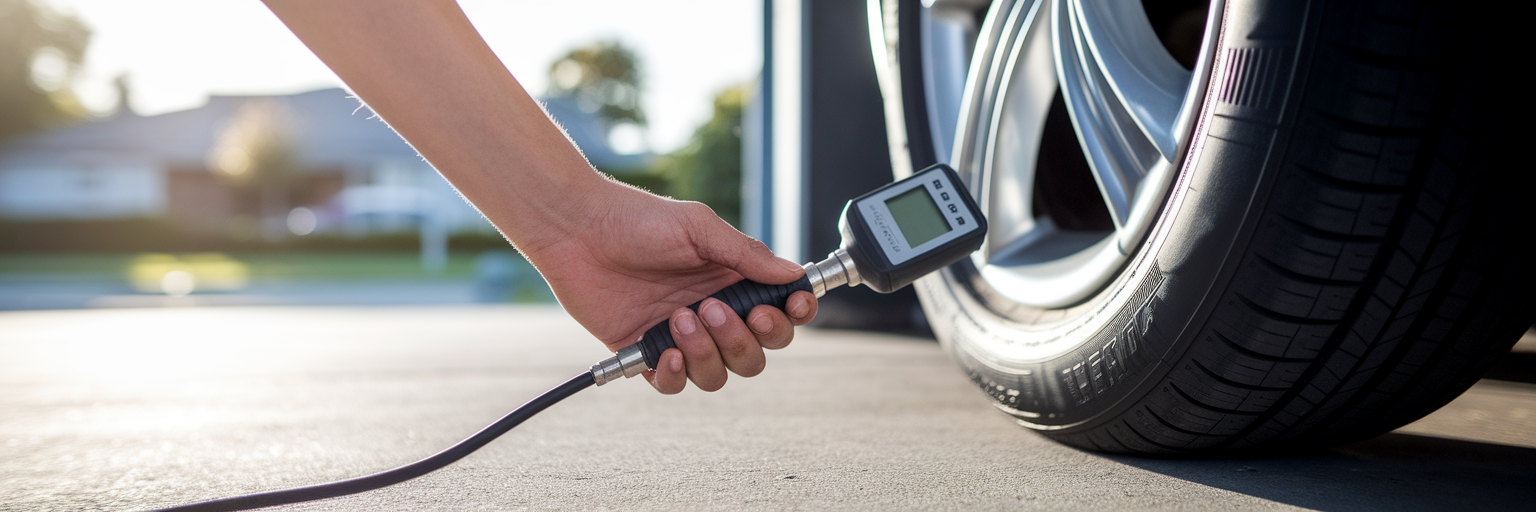
Think of driving on underinflated tires as trying to run through soft sand. It creates more resistance, forcing your engine to work harder. This is called rolling resistance. Keeping your tires inflated to the correct pressure can improve your mileage by up to 3%. The correct pressure is not the number on the tire’s sidewall; that’s the maximum pressure the tire can hold. Instead, use the pressure listed on the sticker inside your driver’s side door jamb. Check your tire pressure monthly for optimal performance.
8. Use a Manual Transmission Efficiently
If you drive a manual, you have even more control over your fuel consumption. The key is to shift into higher gears as soon as it’s practical without straining the engine. Listen to your engine and keep the RPMs low. Shifting early allows the engine to operate at a lower, more efficient speed. Avoid “lugging” the engine by downshifting when you need to accelerate, but for steady cruising, a higher gear is always better.
9. Remove Unnecessary Weight
Your car is a weight-carrying machine, and the more weight it has to move, the more fuel it needs. A good rule of thumb is that for every 100 pounds of extra weight in your vehicle, your fuel economy can drop by about 1%. Clean out your trunk and cabin of any non-essential items. This is particularly true for trucks, where carrying heavy tools or equipment is common. Also, remove external carriers like roof racks or cargo boxes when not in use, as they add significant aerodynamic drag in addition to weight.
10. Use Air Conditioning Sparingly
Your car’s air conditioning system is powered by the engine, and running the compressor puts a direct load on it, increasing fuel consumption by as much as 20%. However, the advice here is nuanced. At lower city speeds, opening your windows is more efficient. But at highway speeds (typically above 50 mph), the aerodynamic drag created by open windows can be greater than the energy needed to run the A/C. So, the rule is: windows down in the city, A/C on the highway.
| Habit | Action Required | Potential Fuel Economy Improvement |
|---|---|---|
| Smooth Acceleration & Braking | Avoid rapid starts and stops; look ahead to anticipate traffic flow. | 10% – 40% |
| Observe Speed Limits | Drive at or below the speed limit, especially on highways. | 7% – 15% |
| Proper Tire Inflation | Check tire pressure monthly and inflate to the vehicle’s recommended PSI. | Up to 3% |
| Reduce Extra Weight | Remove 100 lbs of unnecessary items from the vehicle. | ~1% |
| Avoid Excessive Idling | Turn off the engine if you anticipate being stopped for more than 60 seconds. | Saves 0.25-0.5 gallons per hour |
Note: Improvement percentages are based on data from the U.S. Department of Energy and Environmental Protection Agency. Actual savings may vary based on vehicle type, road conditions, and driving style.
Making Fuel Efficiency a Lifelong Habit

Adopting these techniques isn’t about perfection; it’s about progress. The key to significant savings at the pump is consistency. Don’t feel pressured to master all ten habits at once. Start by focusing on two or three, like gentle acceleration and anticipating traffic. Once those become second nature, incorporate a few more. Over time, these small adjustments will compound into substantial savings.
Beyond your driving style, vehicle health is a critical partner in fuel efficiency. A well-maintained car simply runs better and uses less fuel. Pay attention to these key maintenance tasks:
- Using the manufacturer-recommended grade of motor oil.
- Keeping the engine air filter clean to ensure optimal airflow.
- Performing regular tune-ups to keep all systems running smoothly.
Ignoring strange noises can lead to bigger problems that also hurt your MPG. If you’re wondering, “why is my car squeaking when I drive?“, it might be a sign that your car needs a check-up. Improving your fuel economy by just 15% on a 15,000-mile annual commute can save you over $300 a year with gas at $3.50 per gallon. Ultimately, these fuel efficient driving habits put you back in control, turning every drive into a smarter, more cost-effective journey.