
The rise of factory-built, high-performance off-road trucks reflects a significant shift in consumer demand. Buyers are drawn to the aggressive styling and go-anywhere promise these vehicles represent. While a 2026 off-road midsize truck offers unparalleled adventure, it also comes with trade-offs that are not always obvious on the showroom floor. The central conflict is the battle between extreme off-road capability and everyday utility, particularly concerning towing and payload. What is the real-world cost when you choose a top-tier model over its more conventional counterpart?
This analysis examines the capability sacrifices made by the most aggressive factory off-road versions of popular midsize trucks. We will investigate the 2026 Ford Ranger Raptor, Chevrolet Colorado ZR2, GMC Canyon AT4X, Toyota Tacoma TRD Pro, and Nissan Frontier PRO-4X. To measure the true penalty, each off-road model will be compared directly against its most logical on-road equivalent, a similarly configured crew cab 4×4 from the same manufacturer. This approach allows us to precisely quantify the loss in hauling and towing capability that comes with gaining maximum trail performance.
The Real Cost of a 2026 Off-Road Midsize Truck
The surge in popularity for factory-built, high-performance off-road trucks is undeniable. Automakers have responded with increasingly capable models that promise unparalleled adventure straight from the dealership. These trucks feature aggressive styling, advanced suspension systems, and robust underbody protection. However, these enhancements come with trade-offs that are not always apparent on the showroom floor. This introduces the central conflict for many buyers: the battle between extreme off-road capability and everyday utility.
The core question is simple. What is the real-world cost in towing and payload when choosing a top-tier 2026 off-road midsize truck? While marketing materials highlight impressive suspension travel and approach angles, they often downplay the reduction in fundamental truck duties. This article will dissect the numbers for five key players in this segment. We will examine the 2026 Ford Ranger Raptor, Chevrolet Colorado ZR2, GMC Canyon AT4X, Toyota Tacoma TRD Pro, and Nissan Frontier PRO-4X.
To provide a clear and fair assessment, our methodology is critical. We will not compare a top-tier off-road model to a stripped-down base model. Instead, each off-road truck will be measured against its most logical on-road counterpart. This means a crew cab 4×4 off-road model will be compared to a similarly configured crew cab 4×4 designed for street use. This direct comparison allows us to isolate and precisely measure the sacrifice in hauling and towing capability. By understanding these compromises, you can make a more informed decision about which truck truly fits your lifestyle, whether it involves conquering remote trails or towing a family camper on the weekend.
Why Off-Road Hardware Reduces Hauling Capability
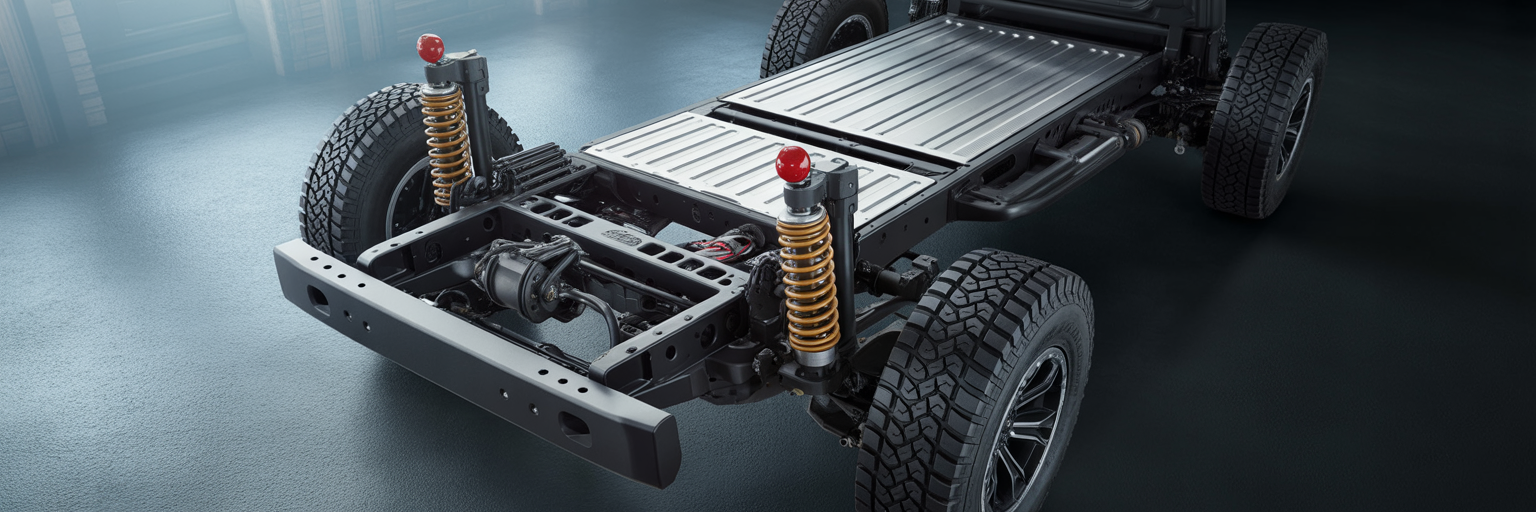
To understand why specialized off-road trucks have lower payload and towing ratings, it is essential to grasp some basic principles of vehicle engineering. The reductions are not arbitrary but are a direct result of physics, safety regulations, and the specific hardware added to enhance trail performance. Every component that makes a truck better off-road often makes it less efficient at hauling heavy loads.
The Fundamental Payload Formula
The key to this entire discussion lies in a simple equation. A vehicle’s payload capacity is determined by subtracting its curb weight from its Gross Vehicle Weight Rating (GVWR). The GVWR is a fixed, non-negotiable safety limit set by the manufacturer. It represents the maximum total weight a vehicle can safely handle, including the truck itself, passengers, cargo, and trailer tongue weight. The formula is straightforward: Payload = GVWR – Curb Weight. Since the GVWR is constant for a given chassis configuration, anything that increases the curb weight directly decreases the payload capacity, pound for pound. This is the fundamental concept behind the truck payload explained debate.
| Metric | Standard 4×4 Truck (Example) | Off-Road Trim (Example) | Impact on Capability |
|---|---|---|---|
| Gross Vehicle Weight Rating (GVWR) | 6,200 lbs | 6,200 lbs | Fixed safety limit; does not change. |
| Curb Weight | 4,700 lbs | 5,100 lbs | Increases due to heavy-duty suspension, armor, and tires. |
| Payload Capacity (GVWR – Curb Weight) | 1,500 lbs | 1,100 lbs | Directly reduced by the increase in curb weight. |
This table illustrates how adding 400 pounds of specialized off-road equipment directly subtracts 400 pounds from the truck’s legal payload capacity, as the GVWR remains constant.
How Off-Road Parts Add Weight
The specialized equipment that defines an off-road truck is the primary source of its increased curb weight. Each component adds pounds that eat into the available payload. Common additions include:
- Heavy-Duty Frames: Some models, like the Ranger Raptor, use a reinforced frame for high-speed durability, adding significant weight.
- Long-Travel Shock Absorbers: Sophisticated dampers like FOX Live Valve or Multimatic DSSV are much larger and heavier than standard shocks.
- Skid Plates and Armor: Thick steel plates protecting the engine, transfer case, and fuel tank add considerable weight.
- Rock Rails: These heavy steel tubes protect the rocker panels but are much heavier than standard plastic trim.
- Larger Tires and Wheels: Aggressive 33-inch or 35-inch all-terrain or mud-terrain tires are substantially heavier than highway tires, including the full-size spare.
Understanding these weight limits is a critical part of vehicle ownership, and it is just one aspect of learning how to keep your car’s engine running for years by operating it within its designed parameters.
The Impact of Suspension and Tires on Stability
Beyond simple weight, the design of off-road components also affects towing stability. Suspensions on trucks like the ZR2 or Raptor are engineered for long travel and articulation to keep tires on the ground over uneven terrain. This requires softer spring rates. When a heavy trailer is attached, this soft suspension can lead to significant rear-end squat, pointing the headlights skyward and reducing front-axle grip. Furthermore, the flexible sidewalls of aggressive off-road tires, designed to deform and grip rocks, can contribute to a feeling of instability and increase the potential for trailer sway compared to the stiffer sidewalls of highway-terrain tires. This is why a lower midsize truck towing capacity is often specified for these models as a safety precaution.
Ford Ranger Raptor Capability Analysis
The Ford Ranger Raptor stands as a prime example of a truck engineered for a very specific purpose: high-speed desert running. Its design philosophy prioritizes off-road performance above all else, resulting in the most significant capability trade-offs in the midsize segment. The comparison of the Ford Ranger Raptor vs Ranger clearly illustrates this specialized focus.
Baseline: The Standard Ford Ranger 4×4
To measure the Raptor’s sacrifice, we must first establish a baseline. The 2026 Ford Ranger Lariat 4×4 Crew Cab, equipped with the powerful 2.7L EcoBoost V6, represents a highly capable, road-focused version of the truck. This configuration boasts a maximum towing capacity of 7,500 pounds and a payload capacity of 1,763 pounds. These figures make it a competent workhorse, capable of handling most recreational trailers and significant cargo loads.
Raptor’s Capability Numbers
In stark contrast, the 2026 Ford Ranger Raptor’s specifications tell a different story. Its maximum towing capacity is dramatically reduced to just 5,510 pounds. The payload capacity also takes a substantial hit, dropping to 1,411 pounds. These are not minor adjustments; they represent a fundamental shift in the vehicle’s intended function, moving it from a versatile hauler to a dedicated performance machine.
Quantifying the Sacrifice
The numbers reveal the true extent of the compromise. When choosing the Raptor over a comparably equipped Lariat, a buyer sacrifices:
- Towing Capacity: A loss of 1,990 pounds, which is a 26.5% reduction. This difference is enough to exclude many common travel trailers and heavy equipment.
- Payload Capacity: A loss of 352 pounds, representing a 20% reduction. This directly impacts the amount of gear, passengers, and trailer tongue weight the truck can legally carry.
These percentages highlight a significant penalty for gaining the Raptor’s off-road prowess. The reduction in towing is particularly severe, fundamentally changing the types of tasks the truck can perform.
Engineering the Trade-Off
The reasons for this large penalty are rooted in the Raptor’s unique engineering. Unlike the standard Ranger’s leaf-spring rear suspension, the Raptor employs a sophisticated coil-spring setup with a Watt’s link. This design provides superior axle control and articulation for high-speed off-roading but is less suited for managing heavy loads. The massive, electronically controlled FOX 2.5-inch Live Valve shocks, while brilliant on the trail, are heavy and tuned for compliance, not for supporting a heavy trailer. Furthermore, the Raptor’s frame is uniquely reinforced to withstand the abuse of jumps and high-speed impacts, adding hundreds of pounds to its curb weight. These purpose-built components create an exceptional off-road vehicle but inherently compromise its function as a traditional workhorse truck.
Chevrolet Colorado ZR2 & GMC Canyon AT4X
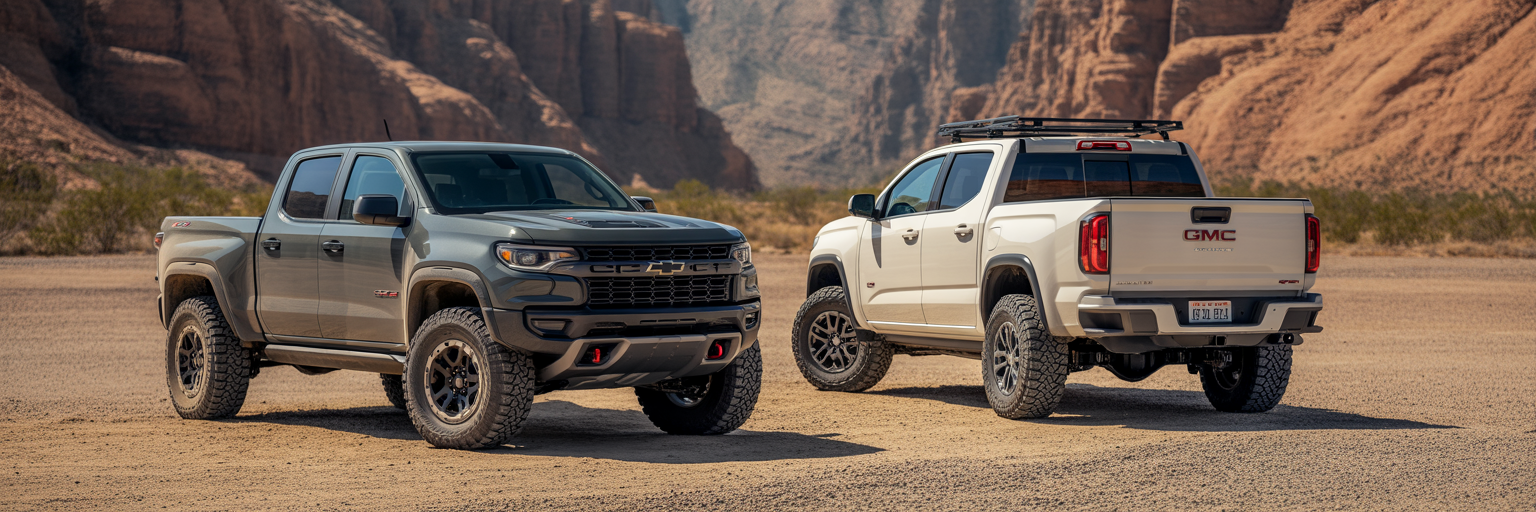
General Motors takes a two-pronged approach to the high-performance off-road segment with the Chevrolet Colorado ZR2 and GMC Canyon AT4X. As platform-mates, they share the same fundamental architecture and powertrain, but each is tuned and marketed to a slightly different audience. Both, however, demonstrate a significant trade-off in payload and towing in exchange for their remarkable off-road capabilities, a compromise driven largely by their world-class suspension systems.
Baseline: The Standard GM Midsize 4x4s
To understand the sacrifice, we look to their more conventional siblings. A 2026 Chevrolet Colorado Z71 or GMC Canyon AT4 serves as an excellent baseline. These trucks, equipped with the same 2.7L TurboMax engine, offer a maximum towing capacity of 7,700 pounds and a payload capacity that can exceed 1,600 pounds depending on the specific configuration. These are strong numbers for the class, positioning the standard GM trucks as capable haulers.
ZR2 and AT4X Capability Numbers
Stepping up to the top-tier off-road models brings an immediate and noticeable reduction. The 2026 Colorado ZR2 and Canyon AT4X see their maximum towing capacity drop to 6,000 pounds. The payload capacity also decreases significantly, with the Colorado ZR2 payload loss bringing it down to around 1,280 pounds, and the AT4X landing in a similar range. It is important to note that even more extreme versions, like the AT4X AEV Edition with its heavy steel bumpers and additional skid plates, will see these numbers fall even further.
Calculating the Performance Penalty
The compromise for choosing the ZR2 or AT4X is substantial, especially in towing. Buyers face:
- Towing Capacity: A loss of 1,700 pounds, which represents a 22% reduction from the standard models’ maximum. This can be the difference between comfortably towing a 24-foot travel trailer and being limited to smaller campers.
- Payload Capacity: A loss of approximately 300 to 400 pounds, a reduction of 18-25%. This directly impacts the ability to carry passengers, gear, and the tongue weight of a trailer simultaneously.
When making a choice in this competitive segment, weighing factors like these is crucial, much like when deciding if the Nissan Frontier vs Chevrolet Colorado which midsize truck makes more sense for your specific needs.
The Multimatic DSSV Difference
The primary reason for the capability reduction in the GM twins is their signature suspension technology: Multimatic DSSV (Dynamic Suspensions Spool Valve) dampers. These are not ordinary shock absorbers. They are incredibly complex, position-sensitive dampers derived from motorsports, providing an unparalleled combination of high-speed control and low-speed compliance off-road. However, this performance comes at a cost. The dampers themselves are large, heavy, and part of a wider, beefier suspension system that adds significant curb weight. This advanced, heavy hardware, combined with the large 33-inch tires and extensive underbody armor, is directly responsible for the reduction in payload. The suspension is tuned for absorbing massive impacts, not for supporting the static, heavy load of a trailer, leading to the manufacturer’s more conservative towing recommendation.
Toyota Tacoma TRD Pro Deep Dive
The Toyota Tacoma has long been a dominant force in the midsize truck market, with a reputation for reliability and off-road prowess. The 2026 Toyota Tacoma TRD Pro sits at the apex of its lineup, integrating a powerful hybrid system with a host of trail-focused hardware. While formidable off-road, it is not immune to the compromises that affect payload and towing capabilities, particularly when compared to other models in the new Tacoma family.
Baseline: The Hybrid Tacoma Limited
For a proper comparison, we look to the 2026 Toyota Tacoma Limited equipped with the same i-FORCE MAX hybrid powertrain as the TRD Pro. This model is designed for on-road comfort and performance, making it the ideal baseline. The Tacoma Limited Hybrid is expected to offer a maximum towing capacity of around 6,500 pounds and a payload capacity in the neighborhood of 1,700 pounds. The hybrid system’s battery and motor add weight, which already places its capabilities slightly below some non-hybrid competitors.
TRD Pro’s Hauling and Towing Specs
The 2026 Tacoma TRD Pro, which comes standard with the heavy i-FORCE MAX powertrain, sees its capabilities further reduced by its specialized off-road equipment. The official maximum towing capacity for the TRD Pro drops to 6,000 pounds. Its payload capacity also takes a significant hit, falling to approximately 1,300 pounds. This reduction is a direct consequence of the added weight from its exclusive off-road hardware.
Analyzing the Capability Reduction
When analyzing the Tacoma TRD Pro towing and payload sacrifice, the numbers are clear. Compared to its road-focused hybrid sibling, the TRD Pro gives up:
- Towing Capacity: A loss of 500 pounds, which is a relatively modest 7.7% reduction. This is one of the smallest towing penalties in the segment.
- Payload Capacity: A loss of roughly 400 pounds, representing a more substantial 23.5% reduction. This significant drop in payload is the TRD Pro’s primary compromise.
This disparity shows that Toyota has prioritized maintaining a respectable tow rating, but at the expense of payload, which is often the more critical limiting factor for real-world use. This trade-off is a key consideration in the ongoing Jeep Gladiator vs Toyota Tacoma which truck is better off road debate, as each truck makes different compromises.
Hardware Behind the Compromise
The TRD Pro’s payload penalty is a direct result of its exclusive and heavy equipment. The 2.5-inch FOX QS3 internal bypass shocks with remote reservoirs are a major contributor to the added weight. The multi-link coil spring rear suspension, while excellent for articulation, is more complex and heavier than a standard leaf spring setup. Perhaps the most unique feature, the IsoDynamic Performance Seats, adds to the curb weight. These seats use a shock absorber system to reduce occupant fatigue on rough terrain, but they are significantly heavier than conventional seats. Combined with aluminum skid plates and other protective gear, this hardware makes the TRD Pro a trail champion but necessarily sacrifices its raw hauling capability.
Nissan Frontier PRO-4X Breakdown

The Nissan Frontier PRO-4X occupies an interesting space within the off-road midsize truck segment. While fully capable and equipped with a host of trail-ready features, it represents a more traditional and arguably less extreme approach compared to the long-travel, wide-body designs of its rivals. This positions the PRO-4X as a potential sweet spot for buyers who want enhanced off-road ability without sacrificing as much everyday utility.
Baseline: The Work-Ready Frontier 4×4
To measure the PRO-4X’s compromise, we start with a standard 2026 Nissan Frontier SV or SL Crew Cab 4×4. These models are known for their solid, no-nonsense performance, offering a maximum towing capacity of around 6,640 pounds and a payload rating that can reach up to 1,480 pounds. These figures establish the Frontier as a respectable and practical choice for daily work and recreational hauling.
PRO-4X Official Capacities
When stepping up to the 2026 Frontier PRO-4X, buyers gain a more rugged aesthetic and tangible off-road upgrades. However, this comes with a predictable reduction in hauling numbers. The maximum towing capacity for the PRO-4X dips slightly to 6,450 pounds. The more significant change is in its payload capacity, which drops to approximately 1,220 pounds. This reduction is a direct result of the added weight of its off-road-specific hardware.
Measuring the Trade-Off
Calculating the penalty for choosing the PRO-4X reveals a nuanced picture:
- Towing Capacity: A loss of just 190 pounds, which is a minimal 2.9% reduction. This is the smallest towing penalty among the trucks in this comparison, making the PRO-4X’s tow rating nearly identical to its standard counterparts.
- Payload Capacity: A loss of approximately 260 pounds, representing a 17.6% reduction. While still a significant drop, it is a less severe percentage loss than some of its more extreme competitors.
A More Balanced Approach?
The PRO-4X’s hardware helps explain this more moderate compromise. It features proven Bilstein off-road shock absorbers, which are a significant upgrade over the standard units but are less complex and heavy than the massive dampers on the Raptor or ZR2. It also includes multiple steel skid plates and an electronic locking rear differential. This package is highly effective for traditional off-roading without adding the extreme weight and complexity of long-travel suspension systems. This raises a critical question for buyers: Does the PRO-4X’s less aggressive approach result in a better-balanced truck? For someone who needs to perform daily work tasks, tow regularly, and still have the confidence to explore challenging trails on the weekend, the Frontier PRO-4X may offer one of the most sensible blends of adventure and practicality in the segment.
The Real-World Family Camping Test
Specifications and percentages are useful, but they do not always paint a clear picture of real-world limitations. To translate this data into a tangible scenario, we will simulate a common use case for a midsize truck: a family camping trip. This test will demonstrate how quickly the payload penalty becomes the most critical limiting factor, often with surprising results.
Here are the parameters for our test:
- Occupants and Gear: We will load the truck with two adults (350 lbs), two children (150 lbs), and 150 lbs of essential camping gear and supplies. This totals 650 pounds of weight inside the vehicle.
- Trailer Tongue Weight: We will attach a modest family travel trailer with a dry weight of 5,000 pounds. A safe tongue weight is typically 10-15% of the trailer’s total weight. We will use a conservative 12%, resulting in a 600-pound tongue weight that is applied directly to the truck’s payload.
- Total Payload Requirement: The total payload needed for this trip is the sum of the occupants, gear, and tongue weight. This comes to 650 lbs + 600 lbs = 1,250 pounds.
Now, let’s see how each of our top-tier off-road trucks handles this 1,250-pound payload requirement:
- Ford Ranger Raptor (Payload: ~1,411 lbs): With a requirement of 1,250 lbs, the Raptor appears to pass with 161 lbs to spare. It is capable, but getting close to its limit.
- Chevy Colorado ZR2 / GMC Canyon AT4X (Payload: ~1,280 lbs): These trucks are right on the edge. With a 1,250 lb requirement, they are left with only 30 pounds of capacity. Adding a cooler or a few extra items would push them over their legal limit. This is a borderline fail.
- Toyota Tacoma TRD Pro (Payload: ~1,300 lbs): The TRD Pro passes this test with 50 pounds of payload capacity remaining. Like the GM twins, it is very close to its maximum, leaving little room for error or extra gear.
- Nissan Frontier PRO-4X (Payload: ~1,220 lbs): The PRO-4X fails this test. Its 1,220-pound payload capacity is 30 pounds short of our 1,250-pound requirement. The truck is legally overloaded before it even leaves the driveway.
This stark analysis shows that even with a modest trailer, three of the five premier off-road trucks are either overloaded or operating dangerously close to their maximum legal limits. This scenario highlights why understanding payload is critical and may lead some families to consider some of the best family road trip vehicles that are not boring as more practical alternatives.
The Final Verdict: Ranking the Compromises
After analyzing the specifications, calculating the penalties, and running a real-world scenario, a clear picture emerges. The most capable off-road trucks demand the biggest sacrifices in utility. For buyers, the decision comes down to honestly assessing their needs and understanding which compromises they are willing to make. Here is our final verdict on how these trucks stack up.
The Payload Champion
The Ford Ranger Raptor, surprisingly, retains the highest payload capacity among the elite off-road models at approximately 1,411 pounds. While it sacrifices a significant percentage of its potential payload compared to a base Ranger, its higher starting GVWR gives it an advantage in absolute numbers, allowing it to pass our family camping test with the most margin.
The Towing Champion
The Nissan Frontier PRO-4X is the undisputed towing champion in terms of retained capability. With a towing capacity loss of less than 3%, it sacrifices almost none of its standard counterpart’s tow rating. The Toyota Tacoma TRD Pro also performs admirably, with a reduction of less than 8%. Both trucks are excellent choices for buyers who prioritize off-road credentials but still need to tow close to the model’s maximum.
The Largest Capability Penalty
The Ford Ranger Raptor demands the biggest sacrifice in towing, with a massive 26.5% reduction in its rating. This positions it as a highly specialized tool for high-speed off-roading, not a general-purpose hauler. The Chevrolet Colorado ZR2 and GMC Canyon AT4X also incur a significant 22% towing penalty, placing them firmly in the specialized category. As a first test by MotorTrend confirms, the AT4X’s top-tier off-road status comes with on-road compromises.
Final Recommendations for Buyers
For many families looking to tow a travel trailer, the top-tier off-road trims are often the wrong choice. Their payload capacities are quickly consumed by passengers, gear, and tongue weight, as our camping test demonstrated. Buyers in this situation should strongly consider milder off-road packages like a Toyota Tacoma TRD Off-Road, a Chevrolet Colorado Z71, or a standard 4×4 model. These trucks offer a much better balance of capability and utility, providing most of the off-road performance an average user will ever need without the severe payload and towing penalties. For those on a tighter budget, exploring options like the best used trucks for towing a camper under $35,000 can also yield a more practical solution.
Ultimately, the most important piece of advice is this: always verify the specific vehicle’s payload capacity on the Tire and Loading Information sticker, usually located on the driver-side door jamb. This number is unique to that exact vehicle as it left the factory. Before signing any paperwork, it is essential to understand how to calculate safe towing capacity including payload and tongue weight to ensure your chosen vehicle truly meets your needs.
| Off-Road Model | Payload Loss (vs. Standard 4×4) | Towing Capacity Loss (vs. Standard 4×4) | Passes Family Camping Test (1,250 lb Payload)? |
|---|---|---|---|
| Ford Ranger Raptor | ~20% | ~26.5% | Yes |
| Chevrolet Colorado ZR2 | ~18-25% | ~22% | Borderline/Fail |
| GMC Canyon AT4X | ~18-25% | ~22% | Borderline/Fail |
| Toyota Tacoma TRD Pro | ~23.5% | ~7.7% | Yes (Barely) |
| Nissan Frontier PRO-4X | ~17.6% | ~2.9% | No |
Note: All percentages are approximate and based on comparing top-tier off-road trims to their closest standard crew cab 4×4 counterparts. Final payload figures must always be confirmed on the vehicle’s door jamb sticker.