
Ford VS Ferrari stands as one of the most iconic rivalries in motorsports history, epitomized by their dramatic clash at the 1966 24 Hours of Le Mans. This intense competition was more than just a race; it symbolized a profound cultural and industrial rivalry between American ingenuity and Italian craftsmanship. The story behind Ford VS Ferrari transcends motorsports, highlighting the intersection of ambition, innovation, corporate pride, and personal rivalries.
Origins of the Ford VS Ferrari Rivalry
The Ford VS Ferrari rivalry began in the early 1960s, rooted deeply in a failed business deal. Henry Ford II, grandson of the legendary Henry Ford, sought to elevate the Ford Motor Company’s image by dominating motorsport competitions, particularly the prestigious 24 Hours of Le Mans. At that time, Ferrari was the undisputed king of endurance racing, having secured multiple victories at Le Mans.
In 1963, Ford sought to acquire Ferrari, seeing it as a shortcut to international racing prestige. Ford executives, led by Lee Iacocca, initiated negotiations with Enzo Ferrari, the enigmatic founder of Ferrari. Initially, Enzo Ferrari appeared receptive to the deal, but negotiations dramatically fell apart when Ferrari insisted on retaining full control over Ferrari’s racing division. Angered and feeling humiliated by Ferrari’s abrupt withdrawal from negotiations, Henry Ford II vowed revenge by defeating Ferrari at their own game: endurance racing.
This broken deal ignited the fierce Ford VS Ferrari rivalry, setting the stage for one of motorsport’s most legendary confrontations.
Key Figures: Henry Ford II and Enzo Ferrari

Central to the Ford VS Ferrari rivalry were two imposing figures, each embodying their companies’ distinct values and visions:
- Henry Ford II: Known affectionately as “Hank the Deuce,” Henry Ford II was determined, authoritative, and deeply committed to restoring Ford’s global prestige. Driven by pride and a desire for revenge, Ford II personally oversaw Ford’s motorsport ambitions, investing substantial resources into developing a car capable of defeating Ferrari.
- Enzo Ferrari: The charismatic and fiercely independent founder of Ferrari, Enzo Ferrari was known for his uncompromising standards and passion for racing. Ferrari’s cars were renowned for their exquisite engineering, performance, and dominance on the race track. Enzo Ferrari’s refusal to relinquish control of his racing division demonstrated his unwavering commitment to motorsport excellence.
The personal animosity between these two automotive giants gave the rivalry an intense emotional dimension, fueling public interest and media coverage across the globe.
Development of the Ford GT40

Determined to beat Ferrari, Ford initiated an ambitious project to build a racing car capable of outperforming Ferrari’s dominant prototypes. In 1964, Ford turned to British racing engineer Eric Broadley and his company Lola Cars, acquiring their Lola Mk6 as the foundation for Ford’s new racing machine.
The resulting vehicle, named Ford GT40 (standing just 40 inches tall), was a masterpiece of automotive engineering. Early prototypes faced significant reliability and aerodynamic challenges, prompting Ford to enlist the expertise of Carroll Shelby, an American racing legend, and British driver Ken Miles, whose profound understanding of racing dynamics proved invaluable.
Under Shelby’s guidance, the Ford GT40 underwent extensive redevelopment, including:
- An advanced aerodynamic design to maximize speed and stability.
- Incorporation of a powerful 7-liter V8 engine, producing over 485 horsepower.
- Enhanced braking and suspension systems for endurance racing reliability.
Carroll Shelby’s relentless testing and refinements transformed the GT40 from an unreliable prototype into a formidable machine, ready to challenge Ferrari’s dominance at Le Mans.
The Epic 1966 24 Hours of Le Mans
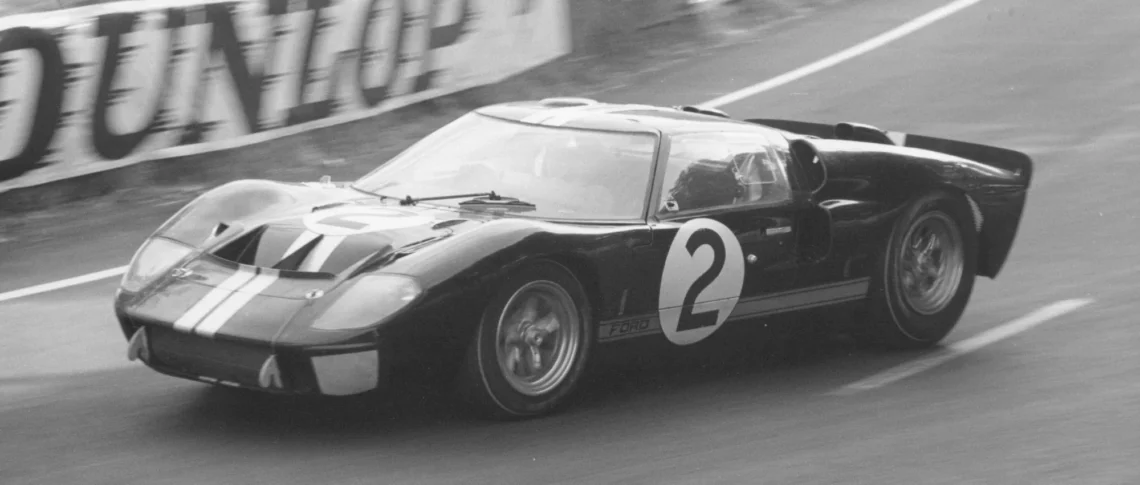
The stage was set for the ultimate Ford VS Ferrari showdown at the 1966 Le Mans. Ford entered multiple GT40s, led by Shelby American’s team, while Ferrari fielded their powerful Ferrari 330 P3s, driven by seasoned racers.
The race itself became an epic battle of speed, endurance, and strategic planning. Ferrari initially set an aggressive pace, attempting to pressure Ford into mechanical failures. However, Shelby’s meticulous preparation and strategic discipline ensured the GT40s maintained a steady, sustainable pace.
Strategic Decisions and Race Dynamics
Key strategic decisions shaped the outcome of Ford VS Ferrari at Le Mans:
- Driver management: Shelby emphasized driver discipline, instructing drivers to maintain consistent lap times rather than chasing Ferrari’s risky pace.
- Pit strategy: Ford’s efficient pit operations minimized downtime, ensuring cars spent maximum time racing.
- Technical reliability: Extensive testing and preparation paid off, with the GT40s demonstrating exceptional mechanical reliability under extreme racing conditions.
As Ferrari cars faced mechanical issues and accidents, Ford GT40s moved into commanding positions. In a dramatic finale, Ford orchestrated a controversial three-car photo finish. Bruce McLaren and Chris Amon, driving the #2 GT40, were awarded victory due to starting further back on the grid, despite Ken Miles and Denny Hulme leading most of the race, causing controversy and debate that still resonates among motorsport historians today.
Lasting Impacts on Ford, Ferrari, and the Automotive Industry
The monumental victory in the Ford VS Ferrari showdown at Le Mans profoundly impacted both companies and the broader automotive industry:
Ford’s Triumph and Brand Evolution
- Ford’s Le Mans victory elevated the company’s international prestige, transforming its image from merely an American automaker into a global racing powerhouse.
- The GT40 became an iconic symbol of American automotive ingenuity, inspiring future generations of performance vehicles, including the Ford Mustang and modern Ford GT models.
- Ford’s motorsports success translated into increased vehicle sales and brand loyalty worldwide.
Ferrari’s Reaction and Continued Excellence
- Despite the 1966 defeat, Ferrari quickly rebounded, continuing to innovate and dominate various motorsport competitions, solidifying their prestigious reputation.
- Ferrari maintained its commitment to racing excellence, using the rivalry to fuel further technological advancements and competitive spirit.
- The Ford rivalry reinforced Ferrari’s identity as a fiercely independent and uncompromising brand.
Broader Cultural and Technological Significance
The Ford VS Ferrari rivalry significantly influenced automotive culture and technology:
- Popularized endurance racing globally, elevating the 24 Hours of Le Mans to unprecedented international prominence.
- Accelerated automotive technological advancements, particularly in aerodynamics, engine performance, and reliability, influencing mainstream automotive manufacturing.
- Inspired cultural works, including documentaries, books, and the acclaimed 2019 film “Ford v Ferrari,” bringing renewed attention to this historic motorsports story.
Conclusion: A Legacy Beyond Motorsports
The Ford VS Ferrari rivalry at the 1966 Le Mans transcended mere racing competition, symbolizing a powerful clash of corporate pride, national identity, and personal ambition. The rivalry catalyzed significant automotive innovations, reshaped global perceptions of American automotive capabilities, and left an enduring cultural legacy.
Today, the story of Ford VS Ferrari continues to captivate enthusiasts, historians, and the general public, exemplifying the relentless pursuit of excellence, innovation, and determination that defines motorsport at its finest. Because of Ford, the 1960’s were packed full of “1960 Muscle Cars” that boomed. This epic tale remains a powerful reminder of how competition can drive extraordinary human achievement, forever altering the automotive landscape.