
The 2025 Towing Dilemma
For decades, the sound of a rumbling V8 engine was the undisputed soundtrack of serious towing. That deep, mechanical growl meant power and capability. Now, the silent, immediate force of electric motors is challenging that long-held assumption, creating a genuine dilemma for truck buyers in 2025. Electric trucks are no longer a niche concept but a legitimate contender for those with demanding towing needs.
This shift raises a critical question: can an electric truck truly replace a traditional gas or diesel model for hauling a heavy trailer, or are the trade-offs still too significant? The debate over gas vs electric truck for towing is not just about environmental impact. It is a practical consideration that touches every aspect of the ownership experience.
To make an informed decision, we need to look past the marketing and compare these two technologies on the factors that matter most on the road. We will examine the raw power and performance under load, the reality of towing range, the logistics of refueling versus charging, and finally, the total cost of ownership over the life of the vehicle. This comparison will provide a clear picture of where each powertrain stands today.
A Head-to-Head on Power and Performance
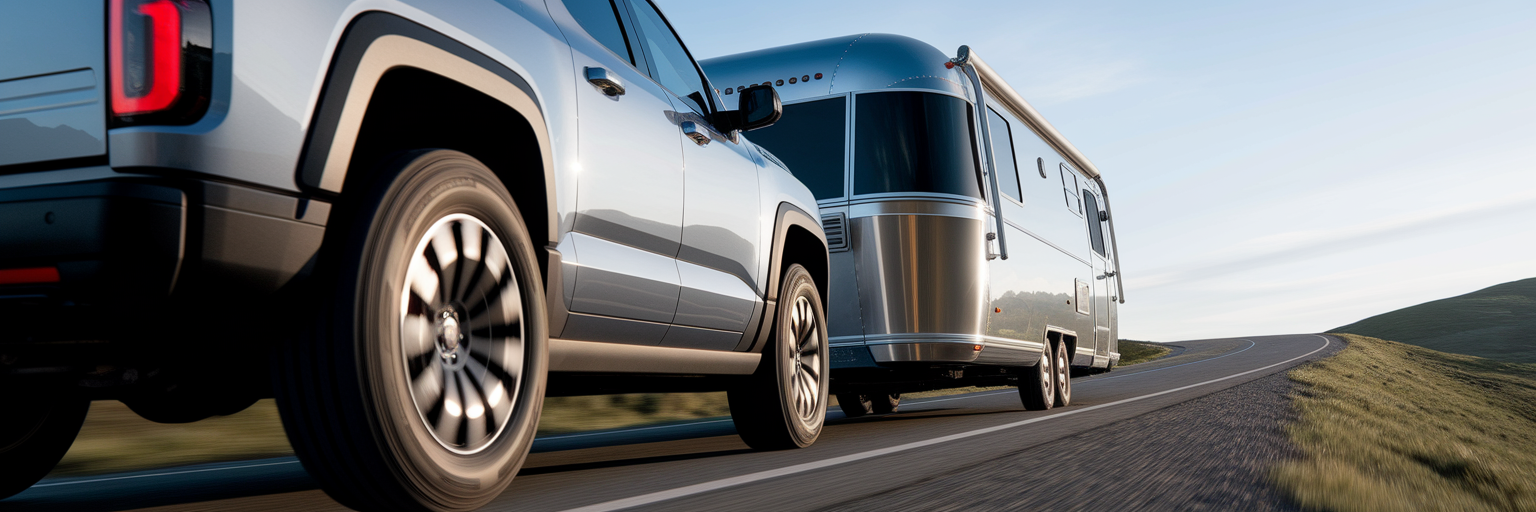
When you are pulling thousands of pounds, the way a truck delivers its power is just as important as how much power it has. This is where electric and gas trucks offer fundamentally different experiences. Electric trucks benefit from instant torque, a concept that changes the feel of towing entirely. The moment you press the accelerator, an EV delivers its maximum pulling force without any hesitation.
Imagine pulling a heavy boat up a steep ramp. With a gas engine, you hear the motor strain as it builds revs to get into its power band. An electric truck, in contrast, pulls away smoothly and silently, as if the weight behind it is barely there. This immediate response provides a sense of effortless control. Modern models demonstrate this capability clearly. The upcoming 2026 GMC Sierra EV, for example, boasts an impressive electric truck towing capacity rated up to 10,000 pounds, putting it squarely in competition with its gas counterparts.
This difference extends to the overall ride quality. The heavy battery pack in an EV gives it a low center of gravity, resulting in a more stable and planted feel on the highway, with less sway from crosswinds. The experience is quiet and refined, a stark contrast to the noise, vibration, and harshness that often accompany a gas engine working hard. While gas trucks get the job done, the performance of an EV under load feels less like a struggle and more like a demonstration of controlled strength. This is part of a wider trend in vehicle design, and you can learn more about the general progress in our overview of electric vehicles.
The Critical Challenge of Towing Range
While electric trucks excel in power delivery, their greatest challenge remains the EV truck towing range. It is the one topic that causes the most hesitation, and for good reason. Towing a heavy trailer can realistically cut an electric truck’s advertised range by approximately 50%. This is not a minor reduction; it fundamentally changes how you plan and execute a trip.
To put this in perspective, a recent test by Consumer Reports found that a Ford F-150 Lightning towing a 7,200-pound camper trailer saw its effective range drop to as low as 90 miles on a single charge. This real-world performance of the electric variant of a truck like the 2025 Ford F-150 highlights a crucial planning constraint. A trip that would be a single, uninterrupted drive in a gas truck could require multiple charging stops in an EV.
However, weight is not the only factor. A critical and often overlooked detail is aerodynamics. A tall, boxy travel trailer creates immense wind resistance, acting like a parachute that drains the battery far more quickly than a heavier but more aerodynamic load, like a flatbed trailer. This means that what you tow can affect your range as much as how much it weighs. In contrast, while a gas truck’s fuel economy also drops significantly when towing, the impact feels less severe simply because a gas station is almost always just a few miles away, eliminating the stress of finding a compatible and available charger.
Refueling Convenience vs. Charging Logistics
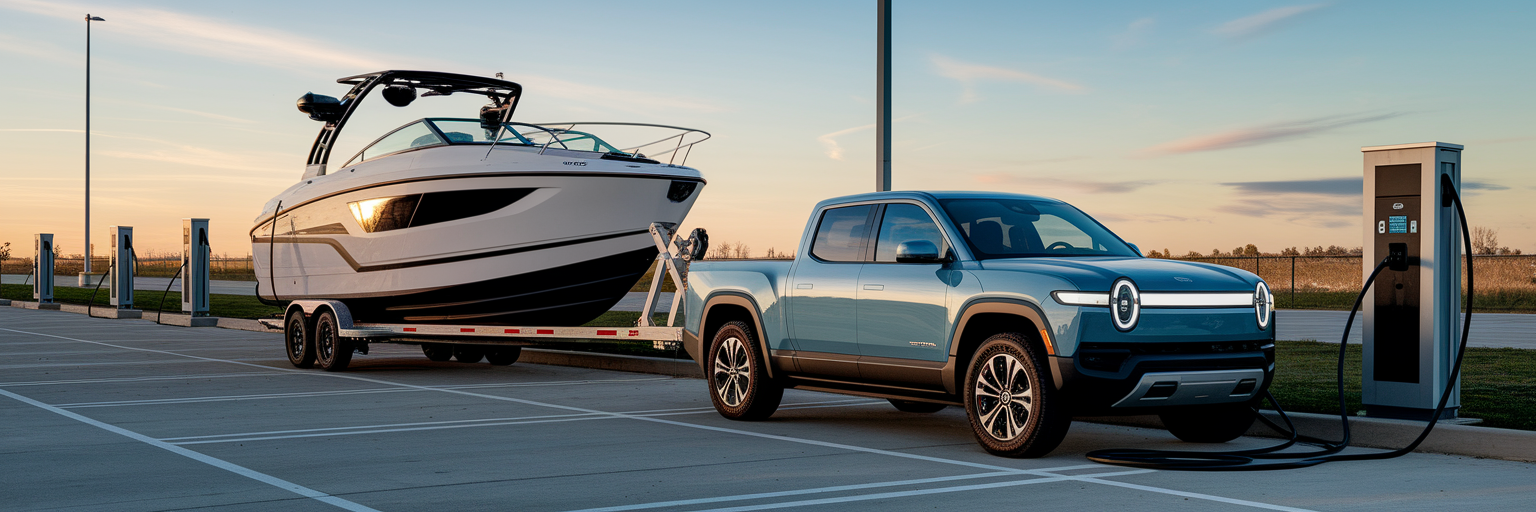
Beyond how far you can go is the practical matter of how you “fill up.” Here, the convenience of the past clashes with the logistics of the future. A gas truck can be refueled in five minutes at nearly any corner in the country. This process is so routine we barely think about it. For an electric truck, the experience requires planning and patience.
On a road trip, you need a DC fast charger (Level 3) to add significant range in a reasonable amount of time, typically 30 to 60 minutes. These stations are becoming more common, but they are not nearly as ubiquitous as gas stations. Slower Level 2 chargers, the kind you might have at home, are impractical for mid-journey stops as they can take hours to add meaningful range. This planning is crucial to avoid being stranded, a situation that brings its own set of problems, like figuring out why your vehicle will not start in the middle of nowhere.
A more frustrating and overlooked hurdle is the physical layout of most charging stations. They are designed like standard parking spots, requiring you to back in or pull forward. This makes it impossible to charge with a trailer attached. You are forced to unhitch, charge, and then re-hitch, adding significant time and hassle to every stop. For anyone searching for the best truck for towing a camper, this logistical headache is a major consideration, especially since charging infrastructure in the rural and scenic areas where you would tow a camper often remains sparse.
A Complete Breakdown of Ownership Costs
The sticker price is only the beginning of a truck’s story. A complete financial picture requires looking at the total cost of ownership. It is true that electric trucks generally have a higher initial purchase price than comparable gas models. However, the savings over time can be substantial, shifting the balance of the gas vs electric truck for towing debate.
The most significant saving comes from “fuel.” Charging an EV at home overnight costs a fraction of what it takes to fill a gas tank, even with fluctuating electricity rates. While public fast charging is more expensive, it is still typically cheaper than gasoline. Maintenance is another area where EVs win. With no oil changes, spark plugs, or complex exhaust systems to service, routine upkeep is minimal. The primary maintenance items are tires, brakes, and cabin air filters.
Of course, long-term repairs are a consideration for both. A gas truck may eventually need engine or transmission work, while an EV’s biggest potential expense is battery replacement, though most are warrantied for at least eight years. For buyers weighing these costs, exploring specific models from brands like Ford can provide concrete pricing examples. The table below summarizes these financial trade-offs.
| Cost Factor | Traditional Gas Truck | Electric Truck |
|---|---|---|
| Initial Purchase Price | Lower to Moderate | Higher |
| Fuel / Energy Cost (per 100 miles) | $15 – $25+ (Varies with gas prices) | $4 – $8 (Varies with electricity rates) |
| Routine Maintenance | Oil changes, filter replacements, spark plugs, fluid checks | Tire rotations, cabin air filter replacement |
| Long-Term Repair Costs | Engine, transmission, exhaust system, fuel system | Battery pack replacement (after 8-10+ years), electric motor |
Note: Fuel and energy costs are estimates based on average U.S. prices for gasoline ($3.50/gallon at 15 MPG) and residential electricity ($0.17/kWh at 2 miles/kWh). Actual savings will vary based on driving habits, location, and vehicle model.
Making the Right Choice for Your Towing Needs
So, should your next towing truck be electric or gas? The best choice in 2025 depends entirely on how you use your vehicle. The decision comes down to a clear trade-off: an EV’s superior, quiet power and lower running costs versus a gas truck’s unmatched range and refueling freedom. There is no single right answer, only the right answer for your specific needs.
To help you decide, consider which of these profiles sounds more like you:
- A gas or diesel truck is likely better if: You frequently tow heavy loads over long distances, often traveling more than 200 miles in a day. Your routes take you through rural areas with limited charging infrastructure, and you value the speed and certainty of the traditional refueling network above all else.
- An electric truck could be a great fit if: Your towing is mostly regional, involving shorter trips to a lake house, campsite, or job site. You can conveniently charge at home or your destination, you place a high value on a quiet and powerful driving experience, and you want to minimize long-term fuel and maintenance costs.
It is important to remember that battery technology and charging infrastructure are improving constantly. The limitations that exist today may be significantly reduced in the coming years, continuing to shift the balance in favor of electric trucks. For those ready to explore options that fit their profile, our comprehensive list of available trucks can help you compare models.