
Anyone who has spent time on a trail knows that the most expensive suspension lift is useless if your tires cannot find grip. The four patches of rubber connecting you to the ground are your first and last line of defense against getting stuck. Yet, choosing the right set can feel overwhelming. The secret is that the “best” tire is not a specific brand or model. It is the one that perfectly matches where and how you drive.
Assess Your Terrain and Driving Habits
Before you even glance at a tire catalog, the most important step is an honest self-assessment. Think of it like choosing footwear. You would not wear hiking boots to a formal dinner or dress shoes on a muddy trail. The same logic applies directly to your vehicle. The central question of how to choose off road tires begins with a clear look at your own driving patterns.
Start by asking yourself: what is my real pavement-to-dirt ratio? Be honest. Does your rig spend five days a week commuting and one weekend a month on the trail, or is it a dedicated off-road machine that only sees asphalt on the way to the trailhead? This single answer will immediately narrow your options. A tire designed for extreme mud will wear out quickly and create a lot of road noise on the highway, impacting your daily comfort and fuel budget.
Next, consider the specific terrain you encounter. The demands of the slickrock trails in Moab, Utah, where grip on abrasive stone is paramount, are completely different from the deep, soupy mud of Pacific Northwest forests, which requires a tire that can aggressively clear itself. If you explore the sandy washes of the Anza-Borrego Desert, you need a tire that can float on top of the sand when aired down, not dig itself into a hole. Whether you’re building up a classic or a brand new model from a manufacturer like Jeep, the right tires are a critical first step that must align with these environments.
Decoding Off-Road Tire Categories
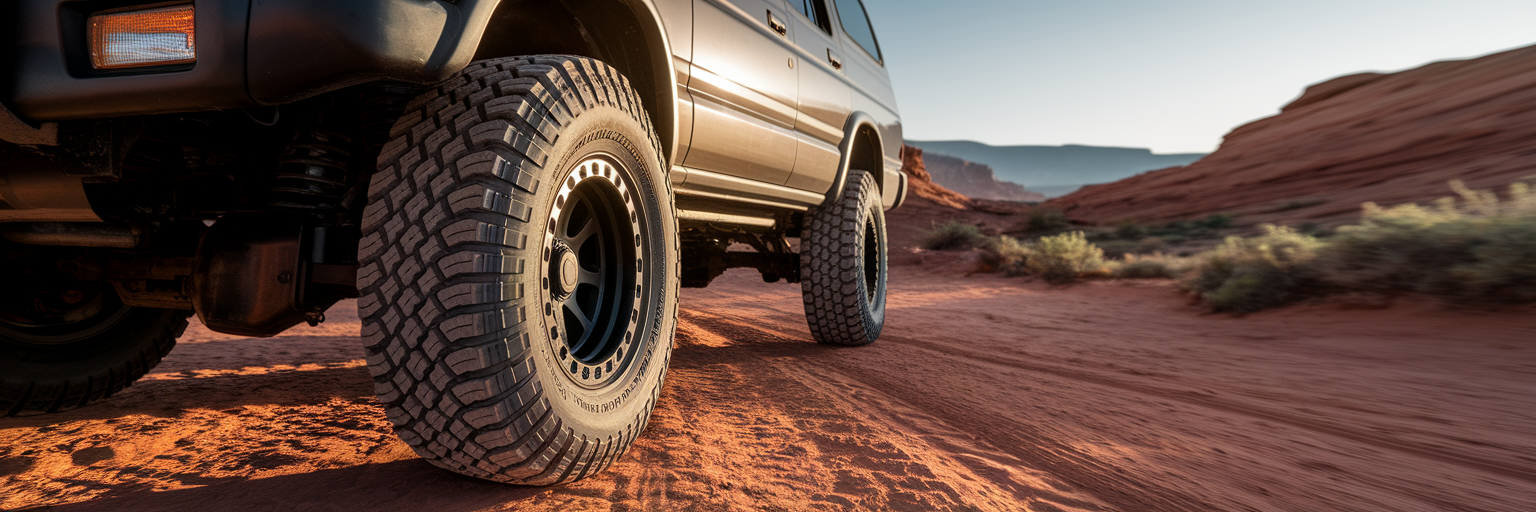
Once you have a clear picture of your needs, you can start to understand the main categories of off-road tires. Each type is designed with a specific philosophy, balancing on-road manners with off-road capability. These tire categories are especially relevant for owners of modern trucks who want to enhance their vehicle’s stock capabilities without making excessive compromises.
All-Terrain (AT): The Versatile All-Rounder
For many, the All-Terrain tire is the default choice, and for good reason. It is the jack-of-all-trades in the tire world. AT tires feature interlocking tread blocks and small slits, known as sipes, that provide dependable grip on pavement, especially in wet or light snow conditions. This balance makes them some of the best tires for overlanding, where you might cover hundreds of highway miles before hitting a remote dirt track. They offer a quiet, comfortable ride on the road while still providing enough traction for moderate off-road situations like gravel roads and light trails.
Mud-Terrain (MT): The Specialist for Extreme Conditions
You can spot a Mud-Terrain tire from a distance. Their aggressive, chunky appearance is not just for show. MT tires are designed with massive tread blocks and large, open spaces called voids. This design is crucial for one primary purpose: to bite into soft surfaces like mud and clay and then eject that material as the tire spins. This self-cleaning action ensures the tread is always ready to find fresh grip. The trade-off is significant. On the road, they are noisy, offer less grip in wet conditions, and wear down much faster than their AT counterparts.
Rugged-Terrain (R/T): The Hybrid Solution
A growing category of hybrid or Rugged-Terrain tires aims to bridge the gap between AT and MT. These are for the driver who finds an All-Terrain tire a bit too mild for their weekend adventures but is not willing to live with the daily compromises of a full Mud-Terrain. R/T tires typically feature the large voids of an MT tire near the shoulder for off-road bite, combined with a tighter, more stable center tread pattern for better on-road behavior. They offer a compelling middle ground, providing more aggressive looks and capability than an AT without all the noise and rapid wear of an MT.
Key Factors in Tire Construction and Performance
Looking beyond the broad categories, understanding a tire’s construction is essential for making an informed choice. This is the anatomy lesson that empowers you to read a spec sheet and know what it means for trail performance. This practical 4×4 tire buying guide focuses on the elements that define a tire’s toughness and effectiveness.
The first thing to consider is the tread pattern and void ratio. The shape of the tread blocks and the amount of empty space between them represent a direct trade-off. Tightly packed blocks create a quieter ride and more stable handling on pavement. Larger voids, on the other hand, are better at clearing mud and debris for continuous off-road traction. The next critical factor is sidewall strength and ply rating. The sidewall is the most vulnerable part of a tire on a rocky trail. A tire’s Load Range, often shown as a letter like C, D, or E, indicates its internal construction. A higher letter means more layers, resulting in a stiffer, more puncture-resistant tire that can handle lower pressures without damage. As industry leaders like BFGoodrich emphasize, a tire’s construction, particularly its sidewall toughness, is a primary defense against trail damage.
Finally, the rubber compound itself plays a huge role. Softer compounds offer incredible grip on rocks and slick surfaces but wear out much faster on abrasive pavement. Harder compounds provide a longer tread life but may not offer the same level of traction when you need it most. When considering upgrades for a vehicle like the 2025 Ford F-150, tires are often the first and most impactful change an owner can make, and these construction details are what separate a good choice from a great one.
All-Terrain vs Mud-Terrain: A Direct Comparison

With the basics understood, the most common decision comes down to all terrain vs mud terrain tires. This is where your honest self-assessment from the beginning pays off. Instead of thinking about which tire looks better, consider which one performs better in the scenarios you actually face. For a capable SUV like the upcoming 2026 Jeep Grand Cherokee, an All-Terrain tire often provides the ideal balance of daily usability and weekend adventure.
The following table provides a quick reference for their head-to-head performance.
| Performance Factor | All-Terrain (AT) Tires | Mud-Terrain (MT) Tires |
|---|---|---|
| On-Road Comfort & Noise | Quieter, smoother ride | Noticeable road noise, rougher ride |
| Mud & Soft Soil | Adequate in light mud, can pack up | Excellent, self-cleans for continuous grip |
| Rocks & Durability | Good, with strong sidewall options | Excellent, often with tougher construction |
| Snow & Ice | Often better, many have 3PMSF rating | Poor on packed snow and ice |
| Sand | Good, especially when aired down | Can dig in too aggressively if not aired down properly |
| Tread Life | Longer lifespan on pavement | Wears significantly faster on pavement |
This table summarizes the typical trade-offs between AT and MT tires. Individual performance can vary by brand and specific model.
On the road, the difference is immediately apparent. An MT tire produces a distinct hum that gets louder with speed, and its large tread blocks can lead to slower, less precise steering. In deep mud, however, an MT tire truly shines, acting like a paddle to propel the vehicle forward while an AT tire is more likely to clog with mud and spin. For winter driving, many AT tires carry the Three-Peak Mountain Snowflake (3PMSF) symbol, indicating they meet a specific performance standard in severe snow, a rating most MT tires lack. The decision framework is simple: if you spend more than half your time on pavement, an AT tire is almost always the smarter choice. If your vehicle is a dedicated trail rig or you consistently face extreme mud and rocks, the superior off-road grip of an MT is worth the on-road compromises.
Essential Maintenance for Tire Longevity and Safety
Your investment in quality tires is only protected by proper care. A few simple habits can dramatically extend their life and, more importantly, prevent a dangerous failure on the trail or highway. These essential off road tire maintenance tips should become a regular part of your routine.
- Proper Tire Pressure: This is the single most important factor. Learn to “air down” your tires before hitting the trail. Lowering the pressure increases the tire’s footprint, improving traction and smoothing out the ride. Just as crucial is “airing up” to the manufacturer’s recommended pressure before you get back on the highway to ensure safety and prevent uneven wear.
- Consistent Rotations: Aggressive tread patterns wear more quickly and irregularly than standard tires. Implement a more frequent rotation schedule, typically every 3,000 to 5,000 miles. If you have a matching full-size spare, include it in a five-tire rotation pattern to ensure all your tires wear evenly over time.
- Regular Inspections: Make it a habit to walk around your vehicle before and after every trip. Look for cuts or bulges in the sidewalls, check for embedded rocks or nails in the tread, and monitor for any signs of unusual wear patterns. Ignoring tire maintenance can lead to other problems, so if you’re wondering ‘why is my car squeaking when I drive?‘, uneven tire wear could be a contributing factor. Catching a small issue early can prevent a major headache later.