
Balancing Towing Power with Fuel Efficiency
For many Americans, a truck is more than just a vehicle. It’s the tool that hauls equipment to a job site Monday through Friday and pulls the family camper into the mountains for the weekend. This dual identity creates a constant tension: the need for serious towing muscle versus the persistent sting of high fuel prices at the pump. We’ve all felt it, watching the dollars climb while filling up a thirsty V8 before a long haul.
For years, the assumption was that power and efficiency were mutually exclusive. You either had one or the other. However, modern engine advancements are rewriting that old rulebook. The introduction of sophisticated hybrid systems and incredibly refined diesels means that finding fuel efficient trucks for towing is no longer a fantasy. The market is filled with capable trucks designed for specific needs, each offering a different answer to this classic problem.
This guide is designed to cut through the marketing noise and provide clear, practical advice for navigating the 2025 truck market. Our goal is to help you find the right tool for your job, not just the truck with the biggest numbers on a spec sheet. It’s about making a smart purchase that serves you both on the clock and off.
Decoding Towing Specs and Real-World MPG
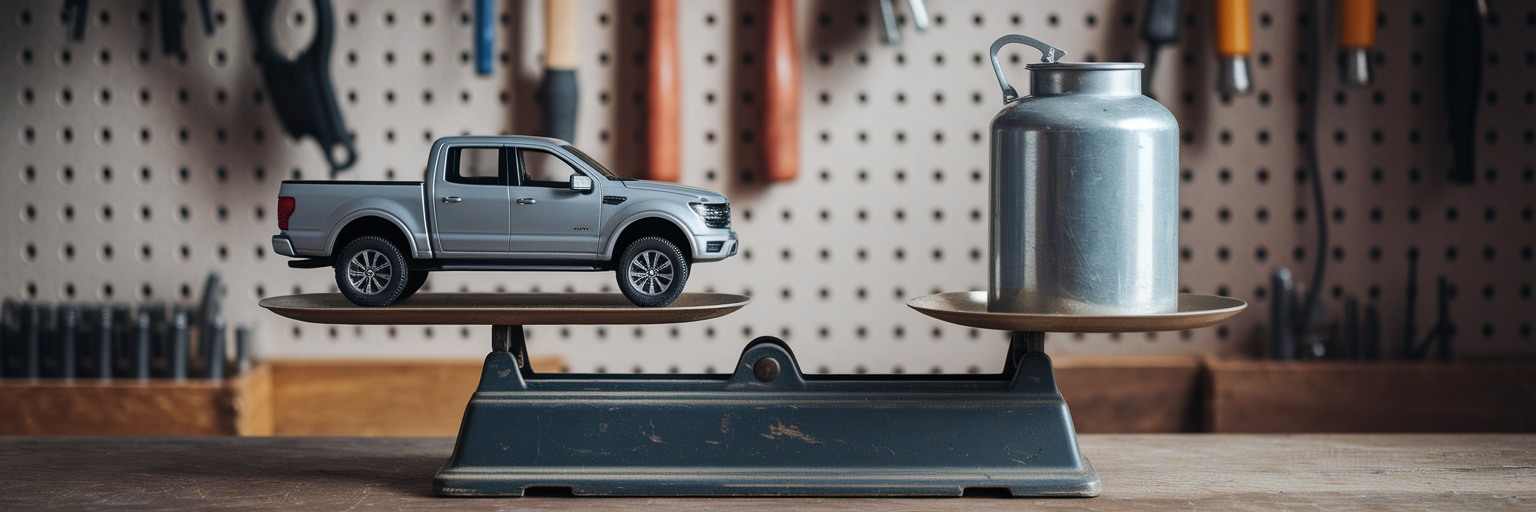
One of the first moments of confusion for any truck buyer is seeing an impressive EPA-estimated MPG sticker and then experiencing something entirely different in reality. Let’s be clear: the fuel economy your truck achieves while empty is a world away from what it gets when pulling a 7,000-pound trailer. The added weight, combined with the wind resistance of a tall, boxy camper, forces the engine to work much harder, consuming significantly more fuel.
To make an informed choice, you need to understand the language of towing. These numbers are about safety and vehicle longevity, not just bragging rights.
- Towing Capacity: This is the maximum weight your truck can safely pull. Exceeding it puts immense strain on the engine, transmission, brakes, and frame.
- Payload: This is the total weight your truck can carry in its cab and bed, including passengers, cargo, and the tongue weight of the trailer.
- Tongue Weight: The downward force that the trailer’s tongue exerts on the hitch. It should typically be 10-15% of the total trailer weight for stable towing.
- Gross Combined Weight Rating (GCWR): The maximum allowable weight of the fully loaded truck and the fully loaded trailer combined.
External factors also play a huge role. Towing a low-profile utility trailer across the flat highways of Texas will use far less fuel than pulling a high-roof travel trailer through the steep grades of the Rocky Mountains. The key takeaway is this: as a rule of thumb, expect your MPG to drop by 30-50% when towing. Setting this realistic baseline is the first step to avoiding disappointment.
Top Light-Duty Picks for Everyday Hauling
The light-duty segment offers the most variety, with powertrains tailored to different priorities. The debate over hybrid vs diesel for towing is most relevant here, as each technology offers distinct advantages depending on your primary use case.
The Gasoline Workhorse: Ford F-150 EcoBoost
For those who prioritize raw power for occasional but heavy jobs, the F-150 with a 3.5L EcoBoost V6 remains a top contender. It delivers impressive towing figures that rival some older heavy-duty trucks, making it a versatile choice for hauling everything from large boats to heavy equipment trailers.
The Hybrid All-Rounder: F-150 PowerBoost
The 2025 Ford F-150 continues to be a leader, especially with its PowerBoost Hybrid option. This truck represents the ideal compromise. It combines strong towing capability with better fuel economy in city and mixed driving. The onboard Pro Power Onboard generator is a standout feature, turning the truck into a mobile power source for campsites or job sites. This commitment to versatility is a hallmark of the Ford truck lineup.
The Diesel Marathoner: Chevrolet Silverado 1500 Duramax
If your towing involves long stretches of highway, the 3.0L Duramax diesel is hard to beat. This engine is the undisputed best towing mpg truck for long-distance haulers. Its exceptional fuel economy on the open road and the steady, confident torque it delivers make it perfect for those who frequently tow campers or trailers cross-country.
The Mid-Size Efficiency King: Toyota Tacoma Hybrid
Not everyone needs to tow 10,000 pounds. For smaller loads like a pair of jet skis, a small fishing boat, or a utility trailer, the new Toyota Tacoma with the i-FORCE MAX hybrid powertrain is a brilliant choice. It offers more than enough power for lighter duties while maximizing fuel efficiency in daily driving.
| Model | Powertrain | Max Towing Capacity (lbs) | Estimated Highway MPG (Unloaded) | Best Use Case |
|---|---|---|---|---|
| Ford F-150 EcoBoost | Gasoline V6 | 13,500 | ~24 MPG | Maximum towing power for heavy trailers |
| Ford F-150 PowerBoost | Hybrid V6 | 12,700 | ~24 MPG | Balanced daily driving and frequent towing |
| Chevy Silverado 1500 | Diesel I6 | 13,300 | ~33 MPG | Long-distance highway towing |
| Toyota Tacoma Hybrid | Hybrid I4 | 6,000 | ~24 MPG | Efficiently towing smaller loads |
Note: Towing capacity varies significantly by configuration. MPG figures are EPA estimates for unloaded highway driving; expect a 30-50% reduction when towing.
Heavy-Duty Diesels for Maximum Towing Strength
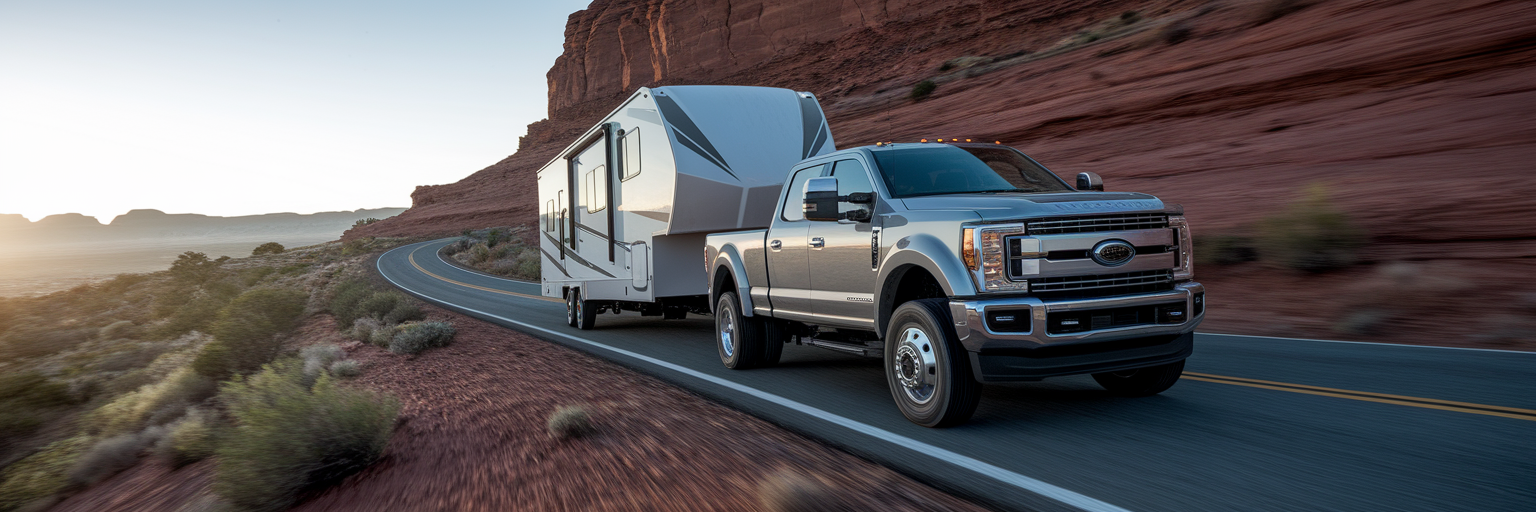
When the job calls for moving massive loads like a large fifth-wheel RV, a multi-horse trailer, or heavy construction machinery, the heavy-duty (HD) segment is the only answer. In this class, “fuel efficiency” takes on a different meaning. While you won’t see hybrid-like MPG numbers, making a smart choice is still critical for managing operational costs.
The leaders here are the Ford Super Duty, Ram HD, and the GM HD twins. These are the 2025 trucks with best towing capacity, designed for the most demanding tasks. According to a 2025 analysis by Motor1.com, the Chevrolet Silverado HD and GMC Sierra HD can tow up to 36,000 pounds when properly equipped. The core insight for HD buyers is to think in terms of cost per mile towed. A powerful HD diesel engine operating comfortably within its limits can often be more economical and durable over the long run than a light-duty truck constantly straining at its maximum. Pushing a smaller truck to its edge burns excessive fuel and accelerates wear on critical components, leading to higher costs down the road.
The New Frontier of Hybrid and Electric Towing
Emerging technologies are reshaping what’s possible, but it’s important to have a realistic outlook. The term “hybrid” itself can mean different things. The Ford Maverick Hybrid, for example, is an efficiency-first vehicle designed for very light duties. It’s a stark contrast to the F-150 PowerBoost, which uses its hybrid system to enhance performance and capability for serious work.
The all-electric segment, including the Chevrolet Silverado EV and GMC Sierra EV, introduces a compelling advantage: instant torque. This allows for incredibly smooth and powerful acceleration from a standstill, even with a heavy trailer. However, this comes with a significant trade-off. The primary challenge for EV towing is range reduction. Pulling a heavy, un-aerodynamic trailer can easily cut an EV’s range by 50% or more. This is a critical factor for anyone planning trips beyond their local area.
The verdict for 2025 is clear. Hybrid trucks like the PowerBoost are a mature, no-compromise solution available today. Electric trucks are an excellent choice for local work or regional towing where charging is predictable, but they require meticulous planning for long-haul journeys. This move towards electric power is reshaping the entire truck market, and the technology is improving rapidly.
Simple Habits to Improve Your Towing Fuel Economy
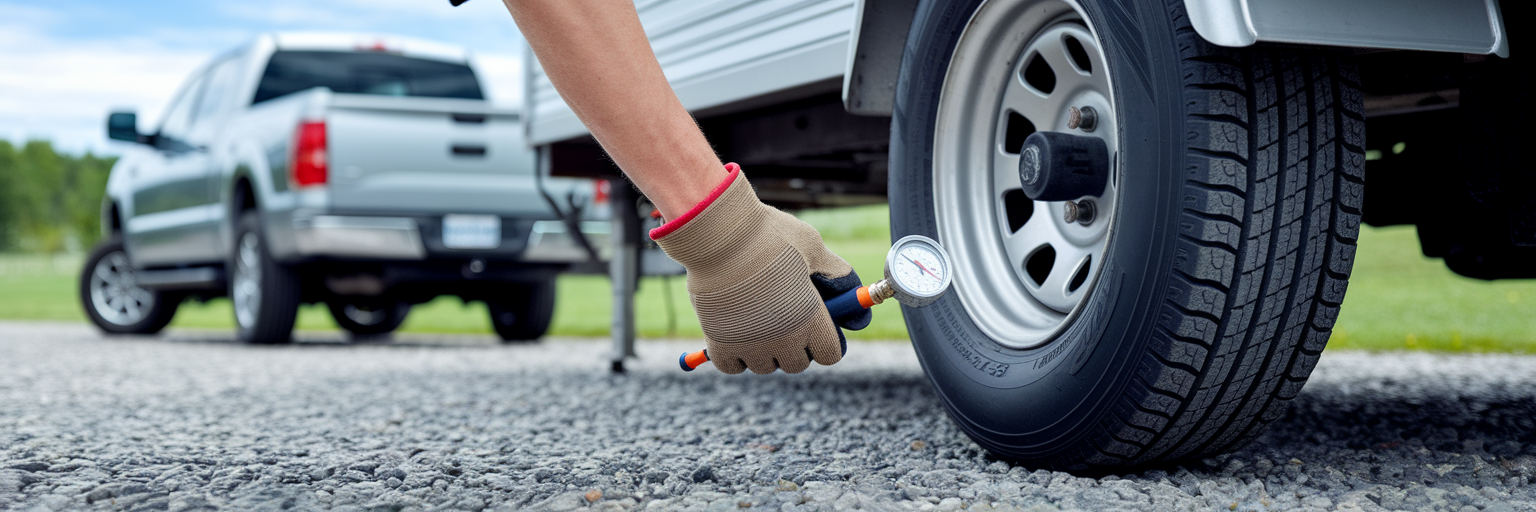
Regardless of which truck you drive, your habits behind the wheel have a major impact on fuel consumption. Learning how to improve towing fuel economy is about working with your truck, not against it. Here are a few simple practices that can make a real difference.
- Drive Smoothly. Abrupt acceleration and hard braking are fuel killers, especially with a trailer. Anticipate traffic, ease onto the throttle, and use the vehicle’s momentum. On flat ground, using cruise control can help maintain a steady, efficient speed.
- Prep Your Vehicle and Trailer. Always check that the tires on both your truck and trailer are inflated to the recommended pressure. Underinflated tires create more rolling resistance and waste fuel. Also, always use your truck’s “Tow/Haul” mode. It adjusts transmission shift points to reduce strain and improve performance. A quick check can also reveal issues like dragging trailer brakes, which can cause strange noises and drastically reduce efficiency.
- Manage Weight and Aerodynamics. A properly balanced trailer is safer and more efficient. Follow the 60/40 rule: place about 60% of the cargo weight forward of the trailer axle. This improves stability, reduces sway, and saves fuel.
- Plan Your Route. The shortest route isn’t always the most efficient. Use modern GPS apps to find a path that avoids steep grades, heavy stop-and-go traffic, and excessive city driving whenever possible.
Choosing the Right Towing Truck for Your Needs
The “best” truck is a personal decision, not a universal one. To find your perfect match, start by asking yourself three honest questions:
- How much weight do I realistically need to tow on a regular basis?
- How often will I be towing—daily, weekly, or just a few times a year?
- What is my total budget, including fuel and maintenance costs?
Your answers will point you in the right direction. For occasional, maximum-power needs, a light-duty gas truck is a great fit. For a balanced daily driver that tows frequently, a light-duty hybrid is ideal. For those covering long distances, a light-duty diesel offers unmatched highway economy. And for the biggest jobs, only a heavy-duty diesel will do.
The ultimate goal is to choose the truck that most efficiently and safely meets the majority of your needs. With this framework, you’re ready to explore the options and find the perfect truck for your adventures and work at Carphanatics.