
That little icon of a car with squiggly lines behind it suddenly blinks on your dashboard as you pull away from a stoplight. For a moment, the car seems to hesitate before moving forward smoothly. This experience, the traction control light flashing when accelerating, is a common one, yet it often causes a flicker of concern. Is something wrong with your car? In most cases, the answer is no. That flashing light is not a warning of failure but a sign that a critical safety system is doing its job exactly as intended.
Distinguishing a Flashing Light from a Solid Warning
The first step in understanding your car’s behavior is to recognize the difference between a flashing light and a solid one. Think of it this way: a flashing light means the traction control system is actively “reporting for duty,” while a solid, continuously lit icon suggests the system has “called in sick.”
A flashing light indicates normal operation. It’s your vehicle’s way of telling you that it has detected a loss of traction in one or more wheels and is actively intervening to restore grip. This happens frequently on wet, icy, or gravelly roads, but it can also occur during hard acceleration on dry pavement. The flash is simply a notification that the system is working to keep you safe. It is not a sign of a problem.
Conversely, a solid, non-flashing light signifies a system fault. When this light stays on, the vehicle’s computer has detected a problem within the Traction Control System (TCS) or a related system, like the Anti-lock Braking System (ABS). As a fail-safe measure, the computer disables traction control to prevent unpredictable behavior. This means you no longer have the system’s assistance, and the vehicle will rely solely on the mechanical grip of its tires. Understanding this distinction is key. A brief flash prompts you to be more cautious in the current driving conditions, while a solid light is a clear signal that your vehicle needs a professional diagnosis to identify the underlying issue.
How Your Vehicle’s Traction Control System Operates
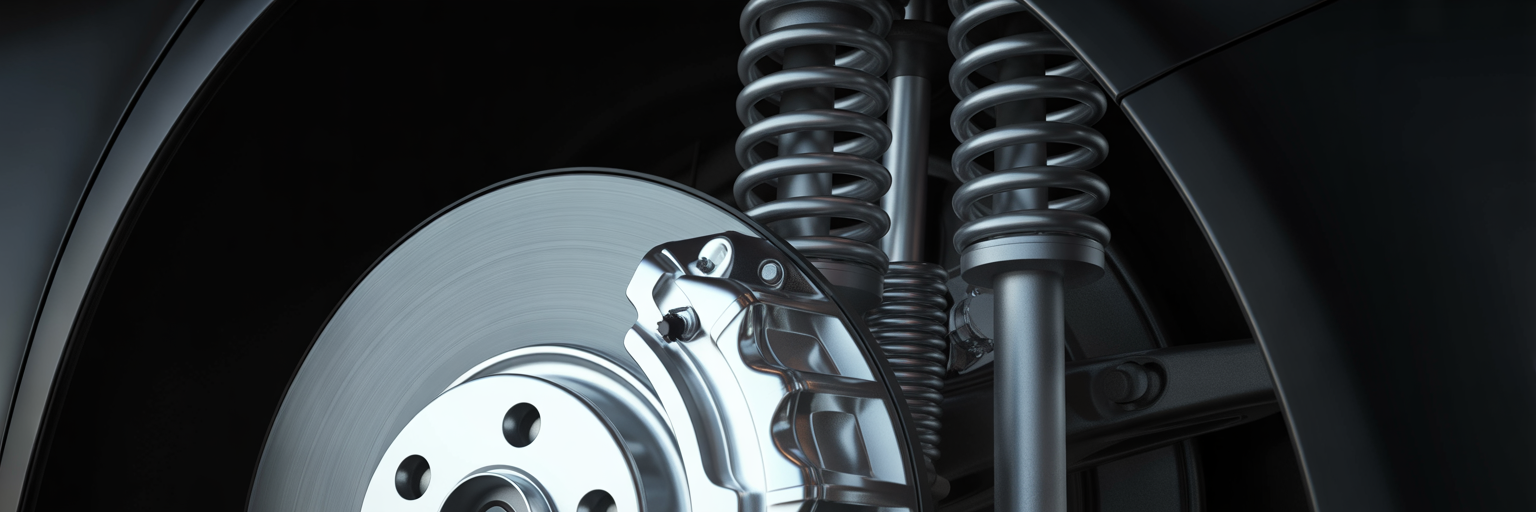
To appreciate what that flashing light means, it helps to understand what’s happening behind the scenes. Your car’s Traction Control System is a sophisticated network of sensors and computer logic designed to prevent the drive wheels from spinning faster than the ground they are moving over. It’s a clever system that works in fractions of a second to maintain control.
Detecting Wheelspin with Shared Sensors
The foundation of the TCS is the set of wheel-speed sensors, which it shares with the Anti-lock Braking System. These sensors are the system’s “eyes,” constantly monitoring the rotational speed of each of the four wheels. The onboard computer knows that when the car is moving, all four wheels should be spinning at very similar speeds. When you accelerate and one drive wheel hits a patch of water or loose gravel, it loses grip and starts to spin much faster than the others. The computer instantly recognizes this speed difference as wheelspin.
Using Brakes and Engine Power to Regain Grip
Once wheelspin is detected, the system employs a two-part strategy to restore traction. First is brake intervention. The TCS commands the ABS hydraulic unit to apply a precise amount of brake pressure to only the spinning wheel. This action slows the wheel down, allowing it to regain grip. It also has the clever effect of redirecting engine power to the other drive wheel, which presumably still has traction.
If braking the individual wheel isn’t enough, or if both drive wheels are spinning, the system moves to engine intervention. It communicates with the Engine Control Unit (ECU) to temporarily reduce engine power. This can be done by closing the throttle, adjusting ignition timing, or even cutting fuel to one or more cylinders. This prevents the engine from overpowering the available grip. These systems work in harmony, and keeping all parts of a car in good shape is crucial for their performance. This includes following routine maintenance, which is why we created guides on topics like how to keep your car’s engine running for years.
Common Scenarios for Normal Traction Control Activation
Seeing the traction control light flash can be unsettling if you don’t know why it’s happening. However, many everyday driving situations can cause a temporary loss of grip, prompting the system to engage. Recognizing these scenarios can provide peace of mind that your vehicle is functioning correctly.
- Hard Acceleration: Even on dry pavement, especially in a vehicle with a powerful engine, the sudden torque can overwhelm the tires’ ability to grip the road. The TCS steps in to manage the power delivery for a smooth and controlled launch.
- Wet or Rainy Roads: Water on the road surface acts as a lubricant between your tires and the asphalt. This significantly reduces traction and is one of the most common reasons for the TCS to activate, preventing hydroplaning and spinouts.
- Snow and Ice: These are the classic low-traction conditions. The TCS will likely be very active when driving in winter weather, working constantly to maintain forward momentum and stability by preventing the wheels from spinning uselessly.
- Loose Surfaces (Gravel, Mud, Sand): When driving on unpaved roads or loose shoulders, tires struggle to get a solid “bite.” The system will frequently activate to manage wheelspin as the tires search for grip.
- Uneven Pavement or Potholes: Hitting a pothole or a rough patch of road can cause a tire to momentarily become unloaded or even leave the ground. When it makes contact again, it can spin briefly, triggering the TCS.
- Sharp Turns or Cornering: When you accelerate while in a turn, weight shifts to the outside wheels, unloading the inside drive wheel. This makes the inside wheel more likely to spin, and the TCS will brake it to maintain stability.
- Steep Inclines: Starting from a stop on a steep hill can cause the vehicle’s weight to shift backward, reducing the load and grip on the front drive wheels. The TCS helps prevent them from spinning as you pull away.
- Worn Tires: This is a critical point. Tires with low tread depth have significantly less grip. If you notice your traction control light flashing when accelerating more often than it used to under normal conditions, it’s a strong indication that your tires are worn out and need replacement. The system is working correctly, but it’s compensating for poor equipment.
What to Expect When Traction Control Engages

Beyond the flashing light on the dash, the activation of the traction control system creates distinct physical sensations. These feelings can be surprising at first, but they are all normal indicators that the system is protecting you. Knowing what to expect can prevent you from thinking something is breaking.
The most common sensation is a feeling of hesitation or reduced engine power. You might be pressing the accelerator, but the car feels like it’s bogging down or not responding. This is the ECU intentionally managing engine output to stop the wheels from spinning. It’s not a loss of power, but rather a precise management of it to match the available traction.
You may also hear a grinding, buzzing, or pulsing noise, sometimes accompanied by a vibration through the floor or brake pedal. This mechanical sound is completely normal. It is the noise of the ABS hydraulic pump rapidly applying and releasing brake pressure to the spinning wheel. It sounds alarming, but it’s the sound of safety in action.
Finally, the car’s acceleration might feel stuttering or choppy instead of smooth. This is the result of the system rapidly cycling between braking a wheel and modulating engine power, constantly searching for the perfect balance to maximize grip. These sensations are your car’s way of communicating that it has detected a slip and is actively managing the situation. It’s not a fault; it’s feedback.
Identifying Problems That Trigger Unnecessary Activation
While a flashing light during acceleration is often normal, what causes the traction control light to come on and stay on, or flash erratically on dry, smooth roads? This usually points to a fault in the system. These issues range from simple tire problems to more complex sensor failures.
Tire and Wheel Issues
The most common culprits are often the simplest. Incorrect tire pressure, whether too high or too low, changes a tire’s shape and its rolling circumference. The system can misinterpret this as a wheel spinning at a different speed. Similarly, mismatched tire sizes are a major cause of TCS faults. Even replacing just one tire with a new one of the same size can be enough to trigger the light, as its larger diameter will make it spin slower than the three older, worn tires.
Sensor and Wiring Faults
The electronic components of the TCS live in a harsh environment near the wheels. A bad wheel-speed sensor is a very common failure. The wiring leading to these sensors can also be damaged by road debris, corrosion, or improper repairs. Each sensor reads a toothed reluctor ring (or tone ring) on the axle or wheel hub. If this ring becomes clogged with brake dust and rust, or if it cracks, it will send an erratic signal to the computer, triggering a fault.
Advanced System Malfunctions
Deeper issues can also disable the system. The steering-angle sensor, which tells the computer where you intend to go, can fail and confuse the stability control logic. A faulty yaw-rate sensor, which measures if the car is sliding sideways, will also trigger a warning. Mechanical problems like a worn wheel bearing can cause excessive play in the wheel hub, disrupting the wheel-speed sensor’s reading. Finally, electrical issues like a weak battery or failing alternator can cause low system voltage, which is often not enough to power the control modules correctly. According to industry resource Cars.com, these sensor-related issues are among the most frequent causes of TCS warnings. Understanding these potential failure points is especially important for those considering older vehicles, as we’ve detailed in our guide on why some high mileage cars age better than others.
| Symptom | Most Likely Cause | Diagnostic Step |
|---|---|---|
| Light flashes on dry, straight roads during normal acceleration | Mismatched or unevenly worn tires | Check tire pressures and compare tread depth on all four tires. Verify all tires are the exact same size on the sidewall. |
| TCS light and ABS light are both on | Faulty wheel-speed sensor or wiring | Scan the ABS module for ‘C’ (Chassis) codes to identify the specific wheel circuit that is failing. |
| Light came on after hitting a large pothole | Damaged wheel-speed sensor wiring or sensor itself | Visually inspect the wiring leading to the wheel hub in the area of impact for breaks or damage. |
| Light comes on during turns only | Failing steering angle sensor or worn CV joint on a FWD car | Use a scan tool to monitor live data from the steering angle sensor while turning the wheel. |
| System feels like it’s activating randomly with grinding noises | Dirty or damaged reluctor (tone) ring | Raise the vehicle and visually inspect the toothed ring on the axle or hub for debris, rust, or broken teeth. |
How Tire Changes Can Affect Your Traction Control System

Because the traction control system is so sensitive to the rotational speed of each wheel, any change involving your tires can have an immediate effect. What seems like a routine maintenance task can sometimes lead to a warning light on your dashboard.
A simple tire rotation can occasionally cause the light to come on temporarily. If your tires have been wearing unevenly, moving them to different positions on the car changes the rolling diameters at each corner. The system may need a short drive to adapt to these new readings. If the light stays on, the rotation may have simply highlighted a significant pre-existing difference in tire wear that now exceeds the system’s tolerance.
Installing mismatched tires is a guaranteed way to cause problems. We strongly recommend that all four tires be the same brand, model, and size. Even small variations in tread design and compound between different brands can lead to slight differences in diameter. A new tire paired with three worn ones creates a significant difference, tricking the system into thinking one wheel is constantly slipping or dragging, which will trigger a fault code.
Finally, using the temporary “donut” spare will almost certainly cause the TCS and ABS lights to illuminate. These spares are much smaller in diameter than a standard tire, forcing them to spin significantly faster to keep up. The system correctly identifies this as a major fault. This is expected behavior, and the lights should turn off once a matching, full-size tire is installed. For more information on vehicle maintenance and parts, our informative guides offer a wealth of knowledge.
Why ABS and Stability Control Lights Often Appear with Traction Control
It’s a common sight: the traction control light comes on, and it brings friends. Suddenly, your dashboard is lit up with warnings for the traction control and ABS light on, and possibly the Electronic Stability Control (ESC) light as well. This “Christmas tree” effect can seem alarming, but it usually points to a single problem because these systems are deeply interconnected.
Think of your vehicle’s stability systems as layers of software built on the same hardware foundation.
The base layer is the Anti-lock Braking System (ABS), which uses wheel-speed sensors to prevent wheels from locking up during hard braking.
The next layer is the Traction Control System (TCS), which uses those same sensors and the ABS hydraulic pump to prevent wheelspin during acceleration.
The top layer is Electronic Stability Control (ESC), which uses all of that hardware, plus a steering angle sensor and yaw-rate sensor, to prevent skids and keep the car heading where the driver is steering.
Because they all rely on the same core components, a single fault can knock out the entire suite of features. The most common culprit is a failed wheel-speed sensor. Without accurate data from all four wheels, none of these systems can function safely. The car’s computer has no choice but to disable all of them and illuminate their respective warning lights. So, while it looks like multiple things have gone wrong, it often simplifies the diagnosis, pointing directly toward a failure in a shared component.
When You Should Manually Disable Traction Control

Nearly every modern car has a button to turn off the traction control system, often marked “TCS OFF” or with the same icon as the warning light. This leads many drivers to wonder when to turn off traction control. The answer is simple: almost never. For all normal driving, traction control is a vital safety feature that should always be left on.
However, there is one specific scenario where disabling it is necessary: when your vehicle is stuck. If you are in deep snow, mud, or sand, the system’s primary goal of preventing wheelspin becomes counterproductive. To escape, you often need a certain amount of controlled wheelspin to clear the debris from the tire treads and dig down to a surface with better grip. By turning TCS off, you regain full control of the throttle, allowing you to “rock” the car back and forth or spin the wheels as needed to break free.
The most important step is to remember to turn it back on immediately after you are free and back on solid ground. Forgetting to re-enable the system leaves you driving without a critical safety net, making the vehicle far less stable in an emergency situation.
A Step-by-Step Guide to Troubleshooting Your Traction Control System
If you have a solid traction control light that won’t go away, here is an actionable process to figure out how to fix traction control light issues, moving from simple DIY checks to professional diagnostics.
- Step 1: Basic Tire Inspection (DIY). Your first step should always be to check your tires. Use a quality tire pressure gauge to ensure all four tires are inflated to the pressure listed on the sticker inside your driver’s door jamb. While you’re there, visually inspect the tread for any obvious signs of severe or uneven wear.
- Step 2: Verify Tire Uniformity (DIY). Read the sidewall of all four tires and confirm that the size numbers (e.g., 225/60R17) are identical. Note any different brands or models, as this can be a source of problems. Also, double-check that you are not running on a temporary spare. Knowing these details is crucial, especially when looking for a pre-owned vehicle, as mismatched tires can be a red flag on some of the best used cars for first-time buyers under $12,000.
- Step 3: Scan for Diagnostic Codes (Professional). If the tire checks don’t solve the problem, the next step requires a specialized tool. A standard OBD-II code reader used for “check engine” lights will not work. A mechanic needs a scanner that can communicate with the ABS module to retrieve “C” (Chassis) codes, which will often point directly to the faulty sensor or circuit.
- Step 4: Analyze Live Data (Professional). This is the definitive diagnostic step. A technician can use their scan tool to view the speed readings from all four wheel-speed sensors in real-time while the wheels are turning. This will instantly reveal if one sensor is reading zero, has an erratic signal, or is out of sync with the others, confirming the source of the fault.
- Step 5: Targeted Visual Inspection (Professional). Once the scan tool identifies the problematic wheel, a technician can raise the vehicle to physically inspect the sensor, its wiring harness, and the reluctor ring for the physical damage, corrosion, or debris that is causing the bad signal.
Driving Safety with an Active or Faulty Traction Control System
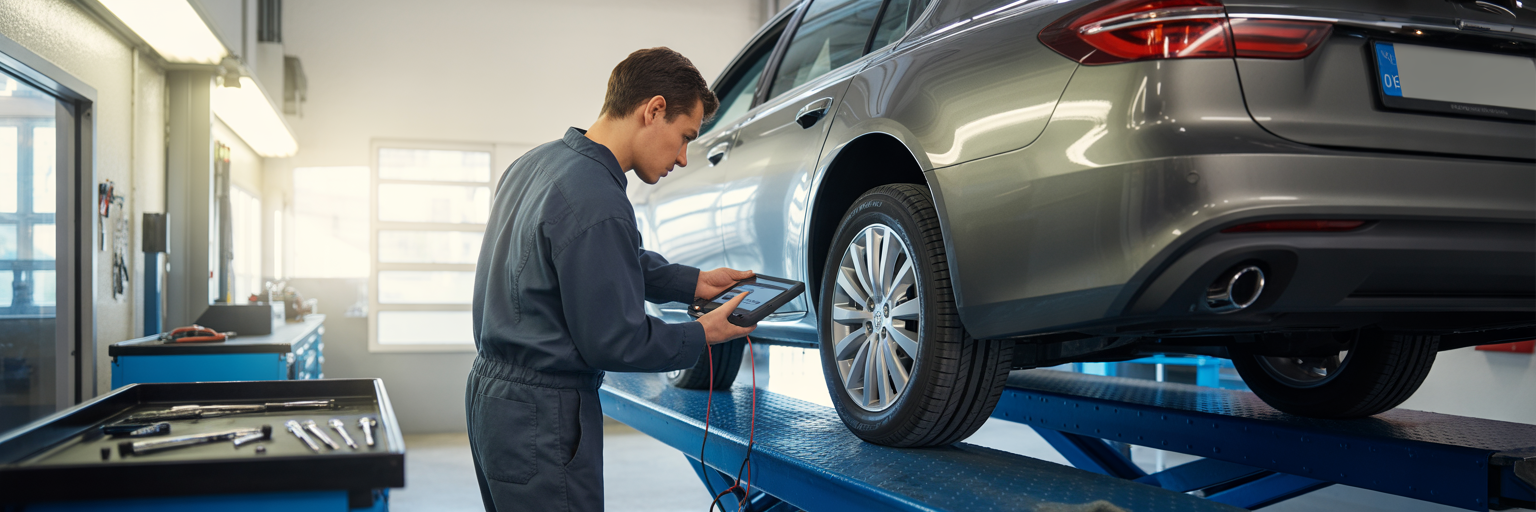
One of the most pressing questions drivers have is, is it safe to drive with traction control light on? The answer depends entirely on whether the light is flashing or solid.
If the light is flashing intermittently, it is completely safe to continue driving. This means the system is working as designed. However, you should treat it as a caution sign. The light is telling you that road conditions are slippery, so it’s wise to reduce your speed, increase your following distance, and avoid any sudden steering, braking, or acceleration.
If the light is on solid, it is generally possible to drive the vehicle, but it is not as safe. Your car will behave like an older model without TCS, ABS, or ESC. This means your wheels can lock up during an emergency stop, potentially increasing braking distance. The car will also be more prone to spinning or skidding during a sudden evasive maneuver. You should drive cautiously and schedule an inspection with a qualified mechanic as soon as practical.
There are, however, symptoms that require immediate action. If the TCS or ABS light is on and you experience any of the following, you should pull over safely and call for a tow:
- A brake pedal that feels spongy, soft, or unusually hard
- Severe and constant reduction in engine power
- Unpredictable braking behavior where the car pulls to one side
While vehicle safety is the priority, modern drivers often personalize their cars with various technologies; even protective phone cases have become part of this expression. But unlike an aesthetic choice, a warning light is a direct request for service from your vehicle that should never be ignored.
Frequently Asked Questions About Traction Control
To wrap up, here are quick answers to some of the most common questions about traction control systems.
Can worn tires alone cause the traction control light to flash more often?
Yes, absolutely. Tires with low tread depth have far less grip on the road, especially in wet conditions. This forces the traction control system to intervene much more frequently to prevent wheelspin. It’s one of the clearest signs that your tires are due for replacement.
How much does it cost to fix a wheel-speed sensor?
The cost can vary significantly. The sensor part itself might range from $50 to $150. However, labor is the main variable. On some vehicles, the sensor is a simple, accessible part. On others, it is integrated into the wheel hub assembly, which is a much more expensive and labor-intensive replacement that can cost several hundred dollars per wheel.
My light only flashes in the rain. Is something wrong?
No, this is the system working perfectly. Rain makes road surfaces slippery, reducing traction. The flashing light is simply your car confirming that the system is actively helping you maintain control. Consider it a helpful reminder to drive more cautiously for the conditions.
Will turning traction control off make my car faster?
For the vast majority of drivers, the answer is no. The system is engineered to provide optimal acceleration by preventing wasteful wheelspin. While a professional driver on a closed track might gain a fraction of a second by expertly managing wheelspin themselves, on a public road, turning it off will likely make you slower and, more importantly, far less stable.
Can the traction control system activate on perfectly dry pavement?
Yes. It can happen during very aggressive acceleration, especially in a powerful rear-wheel-drive car, or when cornering hard. However, if the light flashes during normal, gentle driving on a dry road, it is a strong indicator of a problem, such as mismatched tires or a failing sensor.