CARPHANATICS.COM · THE TUNDRA YEAR BY YEAR · CHAPTER 01
Toyota finally brought a V8 to the American pickup fight. Here is the full story of the first Tundra, from its Indiana roots to the details that matter under the hood and underneath the frame.
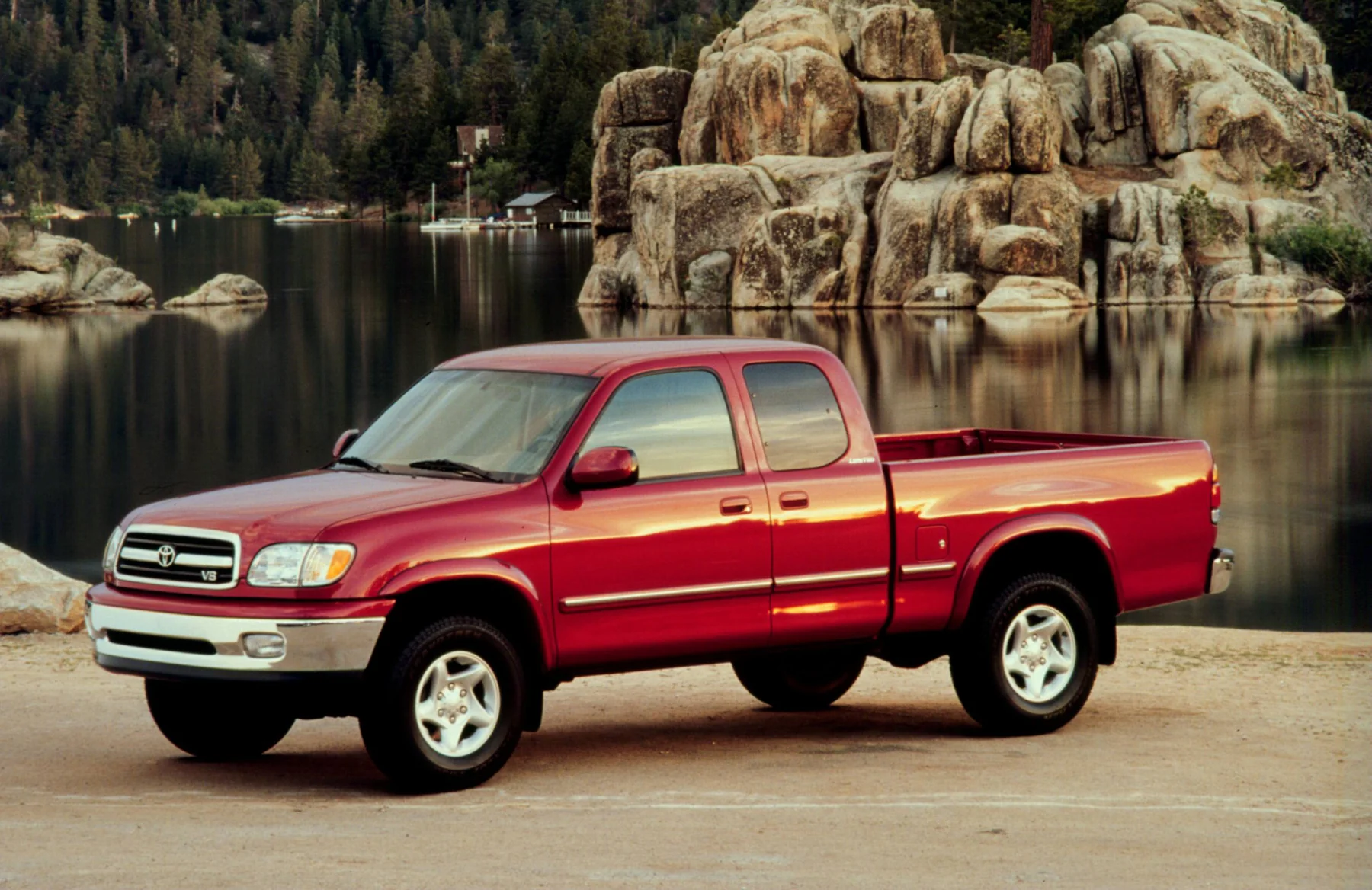
The first Toyota Tundra had something Toyota pickup buyers had been asking for: a V8.
That sounds ordinary now. In 1999, it changed the conversation. Toyota already knew how to build a small truck. It had spent years selling practical pickups to people who valued manageable size and straightforward controls. But buyers who wanted more pulling power often left the showroom for a Ford, Chevrolet, GMC, or Dodge.
The 2000 Tundra gave them a reason to stay. It had an available 4.7-liter V8, a usable cargo bed, and an extended cab with rear access doors. It was built in Indiana. It could tow as much as 7,200 pounds when properly configured.
It also had limits. The back seat was tight. The model range was narrow. Fuel economy was modest. Years later, frame corrosion became a serious part of its story.
This guide covers the first U.S. model year. Specifications belong to the configuration listed. The ownership advice is based on the factory documents and the inspection needs of an aging truck. Driving impressions are attributed to period reviewers, not presented as a new Carphanatics road test.
01. Why a 2000 truck went on sale in 1999
A model year is a product designation. It does not have to match the calendar year in which a vehicle was assembled or sold. That is why someone can truthfully say they bought their first Tundra in 1999 while the title identifies it as a 2000.
Toyota’s retrospective dates production to May 1999. The truck reached buyers that year as a 2000 model. There was no separate U.S. 1999-model-year Tundra preceding it. A build label with a 1999 date is normal on an early example.
Dates attached to the debut can describe different events. A concept reveal, a plant ceremony, production, and the start of retail sales are not the same milestone. Toyota had already shown the production-name Tundra at the Indiana State Fair in 1998.
The earlier show truck wore the T150 name. That name was uncomfortably close to Ford’s F-150. The production truck became the Tundra. Car and Driver’s history describes the naming dispute and the change. Tundra naming history
Use the title, VIN, emissions label, and factory identification labels together. A seller’s headline may use the build year. Parts searches and this article use the model year.
02. Toyota’s road to a bigger pickup
A truck was there near the beginning
Toyota’s history reaches back to Sakichi Toyoda’s loom business. His son, Kiichiro Toyoda, pursued automobile production. The G1 truck appeared in 1935. Toyota Motor Company followed in 1937. Commercial vehicles were part of the company’s foundation, long before the Corolla or Camry.
The small pickup became a familiar face in North America. The Stout, Hilux, later Toyota Pickup, and Tacoma helped establish that presence. The Land Cruiser and 4Runner added another side of the business. Toyota had experience with working vehicles and four-wheel drive. Its missing piece was a convincing answer to the American V8 pickup.
The T100 showed the gap
The T100 arrived for 1993. It offered more room than Toyota’s compact pickup, but it sat awkwardly between familiar categories. It lacked a V8. Toyota’s own history acknowledges that its size left some buyers unsure where it belonged. The Tacoma, introduced in 1995, served the smaller-truck market more directly.
The business case for the Tundra was clear. A customer who liked a Toyota car or compact pickup might also need to pull a boat, haul tools, or carry a heavier trailer. Keeping that customer required more than a larger badge.
A big-truck buyer wanted to know how it pulled uphill. A contractor wanted to know what fit in the bed. A family wanted an easier way into the back seat. The Tundra addressed each question, although its rear seat still favored occasional passengers.
Building it in Indiana mattered
Toyota announced the Indiana plant project in 1995 and established Toyota Motor Manufacturing, Indiana in 1996. The Tundra was the intended successor to the T100. Toyota later added the related Sequoia SUV to the plant’s plans.
The 2000 truck was assembled in Princeton, Indiana. Its story should not be illustrated as a Texas-built truck. Texas belongs to the Tundra’s later production history.
Local assembly also made the commitment visible. Toyota was investing in a factory and a long-term truck program. The Tundra was not simply a larger engine dropped into an imported T100.
03. What Toyota wanted the Tundra to do
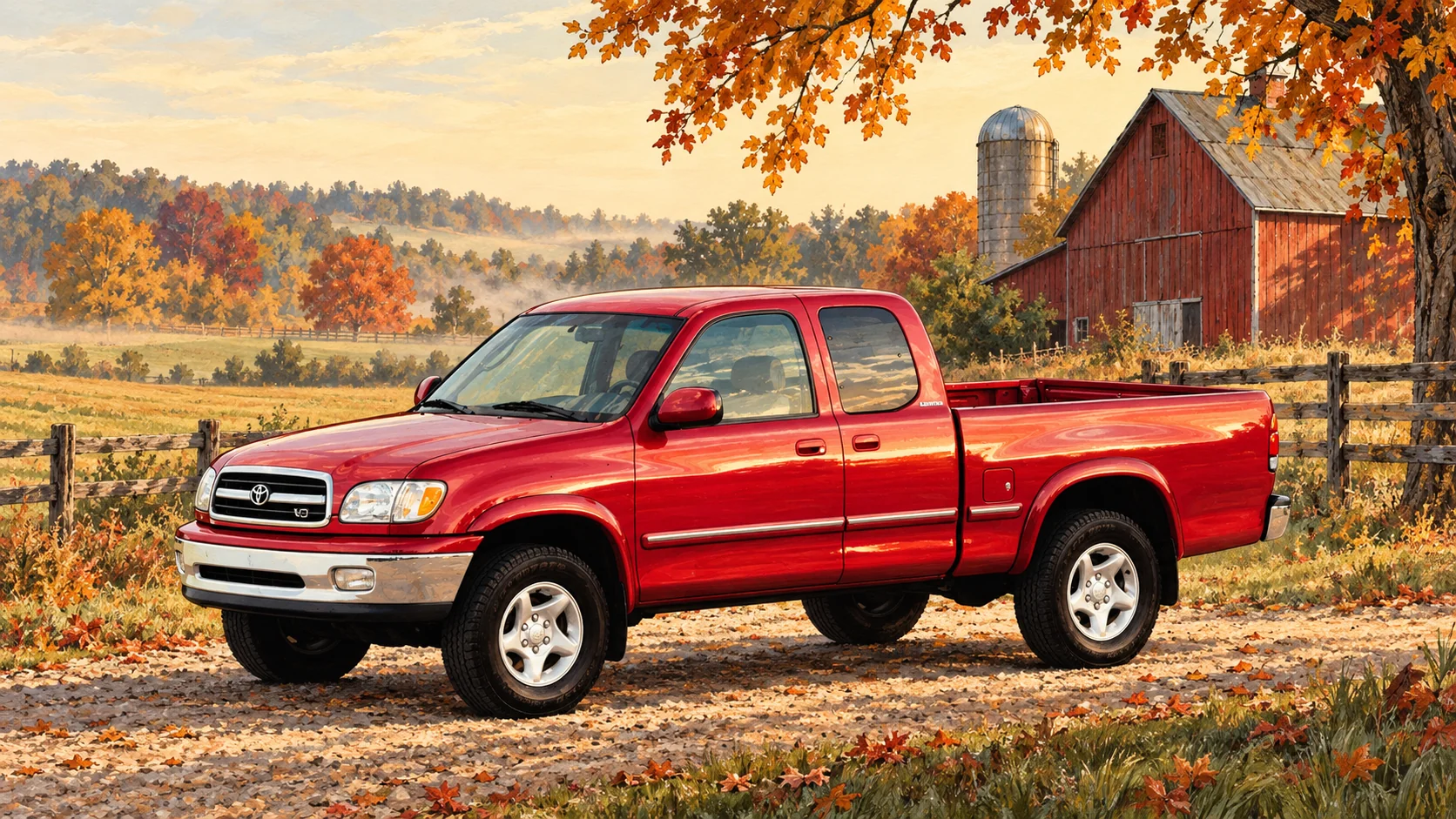
The target was the light-duty, full-size pickup buyer. The Tundra needed to feel useful at work and comfortable on the drive home. Its appeal rested on an available V8, smooth controls, and familiar Toyota ownership expectations.
MotorTrend’s launch report names Toru Tanaka as the project’s chief engineer. It describes dealers pressing Toyota to include a V8. The report also makes clear that the new truck had its own frame, body, and interior.
The Tundra was sold as a full-size pickup. It was still smaller in several useful measurements than comparable domestic trucks. That could be an advantage in a garage or parking lot. It could be a disadvantage when people or bulky loads had to fit.
There was no heavy-duty Tundra line behind it. Buyers could not move up to a factory diesel, a dual-rear-wheel model, or a one-ton version. The Tundra occupied one part of a large truck market.
That focus helps explain the truck. Toyota was offering an approachable everyday pickup with real working ability. A buyer who needed the largest cab or the heaviest tow rating still had reasons to shop elsewhere.
04. Regular Cab and Access Cab
Regular Cab: more bed, less cabin
The Regular Cab had two doors and one row of seats. Its main advantage was the long bed. It suited owners who needed room for material more often than room for passengers.
A bench-equipped truck could seat three. Front bucket-seat equipment changed that count. There was no rear passenger compartment to use for bags, pets, or groceries. Before choosing one, think about the items you would want locked inside on a rainy day.
Access Cab: a second row and rear access doors
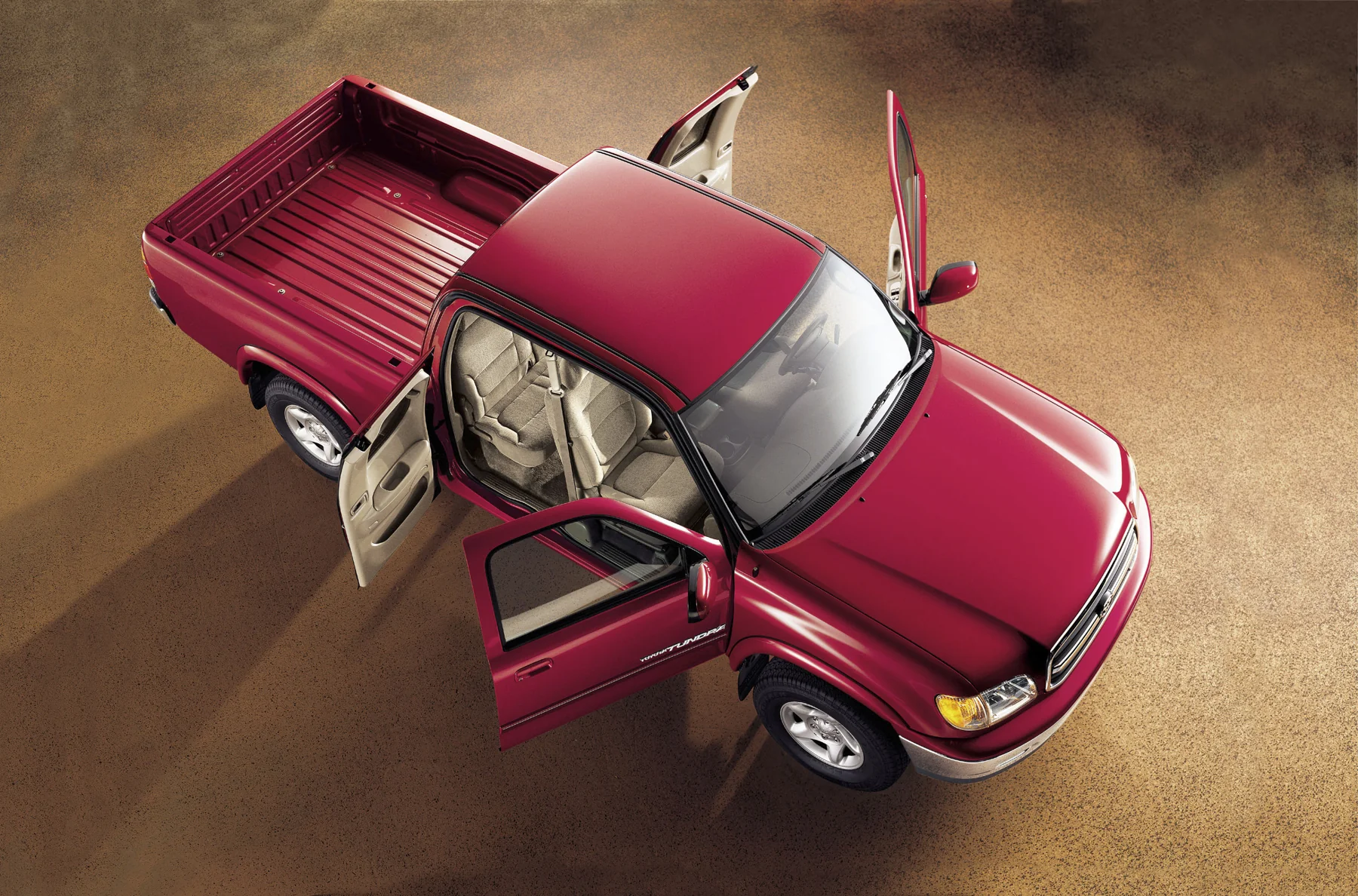
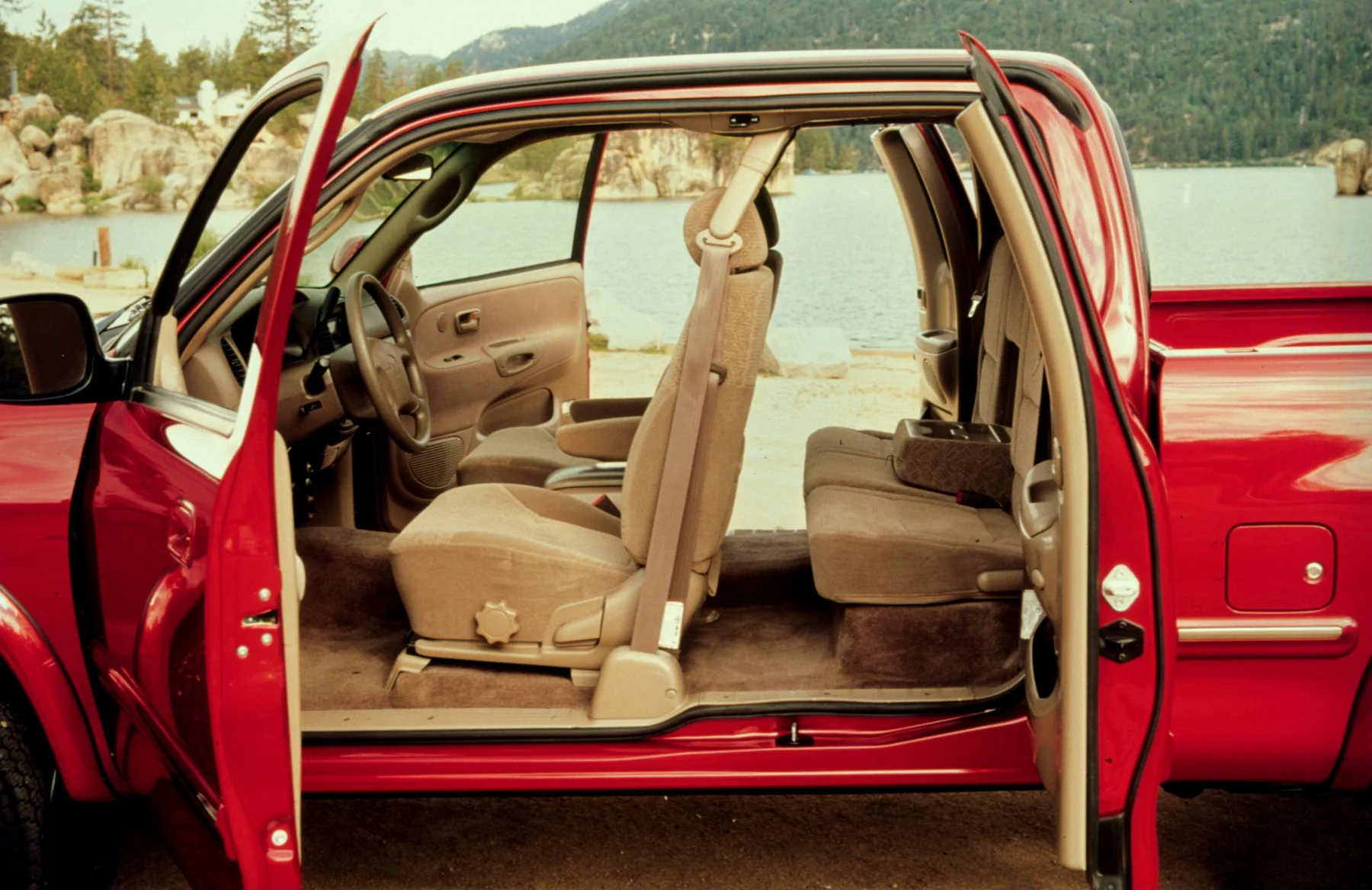
The Access Cab added small rear-hinged doors behind the front doors. Open the front doors first to reach the rear-door opening sequence. The layout made the back seat and storage area easier to reach than in an extended cab with no rear doors.
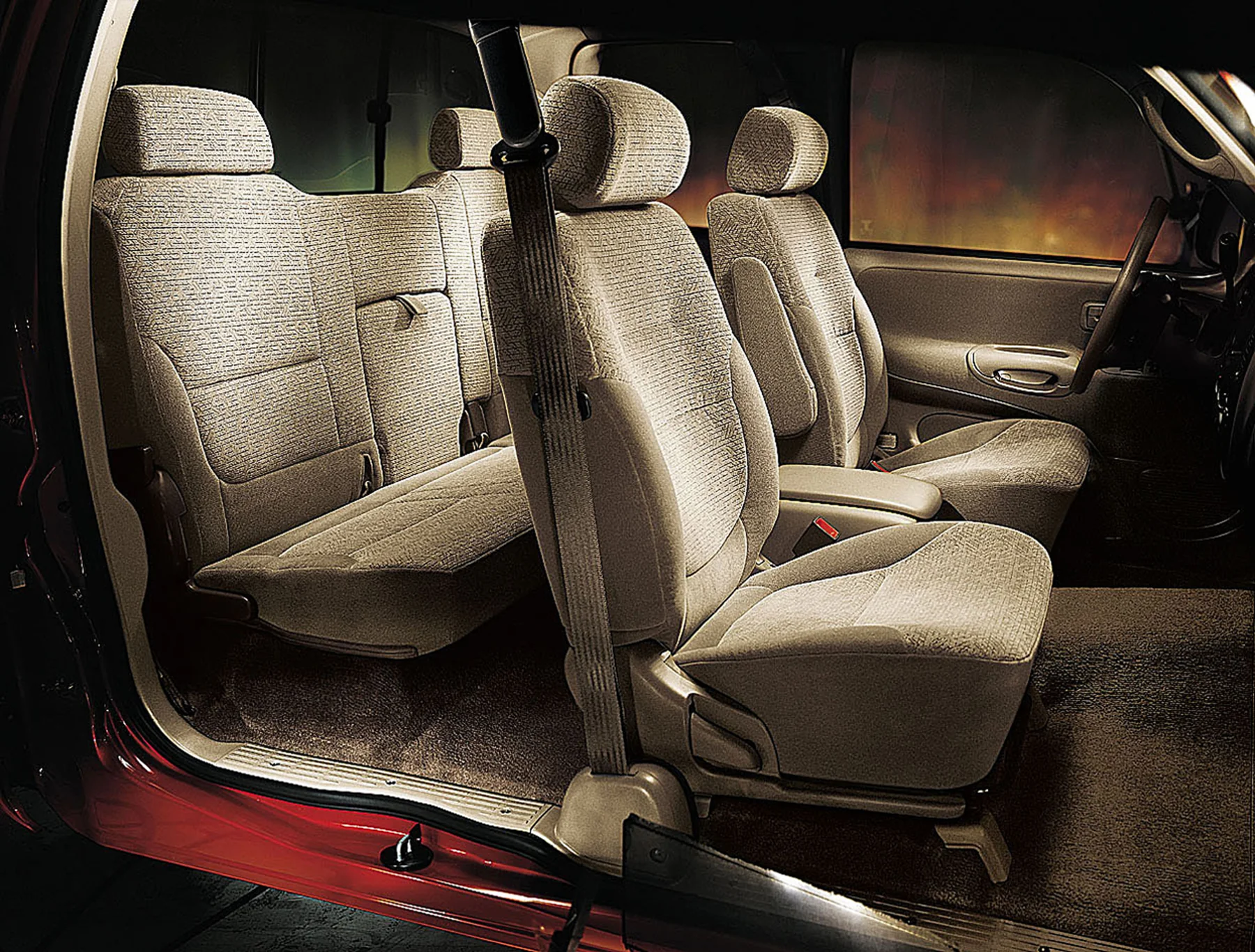
It was not the later Double Cab. Its rear doors were smaller. Its back seat had limited legroom. It could work for shorter trips, smaller passengers, or protected storage. It was a compromise for adults on a long drive.
Front seating determined whether an Access Cab had five or six seating positions. Captain’s chairs provided two front positions. A front split bench provided three. Count the installed seats and belts, rather than assuming all Access Cabs seat six.
| Measurement | Regular Cab | Access Cab |
|---|---|---|
| Wheelbase | 128.3 in | 128.3 in |
| Length with rear bumper | 217.5 in | 217.5 in |
| Inside bed length | 98.2 in | 76.5 in |
| Inside bed width | 61.2 in | 61.2 in |
| Between wheel housings | 49.3 in | 49.3 in |
| Bed depth | 16.7 in | 16.7 in |
| Front legroom | 41.5 in | 41.5 in |
| Rear legroom | Not applicable | 29.6 in |
| Front / rear headroom | 40.3 in / none | 40.3 / 37.0 in |
The two cab styles used the same published wheelbase and overall length. Toyota traded bed length for cabin length. The Access Cab bed is often called a 6.5-foot bed, though the factory inside-length figure is 76.5 inches.
05. Base, SR5, and Limited
Trim tells only part of the story. Engine, cab, drive system, packages, and regional equipment also mattered. Two SR5 trucks can be noticeably different inside.
| Grade | Role | What to expect |
|---|---|---|
| Base | Basic Regular Cab 4×2 | V6, steel wheels, simple trim, and work-oriented equipment choices |
| SR5 | Mainstream grade | Regular Cab 4×4 and Access Cab configurations; engine and convenience equipment vary |
| Limited | Top grade | V8 Access Cab, automatic, 4×2 or 4×4; more exterior and cabin equipment |
What the base truck included
The base truck was plain, but it was not an empty metal box. Toyota listed cloth seating, carpeting, a cassette radio, cupholders, and auxiliary power outlets. A delete package substituted vinyl for the cloth and carpet. Air conditioning was an option on the basic 4×2.
Why the SR5 needs a closer look
The SR5 covered much of the useful middle ground. Check for the actual windows, locks, mirrors, cruise control, and seating equipment. A badge cannot tell you which convenience package was ordered.
Limited did not automatically mean leather
The Limited added equipment such as alloy wheels, larger tires, fog lights, power windows and locks, and an upgraded audio system. Leather-trimmed captain’s chairs, a power driver’s seat, and wood-grain-style trim were offered through a separate leather package.
That distinction matters in a used listing. Cloth seats do not automatically make a Limited fake. Leather seats do not prove that an SR5 left the factory as a Limited.
06. The two engines, explained
The 2000 Tundra offered two gasoline engines. Both used fuel injection and dual overhead camshafts. Neither had a factory turbocharger. There was no factory diesel or hybrid.
| Specification | 3.4-liter V6 | 4.7-liter i-Force V8 |
|---|---|---|
| Engine code | 5VZ-FE | 2UZ-FE |
| Displacement | 3,378 cc | 4,664 cc |
| Cylinders / valves | 6 / 24 | 8 / 32 |
| Bore × stroke | 93.5 × 82.0 mm | 94.0 × 84.0 mm |
| Horsepower | 190 at 4,800 rpm | 245 at 4,800 rpm* |
| Torque | 220 lb-ft at 3,600 rpm | 315 lb-ft at 3,400 rpm |
| Transmissions | 5-speed manual or 4-speed automatic | 4-speed automatic |
| Fuel | 87-octane unleaded or higher | 87-octane unleaded or higher |
| Camshaft drive service | Timing belt | Timing belt |
*Toyota listed 240 hp for the V8 with California emissions equipment.
The 3.4-liter 5VZ-FE V6
The V6 was the familiar choice. Toyota had used the 3.4-liter engine in other trucks, including the T100. In the Tundra it became the entry engine.
Its 190 hp could move an unloaded truck without turning every drive into a struggle. The bigger difference appeared with weight. A trailer, a bed full of tools, or a long hill made the V8’s extra torque useful.
The V6 also kept the manual transmission available. That gives it a distinct place in the lineup. A buyer who wants to shift gears must look for a V6 truck or a later conversion. Toyota did not sell the 2000 V8 with a factory manual.
A smaller engine is not automatically a cheaper used purchase. A neglected V6 may need more work than a well-maintained V8. Compare the truck’s condition and records before treating cylinder count as a shortcut.
The 4.7-liter 2UZ-FE V8
The V8 was the main event. Its 315 lb-ft rating was 95 lb-ft higher than the V6’s. That is about 43 percent more peak torque, calculated from the factory figures.
The 2UZ-FE had a cast-iron block and aluminum cylinder heads. It shared its basic engine family with the 4.7-liter V8 used in the Land Cruiser and Lexus LX 470. The Tundra version had its own application and output rating. It was not simply a Lexus sedan engine with a truck badge.
Four valves per cylinder helped the engine move air. Dual overhead camshafts placed the valve gear in the heads. Electronic fuel injection managed fuel delivery. These terms describe how the engine worked. They do not mean it was immune to worn seals, cooling problems, or missed maintenance.
The early V8 did not have the later Tundra’s VVT-i specification. Do not attach the later 282-hp rating to a stock 2000 truck. Toyota’s 2005 changes belong to a later chapter.
What i-Force meant
i-Force was Toyota’s engine branding. On this truck it referred to the available 4.7-liter V8. It did not mean a hybrid system, a turbocharger, or a special transmission. Later Toyota trucks reused the name for different engines, which can confuse searches today.
Regular fuel was enough
The owner’s manual calls for unleaded gasoline rated at least 87 octane on the U.S. pump scale. Premium was not a normal factory requirement. A truck with an aftermarket tune or forced-induction conversion needs its own fuel instructions.
07. Transmissions and gearing
The V6 could be paired with a five-speed manual or a four-speed automatic. The V8 used the automatic only. Both transmissions offered an overdrive top gear for highway use.
The automatic belongs to the A340 family. The rear-drive application is identified as A340E, and the four-wheel-drive application as A340F. The V6 manual belongs to the R150 family, with application differences between two-wheel drive and four-wheel drive. Confirm the installed unit before ordering parts. ATRA automatic application chart; Transmission application catalog
Why four gears were enough then
The engine’s torque made the automatic usable without the many ratios found in a newer truck. A downshift raised engine speed when the driver asked for more power. On a grade with a trailer, that was normal behavior.
A used truck should engage Drive and Reverse promptly and shift without slipping. A flare in engine speed between shifts deserves investigation. So does a delayed engagement, a harsh bang, or fluid with evidence of contamination.
On a manual, test clutch take-up, every forward gear, and reverse. A high engagement point alone is not a complete diagnosis. Slipping under load, grinding, or difficulty selecting gears can add expensive work to a seemingly cheap truck.
The axle ratio is a separate number
The rear differential adds another gear reduction after the transmission. The V8 brochure ratios were about 3.91:1. The V6 figures varied by drive system and transmission, reaching 4.30:1 in the Access Cab 4×4 automatic.
A numerically higher ratio multiplies torque more, all else equal. Larger tires effectively reduce that multiplication at the road. This is one reason a lifted truck with oversized tires may feel slower even when its engine is healthy.
08. Two-wheel drive, four-wheel drive, and TRD
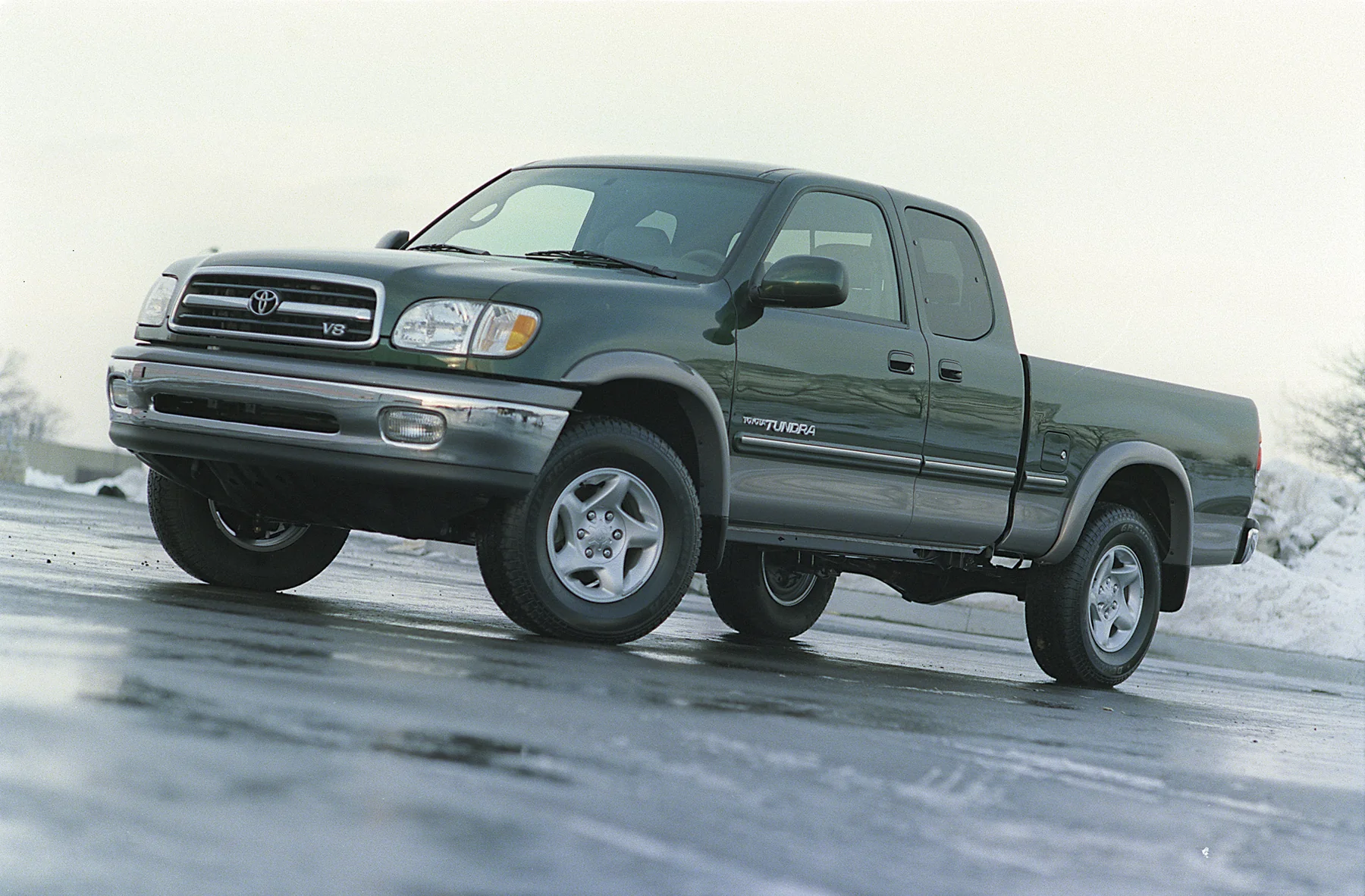
A 4×2 Tundra drove the rear wheels. A 4×4 added the front drive components and a two-speed transfer case. Low range reduced speed and increased torque multiplication for difficult ground and slow maneuvering.
The factory brochure lists a 2.566:1 low-range ratio. It identifies 4WDemand on V6 4WD Access Cabs and Touch-Select on V8 4WD trucks. The control arrangements differ, so use the instructions for the actual truck.
This was part-time four-wheel drive. Do not treat its locked four-wheel-drive modes like a modern automatic all-wheel-drive system on dry pavement. The tires need an appropriate surface to release the difference in travel between the front and rear axles. Follow the owner’s manual for shifting conditions and limits.
What the TRD Off-Road Package added
The listed Access Cab 4×4 package combined an off-road suspension setup, Bilstein shocks, BFGoodrich P265/70R16 tires, and alloy wheels. Trim-specific details included flares and fog lights. It was an equipment package, not a separate engine.
A TRD sticker on a used bedside proves little. Shocks, wheels, and decals can all be changed. The package also does not establish that a truck has a locking differential. Check the build information and the installed hardware.
Choosing between 4×2 and 4×4
For paved roads and light work in mild weather, a 4×2 removes some mechanical complexity. For muddy access roads, snow, or a slippery boat ramp, a sound 4×4 may be more useful. It also adds joints, seals, and actuators to inspect.
Test the system before buying. An illuminated switch is not proof that every component engaged. Have a shop verify operation if the indicator keeps flashing, the system makes unusual noises, or the seller cannot demonstrate it on a suitable surface.
09. Frame, suspension, steering, and brakes
The Tundra used body-on-frame construction. The cab and bed attached to a separate steel ladder frame. This was the familiar pickup arrangement, with the cargo box and passenger compartment serving different jobs.
The front suspension used upper and lower control arms, coil springs, and a stabilizer bar. Each front wheel could move independently. At the rear, a solid axle rode on leaf springs. Power-assisted rack-and-pinion steering controlled the front wheels.
That combination explains much of the truck’s character. Independent front suspension can help isolate rough pavement. Rear leaf springs support cargo. An empty bed and a loaded bed do not feel the same over broken pavement.
| Item | 2000 Tundra specification |
|---|---|
| Frame | Steel ladder frame with a boxed front section |
| Front suspension | Independent double wishbones and coil springs |
| Rear suspension | Solid axle and leaf springs |
| Steering | Power-assisted rack and pinion |
| Front brakes | Ventilated discs with four-piston calipers |
| Rear brakes | Drums |
| ABS | Optional in the U.S. brochure |
| Turning circle | 44.9 ft for listed 4×2 models; 44.3 ft for listed 4×4 models |
Do not assume a truck has ABS because it is a Limited or a 4×4. Check the equipment and the warning-lamp self-test. A warning lamp that never comes on at startup can deserve as much attention as one that stays on.
How age changes the ride
Today, the condition of the suspension matters more than the old brochure’s description. Worn shocks can let the body keep bouncing. Tired bushings can allow movement and noise. Sagging springs can change ride height and load behavior.
Steering play needs a proper inspection. Tires, wheel bearings, tie rods, ball joints, bushings, and the steering rack can all affect what the driver feels. Replacing parts at random is expensive and can leave the real problem untouched.
10. Size, weight, and bed usefulness
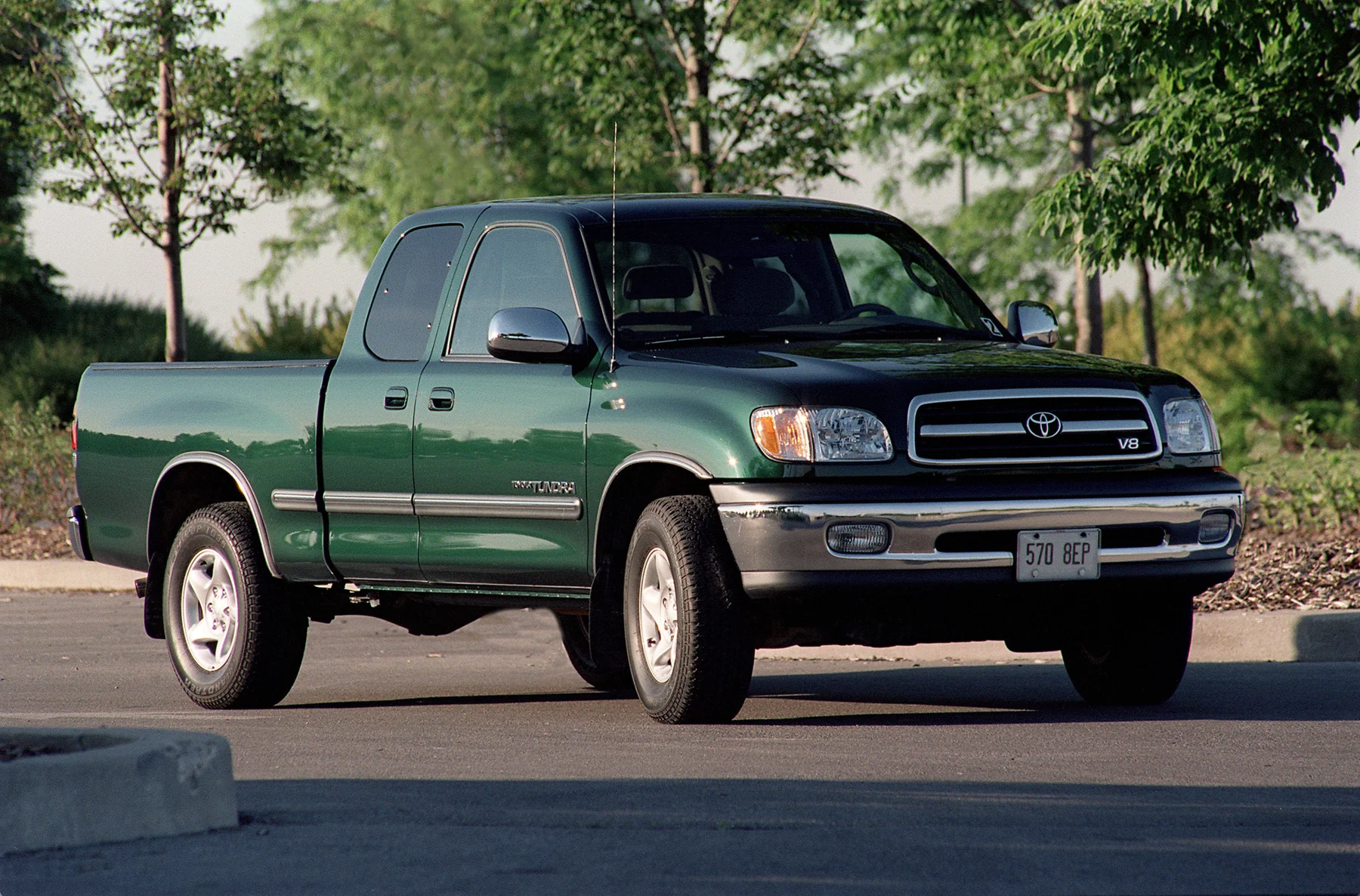
At 217.5 inches with the rear bumper, the Tundra was a little over 18 feet long. Its published 128.3-inch wheelbase applied to both original cab styles. That made the choice unusually simple: more bed or more cabin within a similar overall length.
The standard body-width figure was 75.2 inches. Toyota listed 79.3 inches for the Limited with its wider exterior treatment. Neither figure should be treated as a mirrors-out garage-clearance measurement. Measure the actual truck if the doorway is close.
Brochure heights ranged from about 70.5 to 71.7 inches across listed versions. Tire packages changed measurements. The owner’s manual uses additional tire and equipment distinctions, so a single height copied into every listing can be misleading. A lift kit makes the original measurement less useful still.
| Configuration | Curb weight | GVWR |
|---|---|---|
| Base Regular Cab V6 manual 4×2 | 3,795 lb | 5,500 lb |
| SR5 Access Cab V6 automatic 4×2 | 4,133 lb | 5,700 lb |
| SR5 Access Cab V8 automatic 4×2 | 4,276 lb | 6,200 lb |
| SR5 Access Cab V8 automatic 4×4 | 4,518 lb | 6,050 lb |
| Limited Access Cab V8 automatic 4×4 | 4,664 lb | 6,050 lb |
GVWR means gross vehicle weight rating. It is the maximum allowed weight of the truck and everything it carries. Curb weight describes the vehicle in its specified unloaded condition. A canopy, winch, tool chest, and larger wheels add weight before anyone sits down.
Can a sheet of plywood fit?
The 49.3-inch space between the wheel housings exceeds the 48-inch width of a standard plywood sheet. The Regular Cab’s 98.2-inch bed also exceeds an eight-foot sheet’s 96-inch length. The Access Cab’s shorter box cannot contain that length with the tailgate closed.
That does not remove the need to secure cargo. Support, weight, overhang, and tiedowns still matter. A loose sheet can move even when its dimensions fit the floor.
The tailgate was removable and lockable. Inspect both support cables, the hinges, the latches, and the bed floor on a used truck. Also check for dents near the front of the bed, loose bed mounts, and holes hidden under a liner. A liner can protect the surface, but it can also hide damage.
11. Tire sizes and wheels
The two main factory tire sizes were P245/70R16 and P265/70R16. The standard wheel diameter was 16 inches. The owner’s manual lists 16 × 7 wheels for these applications.
| Size | Typical factory use | Calculated nominal diameter |
|---|---|---|
| P245/70R16 | Standard on listed base and SR5 versions | 29.5 in |
| P265/70R16 | Standard on Limited; available on specified SR5 packages and TRD | 30.6 in |
The calculated diameters use the labeled dimensions. Actual mounted size varies by tire model. The factory sizes come from the Toyota brochure and owner’s manual.
Reading P265/70R16
The P identifies a passenger-type tire. The 265 is the nominal width in millimeters. The 70 means the sidewall height is 70 percent of that width. R identifies radial construction. The 16 is the wheel diameter in inches.
Load capacity, speed rating, age, and condition are separate concerns. Two tires with the same size on the sidewall can be very different products.
Air pressure is not one universal number
Use the vehicle’s tire placard and the correct guidance for its installed tires. The pressure molded on a tire sidewall is not automatically the truck’s recommended operating pressure. Replacement LT tires, altered loads, or nonstandard sizes need an appropriate load-and-inflation assessment.
The original manual lists different pressures for the two factory sizes. That is a reason to verify the truck, not a reason to copy a pressure from another Tundra online.
What larger tires change
A larger diameter travels farther with each revolution. It can change the relationship between road speed and the speedometer reading. It also changes effective gearing. Added tire and wheel mass can affect braking, steering, and ride.
Check for rubbing at full steering lock and through suspension movement. Inspect clearance at the control arms and brake calipers. Verify that the spare fits the vehicle and that its carrier still works.
The owner’s manual lists wheel-nut torque at 110 N·m, about 83 lb-ft, for the original arrangement. Aftermarket wheels or hardware may have their own instructions. A wheel that bolts on is not automatically a correct fit.
12. Towing and payload, without the guesswork
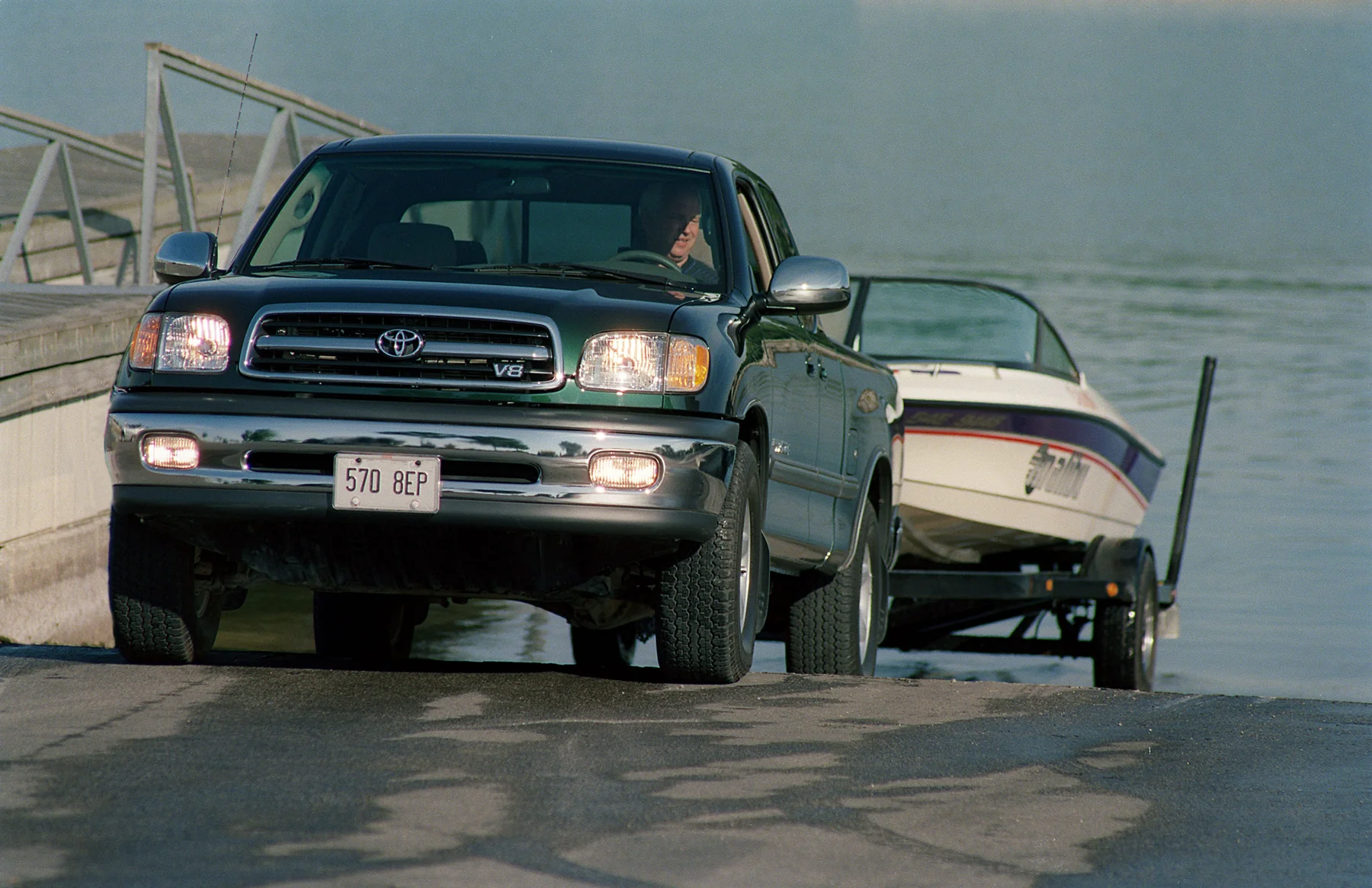
The largest towing number in the brochure was 7,200 pounds. It was not the rating for every Tundra. Cab, engine, drive system, transmission, and equipment changed the figures.
| Configuration | Manual | Automatic |
|---|---|---|
| Regular Cab V6 4×2 | 5,250 lb | 5,200 lb |
| Access Cab SR5 V6 4×2 | 4,950 lb | 4,900 lb |
| Access Cab SR5 V6 4×4 | 5,000 lb | 4,950 lb |
| Regular Cab SR5 V8 4×4 | Not offered | 7,200 lb |
| Access Cab SR5 or Limited V8 4×2 | Not offered | 7,200 lb |
| Access Cab SR5 or Limited V8 4×4 | Not offered | 7,100 lb |
These are brochure configuration ratings, not a VIN-specific towing approval. Toyota’s footnotes call out hitch and sway-control equipment. Added people, equipment, and cargo affect the available capacity. Original towing table and conditions.
The Regular Cab V6 4×4 appears in the historical pricing database but is absent from this brochure’s specification matrix. Its trailer rating is not filled in by borrowing the Access Cab number. Consult the matching factory documentation for that configuration.
Payload is often the tighter limit
Payload includes people, cargo, added equipment, and the trailer’s load on the hitch. It is not just the material in the bed.
The listed SR5 V8 Access Cab 4×4 had 1,532 pounds of payload. The Limited V8 Access Cab 4×4 had 1,406 pounds. The SR5 V8 Access Cab 4×2 had 1,924 pounds, with a brochure footnote listing 2,011 pounds for the Style Package configuration.
Those figures show why a well-equipped truck can have less remaining capacity than a simpler one. Comfort equipment and four-wheel-drive hardware are useful, but they have mass.
Start with a hypothetical truck that has 1,532 pounds of verified available payload. Add 450 pounds of people, 150 pounds of gear, 100 pounds of hitch equipment, and 600 pounds of trailer tongue weight. The total is 1,300 pounds. Only 232 pounds remain. This is an arithmetic example, not a tow recommendation.
The combined rating matters too
Toyota listed an 11,800-pound gross combined weight rating for the V8 configurations in the brochure. GCWR covers the loaded truck and trailer together. You also need to stay within the truck’s GVWR, axle ratings, hitch limits, tire ratings, and trailer limits.
A scale is more useful than a guess. Weigh the truck in its travel condition. Check loaded trailer weight and hitch load. Avoid counting tongue weight twice when calculating the combination’s total weight.
Before using an old Tundra as a tow vehicle
Inspect the frame, receiver attachment points, cooling system, brakes, tires, suspension, and trailer wiring. Verify any required trailer-brake controller and the trailer’s braking equipment. A hitch receiver is only one part of the setup.
Do not infer safe towing capacity from a large aftermarket receiver. It cannot raise the truck’s factory ratings. Neither can air springs, helper springs, or a louder exhaust.
13. Inside the first Tundra
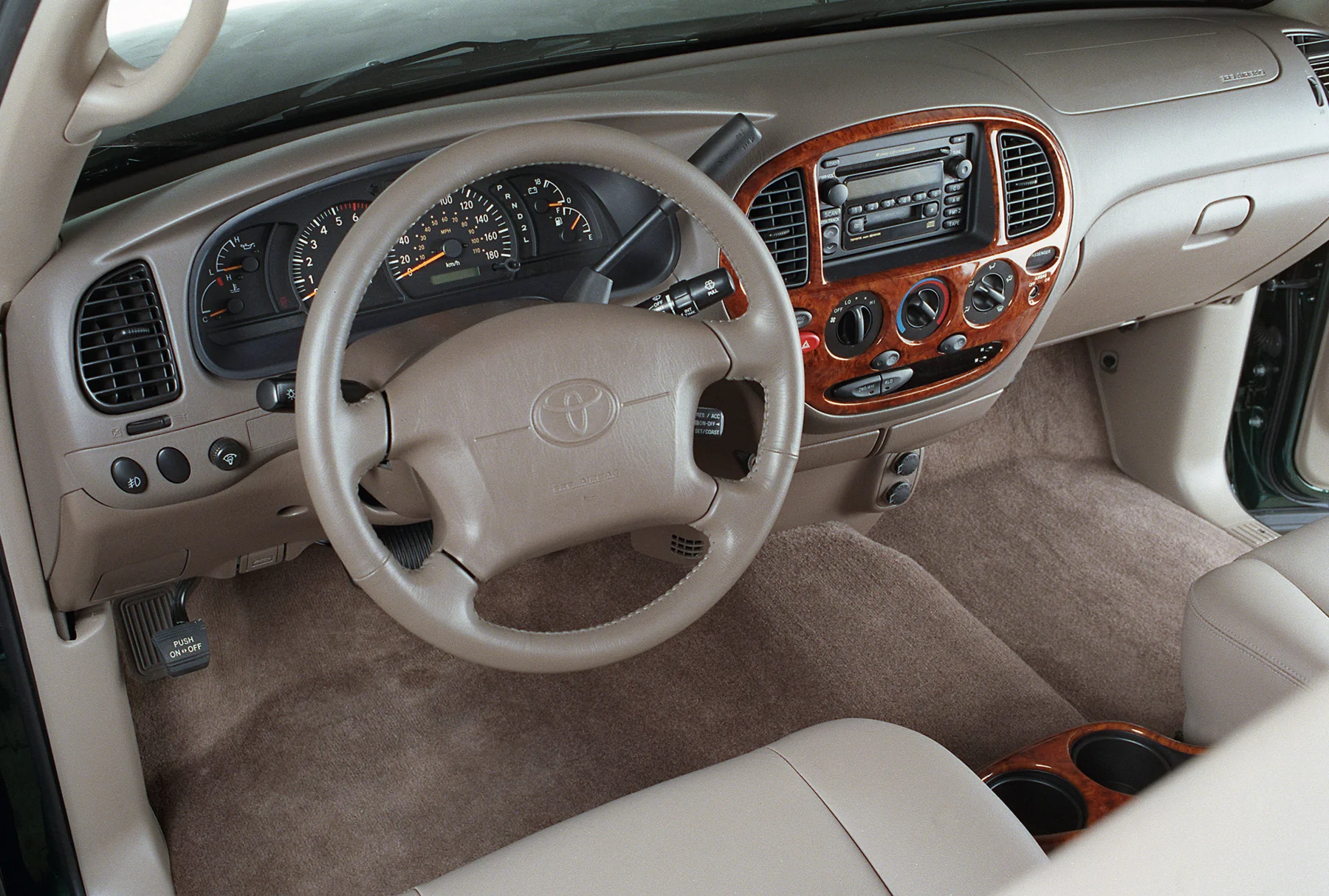
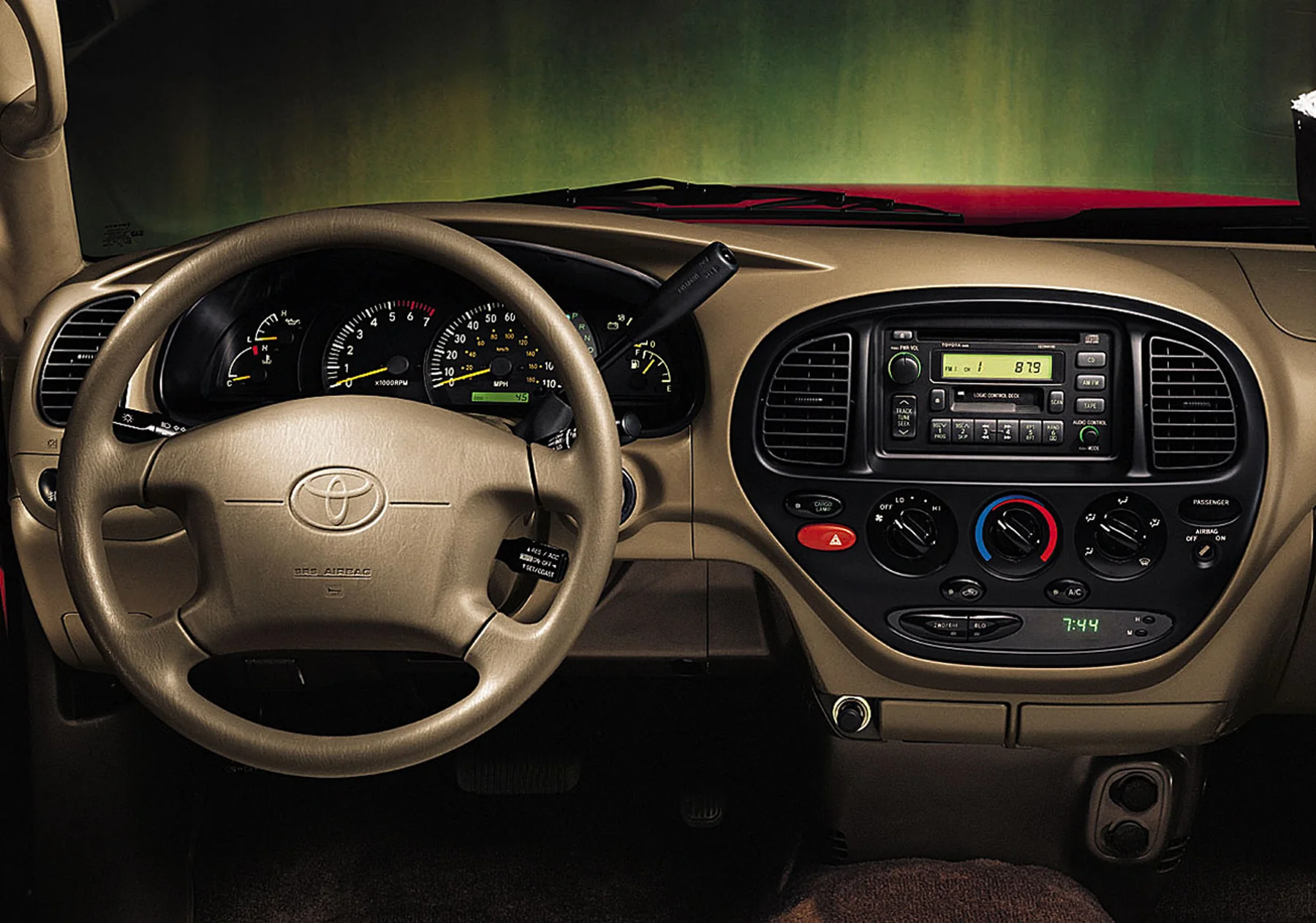
The cabin was built around things a driver could see and touch. There were analog gauges, physical climate controls, a conventional radio, and substantial buttons. Most basic adjustments did not require a screen.
The front cabin offered 62.4 inches of shoulder room and 59.3 inches of hip room. The Access Cab’s rear measurements were 63.2 and 56.6 inches respectively. Width was not the rear seat’s main problem. The 29.6 inches of rear legroom and upright seating position mattered more.
Seats and storage
The base bench, split bench, and captain’s-chair arrangements created different cabins. A center seating position could be useful for occasional work crews. Separate front seats gave each occupant a defined space.
The Access Cab’s rear area could also carry items that should not sit in an open bed. Think of groceries, a camera bag, work clothes, or a small tool kit. Test the seat movement and storage arrangement on the actual truck before assuming a bulky item will fit.
Rear access doors make loading easier when there is room to open them. In a tight parking space, the front and rear doors can leave less standing room than expected. Try the door sequence with the truck parked beside another vehicle.
Audio and convenience equipment
Cassette audio was normal equipment for this period. CD combinations and a six-disc changer appeared among the available systems. Power windows, locks, mirrors, cruise control, and seating upgrades depended on grade and package.
There was no factory Apple CarPlay, Android Auto, or modern touchscreen navigation. A truck that has those features today has been updated. An aftermarket radio can be useful, but check the wiring quality and retained functions.
What to check in an old cabin
Run the heater, air conditioner, and every fan speed. Move the airflow selector through its settings. Test both windows, every lock, the mirrors, the radio, and the interior lights.
Look under the floor mats. Damp carpet can point to water entry, a heater-system leak, or a spill. Check the headliner near the rear window and around the windshield. Strong fragrance can make an old interior seem cleaner without fixing the source of an odor.
Pull each seat belt out far enough to inspect the webbing. Check that it retracts and latches. Ensure the seats and seatbacks lock securely. These are practical inspection items, not cosmetic details.
14. Exterior colors, trim, and accessories
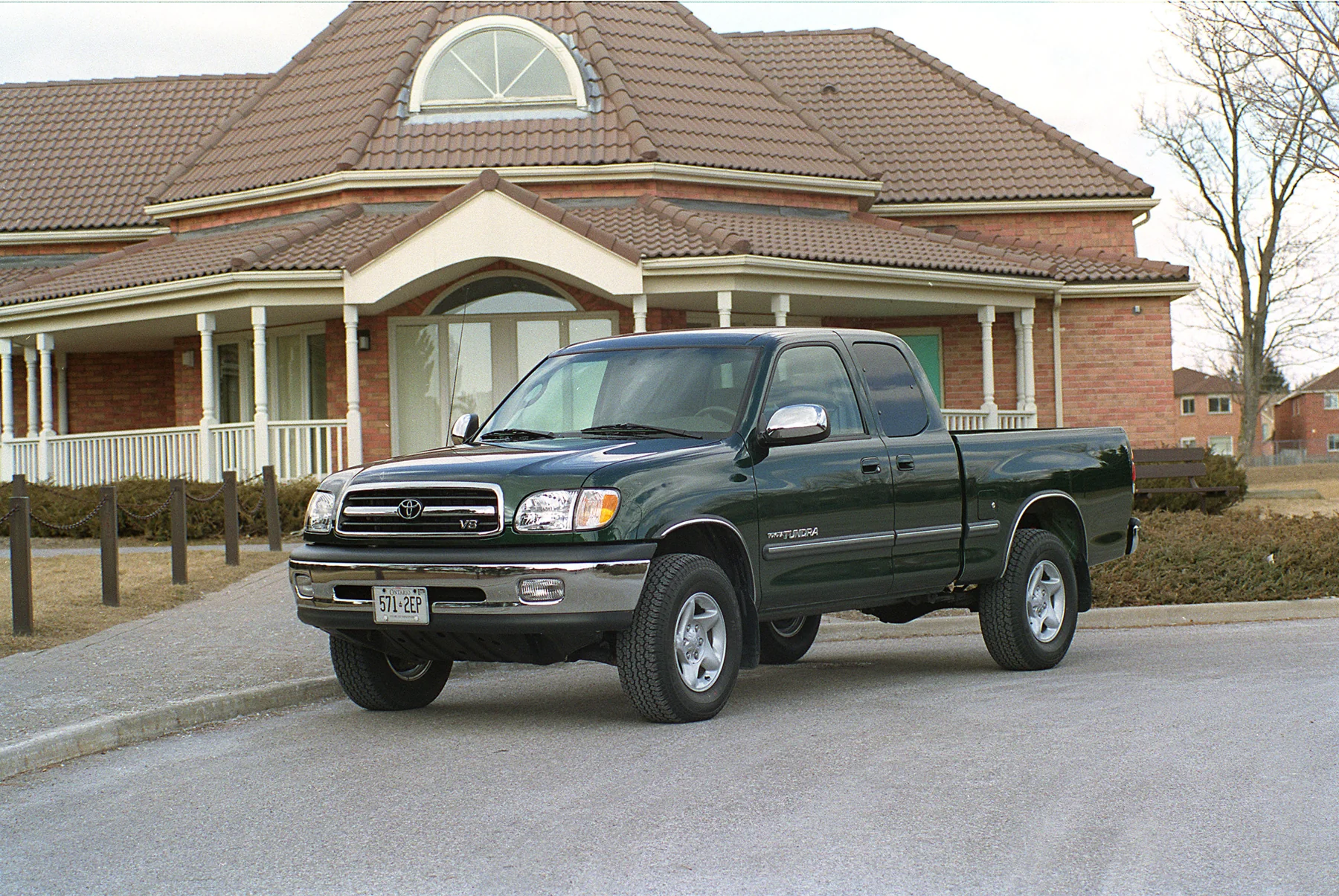
The original palette included familiar work-truck colors and several richer metallic or pearl finishes. Color availability depended on grade. Not every paint and interior combination could be ordered together.
| Single-color finishes | Additional finish |
|---|---|
| Black Natural White Platinum Metallic Thunder Gray Metallic Sunfire Red Pearl Stellar Blue Pearl Imperial Jade Mica Autumn Red Mica Golden Sand Metallic | Imperial Jade Mica / Thunder Gray Metallic two-tone, listed for Limited |
Interior names included Gray, Oak, and Light Charcoal. Trim and package restrictions applied. Use the original color and trim codes when ordering matching paint or upholstery. A photograph taken in warm light is a poor color-matching tool.
The brochure also pictured or listed accessories such as running boards and a tonneau cover. Used trucks may have bed liners, camper shells, brush guards, hitches, or replacement wheels added by any of several owners.
Separate factory equipment from dealer-installed and later aftermarket equipment. That distinction matters for originality, wiring, fit, and replacement parts. A neat installation is more useful than an unsupported claim that everything is original.
Inspect behind wide flares and trim where practical. Paint bubbles at the edges may be only the visible part of corrosion. Different paint texture, overspray, and uneven gaps can point to prior repairs. They are reasons to investigate, not automatic proof of a bad repair.
15. What it cost when new
The entry Tundra cost about $15,000 before extra equipment and applicable charges at launch. MotorTrend’s launch report gave a $14,995 base figure. Its Access Cab V8 4×2 example was listed at $22,250. Those are launch-report figures, not current values.
Model-year databases list other figures. Cars.com’s 2000 trim table starts at $15,345 and reaches $28,430 for a Limited 4×4. The table below reproduces the numerical MSRP entries as a model-year reference. It should not be read as a single verified launch-day price sheet.
| Configuration | Listed MSRP |
|---|---|
| Regular Cab V6 manual 4×2 | $15,345 |
| Regular Cab V6 automatic 4×2 | $16,185 |
| Regular Cab SR5 V6 manual 4×4 | $20,195 |
| Regular Cab SR5 V6 automatic 4×4 | $21,095 |
| Regular Cab SR5 V8 automatic 4×4 | $23,060 |
| Access Cab SR5 V6 manual 4×2 | $20,525 |
| Access Cab SR5 V6 automatic 4×2 | $21,290 |
| Access Cab SR5 V8 automatic 4×2 | $22,600 |
| Access Cab SR5 V6 manual 4×4 | $23,725 |
| Access Cab SR5 V6 automatic 4×4 | $24,550 |
| Access Cab SR5 V8 automatic 4×4 | $25,935 |
| Access Cab Limited V8 automatic 4×2 | $25,095 |
| Access Cab Limited V8 automatic 4×4 | $28,430 |
Cars.com historical MSRP table. Prices are U.S. dollars. Options, delivery charges, taxes, regional distribution, and transaction discounts can change a window sticker or final purchase price.
Why do sources disagree? They may describe different dates, equipment, or treatment of delivery charges. The available evidence does not establish one cause for every difference. An original window sticker is the strongest evidence for a particular truck.
The larger lesson is the size of the spread. A basic two-wheel-drive work truck and a well-equipped Limited occupied different budgets. A headline base price did not buy every feature shown in the advertising.
The original basic warranty
Toyota’s campaign documents identify the original New Vehicle Limited Warranty as three years or 36,000 miles, whichever came first. That basic coverage has long since expired on a 2000 truck. A recall, a historical warranty enhancement, and a used-vehicle service contract are separate matters with their own terms.
16. Fuel economy and range
The fuel tank held 26.4 U.S. gallons. Both engines used regular unleaded fuel. The V6 generally offered a small economy advantage, but it did not turn the Tundra into an economy car.
| Engine / drive / transmission | City | Highway | Combined |
|---|---|---|---|
| V6 4×2, manual or automatic | 15 mpg | 18 mpg | 16 mpg |
| V8 4×2, automatic | 14 mpg | 17 mpg | 15 mpg |
| V6 4×4, manual or automatic | 14 mpg | 16 mpg | 15 mpg |
| V8 4×4, automatic | 13 mpg | 16 mpg | 14 mpg |
EPA/DOE figures use adjusted estimates. The original brochure used the rating method in place at launch.
Older brochures can show higher numbers. Toyota’s brochure used preliminary estimates, including 15 city and 18 highway for the V8 4×2, and 14 city and 17 highway for the V8 4×4. Do not mix those with today’s adjusted EPA figures in one comparison without labeling them.
What that means at the pump
At 14 mpg, 12,000 miles would use about 857 gallons. At 16 mpg, the same distance would use 750 gallons. Multiply gallons by your local fuel price to compare annual spending. These are calculations from the ratings, not forecasts for a particular truck.
At 14 mpg, the full 26.4-gallon capacity gives a theoretical 370 miles. That is not a sensible target between fuel stops. You need a reserve, and towing or bad weather can reduce the distance substantially.
Large tires, a lift, a roof load, short trips, traffic, and a heavy right foot can all change consumption. Measure actual fuel use over several fill-ups. A sudden decline also deserves a check for mechanical problems.
17. How it drove, and how buyers received it
The launch reviews help explain why the truck gained a following. MotorTrend praised its smooth V8, automatic transmission, steering feel, and ride. The rear seat drew criticism for its upright shape. Those were impressions of a new truck, not a guarantee about one with decades of wear.
The magazine awarded the Tundra its 2000 Truck of the Year title. Its later retrospective connected that decision to the blend of driving comfort and truck capability. It also acknowledged that the Tundra did not overturn the domestic brands’ dominance.
Toyota’s year-end sales table reported 100,445 U.S. Tundra sales in calendar year 2000. That is a sales-year total, not the number of 2000-model-year trucks built. Mixing those two concepts produces misleading production claims.
What to expect from a surviving example
A healthy V8 truck should have enough reserve to feel relaxed in ordinary traffic. The four-speed automatic will use higher engine speeds on hills than some newer trucks. That alone is not a fault.
The steering and dimensions can make the early Tundra feel approachable. It still has a pickup’s turning circle, long body, and open cargo box. Parking convenience is relative.
Do not use one acceleration time for every version. Cab, drive system, load, test conditions, and engine all matter. The launch report’s acceleration claim was not an instrumented test of every retail configuration. This guide does not turn that estimate into a universal performance specification.
On a test drive today, listen for wind noise around worn seals, vibrations through the seat or steering wheel, and clunks as the load changes. A smooth road can conceal tired suspension. Include ordinary rough pavement and a safe highway stretch.
18. Safety equipment and crash testing
The 2000 Tundra had driver and front passenger airbags. The factory material also describes a passenger-airbag cutoff switch. Four-wheel ABS was available. Side curtain airbags and today’s driver-assistance systems were not part of this truck’s equipment.
There was no automatic emergency braking, blind-spot warning, or adaptive cruise control to fill in for the driver. A backup camera, if fitted today, is an addition.
The IIHS result needs its full label
IIHS gives the 2000 Tundra extended cab a Good overall rating in its original moderate-overlap front crash test. The tested truck was a 2001 SR5 Access Cab 2WD. IIHS applies that result to 2000 through 2006 models covered by the page.
The individual right-leg/foot injury measure was Marginal, even though the overall result was Good. It is worth reading the component results as well as the headline. IIHS test details
This does not establish a modern small-overlap, side-impact, or crash-prevention rating. Tests and equipment have changed. It also does not tell you whether a particular old truck has hidden collision damage.
Children and the small rear seat
Check a child seat in the truck before relying on the rear bench. Use the instructions for both the child seat and vehicle. Door access, cushion depth, restraint routing, and front-seat position can all affect a usable installation.
Never place a rear-facing child restraint in front of an active passenger airbag. An old cutoff switch does not remove the need to follow the full restraint instructions. Have uncertain installations checked by a qualified child-passenger-safety technician.
On any example, confirm that the airbag system’s warning lamp performs its normal check and then goes out. Prior repairs, modified steering wheels, and damaged wiring need more than a seller’s reassurance.
19. Maintenance: belts, fluids, and records
A service history should show dates as well as mileage. A truck driven very little can still have old coolant, hardened hoses, aged tires, and a timing belt that has spent years under tension.
Timing belts on both engines
Both the V6 and V8 use a timing belt. Toyota’s 2000 maintenance guide places belt replacement at the 90,000-mile / 72-month service. If the records do not establish when it was last changed, include belt service in the purchase plan.
The belt keeps crankshaft and camshaft movement synchronized. It is not the exposed accessory belt at the front of the engine. A fresh-looking accessory belt proves nothing about the hidden timing belt.
When obtaining a quote, ask what the job includes. Water-pump condition, tensioning components, idlers, seals, coolant, and labor overlap all matter. A timing-belt kit is not the same thing as a complete inspection of the cooling system.
The original oil-service schedules
Toyota’s guide used 5,000-mile / four-month service intervals for specified harder use, including towing, dusty roads, and repeated short trips below freezing. It used 7,500-mile / six-month intervals for other listed operation. The guide also prescribed additional work for particular conditions. Complete maintenance guide
Do not substitute a newer Toyota’s long oil interval without checking the correct schedule. Check the oil level between changes. An engine can lose oil through leaks or consumption long before the next service date.
| Item | Factory reference |
|---|---|
| V6 oil, with filter | 5.5 U.S. quarts |
| V8 oil, with filter | 6.4 U.S. quarts |
| Preferred engine-oil viscosity | SAE 5W-30; follow the manual’s temperature guidance |
| Automatic transmission fluid | Original D-II / DEXRON III (DEXRON II) specification |
| Manual transmission oil | SAE 75W-90, API GL-4 or GL-5 as specified |
| Brake and clutch hydraulic fluid | DOT 3 specification |
| Original coolant type | Toyota Long Life Coolant or equivalent meeting the manual’s requirements |
Original specifications: Toyota manual, service-specification section. These are starting references for an unmodified vehicle. Confirm product compatibility, current service information, and the installed components. Use the dipstick and the prescribed checking procedure to establish the final oil level.
Transmission service is not just a capacity number
A drain-and-refill quantity is different from the transmission’s total dry capacity. Pouring a dry-fill amount into a simple drain service can overfill it. Fluid choice also matters. Do not assume that a later Toyota fluid specification applies to this early transmission.
Other work that deserves a record
Track coolant service, spark plugs, air filters, brake inspections, differential and transfer-case service, and drive-shaft lubrication where specified. Check hoses, belts, boots, fluid leaks, and wheel bearings during routine inspections.
A receipt should identify the actual parts and work. “Full service” is too vague to establish that the timing belt, transmission, or differential was handled.
20. Reliability and problems worth checking
A strong engine reputation is useful background. It is not an inspection report. By now, storage, climate, repairs, towing, and maintenance can separate two apparently similar Tundras by thousands of dollars in needed work.
Frame corrosion comes first
This is the most important structural concern in the truck’s history. Toyota’s 09V444 campaign addressed excessive rear cross-member corrosion on certain 2000 through 2003 Tundras exposed to severe cold-climate conditions.
The consequences included a spare tire separating from the truck and damage affecting rear braking. Later campaign material also addressed the fuel-tank mounting system. Toyota campaign notice; expanded corrosion description
Inspect the entire structure. Concentrate on cross-members, spring mounts, cab and bed mounts, the spare-tire support, and the fuel-tank supports. Look at the brake and fuel lines too.
Light surface discoloration and structural metal loss are different conditions. Thick scale, holes, swelling seams, and questionable patches need expert evaluation. Fresh black coating does not prove that the steel underneath is sound.
A documented replacement frame can be a positive. Confirm the work, the condition of the replacement, and what else was replaced at the time. The words “frame recall done” are not a lifetime guarantee.
Front-brake vibration
Toyota issued bulletin BR004-02 and revisions for front-brake vibration on affected early Tundras. The revised bulletin describes improvements to brake components. This is a service bulletin, not a blanket recall or a promise of a free repair today.
On a safe test drive, check for vibration under normal braking. A shop should identify the cause and the fitted components. Do not order an upgrade kit solely because an online discussion calls it the Tundra fix.
Cold-start noises and exhaust leaks
Listen with the engine cold. A tick can come from several places, including an exhaust leak. Have the sound diagnosed instead of accepting “they all do that.” Check for soot around exhaust joints and for damaged or missing exhaust hardware.
Do not present every possible age-related fault as a proven model-wide defect. This guide does not have reliable failure-rate data for exhaust manifolds, alternators, door handles, or similar parts. They belong on an inspection list because the truck is old and repairs cost money.
Cooling-system condition
Inspect the radiator, cap, hoses, water pump area, and coolant condition. Look for dried deposits and signs of mixing between fluids. A stable temperature reading during a short idle does not prove that the truck will stay cool on a long loaded climb.
Cooling repairs deserve proper diagnosis. Repeated overheating can damage an otherwise durable engine. A recent radiator is useful only if the reason for replacing it was addressed.
V8 starter access
The V8 starter sits beneath the intake manifold. Toyota’s service procedure includes intake-related disassembly to reach it. That makes labor access part of the repair cost. A click or slow crank still needs a battery, cable, and starting-circuit diagnosis before blaming the starter.
Leaks, boots, and joints
Check engine seals, the transmission, steering rack, differentials, and transfer case for leaks. Inspect CV boots on a 4×4. Check suspension joints with the correct procedure. A quick tug on a tire is not a substitute for a proper front-end inspection.
High mileage alone does not decide whether the truck is worth buying. Low mileage alone does not establish good condition. Records and a thorough inspection are more useful than a promise that these trucks run forever.
21. Recalls and campaign checks
The NHTSA model-year query returned the campaigns below when checked for this draft. Some cover limited production groups or added equipment. They do not all apply to every 2000 Tundra.
| Campaign | Concern | Scope to check |
|---|---|---|
| 09V444000 | Rear frame cross-member corrosion | Specified vehicles and exposure history; review expanded campaign documents |
| 99V347003 | Tail-light socket retention | Affected factory vehicles |
| 01E041000 | Trailer-wiring converter electrical fault | Specified accessory converter part numbers |
| 02V129000 | Missing temporary-spare warning label after a wheel upgrade | Certain Southeast Toyota 4×2 wheel/tire upgrades |
| 06E026000 | Noncompliant replacement lighting | Specified Pro-A Motors lamps |
| 06E065000 | Noncompliant replacement lighting | Specified AJ Motorsport lamps |
| 09E025000 | Noncompliant replacement lighting | Specified Dope, Inc. lamps |
NHTSA model-year campaign data, checked October 1, 2026.
Ask Toyota to check the VIN and provide available campaign-completion records. Also inspect the accessory parts actually fitted. An equipment recall can be relevant to a truck even when the original factory configuration was unaffected.
NHTSA warns that VIN results may omit recalls more than 15 years old, except where the manufacturer provides more coverage. A blank result therefore does not settle the history of this truck. NHTSA recall lookup and limitations
Do not promise a new frame or any other remedy based only on the model year. Eligibility, prior work, parts, and current campaign handling need confirmation for that vehicle.
22. Buying a 2000 Tundra today
Buy the condition first. Then choose the configuration. A sound frame and a documented service history can be worth more than a preferred paint color or trim badge.
Before the visit
Ask for the VIN, title status, mileage, service receipts, and clear underbody photographs. Ask where the truck lived, whether the frame was replaced, and when the timing belt was last done. Request a cold start when you arrive.
Look closely at how the seller answers. Specific dates and invoices help. “The previous owner probably did it” is not a record.
A practical inspection sequence
- Confirm identity. Match the VIN on the vehicle and documents. Check the cab, engine, drive system, and emissions equipment.
- Inspect underneath. Have the frame, mounts, lines, suspension, and leaks checked on a lift before committing.
- Start it cold. Watch the warning-lamp check. Listen for noises. Look for smoke or fluid leaks.
- Check the cabin. Operate every switch, window, lock, seat adjustment, door, and climate setting.
- Drive it fully warm. Test ordinary acceleration, shifts, straight tracking, steering return, and braking.
- Verify 4WD if fitted. Use an appropriate surface and the prescribed procedure.
- Scan the electronics. Read stored and pending fault codes and emissions readiness. Recently cleared monitors need an explanation.
- Review the estimate. Price the needed work before agreeing on the truck’s value.
Which version makes the most sense?
| Main use | Configuration worth considering | Main compromise |
|---|---|---|
| Long material and basic work | Regular Cab | Little secure cabin storage; no rear seat |
| General use with gear inside | Access Cab SR5 | Shorter bed and tight rear legroom |
| More comfort and original equipment | Access Cab Limited | More equipment to inspect; often less payload |
| Manual shifting | V6 with five-speed | Less torque and lower towing ratings |
| Regular trailer use within ratings | Properly equipped V8 | Fuel use and towing-related wear |
| Snowy or muddy access | Sound 4×4 with suitable tires | More driveline components to maintain |
How to judge an asking price
There is no useful single price for every surviving 2000 Tundra. Compare recent local sales and similar listings with the same cab, engine, drive system, title status, and condition. Asking prices are not completed sale prices.
Then subtract the work your inspection identifies. Tires, brakes, cooling repairs, a timing-belt service, and air-conditioning work can quickly change the apparent bargain.
A rust-free truck with complete records may justify more than a shiny truck with hidden structural questions. A replacement frame with documentation may be preferable to an original frame with serious corrosion. Judge the actual evidence.
Budget beyond the purchase
Get local quotes for known repairs. Also budget for fuel, insurance, registration, and routine service. The right reserve depends on what the inspection finds, not a universal percentage.
If this will be your only transportation, consider parts availability and downtime. Routine wear parts and model-specific body or interior pieces can have very different availability. Confirm a needed part before buying a truck that cannot be used without it.
23. Modifications, camping, and keeping it useful
The most useful first upgrade is often catching up on maintenance. Good tires, functioning brakes, sound cooling, and repaired steering wear can improve the truck more than cosmetic accessories.
For camping and outdoor use
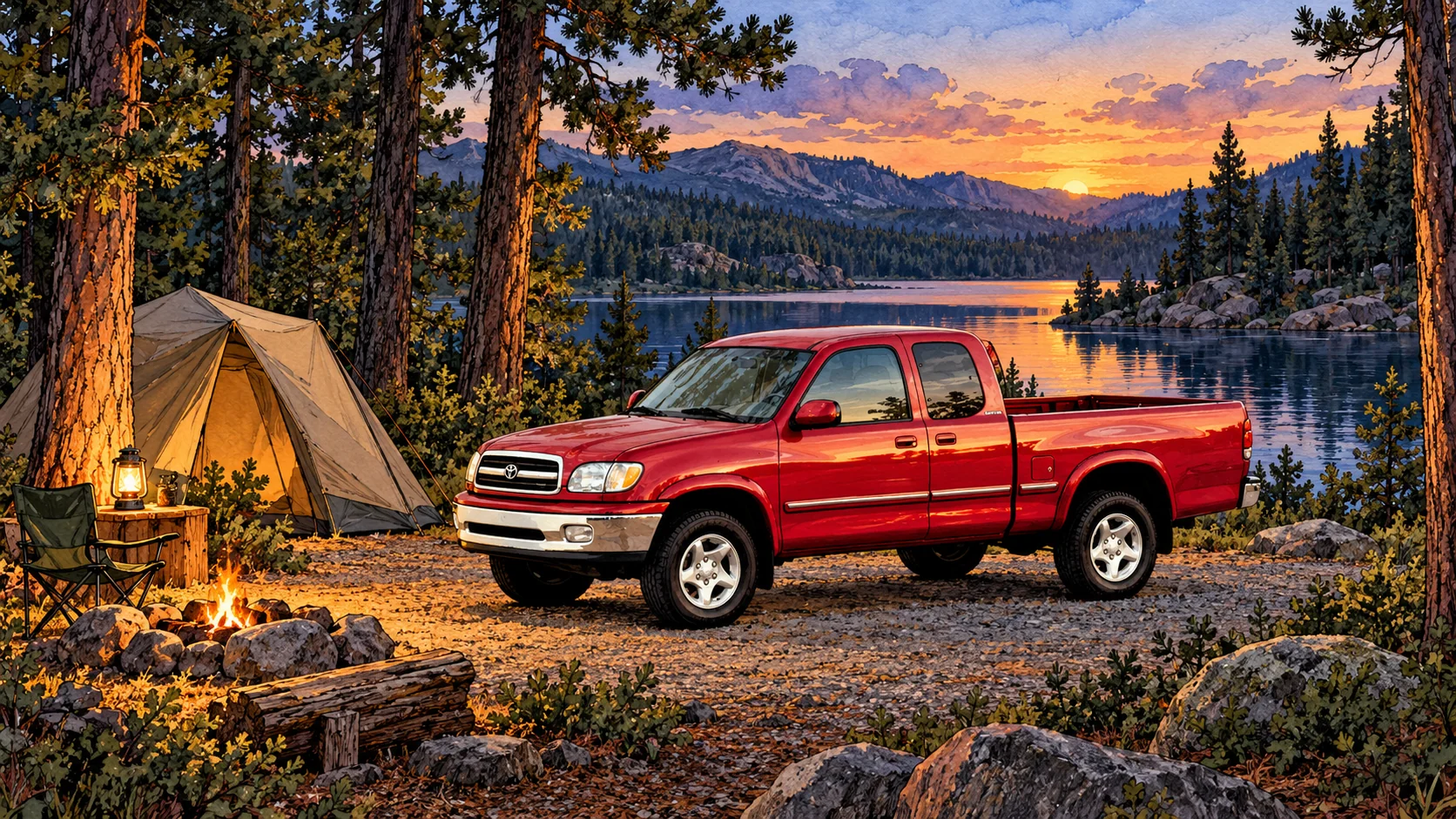
The bed can carry a simple camping setup. A canopy adds protected space. A modest storage system keeps equipment organized. Tie down heavy items and keep track of the added mass.
A camper’s advertised dry weight is not its travel weight. Water, batteries, food, tools, and people all count. Check the actual loaded weight and axle loads before choosing equipment.
For daily driving
A carefully installed modern radio and backup camera can make the truck easier to live with. Preserve safe visibility and route wiring properly. Use fused power connections and secure grounds. Untidy wiring can create problems that appear unrelated to the accessory.
For off-road use
Start with terrain-appropriate tires and a sound suspension. A lift changes geometry and clearance. Bigger tires add weight and may require gearing, brake, and fitment decisions. Keep the whole system in mind.
Do not assume a skid plate, step, hitch ball, or transport tiedown is a recovery point. Use equipment designed for the load and the recovery method. Added hardware should attach to sound structure.
For originality
Save factory parts when practical. Keep receipts and record changes. Original wheels, radios, trim, and upholstery can matter to a future enthusiast even when a newer substitute is more convenient today.
An unusual option combination is interesting. It is not automatically rare. Verified production information is needed before claiming a one-of-a-kind truck or a tiny production run.
24. What came next, and why the first year matters
The first Tundra established the name and gave Toyota a V8 pickup built in the United States. Later first-generation trucks expanded the idea. The Double Cab arrived for the 2004 model year. The 2005 updates brought major engine and transmission changes.
Those changes make year-by-year coverage worthwhile. A specification from a 2005 truck should not quietly migrate into a 2000 guide. Neither should a later cab photo or the towing figure from another generation.
The original truck’s appeal is easy to understand. It offers a size some owners find manageable, a straightforward cabin, and an available V8 without the equipment layers found in many newer pickups.
Its shortcomings are just as real. The back seat is small. Fuel consumption is substantial. Safety equipment is dated. Corrosion can decide whether the vehicle remains worth owning at all.
A good 2000 Tundra can still be a useful truck. The best one is a sound, correctly maintained example that fits the work you need it to do. Its badge tells you where the story began. Its condition tells you what comes next.
25. Quick answers about the 2000 Tundra
Was there a 1999 Toyota Tundra?
It was sold during 1999, but the first U.S. model year was 2000. Early trucks can have a 1999 build date.
What engine came in it?
A 3.4-liter 5VZ-FE V6 or a 4.7-liter 2UZ-FE V8. The V6 made 190 hp. Toyota listed the V8 at 245 hp, or 240 hp with California emissions equipment.
Was the V8 available with a manual?
No. The factory manual was paired with the V6. The V8 used a four-speed automatic.
Does it have a timing belt or chain?
Both original engines use a timing belt. Verify replacement by date and mileage.
Does it need premium gas?
No, not in its standard factory form. The owner’s manual specifies unleaded gasoline rated at least 87 octane on the U.S. scale.
What size tires did it use?
The main factory sizes were P245/70R16 and P265/70R16. Check the truck’s placard, equipment, and current wheel fitment.
Can every one tow 7,200 pounds?
No. That is the highest listed rating for specified V8 configurations. Other versions were rated lower, and the actual loaded combination must meet every applicable limit.
Did it have four full-size doors?
No. The Access Cab had smaller rear access doors. The larger Double Cab came later.
Does Limited always mean leather?
No. Leather was an available package. Check the actual equipment.
What is the biggest buying concern?
Frame condition comes first. Then examine maintenance, the timing belt, brakes, cooling system, transmission, and any collision or modification history.
How many miles will one last?
No honest inspection can promise a mileage limit. Maintenance and structural condition matter more than a story about another truck reaching a huge number.
Is a TRD decal proof of a factory package?
No. Verify the original equipment and current hardware.
Sources and photo credits
Factory specifications come from Toyota’s U.S. documents. Period reporting supplies launch impressions and price context. Links beside the relevant sections lead to maintenance, towing, safety, and recall details.
- 2000 Toyota Tundra U.S. brochure and owner’s manual specifications.
- Toyota’s Tundra retrospective and truck history.
- MotorTrend’s launch road report.
Photos: Toyota / Toyota Canada media archive. Canadian vehicles are pictured; equipment may differ from U.S. models.