The legacy of expeditions like the Camel Trophy in the 1980s and 90s set a benchmark for overland adventure, separating a casual drive on a dirt road from a true test of endurance. Iconic trails earn their status through a demanding mix of extreme terrain, complex logistics, and the absolute need for self-reliance. These journeys are as much about meticulous planning and problem-solving as they are about driving skill. They represent some of the most challenging extreme 4×4 adventures on the planet.
From the sun-scorched dunes of vast deserts to treacherous mountain passes, each environment presents its own unique set of obstacles. This article provides a practical overview of some of the world’s best off road trails. We will cover the critical details you need to understand before even thinking about turning the key, helping you prepare for an expedition where success is measured by the journey itself.
Vehicle and Gear Preparation Essentials
Success in remote environments is determined long before your tires touch the dirt. Proper preparation is not just a suggestion; it is the most critical safety tool you have. Overlooking a single detail can have significant consequences when you are hours or even days from the nearest town. Your journey begins in the garage, not at the trailhead.
Critical Pre-Trip Vehicle Inspection
A thorough mechanical inspection is non-negotiable. Your vehicle is your lifeline, and its reliability is paramount. Pay close attention to the suspension components, as they will endure constant stress. Check for any leaks, worn bushings, or damage to shocks and springs. You must verify that the entire 4WD system, including the transfer case and locking differentials, engages smoothly and correctly. Inspect your tires for wear and damage, and always carry at least one full-size spare that is in excellent condition. Knowing how to diagnose why your car won’t start is a critical skill when you’re miles from a mechanic, and a pre-trip check can prevent many of those issues before they happen.
Non-Negotiable Recovery and Repair Gear
When you get stuck—and you likely will—there is no calling for a tow truck. Self-rescue is the only option. Your gear must be in good working order, and you need to know how to use it safely. A winch can pull you out of deep mud, a high-lift jack can help change a tire on uneven ground, and traction boards are invaluable in sand or snow. Beyond recovery, you need the ability to perform field repairs. A comprehensive tool kit, a tire repair kit, and spare fluids and belts can mean the difference between a minor delay and a trip-ending failure.
Navigation and Communication for Remote Areas
Your smartphone’s GPS will fail you. In remote areas with no cellular service, it becomes a useless piece of glass. For reliable navigation, a dedicated GPS unit loaded with detailed topographic maps is essential. As a backup, physical paper maps and a compass are indispensable. For emergencies, a satellite communication device like a Garmin inReach or a satellite phone allows you to send messages or an SOS signal from anywhere on the planet. This equipment isn’t a luxury; it’s a fundamental part of your safety net.
| Category | Essential Items | Primary Function |
|---|---|---|
| Recovery | Winch, High-Lift Jack, Traction Boards | Self-rescue from being stuck (mud, sand, rocks) |
| Repair | Full Tool Kit, Tire Repair Kit, Spare Fluids/Belts | Field repairs for common mechanical failures |
| Sustenance | Water (1 gal/person/day), Non-Perishable Food, Extra Fuel | Survival in case of delay or stranding |
| Navigation | Dedicated GPS Unit, Physical Maps, Satellite Communicator | Reliable positioning and emergency contact without cell service |
This table categorizes the essential gear required for any serious off-road expedition. The items listed are considered the minimum for ensuring self-reliance and safety in remote environments.
Gibb River Road Preparation: Australia’s Kimberley
The 660-kilometer track of the Gibb River Road cuts through Western Australia’s ancient Kimberley region, a landscape of vast red-soil plains, dramatic gorges, and powerful rivers. This is not a journey to be taken lightly. The trail is classified as ‘More Difficult’ and demands a high-clearance, low-range 4WD. It is only accessible during the dry season, typically from April to October, as wet season rains make river crossings impassable.
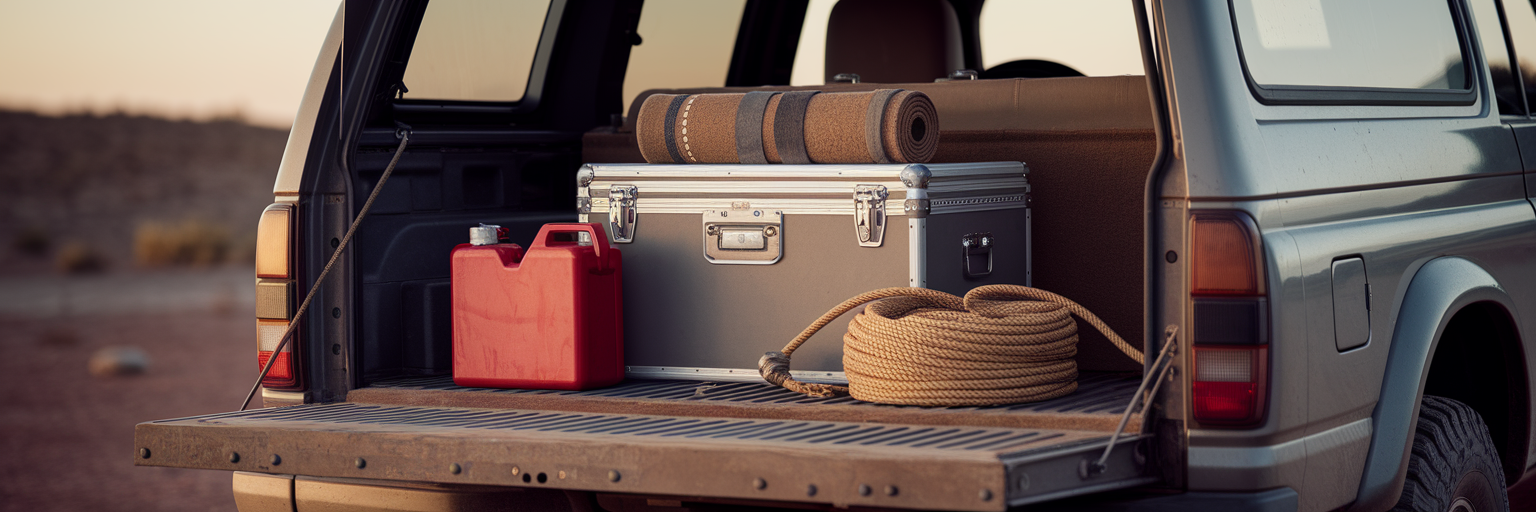
The core challenge of Gibb River Road preparation is logistics. Fuel stops are few and far between, sometimes hundreds of kilometers apart. Running out of fuel is not an option. You must meticulously plan your route, calculating consumption and carrying enough extra fuel in jerry cans to provide a safe buffer. According to Tourism Australia’s official itinerary, poor fuel planning and failure to secure the correct permits are the most common points of failure for travelers. You will need a National Park Pass to access many of the stunning gorges along the way. This expedition is a true test of foresight and planning.
A Moab Off-Roading Guide: Utah’s Rock-Crawling Playground
Moab, Utah, is a global destination for off-roading, a place where the landscape itself is the main attraction. This is not about long-distance travel but technical driving skill. The area offers a vast network of trails, from the scenic White Rim trail to the infamous Hell’s Revenge, a rollercoaster of steep climbs and descents on petrified sand dunes. This is the heart of rock-crawling country.
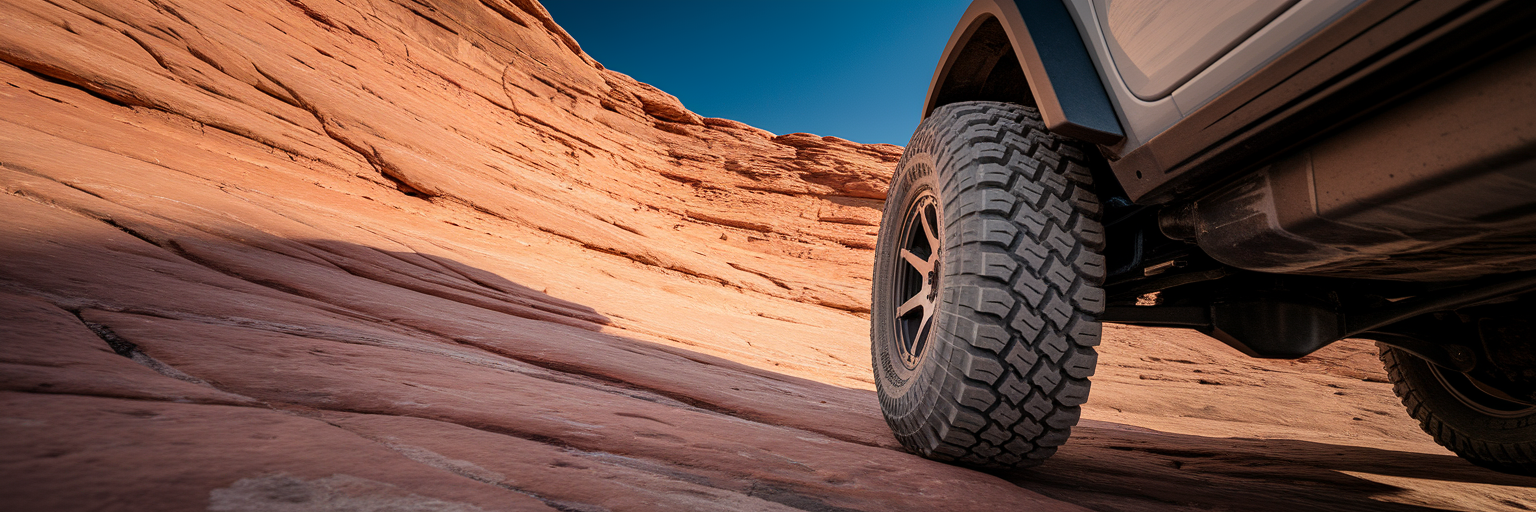
The defining feature of this terrain is the “slickrock” sandstone. Despite its name, it offers incredible grip, but only with the right technique. Careful tire pressure management is key; airing down your tires increases the contact patch and allows the rubber to conform to the rock’s surface. A proper Moab off roading guide will always emphasize vehicle capability. For the more difficult routes, you need excellent suspension articulation to keep your tires on the ground, protective skid plates for the underbody, and robust recovery gear. Vehicles from brands like Jeep are a common sight, prized for their articulation and robust chassis on these challenging trails. Remember to practice ‘Tread Lightly!’ principles to preserve this fragile and beautiful desert environment for future generations.
The Mojave Desert 4×4 Trails: A Test of Self-Reliance
The Mojave National Preserve in California is a place of stark beauty and unforgiving extremes. Its trails traverse remote, arid expanses where help is not coming. This is a landscape that demands complete and total self-reliance. The National Park Service (NPS) is clear in its recommendation: only high-clearance 4WD vehicles should be used for any off-pavement travel. The sandy washes and rocky tracks of the Mojave desert 4×4 trails can quickly disable a less capable vehicle.
The principle of self-rescue is paramount here. As a senior ranger at the Mojave Preserve noted in a warning published on the official NPS safety page, “self-reliance is essential; a vehicle failure in this desert can become a life-threatening event within hours.” This is not an exaggeration. The intense heat and lack of water can create a survival situation quickly. Travelers must carry ample water, food, and fuel, and have the skills to perform their own vehicle repairs. With increasing enforcement of ‘Leave No Trace’ principles, responsible travel is not just encouraged; it is required to protect this unique ecosystem.
Oman’s Diverse Mountain and Desert Circuit
For those seeking a blend of technical driving and cultural immersion, Oman offers a remarkable journey. A popular 10-day 4×4 circuit takes you through the dramatic Hajar mountains, into deep desert wadis (dry riverbeds), and along stunning coastal plateaus. The sheer variety of terrain is the main challenge, requiring a vehicle that can handle everything from graded gravel tracks to soft sand and rocky climbs.
A capable high-clearance vehicle with at least 200mm (about 8 inches) of ground clearance and a robust suspension is recommended. While a 4×4 is ideal, the relative accessibility of some sections means that experienced drivers might manage parts of the route in a capable 2WD vehicle. What makes this adventure more approachable than others are the helpful planning resources available, including downloadable route maps and GPS coordinates for designated wild-camping sites. This journey is more than a driving challenge; it is a unique way to experience Oman’s breathtaking landscapes and rich culture, far from the typical tourist paths. A capable high-clearance vehicle is recommended, and many modern trucks are well-equipped for such a journey.
Off Road Vehicle Recommendations for 2025
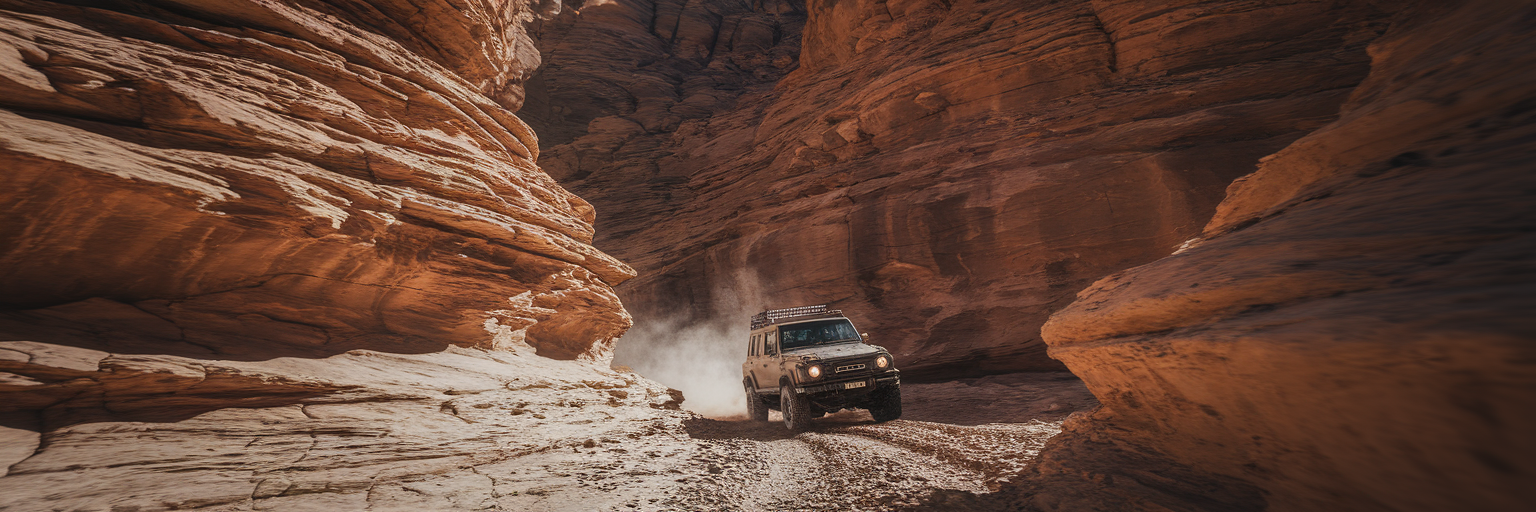
So, what vehicle should you consider for these kinds of expeditions? For 2025, a few models stand out based on their factory-equipped capabilities. These off road vehicle recommendations are a great starting point, but remember that a well-maintained vehicle you know intimately is always the best choice.
- Ford Bronco: With its dedicated G.O.A.T. (Goes Over Any Type of Terrain) modes and advanced suspension options like the HOSS 3.0 system, the Bronco is built for technical challenges.
- Jeep Wrangler: The Wrangler’s proven solid-axle chassis provides outstanding articulation, making it a natural fit for the rock-crawling of Moab. The available 4xe plug-in hybrid powertrain also offers silent, torquey performance on the trail.
- Ford F-150 Raptor: Built for high-speed desert runs, the Raptor’s reinforced frame and sophisticated terrain management system are perfect for covering vast distances like the Gibb River Road. The 2025 Ford F-150, particularly in its Raptor trim, is built for this kind of environment.
Both the Bronco and the F-150 Raptor showcase Ford’s commitment to off-road performance. Ultimately, while these are top-tier models, the most important factor is choosing a reliable, high-clearance 4WD and understanding its capabilities and limitations completely.