The New Baseline for Automotive Excellence
The scent of leather and the gleam of polished wood once defined a luxury sedan. In 2025, that definition is written in lines of code and measured in processing power. The traditional markers of opulence have not disappeared, but they now share the stage with software intelligence and the sophistication of the human-machine interface. The best luxury sedans 2025 are no longer just about how they feel, but how they think.
This shift is built on three core pillars. First is the deep integration of technology that anticipates needs rather than just responding to commands. Second is a renewed focus on the passenger experience, transforming the cabin from a mere transport space into a personal sanctuary. Finally, the very concept of performance is evolving, with electrification offering silent, instantaneous power that challenges the reign of the internal combustion engine.
Benchmark brands like Mercedes-Benz, BMW, and Audi continue to drive this evolution. They are crafting vehicles where seamless connectivity, intelligent assistance, and sustainable practices are the new currency of luxury. This article examines the design philosophies and technologies that are shaping the next generation of premier sedans, moving beyond the surface to understand what truly constitutes automotive excellence today.
The Digital Cockpit and Intelligent Interfaces
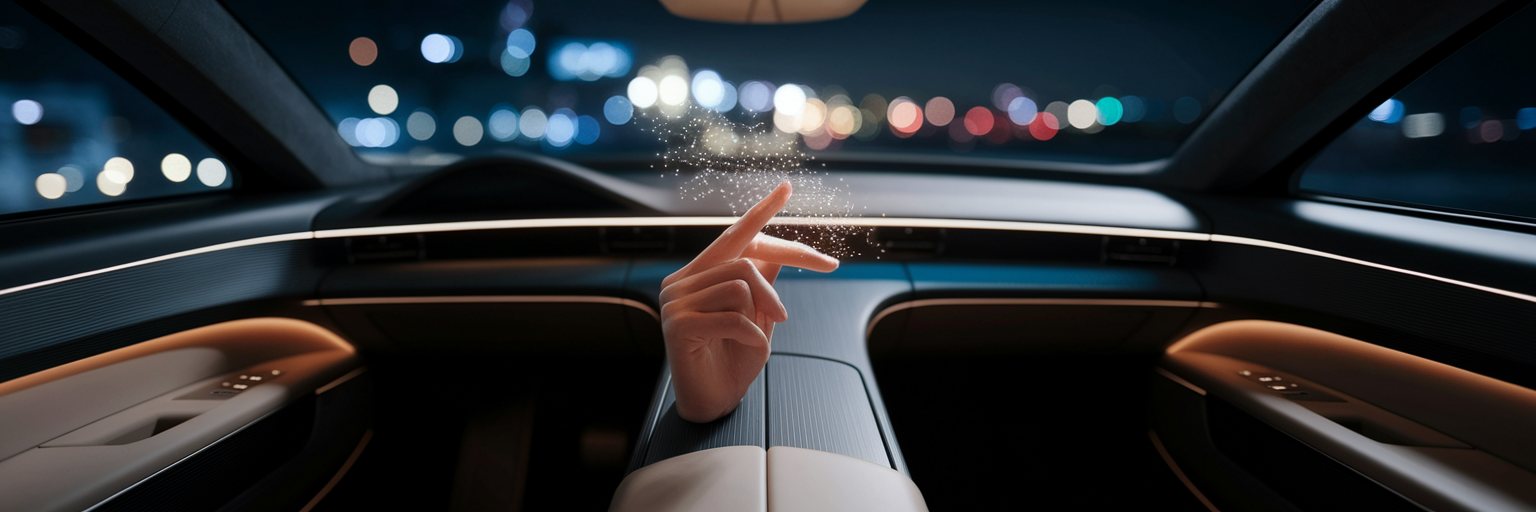
The dashboard has transformed from a simple cluster of gauges into an intelligent command centre. The infotainment system is now the digital heart of the vehicle, and in 2025, the competition is not just about screen size, but about the intelligence and intuition behind the pixels. The leading German manufacturers offer distinct philosophies on how drivers should interact with their cars.
Mercedes-Benz MBUX: Augmented Reality Navigation
With its latest MBUX system, Mercedes-Benz turns navigation into an intuitive, visual experience. Instead of just looking at a 2D map, the system uses a forward-facing camera to display a live video feed on the central screen. It then overlays animated arrows and street names directly onto the image, showing you precisely which lane to be in or which turn to make. As one hands-on review from YouTube demonstrates, it feels less like following directions and more like having a co-pilot who points the way.
BMW iDrive 8.5: Intuitive Control and Projection
BMW has always prioritized the driver, and the latest BMW iDrive 8.5 features reinforce this. The system introduces a “QuickSelect” interface that simplifies the menu structure, reducing the number of clicks needed to access common functions. The real standout, however, is the augmented reality heads-up display. It projects critical information, including navigation cues and driver assistance warnings, directly into the driver’s line of sight on the windscreen. This keeps your eyes on the road while still delivering vital data.
Audi Virtual Cockpit Plus: Haptic and Functional Futurism
Audi takes a more minimalist and tactile approach. Its MMI touch response system replaces physical buttons with two seamlessly integrated touchscreens that provide haptic feedback. When you press an icon, the screen generates a subtle pulse and clicking sound, confirming the command. It is a clever solution that blends the clean aesthetic of a touch interface with the reassuring confirmation of a physical button, creating a functional yet futuristic feel.
Beyond the screens, AI-powered voice assistants have become remarkably conversational. You no longer need to speak in rigid commands. Saying “Hey Mercedes, I’m cold” prompts the car to adjust the climate control, while asking your BMW “Is it going to rain at my destination?” provides a weather forecast. This natural language processing makes controlling complex vehicle functions feel effortless, but it also raises an important question. With so much technology at our fingertips, how do we avoid distraction? The answer lies in thoughtful design that makes these powerful tools intuitive enough to use without taking your focus from the road.
| Feature | Mercedes-Benz MBUX | BMW iDrive 8.5 | Audi MMI Touch Response |
|---|---|---|---|
| Key Innovation | Augmented Reality Navigation | QuickSelect & AR Head-Up Display | Dual-Screen Haptic Feedback |
| User Interface Philosophy | Visually rich, content-driven ‘Zero Layer’ | Driver-focused, simplified menu structure | Minimalist, tactile, and integrated |
| Voice Assistant Capability | Conversational, controls ambient features | Improved natural language processing | Context-aware, integrated with navigation |
| Unique Feature | Live video feed with graphic overlays | Information projected into driver’s line of sight | Physical click sensation on a touch surface |
Performance Reimagined Through Advanced Powertrains
The soul of a luxury sedan has always been tied to its powertrain, and 2025 offers a fascinating spectrum of choices. The conversation is no longer simply about horsepower and cylinders. It is about efficiency, responsiveness, and the character of the driving experience. On one end, advanced internal combustion engines (ICE) have been refined to near perfection. The 2025 Mercedes-E-Class technology, for example, includes a turbocharged engine paired with a mild hybrid system. This setup uses a small electric motor to provide a smooth power boost and improve fuel efficiency without the need for plugging in.
At the other end of the spectrum are the high-performance luxury electric sedans 2025. Models like the Porsche Taycan and Audi e-tron GT are built on an 800-volt architecture. Think of it as a high-pressure hose for electricity. This design allows for incredibly fast charging times, getting you back on the road quicker, and ensures consistent power delivery without overheating during spirited driving. Tesla continues to be a major force, pushing the boundaries of battery range and using over-the-air software updates to enhance performance long after the car has left the showroom.
Making these electric powerhouses work requires more than just big batteries. Sophisticated thermal management systems are essential to keep components at optimal temperatures, while advanced regenerative braking captures energy during deceleration to extend range. This technology is a core part of the broader shift in electric vehicle technology. The result is a driving experience that is fundamentally different. The silent, instant torque of an EV offers a feeling of effortless acceleration that a combustion engine cannot replicate. Yet, for some drivers, the refined mechanical symphony of a high-end ICE model remains an irreplaceable part of the luxury experience. The definition of superior performance is now a matter of personal preference.
The Sanctum of Sustainable and Opulent Interiors
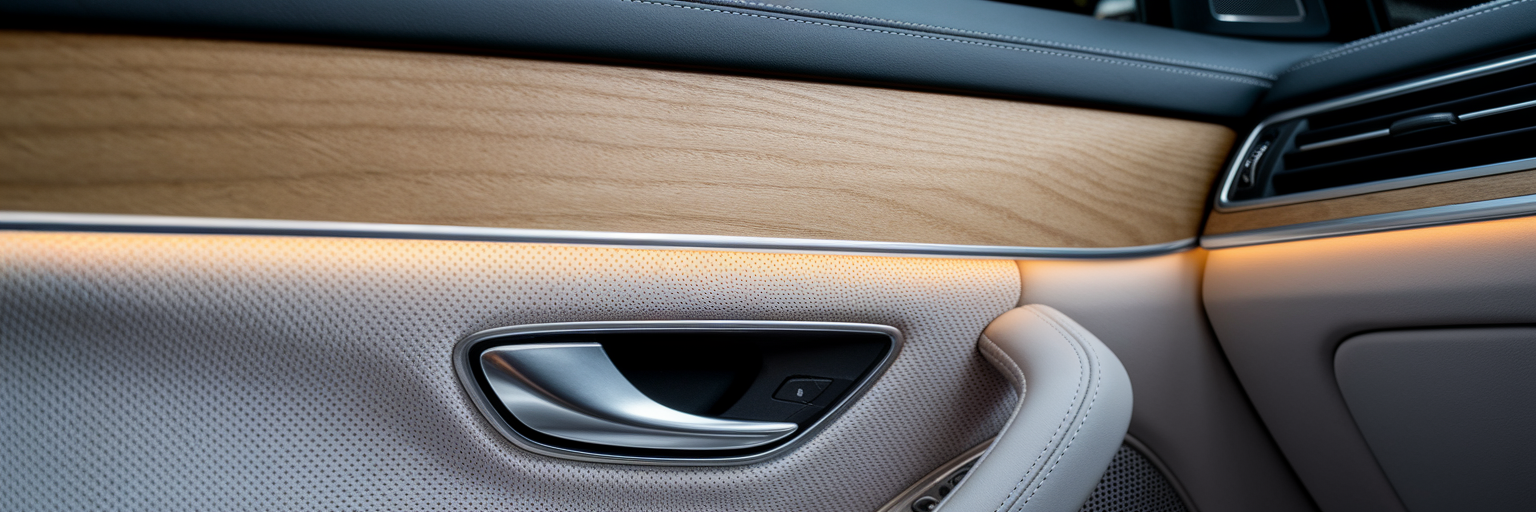
While digital interfaces command attention, the physical cabin remains the core of the luxury experience. For 2025, the focus is on creating a serene sanctum that balances opulence with responsibility. The idea that sustainability requires compromise is outdated. The best premium car interiors 2025 prove that eco-conscious materials can be just as luxurious as traditional ones. Automakers are increasingly integrating innovative and responsibly sourced materials, such as:
- Econyl® regenerated nylon made from fishing nets and other nylon waste.
- Responsibly sourced wood veneers from FSC-certified forests.
- Upholstery made from recycled PET bottles and other plastics.
- Olive-tanned leather, which uses a more environmentally friendly tanning process.
Brands like Volvo and Genesis are at the forefront of this movement. The approach taken by Genesis, in particular, showcases how opulence and sustainability can coexist beautifully. This commitment to quality is recognized across the industry, with a recent U.S. News report highlighting how a car’s interior significantly affects the overall driving experience. Each brand expresses this through a distinct design philosophy. Mercedes-Benz offers tech-forward opulence with vast screens and dynamic ambient lighting, while BMW maintains a minimalist, driver-centric layout. Volvo, true to its roots, delivers clean Scandinavian design that feels both modern and calming.
Beyond materials, passenger comfort has reached new heights. Multi-contour seats with various massage programs can knead away the stress of a long day. Multi-zone climate control systems with advanced air purification create a bubble of clean air inside the cabin. The final touch is the soundscape. Advanced sound insulation and active noise cancellation technology work together to eliminate road and wind noise, creating a tranquil environment that allows for quiet conversation or an immersive audio experience.
The Frontier of Semi-Autonomous Driving
The promise of a self-driving car has been a topic of discussion for years, but in 2025, we are seeing tangible progress. The most advanced systems available in luxury sedans are classified as Level 2 or, in rare cases, Level 3. The distinction between them is critical.
- SAE Level 2 (Partial Automation): The system can control steering and acceleration/deceleration, but the driver must remain fully engaged, monitoring the environment and ready to take control at any moment.
- SAE Level 3 (Conditional Automation): The system can perform all aspects of the driving task under specific conditions, such as on a highway in dense traffic. The driver can safely take their eyes off the road but must be ready to intervene when requested by the system.
Mercedes-Benz’s Drive Pilot is a prime example of a production-ready Level 3 system. In approved regions and under 60 km/h in heavy traffic, it allows the driver to disengage completely. However, its use is still limited by regulatory hurdles. More common are the sophisticated advanced driver assistance systems (ADAS) that are now standard. Features like adaptive cruise control with stop-and-go functionality and automated lane changes make long journeys less fatiguing.
Tesla’s Autopilot and its Full Self-Driving package remain at the forefront of software-based assistance, constantly learning and improving through data collection. While its capabilities are impressive, they are firmly in the Level 2 category and require constant driver supervision. Ultimately, brands like Porsche and BMW are carefully balancing assistance with engagement. Their systems are designed to be a safety net and a convenience, not to detract from the pleasure of driving. To stay informed on this rapidly changing field, keeping up with the latest automotive news is essential.
Synthesizing the Ultimate Driving Experience
A 2025 luxury sedan is more than the sum of its parts. The true art lies in how technology, powertrain, and interior comfort are synthesized to create a distinct driving personality. The experience of piloting a Mercedes S-Class down a motorway is one of serene isolation, where the outside world melts away into a quiet blur. In contrast, guiding a Porsche Taycan or BMW 5 Series through a winding road is an exercise in connection, with instant response and feedback that makes you feel part of the machine.
This is the key takeaway for the modern luxury market. True excellence is a holistic blend of intelligent technology that anticipates your needs, performance that thrills on demand, and personalized comfort that turns every journey into a first-class experience. The car is no longer just a mode of transport; it is an active partner in your drive.
Looking ahead, the next frontier will involve even deeper personalization. Imagine a car that adjusts its settings based on your biometric data or seamlessly integrates with your smart home and digital calendar. The vehicle is becoming a true extension of our digital lives. This evolution is constant, and we encourage you to continue exploring the fascinating world of automotive excellence on CarPhanatics.