Why Your Car’s Tire Size Is Critical
The four small patches of rubber where your tires meet the asphalt are the only points of contact between your vehicle and the road. This simple fact makes their specifications a fundamental part of your car’s safety engineering. The manufacturer’s recommended tire size is not an arbitrary suggestion. It is a precise calculation designed to support the vehicle’s weight, complement its suspension geometry, and work seamlessly with safety systems like ABS and traction control.
Think of it like wearing the wrong size shoes for a run. Ill-fitting footwear can lead to instability, poor performance, and even injury. The same principle applies to your car. Using the wrong tire size can have immediate and dangerous consequences. It can compromise braking distances, making it harder to stop in an emergency. It can also create unpredictable handling, especially during sudden manoeuvres to avoid a hazard.
Beyond the obvious safety risks, incorrect tires can degrade ride comfort and increase road noise. When it comes to choosing new tires for car safety, sticking to the manufacturer’s specifications is non-negotiable. It ensures your vehicle performs exactly as its engineers intended, keeping you and your passengers safe on every journey.
Where to Find Your Vehicle’s Tire Information
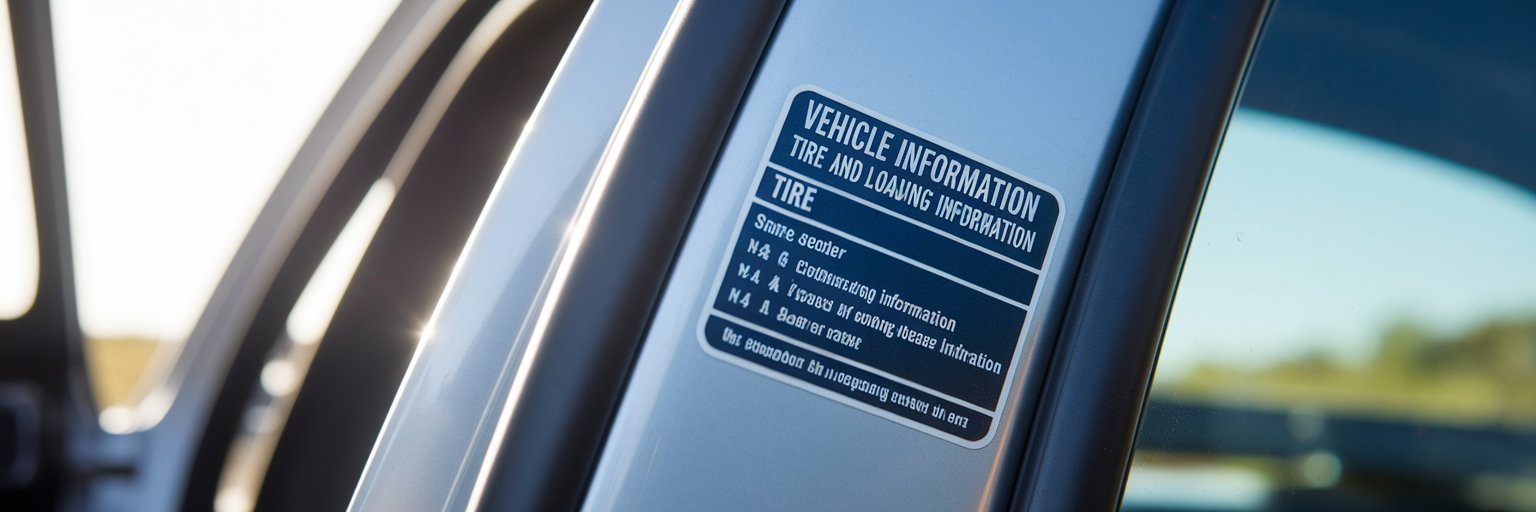
Now that we understand why the correct size is so important, the next step is locating that information. Fortunately, car manufacturers provide it in several easy-to-find places. When you are finding my car’s tire size, use these sources as your definitive guide, in order of reliability.
- The Vehicle Information Placard: This is the most reliable source. It is a sticker typically located on the driver’s side door jamb, inside the glove box, or on the fuel filler door. This placard lists the original equipment (OE) tire sizes recommended for your vehicle, along with the correct inflation pressures. Always trust this information first.
- The Owner’s Manual: Your vehicle’s manual is an equally trustworthy source. It contains the same information as the placard and often provides additional context. For example, it might list optional tire sizes for different versions of your car, as different trims of the same model, like those detailed in our 2026 Genesis GV70 review, can have unique tire requirements.
- The Sidewall of Your Current Tires: You can, of course, look at the tires already on your car. However, approach this method with caution. It is only reliable if you are absolutely certain the previous owner installed the correct size. Someone may have fitted the wrong tires, so always cross-reference with the vehicle placard or owner’s manual to be sure.
Decoding the Main Tire Size Numbers
At first glance, the sequence of letters and numbers on a tire’s sidewall can seem like a complex code. But once you know what each part represents, it becomes a straightforward description of the tire’s dimensions and purpose. Let’s break down a common example, like P225/60R16, to understand how to read tire size information.
Service Type Prefix (P, LT, or Euro-Metric)
The letter at the beginning indicates the type of vehicle the tire is designed for. A ‘P’ stands for P-Metric, meaning it is built for passenger vehicles like sedans, coupes, and smaller SUVs. If you see ‘LT’, it means the tire is for Light Truck use, constructed with more robust materials to handle heavier loads. Many European vehicles use Euro-Metric tires, which have no prefix but serve a similar purpose to P-Metric tires. It is important to match this, as the load requirements for different vehicles, from family cars to the heavy-duty models found in our trucks section, vary significantly.
Tire Width (in Millimeters)
The first three-digit number, 225 in our example, is the tire’s width from sidewall to sidewall, measured in millimeters. A wider tire generally provides a larger contact patch with the road, which can influence grip and handling. This measurement is a critical part of the tire’s fitment within the wheel well.
Aspect Ratio (Sidewall Height)
The number after the slash, 60, is the aspect ratio. This tells you the height of the tire’s sidewall as a percentage of its width. So, this tire’s sidewall height is 60% of 225mm. A lower aspect ratio (e.g., 45) means a shorter, stiffer sidewall, often found on sports cars for sharp handling. A higher aspect ratio (e.g., 65) indicates a taller, more flexible sidewall that provides a more cushioned ride, common on family SUVs and sedans.
Construction Type and Wheel Diameter
The ‘R’ stands for Radial construction, which is the standard for modern tires. The final number, 16, is the diameter of the wheel the tire is designed to fit, measured in inches. This number must match your vehicle’s wheel diameter exactly. A 16-inch tire will not fit on a 17-inch wheel. Understanding these components answers the question of what do tire numbers mean and empowers you to identify the right fit.
Understanding Load Index and Speed Rating

Beyond the primary size numbers, you will see another code, such as 98H. These two characters are not about dimensions but are critical safety ratings that you must not ignore. They represent the tire’s load-carrying capacity and its maximum speed capability.
The Load Index (98) is a numerical code corresponding to the maximum weight each tire can safely support when properly inflated. When replacing tires, the load index of the new tire must be equal to or greater than the original equipment specification. Choosing a tire with a lower load index can lead to overheating and failure, especially when the vehicle is fully loaded.
The Speed Rating (H) is a letter that indicates the maximum speed a tire can sustain for a prolonged period. This rating is matched to the vehicle’s performance capabilities. Just like the load index, you should always choose a tire with a speed rating that is equal to or higher than the one specified by your car’s manufacturer. Downgrading to a lower speed rating compromises the vehicle’s handling and stability at higher speeds and can result in catastrophic tire failure.
This car tire size chart helps translate the speed rating letters into tangible numbers:
| Speed Rating | Maximum Speed | Typical Vehicle Type |
|---|---|---|
| S | 112 mph / 180 km/h | Family Sedans, Minivans |
| T | 118 mph / 190 km/h | Family Sedans, SUVs |
| H | 130 mph / 210 km/h | Sport Sedans, Coupes |
| V | 149 mph / 240 km/h | Performance Sedans, Sports Cars |
| Z | Over 149 mph / 240 km/h | High-Performance and Supercars |
Note: This table shows common ratings. Always match or exceed your vehicle manufacturer’s specified speed rating. The Z rating is often part of a W or Y rating (e.g., 99W), which have specific top speeds of 168 mph and 186 mph, respectively.
Practical Steps for Choosing New Tires
With a clear understanding of what the numbers mean, the process of selecting new tires becomes much simpler. This short checklist provides a tire size explained for beginners approach, guiding you toward a safe and confident purchase.
- Default to the OE Size: The safest and most straightforward choice is to stick with the original equipment specifications. Match the full tire code on your vehicle’s placard, including the size, load index, and speed rating. This guarantees compatibility and performance.
- Replace in Sets: For balanced and predictable handling, the best practice is to replace all four tires at once. According to KBB, replacing all four tires at once is the safest approach to maintain consistent traction, which is especially critical for all-wheel-drive vehicles. If replacing all four is not possible, replace them in pairs on the same axle (both front or both rear).
- Consider Your Driving Needs: While the size is fixed, you have flexibility in choosing the type of tire. Do you need all-season tires for year-round versatility, winter tires for snow and ice, or summer tires for maximum grip in warm weather? Your choice should reflect your local climate and driving style. For example, drivers of high-performance vehicles, like the ones in our muscle cars category, often opt for summer tires for superior handling.
- Consult a Professional: Tire installation is not a DIY job. A qualified technician will ensure the tires are mounted, balanced, and installed correctly. They can also perform an alignment, which is crucial for preventing uneven tire wear and ensuring your vehicle drives straight.
Common Mistakes to Avoid When Buying Tires
Knowing what to do is half the battle. Knowing what not to do is just as important for ensuring your safety on the road. As you shop for new tires, be mindful of these common pitfalls that can lead to poor performance or dangerous situations.
- Ignoring Load and Speed Ratings: A frequent error is focusing only on the main size (e.g., 225/60R16) and overlooking the load index and speed rating. These are not optional. A tire that fits the wheel but cannot support the vehicle’s weight or speed is a major safety hazard.
- Changing Size Without Expert Guidance: The idea of “plus-sizing” to larger wheels can be tempting for aesthetic reasons, but it is a complex modification. It can throw off your speedometer, interfere with ABS and stability control systems, and even cause the tires to rub against the vehicle’s body, leading to issues like those discussed in our guide on strange car noises.
- Mixing Different Tire Models: Even if they are the same size, tires from different brands or models have unique tread patterns and rubber compounds. Mixing them can create an imbalance in grip and handling, especially in wet conditions.
- Buying Used Tires: While the price may be attractive, used tires carry hidden risks. They could have invisible internal damage from impacts, improper repairs, or degradation from age. Your safety is worth the investment in new tires.