The familiar rumble of a diesel engine has long been the soundtrack of American commerce and adventure. But a quieter revolution is gaining momentum. The question is no longer if electric trucks will arrive, but how quickly they will reshape our roads, job sites, and supply chains. In 2025, we are witnessing a significant acceleration, moving from early experiments to widespread deployment.
The Electric Truck Market in 2025
The shift toward electric trucks is no longer a distant forecast. It’s happening now. Sales of new Class 7 and 8 electric trucks in the U.S. have surged fivefold since 2022, a clear signal of a market hitting its stride. According to a fleet guide from Truckclub.com, this momentum is tangible, with over 12% of new heavy-duty commercial trucks sold now being electric. This growth isn’t accidental; it’s driven by a powerful combination of regulatory pushes, financial incentives, and proven economic benefits.
The Forces Driving Commercial Adoption
Three key factors are fueling the rapid commercial electric truck adoption. First, tightening state regulations, like California’s Advanced Clean Fleets rule, are creating firm deadlines for businesses to transition away from fossil fuels. Second, substantial federal and state financial incentives, including those from the Inflation Reduction Act, are helping to offset the higher initial purchase price. Finally, and perhaps most importantly, many fleets are discovering that the total cost of ownership (TCO) for electric trucks has reached parity with diesel for specific applications, especially those with predictable routes and overnight depot charging.
The Rise of the Consumer Electric Pickup
While commercial fleets make headlines, the consumer market is experiencing its own transformation. The availability of compelling electric pickup trucks 2025 models has captured the public’s imagination. Showrooms now feature impressive options like the adventure-ready Rivian R1T and the powerful Chevrolet Silverado EV. However, the most influential player is arguably the Ford F-150 Lightning. By electrifying America’s best-selling vehicle, Ford made electric trucks feel familiar and accessible. The latest updates for the 2025 Ford F-150 continue to build on this momentum, creating a competitive landscape that is rapidly increasing consumer awareness and acceptance.
Core Advantages Driving Widespread Adoption

The growing interest in electric trucks stems from practical benefits that appeal to both fleet managers and individual owners. These advantages go far beyond just being “green” and touch on core operational concerns like cost, performance, and versatility. The appeal of all electric vehicles is clear, but the impact is especially profound in the world of trucking.
Lower Operating Costs and Maintenance
Think about the routine maintenance a diesel truck requires: oil changes, filter replacements, and complex engine upkeep. Electric motors, with dramatically fewer moving parts, eliminate most of these tasks. This translates directly into less downtime and lower service bills. Furthermore, the volatile price of diesel fuel creates budget uncertainty. In contrast, electricity costs are more stable and predictable, and fleets with overnight depot charging can capitalize on cheaper off-peak rates, creating a significant long-term financial advantage.
Superior Performance and Towing
Anyone who has driven an electric vehicle understands the sensation of instant torque. For a truck, this isn’t just about quick acceleration; it’s about control. An electric motor delivers its full power from a standstill, providing superior command when hauling heavy loads or navigating steep grades. This completely changes the game for electric truck towing capacity, offering a smoother and more responsive experience than a diesel engine that needs to build up RPMs to deliver peak power.
The Truck as a Mobile Power Source
One of the most practical innovations is Vehicle-to-Load (V2L) technology, which turns the truck’s battery into a mobile generator. The applications are endless:
- A contractor can power saws, lights, and drills on a job site far from an outlet.
- A family can run essential home appliances like a refrigerator and lights during a power outage.
- A camper can power cooking equipment and lighting at a remote campsite without a noisy generator.
Environmental and Community Health Gains
The benefit of zero tailpipe emissions is often discussed, but its real-world impact is most felt at the local level. Eliminating pollutants like nitrogen oxides (NOx) and particulate matter from delivery routes and urban depots directly improves air quality in the communities where people live and work. For residents near distribution centers or busy city streets, this means cleaner air and healthier neighborhoods.
| Feature | Electric Truck | Diesel Truck |
|---|---|---|
| Maintenance | Minimal; no oil changes, fewer moving parts | Regular oil changes, filter replacements, complex engine upkeep |
| Fueling Costs | Lower, more stable electricity prices; off-peak charging benefits | Volatile, higher diesel fuel prices |
| Performance (Torque) | Instant torque for rapid acceleration and superior hauling control | Delayed power delivery (turbo lag); requires high RPMs for peak torque |
| Local Emissions | Zero tailpipe emissions (NOx, particulate matter) | Significant tailpipe emissions impacting local air quality |
| Upfront Cost | Higher initial purchase price | Lower initial purchase price |
This table compares key operational and financial factors for fleet managers and individual owners. Fuel and maintenance costs are based on national averages and typical usage patterns, highlighting the long-term economic trade-offs.
Significant Hurdles on the Road to Electrification
Despite the clear advantages, the path to full electrification is not without serious obstacles. These challenges provide a necessary reality check, reminding us that the transition requires more than just building great trucks. It requires building an entire ecosystem to support them.
The Charging Infrastructure Gap
The most significant barrier today is the lack of a robust electric truck charging infrastructure. While a personal pickup owner can often rely on home charging, commercial fleets have entirely different needs. In 2025, there are still only around 3,500 public heavy-duty charging stations across the country. This deficit makes long-haul routes challenging and creates logistical bottlenecks for fleets that require fast, reliable charging at depots and along major freight corridors.
Grid Limitations and ‘Charging Deserts’
Beyond the number of chargers is the question of power. A depot charging dozens of heavy-duty trucks simultaneously places an immense strain on the local power grid. Upgrading this infrastructure is a slow and expensive process, filled with technical and bureaucratic hurdles. Furthermore, vast rural areas of the United States remain “charging deserts” with little to no high-power charging available. This effectively makes long-haul electric trucking impractical across many key routes, leaving operators with severe range anxiety.
The Upfront Cost and Payload Penalty
For many small businesses and independent operators, the high initial purchase price of an electric truck remains a major barrier. While incentives help, the upfront investment is still significantly more than for a comparable diesel model. More critically, the immense weight of the batteries creates a payload and range problem. Every pound dedicated to the battery is a pound that cannot be used for cargo. This reduction in legal payload directly impacts revenue. Real-world factors like heavy loads, extreme temperatures, and hilly terrain can also drastically reduce the advertised range, creating uncertainty for operators on tight schedules. These are fundamental challenges for trucks, a vehicle class defined by its ability to haul goods over long distances.
Innovations Shaping the Next Truck Generation
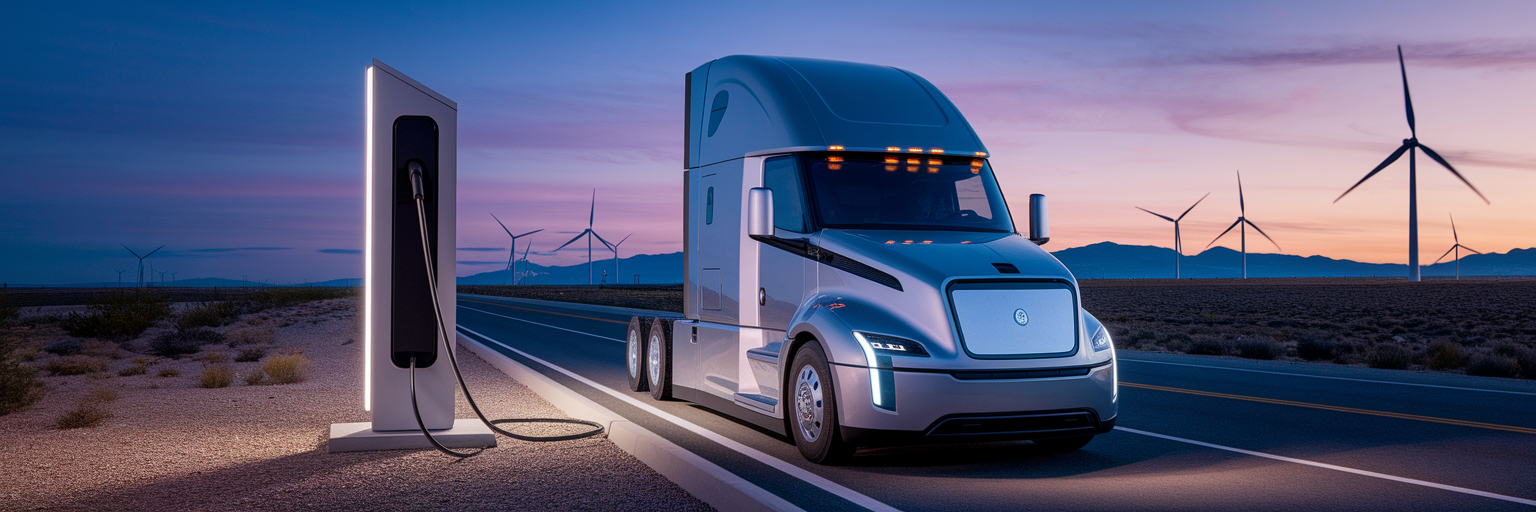
The challenges of cost, range, and charging are not being ignored. A wave of innovation is underway, with engineers and designers working on tangible solutions to make electric trucks more practical, efficient, and affordable. These advancements are directly addressing the hurdles that currently slow down adoption.
The Next Wave of Battery Technology
The battery is the heart of an electric truck, and its technology is evolving quickly. The industry is moving beyond current lithium-ion chemistry with several key goals:
- Increasing energy density to achieve longer range with lighter, smaller battery packs.
- Reducing reliance on costly and ethically challenging materials like cobalt and nickel.
- Accelerating charging speeds to make a charging stop comparable in time to a diesel fill-up.
In the long term, technologies like solid-state batteries promise to deliver even greater leaps in performance and safety.
Smarter, Faster Charging Solutions
To solve the charging bottleneck, a new global standard is emerging: the Megawatt Charging System (MCS). This technology is specifically designed to deliver a massive amount of power to commercial vehicles, potentially recharging a heavy-duty truck in under 30 minutes. Alongside faster hardware, smart charging software is becoming essential. This software helps fleet managers optimize charging schedules to take advantage of the lowest electricity rates and balance the load on the grid, preventing costly demand spikes.
ADAS and AI for Maximum Efficiency
Advanced Driver-Assistance Systems (ADAS) are becoming more than just safety features. In electric trucks, they are crucial tools for maximizing efficiency. By using AI to analyze the route ahead, these systems can intelligently manage regenerative braking to recapture the most energy possible. They can also plan routes that avoid steep inclines or heavy traffic, conserving battery life and ensuring the truck can complete its journey on a single charge.
Redefining Truck Design
Removing the massive diesel engine and transmission opens up a world of design possibilities. Without the need to accommodate a bulky powertrain, designers can create trucks with vastly improved aerodynamics, which directly translates to longer range. They are also increasingly using lightweight composite materials in the cab and chassis to help offset the weight of the battery pack, clawing back valuable payload capacity.
The Future of Trucking Beyond 2025
The progress made by 2025 sets the stage for an even more transformative decade ahead. The convergence of technology, economic pressures, and regulatory action ensures that the future of electric trucking is not a matter of if, but when. The transition is well underway, and its pace is only accelerating.
The Convergence of Electric and Autonomous Tech
Electric platforms are a natural fit for autonomous technology. Their drive-by-wire systems are far easier for computers to control than mechanical diesel powertrains. This synergy is fueling the development of self-driving electric trucks designed for “hub-to-hub” routes on major U.S. highways. These autonomous corridors promise to dramatically increase logistical efficiency and reduce operational costs, representing the next frontier in freight transportation.
Market Expansion and Diversification
The growth trajectory is steep. A forecast from Archive Market Research projects the electric pickup truck market alone could exceed $30 billion by 2033. This expansion will go far beyond semi-trucks and consumer pickups. We will see the rapid electrification of medium-duty trucks, vocational vehicles like garbage and cement trucks, and the last-mile delivery vans that service our neighborhoods. This diversification will bring more brands into the fold, with legacy automakers like Jeep and others introducing a wider range of electrified utility vehicles. The transition will be gradual, but the combination of regulatory pressure, economic benefits, and relentless innovation ensures electric trucks will play an increasingly dominant role on American roads.