Setting the Stage for an American Muscle Rivalry
Since the 1960s, the Chevrolet Camaro and Ford Mustang have been locked in a battle for the soul of American performance. This is more than just a rivalry between two cars; it is a clash of philosophies, a constant debate over the best way to deliver speed, sound, and excitement. Each new generation refines its argument, and in 2026, the Chevrolet Camaro SS and Ford Mustang Mach 1 represent the sharpest points of this decades-long contest.
The Chevrolet Camaro SS stands as the torchbearer for raw, unapologetic V8 power. Its identity is rooted in a large-displacement engine that delivers immediate, chest-thumping torque. Paired with an aggressive chassis, it represents the purist’s choice. This is a car that doesn’t hide its intentions. It’s a visceral, direct machine built for those who believe that the connection between driver and road should be as unfiltered as possible. The Camaro argues that true performance is felt, not just measured.
In the other corner, the Ford Mustang Mach 1 presents itself as a more surgical instrument. It was engineered to bridge the gap between the standard Mustang GT and the elite Shelby models, creating a track-focused machine from the outset. Its philosophy is one of aerodynamic efficiency and handling precision. Ford’s approach with the Mach 1 was not just to add power, but to refine every component for circuit performance, from its suspension to its cooling systems. It argues that the fastest way around a track is through balance and engineering finesse.
This analysis will dissect every critical element of this classic Camaro SS vs Mustang Mach 1 matchup. We will move beyond simple spec sheets to explore engine character, handling dynamics, daily usability, and long-term ownership costs. The goal is to provide a definitive answer for the enthusiast wondering which of these icons is the best track day muscle car available today.
Powertrain and Straight-Line Supremacy
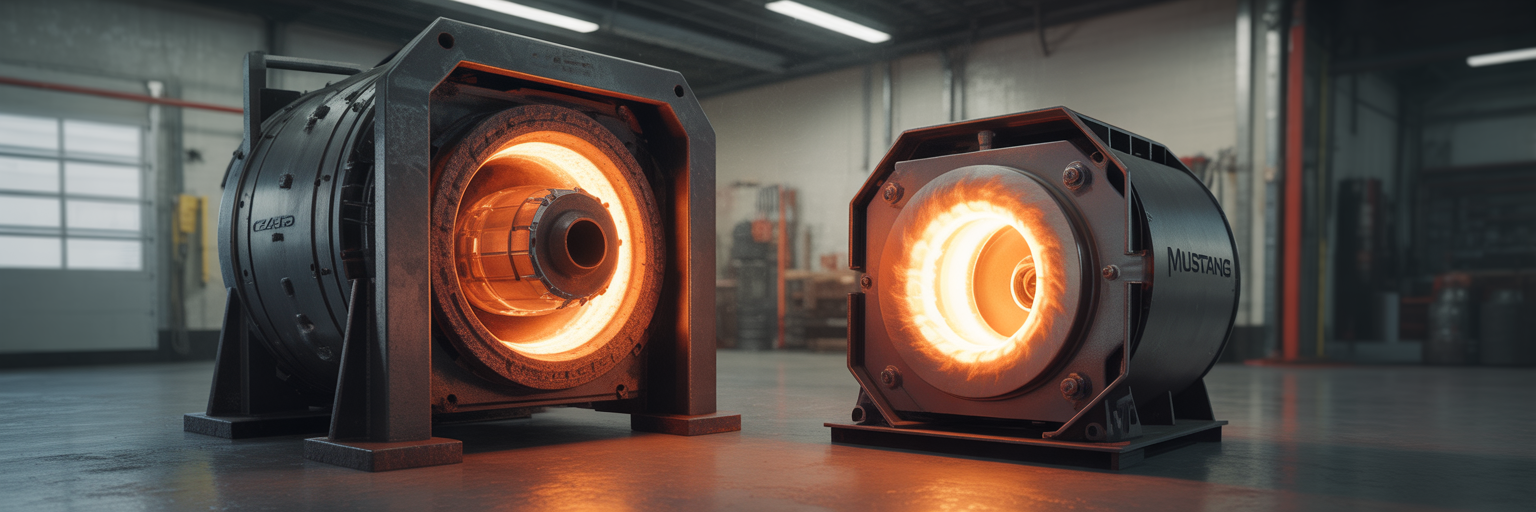
While both cars promise V8 thrills, their engines deliver that excitement in distinctly different ways. The character of the powertrain defines the entire driving experience, from the sound it makes at idle to the way it pulls toward the redline. This is where the philosophical differences between Chevrolet and Ford become most apparent.
The Heart of the Camaro: A 6.2L LT1 V8
The Chevrolet Camaro SS performance is defined by its massive 6.2L LT1 V8. Looking at the numbers, 455 horsepower and 455 lb-ft of torque are impressive, but they don’t tell the whole story. What that large displacement truly delivers is instantaneous, low-end torque. There is no waiting for the power to build. From a standstill, the Camaro shoves you into your seat with a feeling of effortless thrust. It’s a classic muscle car sensation, where a gentle press of the throttle produces an immediate and authoritative response. This engine feels big, strong, and always ready to unleash its power, making it incredibly engaging even at city speeds.
While this V8 is a celebrated powerhouse, it is important for potential owners to have a complete picture. Like many high-performance engines, its history includes specific issues. For instance, some model years have faced challenges, and being aware of information like the GM 6.2L engine recall provides valuable context for long-term ownership.
The Soul of the Mustang: A High-Revving 5.0L Coyote V8
The Ford Mustang Mach 1 review always circles back to its magnificent 5.0L Coyote V8. With 480 horsepower, it slightly edges out the Camaro on paper, but its 420 lb-ft of torque arrives higher in the rev range. This creates a completely different personality. The Coyote is an engine that loves to be revved. While it is perfectly capable around town, its true magic is revealed as the tachometer needle sweeps past 4,000 rpm. It delivers a thrilling, crescendo-like rush as it screams toward its high redline, rewarding drivers who are willing to push it. It feels more like a sports car engine than a traditional muscle car motor, prioritizing high-rpm excitement over low-end grunt.
Acceleration and Auditory Assault
In a straight line, these two are incredibly close. The Camaro SS often posts a 0-60 mph time around 4.0 seconds, its massive torque giving it a slight edge off the line. The Mach 1 is right behind, typically hitting 60 mph in about 4.2 seconds by using its quick-revving nature and aggressive gearing to its advantage. The real difference is how they sound while doing it. The Camaro SS bellows with a deep, guttural roar that is pure, classic American muscle. It’s a simple, powerful, and intimidating sound. The Mach 1, with its active exhaust system, offers a more complex and higher-pitched note. It can be a refined rumble at low speeds or a ferocious wail at full throttle, giving the driver more control over its auditory presence.
| Specification | Chevrolet Camaro SS | Ford Mustang Mach 1 |
|---|---|---|
| Engine | 6.2L LT1 V8 | 5.0L ‘Coyote’ V8 |
| Displacement | 376 cubic inches | 302 cubic inches |
| Horsepower | 455 hp @ 6,000 rpm | 480 hp @ 7,000 rpm |
| Torque | 455 lb-ft @ 4,400 rpm | 420 lb-ft @ 4,600 rpm |
| 0-60 MPH (Approx.) | ~4.0 seconds | ~4.2 seconds |
| Transmission Options | 6-Speed Manual / 10-Speed Automatic | 6-Speed Manual / 10-Speed Automatic |
Note: Performance figures are based on manufacturer claims and results from various automotive publications. Actual times may vary based on transmission, driver skill, and conditions.
Handling Dynamics and Cornering Agility
While straight-line speed is thrilling, a true track car proves its worth in the corners. It is here that the engineering philosophies behind the Camaro and Mustang diverge most sharply. This muscle car handling comparison reveals two different approaches to achieving the same goal: getting around a circuit as quickly and confidently as possible.
Chassis Philosophy: Alpha Platform vs. S550
The Camaro’s exceptional handling begins with its foundation: the Alpha platform. Originally developed for Cadillac’s sport sedans, this chassis is known for its outstanding rigidity and low center of gravity. This gives the Camaro an inherently planted and confident feel. When you turn the wheel, there is a sense of immediacy and solidity, as if the entire car is a single, unyielding unit. This stiff platform allows the suspension to do its job more effectively, providing a stable base that translates into immense mechanical grip through corners.
The Mustang’s S550 platform is a highly capable base in its own right, but for the Mach 1, it serves as a canvas for significant track-focused enhancements. Ford didn’t just rely on the base chassis; it added bracing and components from the Shelby GT350 and GT500 to increase stiffness. The result is a car that feels responsive and agile, but its character is defined more by its sophisticated add-ons than by its inherent chassis design alone.
Suspension Technology: The MagneRide Advantage
The single biggest differentiator in handling is the suspension. The Mustang Mach 1 comes standard with Ford’s MagneRide adaptive damping system. This technology uses magnetic fluid in the dampers that can change viscosity almost instantly. By reading the road surface a thousand times per second, the system can adjust damping at each corner independently to optimize both ride comfort and handling grip. On a track, this means the car stays flatter in corners, manages weight transfer more effectively, and provides a more stable platform under braking.
The Camaro SS features an excellent standard suspension that provides superb control and feedback. However, to get Chevrolet’s similar Magnetic Ride Control, you must option it on the SS or select the 1LE package where it comes standard. The Mach 1’s inclusion of this advanced technology as a core feature underscores its track-focused mission from the factory. As noted in a review by Car and Driver, the Mach 1’s adaptive suspension provides “confidence-inspiring stability” on a road course, making it feel predictable and secure at the limit.
Steering Feel and Driver Connection
The final piece of the handling puzzle is the steering. The Camaro’s steering is characteristically heavy and direct. It provides a rich stream of feedback from the front tires, creating a raw and unfiltered connection to the road surface. You feel every nuance of the pavement, which inspires confidence when pushing hard. Some may find it demanding for daily driving, but on a track, this level of communication is invaluable.
In contrast, the Mustang’s steering is lighter and quicker. It makes the car feel more nimble and eager to change direction. While it may not offer the same granular feedback as the Camaro, it is exceptionally precise. You can place the car exactly where you want it with minimal effort. The choice between the two comes down to preference: the Camaro’s communicative, weighty feel versus the Mustang’s light, razor-sharp precision.
Braking Performance and Track-Day Readiness

Incredible speed and agile handling are useless without the ability to slow down effectively, lap after lap. For a track-day car, stopping power is not just about a single panic stop; it is about endurance and resistance to brake fade. This is where factory preparation for sustained abuse separates serious contenders from street-focused machines.
Stopping Power: A Brembo Brake Showdown
Both the Camaro SS and Mustang Mach 1 come equipped with high-performance Brembo brakes from the factory. The Camaro SS features four-piston calipers at both the front and rear, while the Mach 1 boasts larger six-piston front calipers. In single, hard stops from high speed, both systems are incredibly powerful and provide strong, confident pedal feel. For aggressive street driving or the occasional spirited run on a back road, either setup is more than capable of hauling these heavy cars down from speed without drama.
The Mach 1’s Factory Advantage
Where the Ford Mustang Mach 1 truly distinguishes itself is in its out-of-the-box preparation for track duty. Ford understood that repeated lapping generates immense heat not just in the brakes, but throughout the entire drivetrain. To combat this, the Mach 1 was engineered with multiple dedicated cooling systems borrowed from the Shelby parts bin. This factory-installed hardware includes:
- An Engine Oil Cooler
- A Transmission Cooler
- A Rear Differential Cooler
These components are not flashy, but they are critical for maintaining performance and reliability during a 20-minute lapping session. They signify that the Mach 1 was designed from the ground up with track endurance in mind, allowing a driver to push harder for longer without worrying about overheating key components.
The Camaro’s 1LE Counter-Attack
The standard Camaro SS lacks this level of dedicated cooling, which can become a limiting factor during extended track use. However, Chevrolet offers a powerful counter-argument: the optional 1LE Track Performance Package. Selecting this package transforms the SS into a true track weapon. It adds not only the advanced Magnetic Ride Control suspension but also an enhanced cooling package with an engine oil cooler, dual outboard radiators, and transmission and differential coolers. It also includes the larger six-piston front Brembo brakes and wider, stickier summer tires.
This highlights a key philosophical difference in the Camaro SS vs Mustang Mach 1 debate. The Mach 1 is a complete, track-ready trim level right off the showroom floor. The Camaro SS, while a phenomenal performance car in its own right, requires the 1LE package to achieve the same level of track-day readiness and endurance. This kind of detailed analysis is what helps enthusiasts make informed decisions, and for those who enjoy these head-to-head battles, we offer more in-depth vehicle comparisons.
Interior Ergonomics and Onboard Technology
Performance on the track is only part of the ownership experience. These cars also have to function on public roads, in traffic, and on long trips. The design of the cabin, the usability of the technology, and the overall comfort play a huge role in how enjoyable a car is to live with every day. Here, the two rivals present starkly different environments.
Cockpit vs. Cabin: Two Design Philosophies
Sitting in the Camaro is like strapping into a fighter jet. The interior is a driver-focused “cockpit,” with a high beltline, low roofline, and a dashboard that wraps around you. This creates an immersive, hunkered-down feeling that is exciting when you are focused on driving hard. However, this design comes with a significant and well-known trade-off: terrible outward visibility. The small windows and thick pillars create massive blind spots, which can be unnerving in dense traffic and make placing the car precisely on a track apex more challenging than it needs to be.
The Mustang’s interior, by contrast, feels more like a traditional car cabin. It is more open and airy, with a lower beltline and larger windows that provide much better visibility in all directions. While it may lack the focused intensity of the Camaro’s cockpit, it is a far more practical and less claustrophobic space for daily driving. The layout is more user-friendly, with controls that are easier to see and reach.
Infotainment and Connectivity
Both cars come equipped with modern infotainment systems featuring touch screens and smartphone integration. However, their execution differs. Chevrolet’s Infotainment 3 system is often praised for its speed and intuitive menu structure, while Ford’s SYNC system is also highly capable but can sometimes feel a step behind in responsiveness. Here is a quick breakdown:
- Responsiveness: The Camaro’s system generally feels quicker, with less lag between inputs and actions.
- Interface: Both systems have logical layouts, but Chevy’s is often considered slightly more straightforward for new users.
- Integration: Both offer standard Apple CarPlay and Android Auto, making smartphone connectivity seamless.
- Premium Audio: The Camaro offers an optional Bose premium audio system, while the Mustang counters with an available B&O system, both of which provide a significant upgrade over the standard speakers.
Comfort and Livability
When it comes to daily comforts, the Mustang generally pulls ahead. It offers more creature comforts and a more thoughtfully designed space. Both cars offer features like heated and ventilated seats and digital instrument clusters, but the Mustang’s are often integrated into a more user-friendly package. The Camaro’s interior is purpose-built for the act of driving, and it makes compromises in comfort and practicality to achieve that focus. The Mustang, on the other hand, strikes a better balance, offering a cabin that is both sporty and comfortable enough for a long road trip, making it a more well-rounded choice for an owner who needs their sports car to also be their daily driver.
Reliability and Long-Term Ownership Costs

Owning a high-performance machine involves more than just the initial purchase price. Factoring in maintenance, insurance, fuel, and depreciation is essential for understanding the true financial commitment. When considering V8 sports car ownership costs, both the Camaro and Mustang present a similar picture, but with a few key differences that could influence a buyer’s decision.
Both the GM LT1 and Ford Coyote V8s are mature, well-understood engines. With proper maintenance, both have proven to be robust and reliable powertrains. However, high-performance ownership inherently means more frequent and expensive upkeep. You can expect rapid tire wear, especially with the sticky summer tires these cars are equipped with, and routine services like oil changes will require premium synthetic oil, adding to the cost. Brakes, another consumable item, will also be more expensive to replace than on a standard passenger car.
Insurance premiums for this class of vehicle are consistently high, driven by their power and performance capabilities. Fuel consumption is another significant factor. The Camaro’s larger 6.2L engine may result in slightly lower city MPG, while the Mustang’s smaller displacement might give it a small advantage on the highway, though both will be thirsty when driven enthusiastically. A crucial long-term consideration is depreciation. Market trends often suggest that special, track-focused editions like the Mach 1 tend to hold their value better than standard trims like the Camaro SS. The Mach 1’s specific branding and factory-installed performance hardware make it more desirable to collectors and enthusiasts down the line. While the Camaro’s strong following helps keep its resale values competitive, the Mach 1 likely has a slight edge as a long-term financial choice. Staying informed about these trends is key, and for a wealth of information on all things automotive, enthusiasts can explore the resources available at Car Phanatics.
The Final Verdict for Track Dominance
After dissecting every aspect of these two American icons, from their powertrain philosophies to their track-day endurance, a clear picture emerges. Both cars offer incredible performance for the money, but they are built to satisfy different priorities. To make a final decision, let’s recap their core strengths.
- Chevrolet Camaro SS: Its greatest asset is the raw, unfiltered power from its 6.2L V8, delivering immense torque from anywhere in the rev range. This is backed by an exceptionally rigid chassis that provides a foundation for tremendous mechanical grip and a pure, connected driving experience.
- Ford Mustang Mach 1: Its strength lies in its cohesive, track-focused engineering. A high-revving engine is paired with a sophisticated MagneRide suspension and, most importantly, factory-installed cooling and aero packages that signal its immediate readiness for the circuit.
So, which car delivers better track-day performance? A Camaro SS equipped with the 1LE package is an incredibly formidable competitor, matching the Mach 1 in braking, cooling, and handling prowess. On any given day, with equally skilled drivers, the lap times between a Camaro SS 1LE and a Mustang Mach 1 would be astonishingly close, likely decided by tenths of a second.
However, the question is about the superior track-day car as delivered from the manufacturer. In that context, the verdict is clear. The Ford Mustang Mach 1 is the superior out-of-the-box track car. This conclusion is based on its purpose-built design. The Mach 1 is not a standard model with an optional package; it is a distinct trim level where the chassis, suspension, aerodynamics, and powertrain cooling were engineered from the start to work in harmony for road course agility and endurance. It arrives ready for lapping, with no options required.
The Camaro is a phenomenal muscle car that can be turned into a track weapon, but the Mustang Mach 1 is born as one.