Defining the Modern ‘Everyday Adventure’ Vehicle
The American family car has transformed. What was once the domain of the station wagon has been completely redefined by the midsize SUV. These vehicles are now the default choice for millions, expected to perform a delicate balancing act. They must navigate the stop-and-go traffic of a Dallas commute with quiet composure and then, without hesitation, handle a weekend escape to a state park. This dual personality is the core of the modern ‘everyday adventure’ vehicle.
This idea of adventure isn’t about conquering extreme trails or fording deep rivers. It’s about practical capability. It’s the confidence to drive through an unexpected snowstorm, the traction to manage an unpaved road leading to a scenic overlook, and the muscle to tow a small boat to the lake. It’s about a vehicle that expands your possibilities, rather than limiting them.
In this midsize SUV comparison, we examine two of the most compelling answers to this need: the 2026 Honda Passport and the 2026 Jeep Grand Cherokee. They arrive at the same destination from entirely different directions. The Passport is a masterclass in pragmatic engineering, prioritizing on-road comfort, cavernous interior space, and proven reliability. It’s the logical choice, refined to near perfection. The Grand Cherokee, on the other hand, is a rugged American icon, built with a higher ceiling for capability and a broader spectrum of personalities, from a utilitarian workhorse to a near-luxury sanctuary.
This article will guide you through a direct Honda Passport vs Jeep Grand Cherokee analysis. We will dissect their interior comfort and design, compare their drivetrain philosophies, evaluate their real-world practicality for hauling gear and people, and finally, weigh the long-term ownership factors of reliability and cost. By the end, you will have a clear understanding of which SUV aligns with your definition of adventure.
A Tale of Two Cabins: Comfort vs. Rugged Refinement
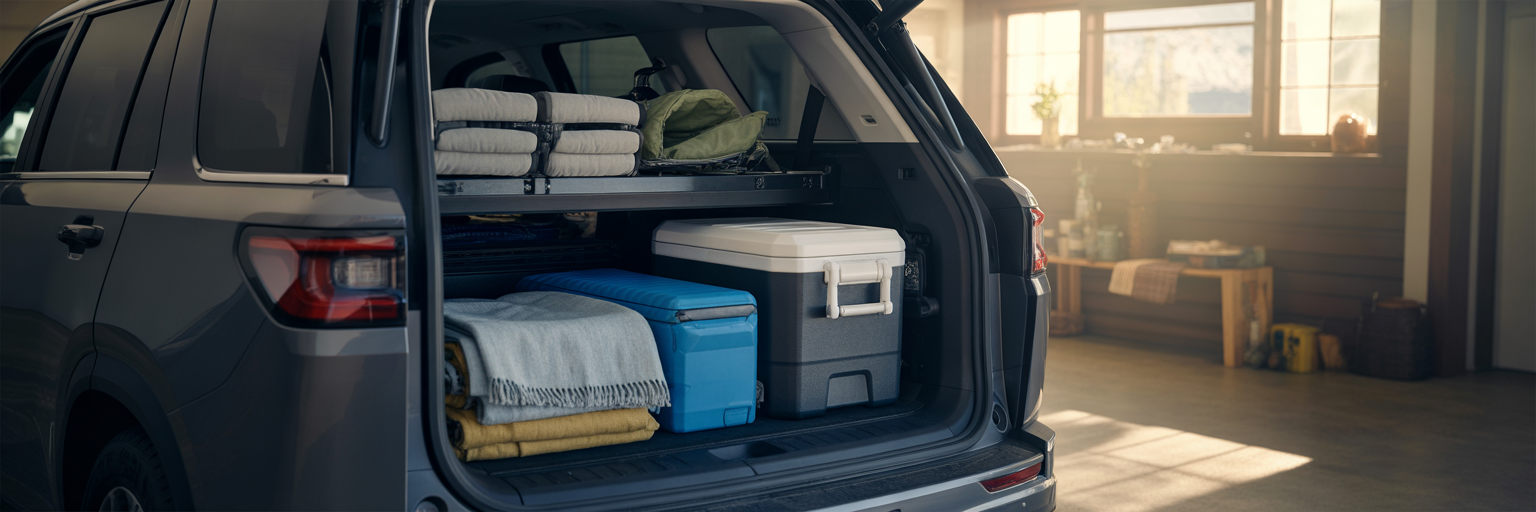
Stepping inside the Passport and the Grand Cherokee reveals their differing priorities as clearly as any spec sheet. One is an open, airy space designed around its occupants, while the other offers a spectrum of environments from tough to opulent. It’s a classic battle of function-first design versus customizable character.
The Passport’s Domain: Cavernous Space and Practical Design
The Honda Passport’s interior is an exercise in thoughtful space optimization. The first thing you notice is the sheer volume. Rear-seat passengers are treated to legroom that feels like it belongs in a class above, making long road trips with teenagers or adults genuinely comfortable. The seats are wide and accommodating, designed for hours of fatigue-free travel. This focus on passenger comfort makes it arguably the best SUV for families who frequently travel together.
The dashboard design reinforces this practical ethos. In an era of screen-centric complexity, Honda provides physical knobs for climate control and a real volume knob. These are small details, but they are the ones you appreciate every single day, minimizing distraction and allowing you to keep your eyes on the road. Materials are high-quality, with durable, soft-touch surfaces that absorb road noise and contribute to a surprisingly quiet, car-like ride. It’s not flashy, but it is impeccably executed, feeling like a space designed by people who actually have families and stuff to haul.
The Grand Cherokee’s Spectrum: From Utilitarian to Upscale
Where the Passport offers one excellent flavor, the Grand Cherokee presents a full menu. The interior experience is a sliding scale. Base models are honest and utilitarian, with durable cloth seats and tough plastics that feel ready for muddy boots and wet gear. They are easy to clean and built to withstand use, not just admiration.
However, as you ascend the trim levels, the cabin transforms. The Grand Cherokee can be optioned into a true luxury contender. Upper trims wrap you in quilted Nappa leather, feature open-pore wood trim that feels incredible to the touch, and offer customizable ambient lighting that can change the entire mood of the cabin. It’s a level of material richness and bespoke feeling that the Passport simply doesn’t aim for. This allows the Grand Cherokee to appeal to a much wider range of buyers, from the contractor to the executive.
Infotainment Philosophies: Simplicity vs. Feature-Rich Tech
This contrast in philosophy extends to the center screen. Honda’s infotainment system is straightforward and effective. The menus are logical, and connecting your phone is a painless process. It’s designed to give you quick access to music, navigation, and contacts without a steep learning curve. It does the essentials, and it does them well.
Jeep’s Uconnect system, especially with the larger optional screens, is a more immersive and feature-dense experience. It offers deeper customization, sharper graphics, and unique features that speak to its brand identity. The available Off-Road Pages, for example, display real-time data on vehicle pitch and roll, suspension articulation, and drivetrain status. It’s a piece of technology that not only provides information but also enhances the vehicle’s adventurous character. The Passport’s system is a tool; the Grand Cherokee’s is a centerpiece.
Power and Traction: Dissecting the Drivetrain Systems
Beneath the sheet metal, the Passport and Grand Cherokee reveal their most fundamental differences. Honda has perfected a single, intelligent system designed for all-weather confidence on the road. Jeep offers an arsenal of hardware built for conquering what lies beyond it. Understanding the engineering behind these systems is key to choosing the right SUV.
Honda’s i-VTM4: The Smart All-Weather System
Every Honda Passport comes equipped with a smooth and powerful V6 engine paired with the brand’s impressive i-VTM4 all-wheel-drive system. This isn’t a simple AWD setup that just reacts to slip. It’s a proactive torque-vectoring system. This means it can not only send power to the rear wheels when needed but can also distribute that power between the individual left and right rear wheels.
Think of it this way: when you’re taking a cloverleaf ramp on a wet day, the system can send more power to the outside rear wheel. This helps the SUV pivot cleanly through the turn, creating a feeling of incredible stability. It’s a subtle but significant advantage that enhances driver confidence in the adverse weather conditions common across the Midwest and Northeast. The system is engineered to make a good driver even better by seamlessly managing traction on paved and graded surfaces.
Jeep’s 4×4 Arsenal: A System for Every Mission
The Grand Cherokee offers a broader powertrain strategy, starting with a choice of a standard V6, a powerful V8, or the advanced 4xe plug-in hybrid. For those exploring electrified options, the landscape of choices is growing, as seen in the competition between models like the Tesla Model X or Rivian R1s. This choice extends to its legendary 4×4 systems, which are tiered for different levels of capability.
- Quadra-Trac I: This is a simple, effective full-time 4WD system. It’s always on, providing basic all-weather traction without any driver input.
- Quadra-Trac II: This system adds a two-speed transfer case. This introduces a “4-Low” gear range, a critical piece of hardware the Passport lacks.
- Quadra-Drive II: The most capable system, this builds on Quadra-Trac II by adding an electronic limited-slip rear differential (eLSD) that can direct nearly all available torque to the one rear wheel with the most grip.
That “4-Low” setting is what truly separates these vehicles. Engaging low-range gearing is like shifting a bicycle into its easiest gear to climb a steep hill. It multiplies the engine’s torque, allowing the Grand Cherokee to crawl over large rocks, ascend incredibly steep and loose grades, and navigate difficult obstacles with slow, precise control. It is the single biggest piece of hardware that defines Jeep’s off-road credentials.
| Feature | Honda Passport (i-VTM4) | Jeep Grand Cherokee (Quadra-Trac II / Quadra-Drive II) |
|---|---|---|
| Primary Design Goal | On-road stability and all-weather confidence | True off-road capability and maximum traction |
| Key Hardware | Rear clutch packs for torque vectoring | Two-speed transfer case, available electronic limited-slip differential (eLSD) |
| Low-Range Gearing | Not available | Standard on Quadra-Trac II and Quadra-Drive II |
| Side-to-Side Torque Distribution | Yes (at rear axle) | Yes (with Quadra-Drive II eLSD) |
| Ideal Use Case | Slippery pavement, snow-covered roads, graded dirt paths | Steep inclines, rock crawling, deep mud, severe conditions |
Capability When the Pavement Ends
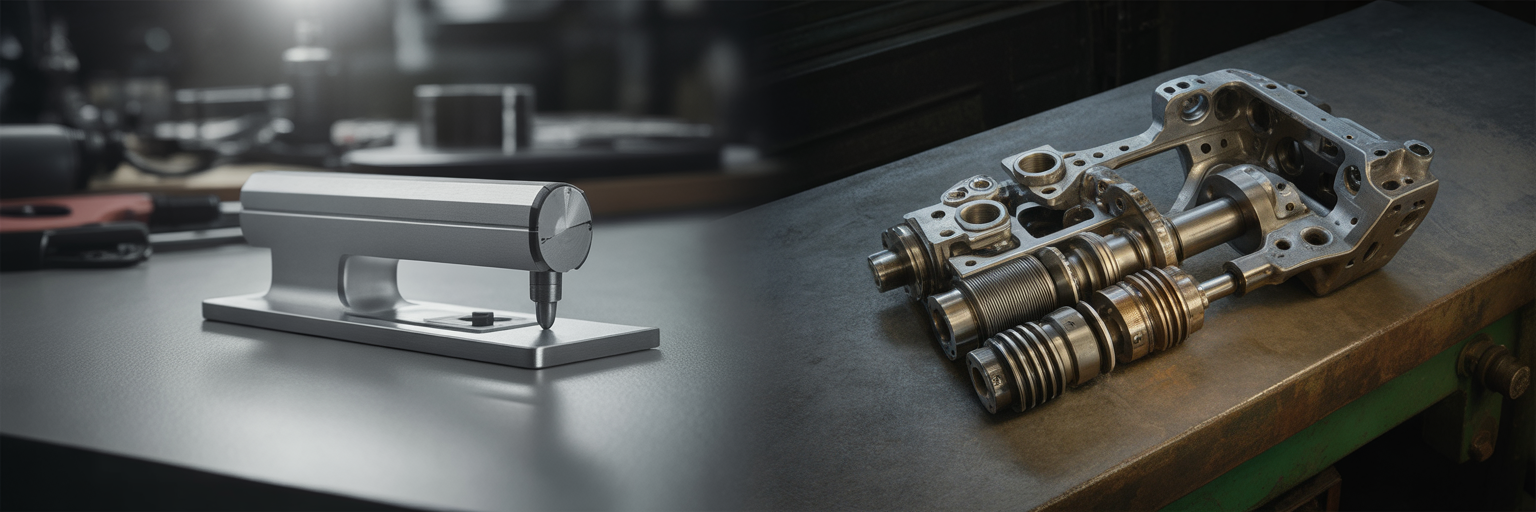
With an understanding of the hardware, we can now look at how these two SUVs perform in the real world. The previous section explained the tools; this one explains what you can build with them. The Passport is designed for the adventures most of us take, while the Grand Cherokee is engineered for the adventures some of us dream of taking.
The Passport is the perfect companion for the vast majority of family outings. It handles gravel roads leading to a hidden fishing spot with complete composure. It confidently navigates snowy driveways and unplowed streets. It will have no trouble crossing a grassy field to get that prime tailgating spot. Its ground clearance is more than respectable for its class, and its Intelligent Traction Management system offers pre-calibrated settings for Snow, Sand, and Mud. These modes adjust the i-VTM4 system’s behavior to optimize grip in specific, common scenarios. It’s a smart, effective system for light-duty challenges.
However, it’s equally important to understand its limits. The Passport’s unibody construction, while excellent for on-road comfort, and its lack of significant underbody protection mean it is not designed for serious trail driving. There is no low-range gearing to help it crawl over rocks or descend steep, treacherous hills safely. Pushing it too far on a difficult trail is a recipe for expensive damage. It is a supremely capable soft-roader, but it is not a rock-crawler.
This is where the Jeep Grand Cherokee establishes its dominance as a truly off road capable SUV. Its superiority isn’t just about the low-range gearing. The available Quadra-Lift air suspension is a transformative feature, allowing the driver to increase the vehicle’s ground clearance at the touch of a button to clear large rocks or deep ruts. You can order it with robust steel skid plates that protect the engine, transfer case, and fuel tank from impacts. The Selec-Terrain system is also more advanced than Honda’s. Instead of just adjusting the AWD system, modes like “Rock” coordinate the 4×4 system, throttle response, braking, and transmission shifting to create a cohesive and incredibly capable off-road machine.
The difference can be summarized this way: the Honda Passport will confidently and comfortably get you to 95% of the destinations you could ever want to visit. The Jeep Grand Cherokee is engineered for the challenging 5% that lies beyond that. It offers a higher ceiling of capability, providing access to more remote and difficult terrain for those who will genuinely use it.
Practicality in Motion: Cargo, Gear, and Towing
An adventure vehicle is only as good as the gear and people it can carry. In the practical world of everyday use, the ability to haul camping equipment, sports gear, or a weekend toy is often the deciding factor. Here, the Passport and Grand Cherokee showcase their different interpretations of utility. One prioritizes internal volume, the other external muscle.
The Cargo King: Passport’s Advantage in Volume and Storage
When it comes to hauling stuff inside the vehicle, the Honda Passport is the undisputed champion. A look at the official cargo capacity figures shows it leads the class, both with the rear seats in place and when they are folded flat. But numbers don’t tell the whole story. The Passport’s cargo area is a wide, square space with a low lift-over height, which makes loading heavy items like a large cooler or bulky luggage significantly easier. There are no strange humps or intrusions to work around.
The Passport’s secret weapon, however, lies beneath the cargo floor. Its massive underfloor storage bin is a brilliant piece of practical design. It’s the perfect place to stash muddy hiking boots, wet beach towels, or an emergency kit, keeping them separate from the main cargo area. For families, it’s an invaluable feature for organizing the chaos of daily life and weekend trips.
The Towing Champion: Grand Cherokee’s Superior Muscle
While the Passport excels at internal storage, the Grand Cherokee is the clear winner when it comes to pulling a trailer. The Passport offers a respectable standard towing capacity of 5,000 pounds. This is more than enough for many families, easily handling a pair of jet skis, a small aluminum fishing boat, or a pop-up camper. It’s a capable and useful rating for typical recreational needs.
However, the Jeep Grand Cherokee towing capacity sets a much higher bar. Depending on the configuration, especially with the V8 engine, it can tow up to 7,200 pounds. This significant increase in capability fundamentally changes what’s possible. It unlocks the ability to haul larger travel trailers, heavier fiberglass boats, or even a two-horse trailer. For buyers whose adventures involve serious towing, this advantage is often non-negotiable. For the most demanding jobs that require even more power, buyers often step up to heavy-duty trucks, a segment with its own set of leaders. For those considering this, it’s worth exploring which heavy-duty truck is right for you.
The Ownership Equation: Reliability and Long-Term Confidence
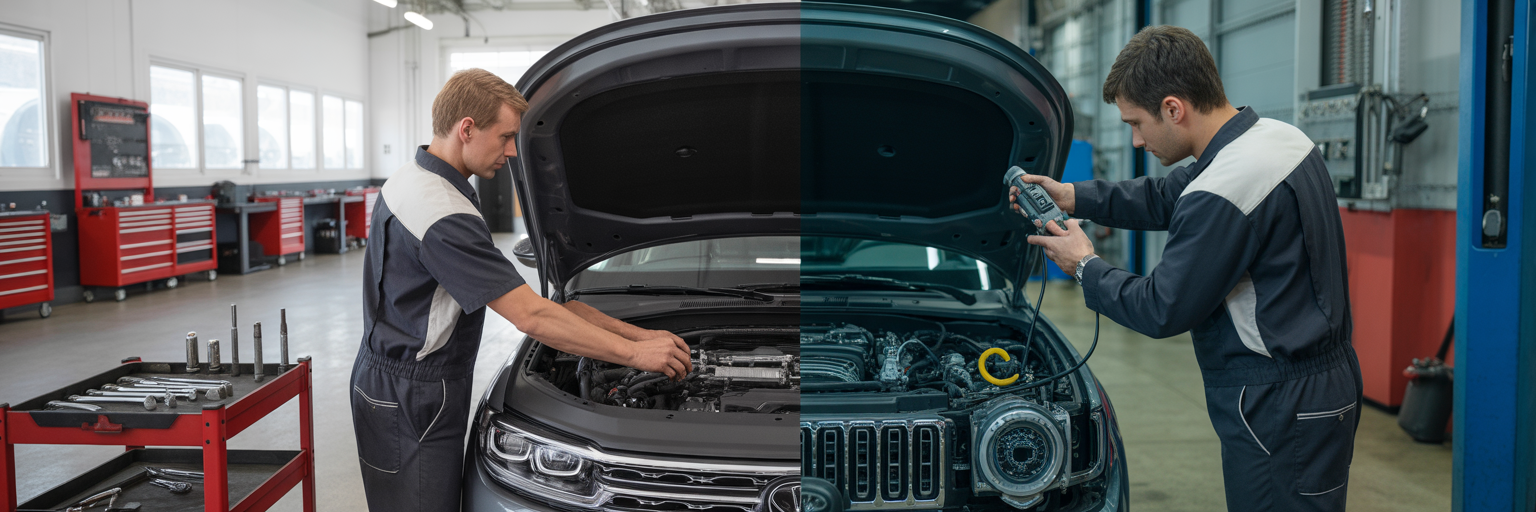
A vehicle purchase is a long-term relationship, and few factors are more critical to that relationship than reliability and overall cost of ownership. This is where the practical, proven approach of Honda clashes with the more complex, feature-rich nature of Jeep. For many buyers, this section is the most important part of the entire Honda Passport vs Jeep Grand Cherokee debate.
There is a reason the term Honda Passport reliability is so well-regarded. The vehicle is built on a platform that also underpins the popular Pilot and Ridgeline models. This means its V6 engine and transmission have been tested and refined over millions of miles in hundreds of thousands of vehicles. This shared architecture leads to a highly predictable ownership experience, with a strong reputation for fewer unexpected repairs and lower long-term maintenance costs. It’s a vehicle engineered to minimize drama.
The Jeep ownership experience is often characterized by a more passionate, but sometimes more volatile, relationship. While the brand commands intense loyalty, its models have historically posted more variable reliability ratings from independent consumer studies. To provide a balanced view, it’s worth noting that while recent models have shown improvement, publications like AutoGuide have pointed out the difference in long-term dependability between the two brands. This isn’t to say every Grand Cherokee will be problematic, but the potential for issues, particularly with more complex systems, is statistically higher.
This difference in mechanical complexity directly impacts the total cost of ownership. Honda’s strong resale value is legendary, meaning owners typically get a larger percentage of their initial investment back when it’s time to sell. Furthermore, repairing the Passport’s single, proven powertrain is generally more straightforward and affordable for an independent mechanic. The Grand Cherokee, with its multiple engine options, available air suspension, and advanced 4×4 systems, introduces more variables. An out-of-warranty repair on an air spring or an electronic differential will be significantly more expensive than any likely repair on the Passport. This trade-off between practicality and premium features is a common theme, one we’ve also explored in our comparison of the Lexus RX and Toyota Highlander.
Ultimately, the choice comes down to your definition of ownership confidence. If your primary concern is a hassle-free, predictable, and financially sensible long-term experience, the Honda Passport holds a clear and significant advantage. The Grand Cherokee buyer implicitly accepts a potential trade-off in this area in exchange for its superior capability, broader range of options, and iconic brand image.
Matching the SUV to Your Ambition
After comparing cabins, drivetrains, and long-term prospects, the choice between the Honda Passport and Jeep Grand Cherokee becomes a reflection of your personal priorities. The “better” SUV is the one that aligns with your life, your needs, and your definition of adventure. Let’s paint a clear picture of who each vehicle is for.
The Ideal Passport Owner: The Pragmatic Adventurer
The ideal Honda Passport owner is a pragmatist. This person or family values space, comfort, and peace of mind above all else. Their adventures are frequent and cherished, but they happen on paved roads, gravel paths, and snow-covered streets. They need a vehicle that can swallow an astonishing amount of gear for a weekend camping trip and then revert to a comfortable, quiet commuter on Monday morning. They see their vehicle as a smart investment and place a high premium on proven reliability, low running costs, and strong resale value. For them, confidence comes from knowing their vehicle will start every morning and won’t present them with unexpected, expensive surprises. The Passport is the ultimate tool for a life well-lived, delivering exceptional comfort and practicality without compromise.
The Ideal Grand Cherokee Owner: The Aspirational Explorer
The ideal Jeep Grand Cherokee owner is an aspirationalist. This buyer is drawn to the rugged image and the promise of what’s possible. They may have a larger boat to tow, a remote cabin to access, or simply a desire to explore more challenging terrain. Or, they may never engage 4-Low but want the confidence that comes from knowing it’s there. This buyer is willing to trade some of the Passport’s cavernous interior space for more powertrain choices, more luxurious options, and a higher ceiling of capability. They are captivated by the Jeep brand’s go-anywhere heritage and are willing to potentially accept higher long-term running costs to own a piece of that legacy. The Grand Cherokee is the choice for those who want more power, more technology, and more freedom to explore whatever lies over the next hill.
So, in the final analysis of the Honda Passport vs Jeep Grand Cherokee, the best choice is the one that matches your ambition. If your adventure is about creating comfortable, reliable, and spacious journeys with your family, the Honda Passport is the intelligent and satisfying answer. If your adventure is about pushing boundaries, tackling tougher challenges, and having the capability to go further, the Jeep Grand Cherokee is the clear and compelling choice.