Anyone shopping for a full-size truck has faced the same question: why do the Chevrolet Silverado and GMC Sierra seem so similar, yet exist as distinct brands? The answer starts with a simple fact. Both trucks are built by General Motors on the exact same platform. This shared DNA is not a redundancy but a deliberate strategy. The Silverado is engineered to be the quintessential American workhorse, designed for practicality and high-volume appeal. The Sierra, on the other hand, is marketed as its more refined, “Professional Grade” sibling for a buyer who expects premium features and a near-luxury experience.
This shared foundation often creates confusion. We all know someone who swears by their Chevy, while their neighbor is equally loyal to their GMC. This article moves beyond brand allegiance to provide a clear guide. We will compare these two titans in the areas that truly matter to you as a buyer. We will examine their engine performance, real-world towing and hauling capabilities, and the crucial differences in interior design and technology. Finally, we will break down their pricing structures and long-term resale value.
Our goal is to give you the insights needed to make a decision based on your personal needs. Are you looking for the maximum capability for your dollar, or are you willing to invest more for a truck that doubles as a luxury vehicle? By the end of this full size truck comparison, you will know which key fits your ignition.
Two Titans From The Same Forge
The core of the Chevrolet Silverado vs GMC Sierra debate begins and ends with their shared engineering. General Motors has perfected the art of platform sharing, creating two distinct identities from one common architecture. Think of it like two houses built from the same blueprint. The foundation, frame, and layout are identical, but the finishing touches, from the kitchen countertops to the light fixtures, create entirely different living experiences. The Silverado is the durable, functional home built with high-quality, practical materials. The Sierra is the same home, but with hardwood floors, granite surfaces, and premium appliances.
This strategy allows GM to cater to two different mindsets. The Silverado buyer often prioritizes function over form. They need a reliable tool that can handle tough jobs without fuss. They appreciate a comfortable cabin but are more concerned with payload ratings and durability. The Sierra buyer wants that same capability but refuses to compromise on comfort and presentation. They might be a contractor meeting with high-end clients or someone who uses their truck as a primary family vehicle for long road trips. For them, the feel of the leather and the clarity of the head-up display matter just as much as the towing capacity.
Throughout this article, we will explore how this philosophy plays out across several key areas:
- Engine and Performance: A look at the identical powertrain options and who each one is for.
- Towing and Hauling: How both trucks use the same technology to make hard work easier.
- Interior Design and Luxury: The single biggest point of separation between the two models.
- Technology and Features: Where shared systems meet exclusive, premium add-ons.
- Pricing and Value: A breakdown of what you get for your money across the trim levels.
- Resale Value: Understanding the long-term financial implications of your choice.
–
–
–
–
This guide is designed to help you see past the badge and focus on the details that will shape your ownership experience. Whether you need a dependable work partner or a refined command center, one of these trucks is built for you. Let’s find out which one it is.
Under the Hood: Engine and Performance Breakdown
When you pop the hood of a Silverado or a Sierra, you will find the exact same lineup of powerful and efficient engines. Performance is not a differentiator here. The choice is not between Chevy and GMC, but about which powertrain best suits your daily life. Whether you are commuting, hauling equipment, or towing a trailer across the country, there is an engine designed for the task. Let’s break down the personality of each one.
The Efficient Powerhouse: 2.7L TurboMax I-4
Do not let the four-cylinder designation fool you. The 2.7L TurboMax is engineered to behave like a larger engine, delivering its impressive 430 lb-ft of torque low in the RPM range. This makes it feel surprisingly quick off the line and capable for daily driving and light hauling. It is the ideal choice for someone who uses their truck primarily for commuting or running a business in the city but still needs the utility of a truck bed for weekend projects.
The Proven Workhorse: 5.3L EcoTec3 V8
This is the quintessential V8, the reliable heart of the lineup for years. It is the all-arounder, balancing proven power with practicality. With 355 horsepower, it has more than enough muscle for moderate towing and hauling, all while delivering that classic V8 rumble that many truck owners expect. If you need a do-it-all truck that can handle family duties during the week and tow a boat on the weekend, the 5.3L V8 is the go-to option.
The Performance King: 6.2L EcoTec3 V8
For those who want maximum power, the 6.2L V8 is the answer. With 420 horsepower and 460 lb-ft of torque, this engine provides effortless acceleration and the confidence to handle heavy loads without breaking a sweat. It is standard on the top-tier trims like the Silverado High Country and GMC Sierra Denali for a reason. It transforms the truck into a true performance machine. This engine has a long and storied history, and for readers interested in its specific service life, more information on topics like the GM 6.2L engine recall can provide deeper context on past updates.
The Torque Monster: 3.0L Duramax Turbo-Diesel
If your life involves long-distance towing, the 3.0L Duramax is in a class of its own. It produces a massive 495 lb-ft of torque, making even heavy trailers feel lighter. Its main advantage, however, is its exceptional fuel economy, making it the champion of highway efficiency. The driving experience is one of quiet, effortless strength. The diesel engine, along with the two V8s, is paired with a sophisticated 10-speed automatic transmission that ensures power is always delivered smoothly and efficiently.
| Engine | Horsepower | Torque | Best For | Key Characteristic |
|---|---|---|---|---|
| 2.7L TurboMax I-4 | 310 hp | 430 lb-ft | Daily driving, light hauling | High torque at low RPMs, fuel efficiency |
| 5.3L EcoTec3 V8 | 355 hp | 383 lb-ft | All-around use, moderate towing | Proven reliability, classic V8 sound |
| 6.2L EcoTec3 V8 | 420 hp | 460 lb-ft | Maximum performance, heavy towing | Highest horsepower, premium power |
| 3.0L Duramax Turbo-Diesel I-6 | 305 hp | 495 lb-ft | Long-distance hauling, maximum torque | Exceptional fuel economy, effortless towing feel |
Note: Horsepower and torque figures are based on manufacturer specifications for the latest model year. These engines are available on both the Chevrolet Silverado and GMC Sierra, with performance being identical.
Real-World Workhorse: Towing and Hauling Power
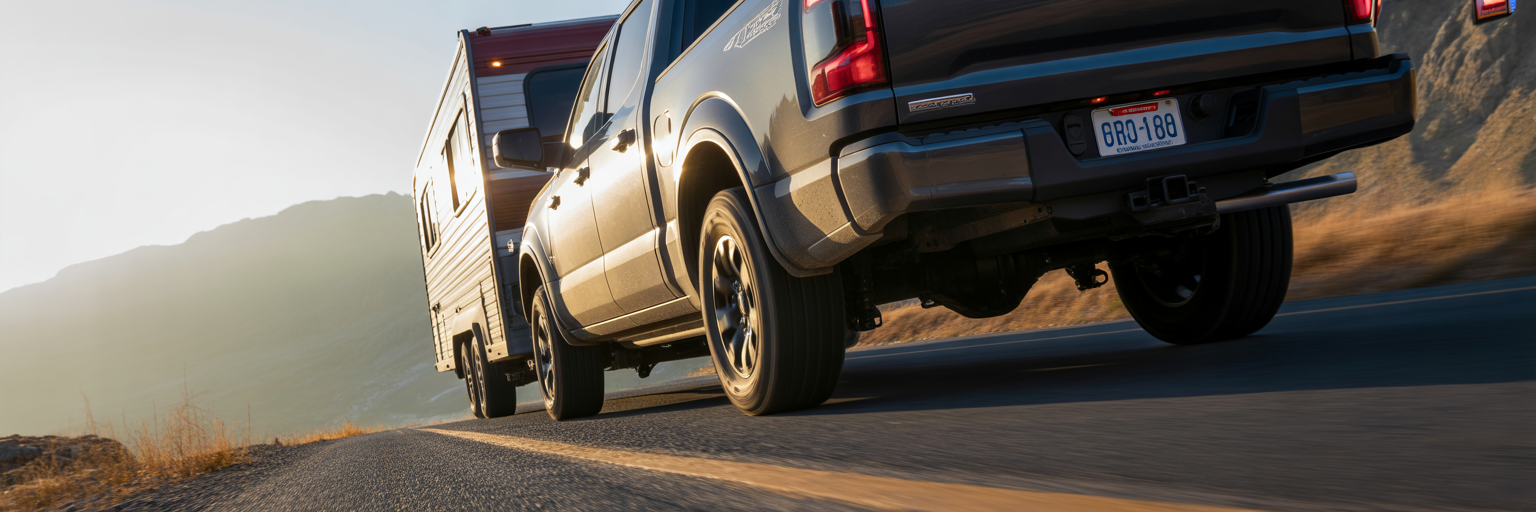
When it comes to getting work done, both the Silverado and Sierra are at the top of their class. From a pure numbers perspective, they are equals. When properly equipped with the 6.2L V8 or Duramax diesel, both trucks boast a maximum conventional towing capacity of around 13,300 pounds. This figure firmly establishes each as a contender for the best truck for towing. Similarly, payload capacities are virtually identical between comparable configurations, meaning neither truck has a statistical advantage for hauling heavy materials in the bed.
The real story is not in the numbers, but in the shared technology that makes towing less of a chore and more of a science. Both trucks offer a suite of features designed to give you more confidence and control:
- In-Vehicle Trailering App: This integrated system allows you to create custom trailer profiles, run through pre-departure checklists, and monitor trailer tire pressure and temperature right from the center screen. It takes the guesswork out of hitching up.
- Multi-Camera System: With up to 14 available camera views, you can see everything around you. The most impressive is the “transparent trailer” view, which stitches together camera feeds to create an image that makes the trailer seem invisible, allowing you to see traffic behind you.
- ProGrade Trailering System: This suite of stability features includes Trailer Sway Control, which automatically applies the truck and trailer brakes to correct sway, and Hill Start Assist, which prevents rollback when starting on an incline.
This functional parity extends all the way to the tailgate. The Silverado’s Multi-Flex Tailgate and the Sierra’s MultiPro Tailgate are mechanically identical. They offer the same six clever positions, transforming from a traditional tailgate into a workstation, a bed extender, or a step for easy access. This feature once again shows how both brands use the same brilliant engineering, just under a different name. While both trucks are top contenders, seeing how they measure up against the wider market can be useful, and a broader look at which 2025 trucks offer the best towing and fuel economy provides that context.
Inside the Cab: A Tale of Two Interiors
This is where the path diverges. Step inside each truck, and the philosophical difference between Chevrolet and GMC becomes immediately clear. While the underlying architecture is the same, the materials, design, and overall ambition of the cabins are worlds apart. This is where your decision will likely be made.
Silverado: The Durable and Functional Command Center
The Silverado’s interior is designed with purpose and durability in mind. In lower trims like the Work Truck (WT) and LT, you will find sturdy plastics and hard-wearing cloth seats. These materials are not fancy, but they are easy to clean and built to withstand the rigors of a job site. It is a space that feels honest about its mission. As you move up to the LTZ and High Country trims, the cabin gets a significant upgrade with leather upholstery, larger screens, and more soft-touch surfaces. However, even in its most luxurious form, the Silverado’s interior maintains an ethos of premium functionality. It is an exceptionally nice tool, but it still feels like a tool.
Sierra: The Professional Grade, Near-Luxury Cabin
The Sierra is where GM’s designers were given the freedom to create a truly premium environment. The difference is most stark in the Denali and Denali Ultimate trims, which are the primary showcase for GMC Sierra interior luxury. Here, you will find materials that would not be out of place in a German luxury sedan. We are talking about authentic, open-pore wood trim, brushed aluminum accents, and full-grain leather that covers not just the seats but also parts of the dashboard and door panels. The Denali Ultimate goes even further with a microsuede headliner and intricate stitching patterns featuring topographical maps of Mount Denali.
The crucial Silverado High Country vs Sierra Denali debate comes down to this tactile experience. While both offer features like heated and ventilated seats, the Sierra Denali offers 16-way power-adjustable front seats with a massage function. The dashboard layout and screen placement are similar, but the switchgear in the Sierra feels more substantial, and the overall fit and finish are executed to a higher standard. It is a space designed not just for work, but for making a statement.
Onboard Tech and Driver Assistance Features

Just like with their powertrains, the Silverado and Sierra are built on a shared technological foundation. Both trucks feature a large, 13.4-inch central touchscreen powered by Google Built-in. This is a significant advantage, as it provides a familiar and intuitive user experience with native Google Maps, Google Assistant for voice commands, and access to the Google Play Store. This system is paired with a customizable 12.3-inch digital instrument cluster that puts key information directly in the driver’s line of sight.
However, as you climb the trim ladders, the Sierra begins to flex its technological muscle. The most significant shared feature is GM’s Super Cruise, the industry’s first true hands-free driving assistance system for compatible highways. This is available on both the Silverado High Country and the Sierra Denali and Denali Ultimate, offering a new level of comfort on long journeys. But the Sierra offers subtle upgrades that enhance its premium feel. For example, its available Head-Up Display (HUD) is a full 15 inches, larger and more comprehensive than the one offered in the Silverado. The Sierra also offers an available Rear Camera Mirror, which uses a camera to provide a wide, unobstructed view behind the truck, even if the cab is full of passengers or the bed is loaded with cargo.
When it comes to safety, both trucks are on equal footing at their core. The standard safety suite, known as Chevy Safety Assist or GMC Pro Safety, includes essential features on most trims:
- Automatic Emergency Braking
- Forward Collision Alert
- Lane Keep Assist with Lane Departure Warning
- Following Distance Indicator
- IntelliBeam Automatic High Beams
This means you do not have to pay a premium for core safety technology. The choice comes down to whether you want the additional layer of sophisticated convenience features that the Sierra offers. For those who follow the latest in automotive advancements, our news section covers emerging trends across the industry.
Decoding the Price Tag: Trim Levels and Value
The price tag is where the philosophical differences between the Silverado and Sierra become a real-world financial decision. While they share a platform, they do not share a pricing strategy. The GMC Sierra consistently carries a higher MSRP than a comparably equipped Chevrolet Silverado across the entire lineup. The question you must ask yourself is: what am I getting for that extra money?
The trim ladders are designed to run in parallel, making for a direct comparison. At the base level, the Silverado WT (Work Truck) and Sierra Pro are nearly identical, with the price difference being minimal and mostly down to badging. As you move into the popular mid-range models like the Silverado LT and Sierra SLE, the Sierra begins to justify its premium by including a few more standard features. The real separation begins with the entry-luxury and top-tier trims.
The most debated matchup in this full size truck comparison is the Silverado High Country vs Sierra Denali. Here, the price gap can widen to several thousand dollars. The Silverado High Country is a genuinely luxurious truck, packed with technology and premium materials. However, the Sierra Denali offers an extra layer of refinement, exclusive materials like open-pore wood, and more advanced features like the larger head-up display. The Denali Ultimate takes this even further, competing not just with other trucks but with luxury SUVs.
So, is the Sierra’s more luxurious interior worth the premium? The answer is entirely personal. If your priority is getting the most capability for your dollar, the Silverado almost always represents the better value. You get the same engine, same towing capacity, and same core technology for less money. If, however, your truck is also your mobile office and family vehicle, and you value a more refined daily driving experience, the extra cost for the Sierra’s superior cabin and added features may be a worthwhile investment.
| Market Segment | Chevrolet Silverado Trim | GMC Sierra Trim | Key Difference |
|---|---|---|---|
| Work Truck | WT (Work Truck) | Pro | Minimal; primarily badging and grille design. |
| Volume Seller | LT / RST | SLE / Elevation | Sierra offers slightly more refined standard features. |
| Off-Road | Trail Boss / ZR2 | AT4 / AT4X | Mechanically identical; cosmetic and branding differences. |
| Entry-Luxury | LTZ | SLT | Sierra SLT begins to introduce more premium interior materials. |
| Top-Tier Luxury | High Country | Denali / Denali Ultimate | Largest gap; Denali offers exclusive materials and features. |
Note: This table illustrates the general trim hierarchy. Specific features and pricing vary by year and optional packages, but the positioning strategy remains consistent.
Resale Value and Long-Term Ownership

A truck is a significant investment, and its long-term value is a crucial part of the purchasing decision. When it comes to the Silverado resale value, there is a nuanced story to tell. Due to its immense sales volume and powerful brand recognition, the Chevrolet Silverado often holds a slight edge in the broader used truck market. There is always high demand for a used Chevy truck, which helps keep its value strong across most trims.
However, there is a critical counterpoint for the Sierra. The high-end trims, particularly the Denali, are exceptional at retaining their value within the specific niche of used luxury trucks. The “Denali” name itself carries significant brand equity. Many buyers specifically seek out used Denali models, knowing they are getting a premium package. As a recent analysis by Capital One highlights, while the Silverado may lead in overall volume, the Sierra’s premium trims hold strong appeal in the secondary market. This means a Sierra Denali may depreciate less in percentage terms than a comparably priced luxury sedan.
When it comes to reliability and maintenance, the decision becomes much simpler. Because the trucks share identical platforms, engines, and transmissions, their long-term reliability and routine service costs are virtually the same. You will pay the same for an oil change or a brake job regardless of the badge on the grille. Furthermore, both trucks come with the same factory warranty from General Motors, meaning neither brand offers an advantage in manufacturer support. This simplifies the long-term financial calculation, allowing you to focus your decision on the initial price and the interior experience. For those who want to browse more articles on various automotive brands, our brands page is a great resource.
Which Truck Is Right For Your Driveway?
After breaking down the engines, interiors, technology, and value, the choice between the Chevrolet Silverado and GMC Sierra becomes a matter of personal priority. There is no single “better” truck, only the truck that is better for you.
The Chevrolet Silverado is the ideal choice for the buyer who prioritizes value and capability. This is the person who needs a proven, no-nonsense tool that can handle any job thrown at it. They appreciate comfort and technology but are unwilling to pay a premium for luxury materials they might be afraid to get dirty. The Silverado offers nearly all the functional performance of its GMC sibling but keeps more money in your pocket.
The GMC Sierra is built for the buyer who wants that same uncompromised capability but demands the comfort and refinement of a luxury vehicle. This is the professional who uses their truck as a mobile office or the family that takes it on long road trips. They are willing to invest more for an elevated daily experience, from the feel of the full-grain leather to the convenience of advanced technology features.
Ultimately, the Chevrolet Silverado vs GMC Sierra matchup is one of the few comparisons where you cannot make a bad choice. Both are mechanically superb machines built from the same proven DNA. The decision rests entirely on your budget and your definition of what a modern truck should be: a pragmatic, high-value workhorse or a professional-grade luxury machine that can also do the heavy lifting.