The moment your tires leave the pavement, the familiar rules of the road are replaced by the unyielding laws of physics and self-reliance. Every piece of gear in your vehicle is a tool to negotiate those laws on your own terms. For those new to exploring the backcountry, understanding this shift is the first step toward safe and memorable adventures.
First Principles of Off-Road Preparedness
Before a single dollar is spent on gear, the most important preparation happens between your ears. Successful off-roading is built on a foundation of proactive thinking, risk assessment, and a deep respect for the environment you are entering. This mindset is the most critical tool you will ever carry.
Shifting from Pavement to Trail Mentality
Driving on the highway is like being a passenger in a well-supported system. There are signs, emergency services, and help is usually just a phone call away. You are rarely truly on your own. The second you turn onto a dirt trail, that entire support structure vanishes. You instantly become the pilot, the mechanic, and the first responder all in one. This is not a change to be taken lightly. It requires a fundamental shift from reactive driving to proactive problem-solving. Every rock, rut, and puddle is a puzzle to be solved before you reach it, not a surprise to react to.
The ‘Layers of Safety’ Framework
To manage this new responsibility, it helps to organize your gear and planning into a mental model. Think of it as three layers of safety. Layer 1 is Prevention. This includes things that stop problems before they start, like having good tires, a full tank of gas, and a reliable navigation plan. Layer 2 is Resolution. This is the gear that solves a problem once it has occurred. Your recovery kit, tire plugs, and basic tools fall into this category. Layer 3 is Emergency. These are the items you hope to never use but are critical when everything else has failed. This includes your first-aid kit, a fire extinguisher, and an emergency communication device.
Assessing Your Vehicle’s Stock Capabilities
Most modern 4x4s are surprisingly capable right from the factory. Before you change anything, you need to understand what you have. Learn the basic geometry of your vehicle. Ground clearance is the lowest point of your undercarriage, determining the largest obstacle you can drive over without impact. Your approach and departure angles define how steep of an incline you can climb or descend without hitting your bumpers. Most importantly, you must identify your vehicle’s recovery points. Look for heavy-duty metal loops bolted directly to the frame. Do not confuse these with the thin, flimsy hooks used for shipping. Using a cosmetic tie-down hook for a recovery can rip it from the vehicle, turning it into a dangerous projectile.
The Importance of a Trail Partner
The single most important piece of safety equipment you can have is another vehicle. For anyone just starting, this is non-negotiable. A trail partner provides more than just a tow rope if you get stuck. They offer a second set of eyes to spot you through a tricky obstacle, a pool of shared tools and resources, and the immense psychological comfort of not being alone if something goes wrong. Safe off roading for beginners always starts with the buddy system. Never venture out solo until you have significant experience and the equipment to be completely self-sufficient.
The Core of Self-Reliance: Your Recovery Kit
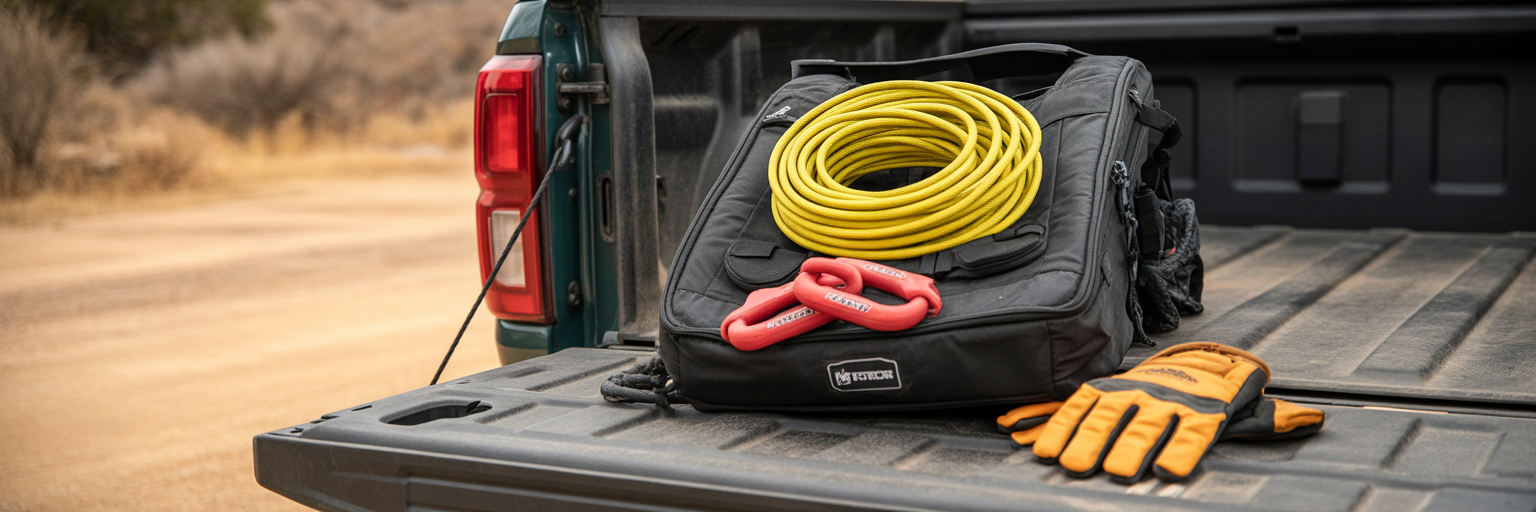
When traction disappears and your vehicle comes to a halt in mud, sand, or snow, your adventure truly begins. A well-stocked and understood recovery kit is the bridge between a minor inconvenience and a trip-ending disaster. This is the first gear you should buy, and it is where you should not cut corners.
Understanding Dynamic vs. Static Recovery Straps
The heart of your kit is the recovery strap, but not all straps are created equal. The distinction between a dynamic and static strap is critical. A dynamic or kinetic rope is like a massive rubber band. It is designed to stretch, storing kinetic energy and then releasing it to gently “pop” a stuck vehicle free. A static tow strap, by contrast, is like a steel chain. It has almost no stretch and is designed only for towing a rolling vehicle on a flat surface. Using a static strap for a kinetic recovery is incredibly dangerous. The abrupt transfer of force can create shock loads that bend frames, break components, and turn hardware into lethal projectiles.
| Feature | Dynamic (Kinetic) Rope | Static Tow Strap |
|---|---|---|
| Primary Use | Recovering a vehicle stuck in mud, sand, or snow (‘snatching’) | Towing a disabled vehicle on a flat, smooth surface |
| Material & Construction | Double-braided nylon that stretches | Polyester or polypropylene with minimal to no stretch |
| Stretch Percentage | 20-30% under load | Less than 5% under load |
| Safety Consideration | Effectively stores and releases kinetic energy for a smooth pull | Can create dangerous shock loads if used for ‘snatching’, risking frame damage or component failure |
Essential Components of a Beginner’s Kit
Your starter kit should be simple but high quality. As emphasized by seasoned adventurers in online communities, having the right recovery tools is non-negotiable. Discussions on forums like Overland Trail Guides frequently highlight the importance of starting with quality basics. Your off road recovery kit essentials should include:
- Kinetic Recovery Rope: Choose one with a minimum breaking strength rated for 2 to 3 times your vehicle’s Gross Vehicle Weight Rating (GVWR).
- Soft Shackles (x2): These are strong, lightweight loops made from synthetic rope. They are far safer than metal D-rings because if they fail, they do not become heavy metal projectiles.
- Folding Shovel: Often the best recovery tool is a shovel. Use it to clear mud, sand, or snow from around your tires and undercarriage to reduce resistance.
- Heavy-Duty Work Gloves: Protect your hands from rope burn, sharp edges on the vehicle, and splinters when handling equipment.
Safe Use of Recovery Points and Shackles
Connecting the recovery rope correctly is paramount. Always attach your shackles to the vehicle’s designated, frame-mounted recovery points. Never, under any circumstances, use a trailer hitch ball, axle, or suspension component as a recovery point. They are not designed for the shock loads of a recovery and will fail. When attaching a shackle, whether soft or metal, ensure it is properly seated and not “side-loaded” at an angle, which drastically reduces its strength.
When to Consider Adding a Winch
A winch is a powerful tool, but it is not a beginner’s first purchase. It adds significant weight to the front of your vehicle, requires complex electrical installation, and demands regular maintenance. More importantly, it requires training to use safely. Master the art of strap-based recovery with a partner first. Learning these fundamentals will make you a better and safer off-roader. A winch is a tool for self-recovery when you are alone, a situation beginners should actively avoid.
Mastering the Terrain: Wheels, Tires, and Traction
Your tires are the only part of your vehicle that actually touches the trail. Every dollar spent on engine performance or fancy suspension is useless if your tires cannot translate that power into grip. Understanding and managing your tires is a skill that provides more capability than almost any other modification.
The Single Most Important Upgrade: All-Terrain Tires
If you make only one modification to your vehicle, make it a set of quality All-Terrain (A/T) tires. The standard highway tires that come on most SUVs and trucks are designed for quiet, fuel-efficient pavement driving. Their thin sidewalls are easily punctured by sharp rocks, and their tread pattern quickly clogs with mud. A good A/T tire features reinforced sidewalls for puncture resistance, aggressive tread blocks with deep voids that grip loose surfaces, and a design that helps eject mud and stones. This is not about brand names, but about features that provide durability and traction when you are miles from help.
The Power of ‘Airing Down’ for Traction
One of the most effective and free techniques to gain traction is to lower your tire pressure, known as “airing down.” Think of how snowshoes distribute your weight over a larger area to keep you from sinking in snow. Lowering tire pressure does the same for your vehicle. It lengthens the tire’s footprint, or “contact patch,” putting more tread on the ground. This dramatically increases grip on sand, rock, and mud. As a bonus, the softer tire acts as an additional shock absorber, significantly smoothing out the ride on rough, corrugated roads.
Essential Tire Pressure Management Tools
To effectively air down, you need a system for the full cycle. First, you need a reliable tire pressure gauge to know your starting pressure and monitor how much air you are letting out. Second, you need a way to reinflate your tires before getting back on the pavement. Driving at highway speeds on underinflated tires is extremely dangerous, as it can cause overheating and a blowout. A quality portable air compressor is a non-negotiable piece of safety equipment. Finally, a dedicated tire deflator tool can make the process of airing down all four tires much faster and more precise than just using a stick on the valve stem.
Your Trailside Tire Repair Solution
A puncture on the trail should be a manageable inconvenience, not a trip-ending emergency. Carrying a simple tire plug kit can empower you to fix most common tread punctures yourself. A standard kit contains a reaming tool to clean the hole, an insertion tool, and sticky rubber plugs. The process is straightforward: locate the puncture, remove the object, clean the hole with the reamer, and insert a plug to seal it. This simple skill can save you from a long walk or a costly recovery. Choosing the right tires is just as important as choosing the right vehicle for the job. For those considering a larger platform for their adventures, understanding the differences between popular models is key, as detailed in our comparison of which heavy-duty truck is right for you: the Titan XD or F-250.
Navigating with Confidence Beyond Cell Service
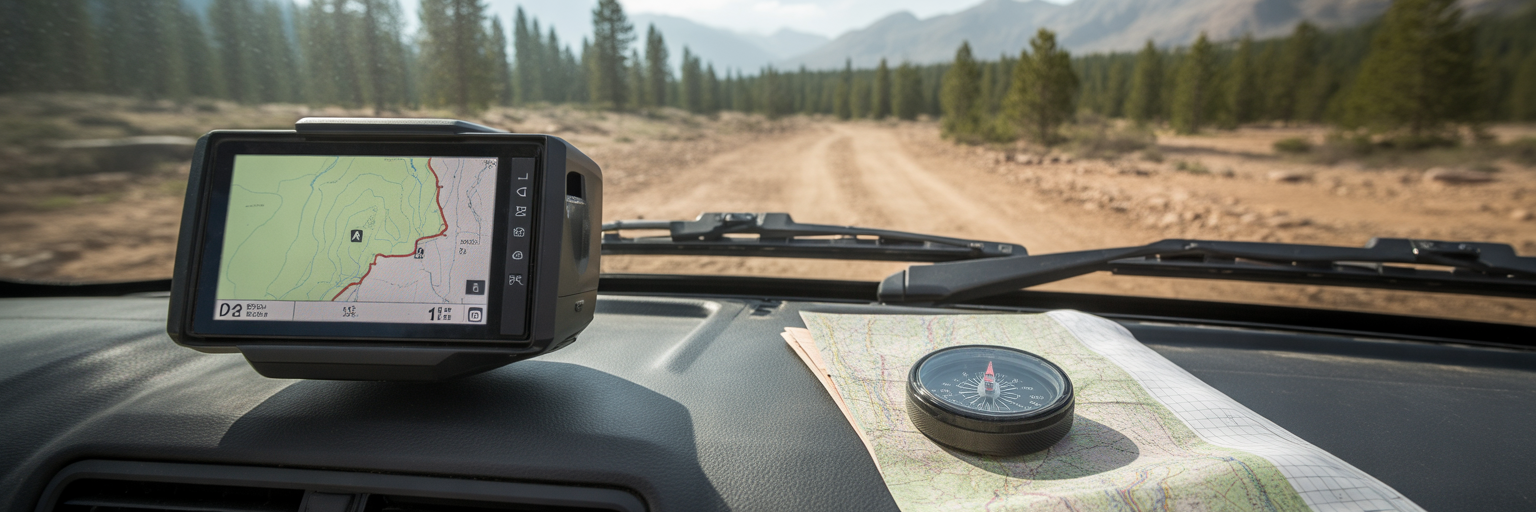
Getting lost is a primary fear for many newcomers to the backcountry. In a world where we rely on our phones for everything, the idea of being without a signal can be intimidating. The key to navigating safely off-grid is not a single magic device, but a layered approach built on the principle of redundancy.
The Redundancy Rule for Off-Road Navigation
In the world of preparedness, there is a saying: “two is one, and one is none.” This is the golden rule of off-road navigation. You must assume that any single piece of electronic equipment can and will fail. Batteries die, screens crack, and devices get dropped in water. Therefore, you should always have at least two independent methods of knowing where you are and where you are going. Relying on a single phone app is not a plan, it is a gamble.
Leveraging Modern Digital Navigation
Digital tools are incredibly powerful when used correctly. The main options are dedicated GPS units and smartphone apps like Gaia GPS or onX Offroad. The single most critical step is to download detailed offline maps for your entire planned region before you lose cell service. This is a common and easily avoidable mistake. Many people assume the map will just work, only to find a blank screen once they are on the trail. While dedicated apps are powerful, many off-roaders supplement their primary navigation with a suite of free digital tools for trip planning, which can help in everything from calculating fuel range to identifying potential campsites.
The Timeless Value of Paper Maps and a Compass
Your ultimate, foolproof backup is a physical map and a compass. They require no batteries and are impervious to digital failure. You can obtain high-quality, detailed paper maps from sources like the U.S. Forest Service or the Bureau of Land Management. You do not need to be an expert orienteer to use them effectively. At a minimum, learn the simple skill of orienting your map. By placing the compass on the map and rotating them together until the compass needle aligns with the North arrow on the map, you can instantly see which direction roads and landmarks are in relation to your position. This simple act can provide immense clarity when you are disoriented.
Off-Grid Communication for Emergencies
When you are truly exploring remote areas of the US and beyond, you need a way to call for help that does not rely on cell towers. A Personal Locator Beacon (PLB) is a simple, one-way device. When activated, it sends an SOS signal with your location to a global satellite rescue network. A satellite messenger, like a Garmin inReach, goes a step further by allowing two-way text messaging via satellite. This lets you communicate the nature of your emergency and stay in contact with rescuers, or simply check in with family back home. For anyone venturing far from civilization, one of these devices is a crucial piece of safety equipment.
Personal and Vehicle Safety Essentials
Once you have addressed recovery and navigation, the next layer of preparedness focuses on preserving the two most important things on any trip: the people and the vehicle itself. This collection of gear answers the broad question of ‘what do I need for off roading?‘ by focusing on personal well-being and the ability to handle common mechanical issues.
Building a Trail-Specific First-Aid Kit
The small first-aid kit in your glovebox is designed for paper cuts and headaches, not the realities of the backcountry. You need to build or buy a kit equipped for more significant injuries. This means adding items like a tourniquet and training on how to use it, trauma shears for cutting away clothing, large sterile gauze pads for controlling bleeding, and comprehensive blister treatments for long hikes. Your gear is only as good as your knowledge, so strongly consider taking a Wilderness First Aid (WFA) or a “Stop the Bleed” course. It is the best investment you can make in your safety and the safety of those with you.
Fire Safety on and off the Trail
Fire is a significant risk that is often overlooked. A vehicle’s hot exhaust or catalytic converter can easily ignite dry grass or brush when you park. Every off-road vehicle should have a properly rated (ABC or BC) automotive fire extinguisher. But having it is not enough. It must be securely mounted within immediate reach of the driver. Buried under a pile of gear in the back, it is completely useless in the critical first seconds of a fire.
Assembling a Basic Onboard Toolkit
You do not need to be a master mechanic, but you should carry a basic toolkit to handle simple, common trail fixes like tightening a loose battery terminal or reattaching a component. Your kit should be tailored to your vehicle, but a good starting point includes:
- A versatile socket set with extensions (metric or standard as needed)
- A set of combination wrenches
- A multi-bit screwdriver and a sturdy set of pliers
- A collection of “universal fixers” like high-quality duct tape, baling wire, and assorted zip ties.
The specific tools you carry should be tailored to your vehicle. Owners of heavy-duty trucks, for instance, will need larger wrenches and sockets than someone in a small SUV. Understanding which truck owns the worksite in 2026 can help you prepare a vehicle-specific toolkit.
Crucial Personal and Survival Gear
Finally, do not forget the gear that keeps you, the human, safe and comfortable. An unexpected night on the trail is much more manageable with the right supplies. Always carry more water than you think you will need, with the rule of thumb being one gallon per person, per day. Pack non-perishable, high-energy snacks. Bring layered clothing, as weather can change rapidly in the mountains or desert. A primary flashlight and a backup headlamp are essential, as is robust sun protection including a hat, sunglasses, and sunscreen, even on cloudy days.
Smart Vehicle Enhancements for Newcomers
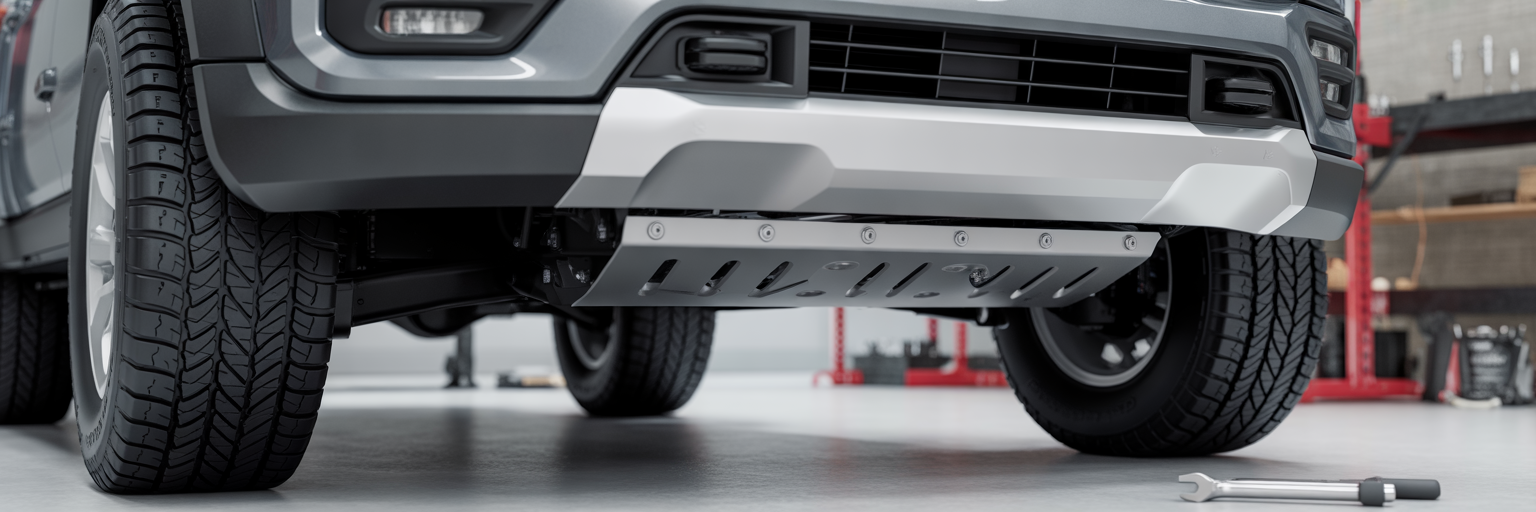
Walking through an off-road expo or browsing online forums can be overwhelming, with an endless array of expensive modifications. For a beginner, the goal should not be to build an extreme rock crawler. The goal is to make smart, incremental enhancements that increase reliability and protection. A complete beginner off road gear list should prioritize function over form.
Protection Before Performance: Underbody Armor
The most logical first modification for any off-road vehicle is underbody armor, or skid plates. Think of them as cheap insurance for the most vulnerable and critical parts of your vehicle. A single misplaced rock can puncture an oil pan, crack a transfer case, or rupture a gas tank, leaving you stranded. A set of steel or aluminum skid plates provides a robust, slick surface that allows you to slide over obstacles instead of getting hung up or causing catastrophic damage.
A Cautious Approach to Lift Kits
Suspension lift kits are one of the most popular off-road modifications, but they are also one of the most misunderstood. Their purpose is twofold: to increase ground clearance and to create room to fit larger tires. However, there is no free lunch. Cheap, overly large lifts can ruin your vehicle’s on-road handling, accelerate wear on driveline components, and create a less stable, top-heavy ride. For most beginners, a modest, high-quality 1 to 2 inch lift is more than sufficient for exploring the vast majority of trails, without compromising daily drivability and reliability.
Rock Sliders vs. Cosmetic Side Steps
This is a critical distinction every newcomer must learn. The factory side steps on many trucks and SUVs are purely cosmetic. They are often mounted to the vehicle’s thin sheet metal body and are designed only to be stepped on. If you hit one on a rock or ledge, it will bend, break, and potentially cause expensive damage to your vehicle’s body. True rock sliders are structural armor. They are bolted directly to the vehicle’s strong frame and are designed to support the entire weight of the truck against an obstacle, protecting the vulnerable rocker panels below your doors.
A Phased Approach to Building Your Rig
The best advice for anyone starting this hobby is to resist the urge to buy everything at once. Your initial focus should be on the essential overlanding equipment for safety and recovery. Then, take your stock or lightly modified vehicle out and drive it. Gain experience. Learn its limits and your own driving style. Pay attention to where you scrape, what obstacles give you trouble, and what you wish you had. That real-world experience, not an online catalog, should guide your future modifications. This phased approach prevents unnecessary spending and results in a capable, reliable vehicle built for the adventures you actually take. Ultimately, building a capable rig is a journey, not a race. For more insights into the world of capable vehicles and automotive culture, CarPhanatics is a great resource for enthusiasts at every stage.