The thrill of leaving the pavement behind is undeniable, but true confidence on the trail comes from preparation. Your first and most important investment is not in aggressive tires or a lift kit, but in a solid recovery kit. Think of this essential off roading gear as an insurance policy for the trail. It’s the non-negotiable equipment that gets you or a fellow adventurer out of mud, sand, or a ditch, turning a potential trip-ending problem into a minor delay.
Building Your Foundational Recovery Kit
Getting stuck is a rite of passage in off-roading. How you get unstuck defines your preparedness. A foundational recovery kit is not about aggression; it’s about physics and safety. It’s the gear you hope you never need but will be incredibly grateful to have when the time comes. Without it, you are relying entirely on luck, which has a bad habit of running out when you are miles from cell service.
Recovery Strap vs. Tow Strap: Know the Difference
We have all seen someone try to yank a stuck car out with a chain or a simple tow rope, followed by a jarring lurch. This is precisely what you must avoid. The most critical distinction to understand is between a recovery strap and a tow strap. A recovery strap, also called a snatch strap, is made of nylon that stretches, building up kinetic energy like a massive rubber band. This allows for a smooth, powerful pull that coaxes a vehicle free. In contrast, a tow strap is static and has almost no stretch. It is designed only for pulling a rolling vehicle on a flat surface. Using one for a stuck vehicle creates a dangerous shock load that can snap the strap or rip off parts of your vehicle.
Secure Connection Points: Shackles and Recovery Points
A strong strap is useless without a safe way to attach it. This is where rated shackles come in. Whether you choose traditional steel D-rings or modern synthetic soft shackles, they provide a secure loop to connect your strap. But where do you connect them? Look for your vehicle’s frame-mounted recovery points. These are solid metal loops or hooks welded or bolted directly to the chassis. Do not ever use the flimsy tie-down hooks found under many cars; those are for securing a vehicle during shipping and will break under load. You can see the trend toward better factory equipment in modern vehicle design; for instance, information on the 2025 Ford F-150 often highlights its integrated, frame-mounted tow hooks designed for real work.
Self-Recovery with Traction Boards
Sometimes the simplest solution is the best. Traction boards are a versatile and often safer tool for self-recovery. If your tires are spinning in sand, mud, or snow, you simply wedge these durable, cleated boards under the tires to provide instant grip. They are often all you need to drive right out of a slippery situation without needing a second vehicle. When looking for budget off road recovery gear, consider a complete kit from a reputable brand that includes a rated strap and shackles. Avoid the temptation of unrated, suspiciously cheap alternatives from unknown online sellers; your safety is worth more than the few dollars you might save.
| Feature | Recovery (Snatch) Strap | Tow Strap |
|---|---|---|
| Material & Construction | Nylon with built-in elasticity (stretches ~20%) | Polyester with minimal stretch (static) |
| Intended Use | Freeing a vehicle stuck in mud, sand, or snow | Pulling a free-rolling vehicle on a flat, even surface |
| Primary Function | Builds kinetic energy for a smooth ‘snatching’ pull | Maintains consistent tension during a tow |
| Safety Risk if Misused | Low risk when used correctly | High risk of shock-loading and breaking if used for recovery |
Note: This table highlights the fundamental differences in design and application. Using the wrong strap for a recovery can lead to catastrophic equipment failure and serious injury.
Managing Tire Pressure and Trailside Repairs
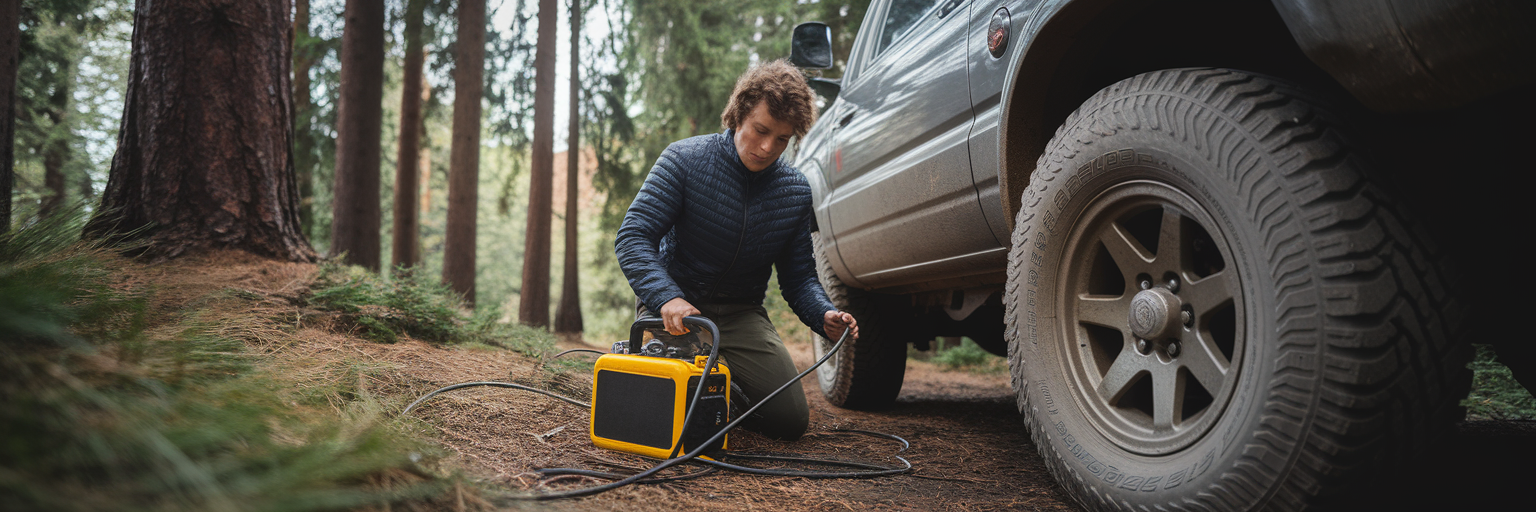
Beyond getting unstuck, smart off-roading is about proactively adapting your vehicle to the terrain. Managing your tire pressure and being equipped for minor trailside fixes are fundamental skills that prevent many problems from happening in the first place. This isn’t about major mechanical work but about handling the small issues that are common when you leave the pavement.
The ‘Airing Down’ Advantage for Traction
One of the most effective techniques for improving off-road performance is “airing down.” By lowering your tire pressure from highway levels, perhaps 35 PSI, down to 15-20 PSI for the trail, you dramatically increase the tire’s footprint. This larger contact patch provides significantly more traction. Instead of bouncing off rocks and roots, the tire flexes and wraps around obstacles, giving you a much better grip on loose dirt, sand, and uneven surfaces. It’s the difference between slipping over a challenge and confidently crawling over it.
Reinflating with a Portable Air Compressor
Airing down is only half the equation. Once you are back on solid ground and ready to hit the highway, you must reinflate your tires. Driving at speed on pavement with low tire pressure is extremely dangerous; it causes excessive heat buildup that can destroy the tire and leads to unstable, “squishy” handling. This makes a portable air compressor for tires a mandatory piece of gear. A reliable 12-volt compressor that connects directly to your vehicle’s battery is the standard choice, allowing you to quickly and safely return your tires to their proper highway pressure before you drive home.
Your Basic Trailside Tool Kit
A small problem on the trail can quickly become a trip-ender if you are unprepared. A basic tool kit is not for rebuilding an engine but for tightening a loose bolt or plugging a tire puncture. It is about self-sufficiency. This kit handles common trail issues, but for more complex problems, like when a vehicle simply refuses to turn over, it helps to have a foundational knowledge of diagnostics. You can learn more by reading up on common reasons why a car won’t start. Your trail kit should include:
- A reliable tire pressure gauge.
- A tire repair plug kit for punctures.
- A combination socket and wrench set (including both metric and standard sizes, especially for American vehicles).
- A set of versatile pliers (needle-nose and channel-lock).
- Multi-bit screwdriver.
- Zip ties and duct tape for temporary fixes.
Navigation and Communication Beyond Cell Service
We have all had that moment, turning onto a remote dirt road and watching the cell signal bars on our phone disappear one by one. On many of America’s best trails, from national forests to desert landscapes, cell service is a fantasy. So, if you are asking, what do I need for off roading? A reliable navigation plan that works offline is right at the top of the list. Relying on your phone’s standard map app is a recipe for getting lost.
Dedicated GPS vs. Smartphone Apps
You have two excellent options for offline navigation. Dedicated GPS units, like those from Garmin, are built to be rugged, waterproof, and have powerful satellite receivers that work well even under heavy tree cover. They are completely independent of your phone. On the other hand, subscription-based smartphone apps like onX Offroad or Gaia GPS offer incredibly detailed satellite imagery, vast libraries of public and private trails, and are often more affordable. As highlighted in a guide on onX Offroad’s own blog, reliable navigation is a cornerstone of any gear list. The choice depends on your budget and how you prefer to interact with your maps.
The Critical Habit of Downloading Offline Maps
Whichever system you choose, one step is non-negotiable: you must download the maps for your planned area before you leave home. This is not a suggestion; it is a fundamental rule of off-road safety. With maps saved directly to your device, your navigation system will work perfectly without any data connection. It is the digital equivalent of bringing a paper map and compass, ensuring you always know where you are and how to get back.
Emergency Beacons: Your Ultimate Lifeline
While navigation tools help you find your way, emergency communication devices are there for when things go seriously wrong. A Personal Locator Beacon (PLB) or a satellite messenger is not for navigating. It is your last-resort lifeline. In a true emergency where you are injured, stranded, or self-rescue is impossible, these devices use satellites to send an SOS signal with your location to emergency responders. It is the ultimate peace of mind when you are truly off the grid.
Essential Personal and Vehicle Safety Items
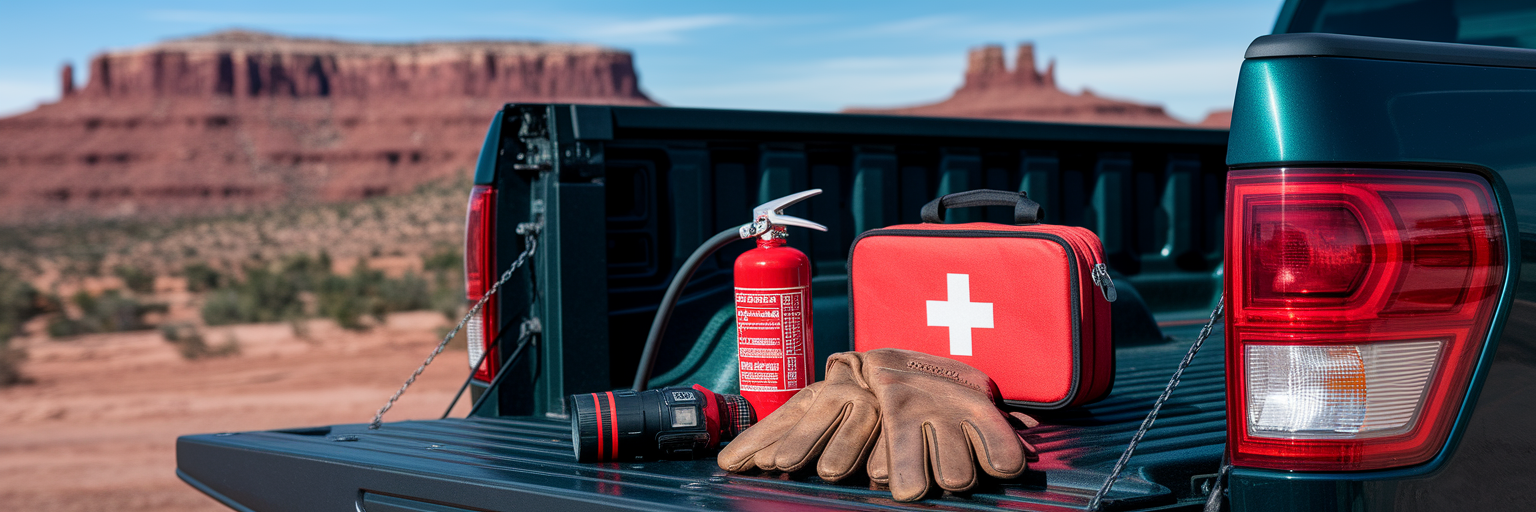
Smart preparation extends beyond vehicle recovery and into personal well-being. Your off road safety equipment is what protects you and your passengers from the common hazards of the trail. These items are not accessories; they are fundamental gear designed to prevent a minor incident from escalating into a serious emergency. This mindset of preparedness is why many off-roaders choose vehicles from brands built for rugged environments. You can see this reflected in the design philosophy of manufacturers like Jeep, whose vehicles are synonymous with adventure.
Your personal and vehicle safety checklist should include:
- Comprehensive First-Aid Kit: Go beyond basic bandages with items like trauma shears, antiseptic wipes, burn gel, and elastic wraps for sprains. Your kit should be equipped to handle the cuts, scrapes, and sprains common in outdoor settings.
- Vehicle-Rated Fire Extinguisher: A hot engine or exhaust can easily ignite dry grass on the trail. Choose a B:C or A:B:C rated extinguisher and mount it securely within the driver’s reach, not buried under other gear.
- Durable Work Gloves: Leather or reinforced synthetic gloves are essential for protecting your hands from sharp metal on a broken part, a hot engine block, or splinters when handling recovery gear.
- Closed-Toe Boots: Flip-flops have no place on the trail. Footwear with ankle support is critical for stability and protection when you have to get out and walk on uneven, rocky, or slippery ground.
- Safety Glasses: A simple pair of safety glasses can protect your eyes from flying dust and debris when spotting another vehicle or from fluids and dirt when making a trailside repair.
Smart Spending for Your Off-Road Kit
Building out your gear can feel overwhelming, and the potential cost can cause some sticker shock. The key is to start smart and build your kit in phases. You do not need to buy everything at once. A prioritized beginner off road gear list allows you to get on the trail safely and add capability as your adventures become more ambitious. The goal is to invest in quality gear that fosters self-reliance.
Here is a logical, phased approach to buying your gear:
- Phase 1 (Day One Essentials): Before your tires touch dirt, you need the absolute must-haves. This includes a basic recovery kit with a rated strap and shackles, a reliable tire pressure gauge, and a comprehensive first-aid kit. This is your safety foundation.
- Phase 2 (Building Capability): Once the basics are covered, your next purchases should focus on convenience and self-sufficiency. This is where a portable air compressor, a basic tool kit, and a set of traction boards come in.
- Phase 3 (For the Dedicated Hobbyist): More expensive, specialized items can wait. A winch, a high-end dedicated GPS, or a satellite messenger are powerful tools, but you should wait to invest until your hobby becomes more serious and you understand your specific needs.
To save money, look for bundled recovery kits that often offer better value than buying pieces individually. Also, keep an eye out for major US sales events like Black Friday or Father’s Day, which are great times to find deals on tools and outdoor gear. For those just starting, choosing a capable vehicle is the first step. Exploring the world of off-road-ready trucks is a great way to see what features come standard and what you might need to add. Ultimately, the right equipment transforms a potential disaster into a manageable inconvenience and a great story to tell later.