Why Your Tires Are Your First Line of Defense in Winter
There is a specific moment every year when the physics of driving changes. The instant the temperature consistently drops below 7°C (45°F), the rubber compound on all-season tires begins to stiffen, which significantly reduces its ability to grip the road. This is not a minor detail. It is the fundamental reason why your approach to car maintenance for winter must start from the ground up. Your tires are the only part of your vehicle in direct contact with the road, making their condition essential for safety on ice, snow, and slush.
Think of the difference between wearing running shoes versus hard-soled dress shoes on a slippery floor. All-season tires behave like those dress shoes in the cold, becoming rigid and losing their traction. Winter tires, however, are engineered with a specialized rubber compound that stays soft and pliable, allowing them to conform to the road surface and maintain grip. Their aggressive tread patterns are designed to bite into snow and channel away slush, ensuring you stay in control.
Ignoring this reality is a common mistake that compromises safety. Effective winter driving is not just about slowing down. It is about ensuring your vehicle is properly equipped for the conditions. This article will cover the essential pillars of winter tire maintenance tips that every responsible driver should follow. We will explore how to maintain correct pressure, inspect your tread, choose the right tires, and ensure proper alignment for safe driving on icy roads.
Mastering Tire Pressure in Freezing Temperatures
With the foundational importance of tire condition established, the most frequent task you will face is managing tire pressure. Cold air contracts, and this simple principle of physics directly affects your tires. For every 5-6°C (10°F) drop in ambient temperature, your tire pressure decreases by approximately 1-2 PSI. A tire that was perfectly inflated in the mild autumn can quickly become dangerously underinflated after the first cold snap.
This makes frequent checks a non-negotiable part of your winter routine. To get an accurate reading, you need to know how to check tire pressure in cold conditions correctly. According to the National Highway Traffic Safety Administration (NHTSA), it is best to check pressure when the tires are “cold,” which means the vehicle has been parked for at least three hours. Driving heats up the tires and the air inside, giving you a falsely high reading.
One of the most critical mistakes drivers make is using the pressure value printed on the tire’s sidewall. That number indicates the maximum pressure the tire can hold, not the recommended operating pressure for your vehicle. Instead, find the correct PSI on the sticker inside the driver’s side doorjamb or in your owner’s manual. This detail is crucial for all cars, from family sedans like the first-generation Honda Accord to modern SUVs. Underinflated tires lead to sluggish steering, uneven wear, and a higher risk of a blowout, all of which are amplified on hazardous winter roads.
Inspecting Tread Depth and Tire Condition
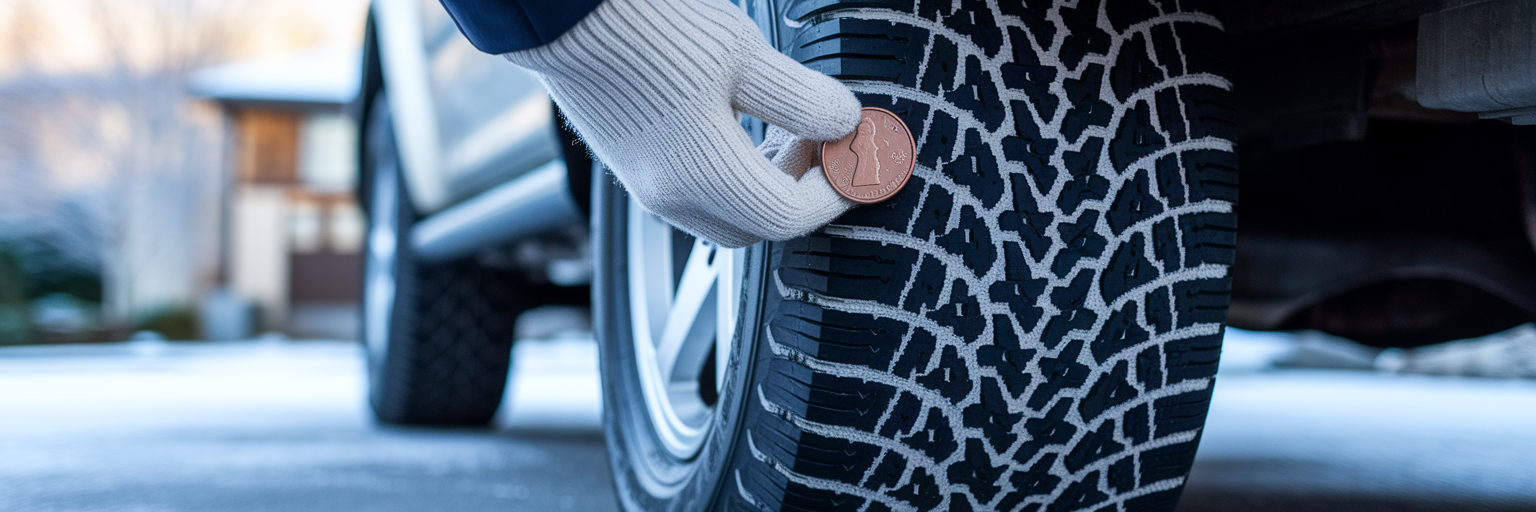
Beyond air pressure, the physical state of your tire tread is what determines its ability to provide traction. A tire with deep tread can effectively channel away slush and snow, maintaining contact with the pavement. A worn tire, however, will hydroplane on top of the slush, leading to a complete loss of control. This is why regular inspections are a core part of any winter safety plan.
The Penny Test: A Simple Tread Depth Check
While the legal minimum tread depth in many places is 2/32 of an inch, that is not enough for safe winter driving. You need more depth to handle snow and ice effectively. Here is how to check tire tread depth with a simple penny. Take a penny and place it with Lincoln’s head upside down in one of the main tread grooves. If you can see the top of his head, your tread is worn below the recommended minimum, and it is time to replace your tires. Check multiple spots across each tire, as wear can be uneven.
Your Monthly Visual Inspection Routine
A quick visual check once a month can help you spot problems before they become dangerous. Look for these warning signs:
- Cuts or punctures: Small objects can become embedded in the tread and cause slow leaks.
- Sidewall bulges or bubbles: These indicate internal damage to the tire structure, often from hitting a pothole, and mean the tire could fail at any moment.
- Cracks in the rubber: Fine cracks on the sidewall or between tread blocks are signs of aging and ozone damage.
- Uneven wear patterns: If you notice the inside or outside of the tread is wearing faster, it often points to an alignment issue. If you notice unusual wear alongside noises, it might be related to other issues, similar to figuring out why your car is squeaking when you drive.
Also, look for the tread wear indicator bars. These are small, raised bars of hard rubber located in the grooves of your tires. When the tread wears down to become flush with these bars, the tire has reached the end of its safe, usable life and must be replaced immediately.
Choosing and Using Dedicated Winter Tires
Once you have confirmed your existing tires need replacing or are unsuitable for winter, the next step is selecting the right equipment. This is where the distinction between all-season and winter tires becomes critical. The difference lies in two key areas: a softer rubber compound that stays pliable below 7°C (45°F) and a more aggressive tread design featuring thousands of tiny slits called “sipes.” These sipes act like biting edges to grip ice and packed snow.
A common misconception is that all-wheel drive (AWD) is a substitute for winter tires. It is not. While AWD helps with acceleration by sending power to all four wheels, it does nothing to improve braking or steering on slippery surfaces. Stopping and turning are entirely dependent on tire grip. As studies by organizations like AAA have demonstrated, winter tires can reduce braking distances on snow and ice significantly compared to all-season tires. This applies to all vehicles, including capable AWD models from brands like Jeep that still benefit immensely from proper winter rubber.
When making the switch, it is vital to install a complete set of four winter tires. Using only two creates a dangerous grip imbalance between the front and rear axles, which can cause the vehicle to spin out unexpectedly during a turn or emergency maneuver. So, when to put on winter tires? The rule is simple: make the change when the average daily temperature consistently drops below 7°C (45°F). This ensures you are prepared before the first snowfall.
| Feature | All-Season Tires | Winter Tires |
|---|---|---|
| Rubber Compound | Hardens below 7°C (45°F) | Stays soft and flexible in deep cold |
| Tread Design | General-purpose for wet and dry roads | Deep grooves and sipes for snow/ice grip |
| Optimal Temperature | Above 7°C (45°F) | Below 7°C (45°F) |
| Braking on Ice/Snow | Significantly longer stopping distances | Shorter, more controlled stopping |
| Cornering Grip | Reduced; prone to sliding | Enhanced; maintains traction in turns |
Note: This table illustrates the fundamental design and performance trade-offs. The choice depends on whether a driver faces consistent temperatures below 7°C, along with snow and ice.
The Role of Alignment and Rotation in Winter
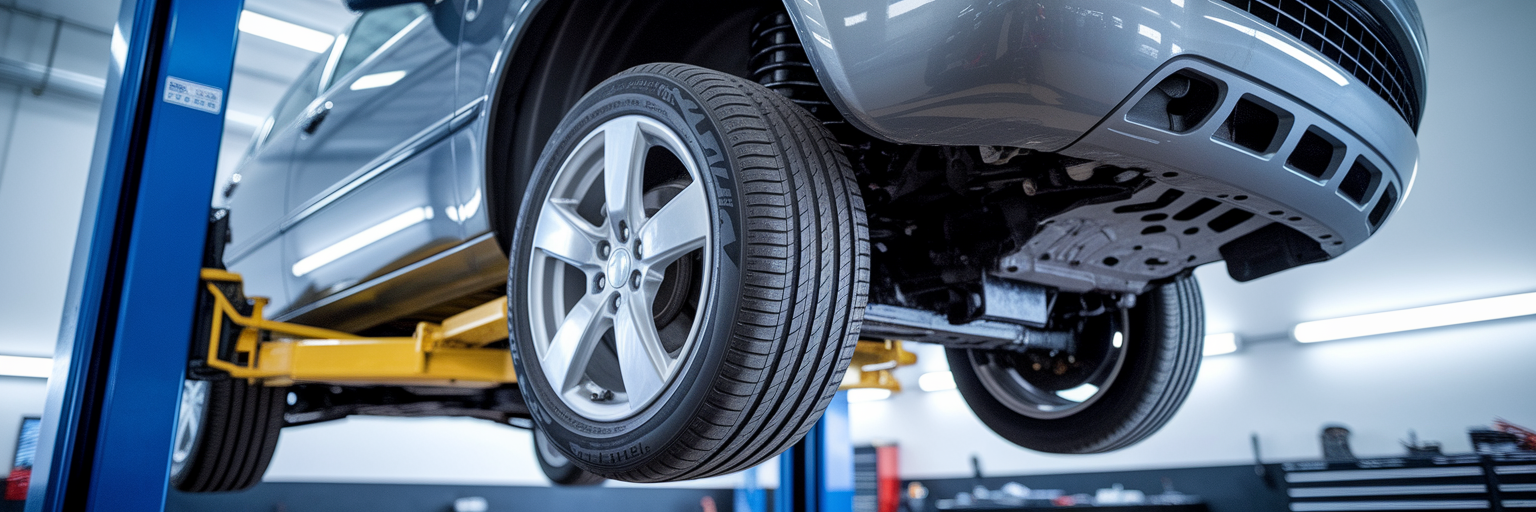
Proper tire selection is only part of the equation. Vehicle maintenance procedures like wheel alignment and tire rotation directly impact how your tires perform and wear. Wheel alignment refers to the adjustment of your car’s suspension, the system that connects the vehicle to its wheels. When misaligned, a car may pull to one side, a tendency that becomes far more dangerous on a slippery road where every steering input is critical.
Poor alignment also causes accelerated and uneven tread wear. This can ruin a set of expensive winter tires in a single season, negating your investment in safety. If you have noticed your steering wheel is off-center or the car drifts on a straight road, it is time for an alignment check. This is a crucial part of a holistic approach to car maintenance for winter, helping prevent more serious issues, such as a situation where your car won’t start on a cold morning because of compounding neglect.
Tire rotation serves a different but equally important purpose: ensuring all four tires wear down at the same rate. On most vehicles, the front tires wear faster than the rear ones. By rotating them at regular intervals, typically every 8,000 to 10,000 kilometers (5,000 to 7,000 miles), you extend the life of the set and maintain balanced handling. Alignment and rotation are not optional extras. They are essential for maximizing tire lifespan and ensuring your vehicle handles predictably when you need it most.
Storing Off-Season Tires Correctly
The final piece of the puzzle in our winter tire maintenance tips is knowing how to store your off-season set. Proper storage preserves the rubber and protects your investment until it is time to use them again. Tossing them in a corner of the yard or a hot shed can cause premature aging and damage.
Follow these simple steps for correct storage:
- Clean and dry them: Before storing, wash the tires and wheels to remove brake dust, dirt, and grime. Dry them completely, as moisture can accelerate degradation.
- Find a cool, dark, dry place: Store them indoors in a climate-controlled environment away from direct sunlight. UV rays and heat are enemies of rubber. Also, keep them away from electric motors like furnaces or sump pumps, which produce ozone that damages tires.
- Position them correctly: If the tires are unmounted, store them standing upright. If they are still on their wheels, it is best to stack them horizontally or hang them by the rims to avoid creating flat spots.
By following this annual cycle of care, you ensure your tires are always ready to perform. For more news and guides on everything from electric vehicles to classic muscle cars, explore CarPhanatics.