
Modern automotive engineering has pushed tire longevity further than ever before, yet the fundamental materials remain subject to the unyielding forces of time and friction. While many drivers focus solely on mileage, understanding the dual factors of use and age is essential when asking how long do car tires last. These two separate clocks tick down simultaneously, dictating the true lifespan of the rubber that connects your vehicle to the road. This guide will walk you through everything you need to know about your tires, from reading their sidewalls to recognizing the subtle signs that it is time for a replacement.
Understanding the Lifespan of Car Tires
The industry average for tire life often falls between 50,000 and 60,000 miles, but this figure should be seen as a baseline, not a guarantee. Numerous variables can significantly shorten this lifespan. Aggressive driving habits, such as hard cornering, rapid acceleration, and abrupt braking, generate excess heat and friction that wear down tread much faster. Similarly, consistently driving on poorly maintained roads with potholes and debris can cause physical damage and accelerate wear. The vehicle itself plays a role; heavier SUVs and trucks place more strain on their tires, as do high-torque electric vehicles that deliver instant power to the wheels.
Beyond mileage, there is the unavoidable factor of age. Most tire and vehicle manufacturers recommend replacing tires after a maximum of ten years, regardless of how much tread remains. This is because the rubber compounds degrade over time. A common rule of thumb is to begin annual professional inspections once a tire reaches five years of age. This degradation is a chemical process. Oxidation and repeated heat cycles from driving cause the flexible polymers in the rubber to become stiff and brittle from the inside out. This means a tire on a classic car that sits in a garage for most of the year can become unsafe even with very few miles on it.
This concept of aging applies to many vehicle components, not just the rubber meeting the road. Just as with tires, the way a car is used and stored over the years has a major impact, which helps explain why some high-mileage cars age better than others. A tire with deep tread but hardened, aged rubber can be just as dangerous as a bald one, especially in wet conditions where flexibility is key to maintaining grip.
Decoding the Information on a Tire’s Sidewall
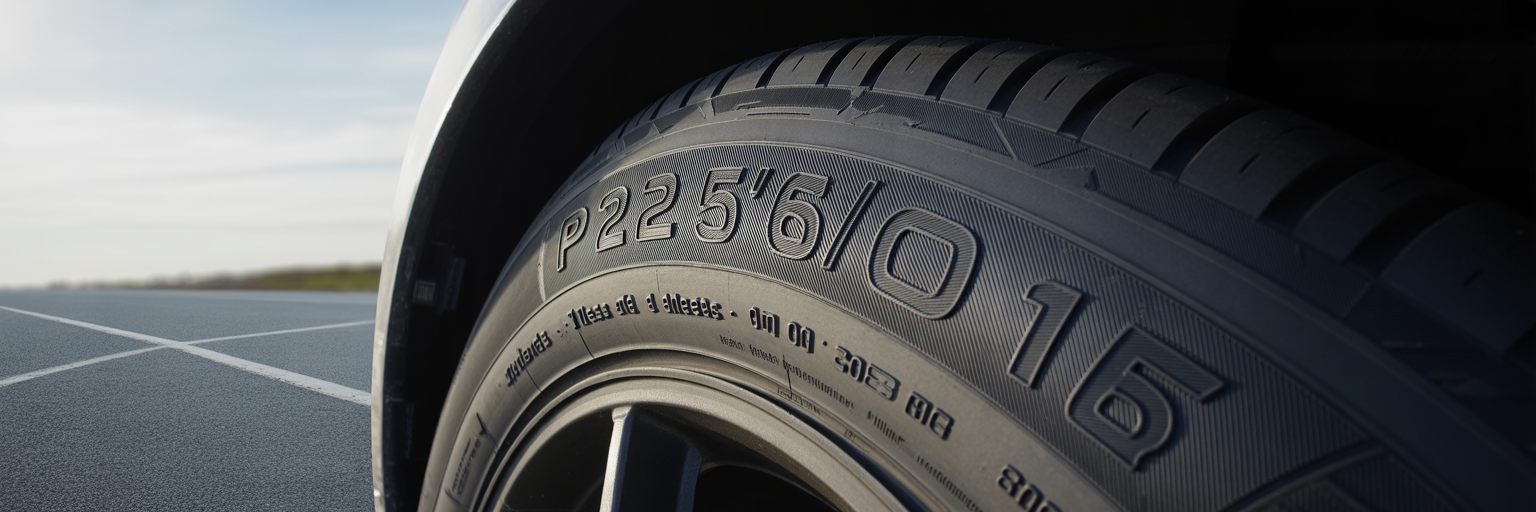
A tire’s sidewall is its birth certificate and resume combined, packed with information that can seem cryptic at first glance. Learning to read this data empowers you to make informed decisions about your vehicle’s safety and performance. It tells you when the tire was made, its size, and its performance capabilities, all encoded in a series of letters and numbers.
Finding the Manufacturing Date in the DOT Code
Every tire sold in the United States has a Department of Transportation (DOT) code stamped on its sidewall. This alphanumeric sequence contains manufacturing details, but the most critical part for a consumer is the last four digits. These numbers represent the week and year the tire was made. For example, a code ending in “3225” means the tire was manufactured in the 32nd week of 2025. When you are reading tire dot code information, this is the key takeaway. It is especially important to check this when purchasing “new” tires, as some may have been sitting on a warehouse shelf for several years, already well into their age-based lifespan.
Understanding the Tire Size Code
The most prominent code on the sidewall indicates the tire’s size and construction, for example, P225/60R16. Each part of this code has a specific meaning. The “P” stands for passenger vehicle. The “225” is the tire’s width in millimeters from sidewall to sidewall. The “60” is the aspect ratio, meaning the height of the sidewall is 60% of the tire’s width. The “R” indicates that it has radial construction, which is the standard for modern cars. Finally, the “16” is the diameter of the wheel in inches that the tire is designed to fit.
Interpreting Load Index and Speed Rating
Following the size code, you will find a service description, such as “98H”. The number “98” is the load index, which corresponds to a chart indicating the maximum weight each tire can safely support. The letter “H” is the speed rating, which signifies the maximum sustained speed the tire can handle. It is crucial to choose replacement tires that meet or exceed the specifications recommended by your vehicle’s manufacturer. This information is typically found on a placard on the driver’s side doorjamb.
Key Visual Signs Your Tires Need Replacing
Regular visual inspections are one of the easiest and most effective ways to monitor your tire’s health. You do not need to be a mechanic to spot the most common warning signs. A quick walk-around inspection before a drive can help you identify potential issues before they become serious safety hazards. Knowing when to replace car tires often starts with simply looking at them.
The most well-known indicator is tread depth. While the legal minimum in most places is 2/32 of an inch, a tire’s ability to channel water and prevent hydroplaning is significantly reduced well before it reaches that point. Other critical visual cues to look for include:
- Sidewall Bulges or Blisters: A bulge or bubble on the side of a tire indicates that the internal structure has failed. Air has pushed through the inner liner and is being held back only by the outer layer of rubber. This is a serious condition that requires immediate replacement, as a blowout could be imminent.
- Cracks and Cuts: Look for fine cracks in the sidewall or between the tread blocks. This phenomenon, known as crazing or weather checking, suggests the rubber is drying out and becoming brittle due to age and sun exposure. While minor surface marks may be harmless, any cut deep enough to expose the underlying fabric or steel cords is a major concern.
- Uneven Wear Patterns: The way a tire wears tells a story about the health of your vehicle’s suspension and alignment. Consistent, even wear across the tread is ideal. Irregular patterns not only shorten a tire’s life but also point to underlying mechanical issues that need to be addressed.
This table helps diagnose common tire wear issues. The wear pattern on your tires can indicate problems with inflation, alignment, or suspension components, which must be addressed to prevent premature wear on new tires.
| Wear Pattern | Appearance | Likely Cause(s) | Recommended Action |
|---|---|---|---|
| Center Wear | Tread is worn down the middle, but not the edges. | Over-inflation | Adjust tire pressure to manufacturer’s spec. |
| Edge Wear | Both outer edges are worn, but the center is not. | Under-inflation | Inflate tires to the correct pressure. |
| One-Sided Wear | Only the inner or outer shoulder is worn. | Wheel misalignment (camber issue) | Get a professional wheel alignment. |
| Cupping/Scalloping | Random, diagonal patches of wear across the tread. | Worn suspension parts (shocks/struts) or poor tire balance. | Have suspension and balance checked by a mechanic. |
Mastering Tread Depth Test Methods

Tread depth is critical for safety, especially in wet or snowy conditions. The grooves in your tire are designed to channel water away from the contact patch, allowing the tire to maintain its grip on the road. As the tread wears down, its ability to evacuate water diminishes, increasing the risk of hydroplaning. Fortunately, checking tire tread depth is a simple task you can do at home with common items. These quick tests can give you a clear indication of your tire’s condition.
- The Penny Test: This is the classic method for checking against the legal wear limit. Take a penny and place it with Abraham Lincoln’s head upside down into several tread grooves across the tire. If you can see the top of Lincoln’s head, your tread is at or below 2/32 of an inch. At this point, the tire is considered worn out and needs immediate replacement.
- The Quarter Test: For a more cautious approach that provides a greater safety margin, use a quarter. Perform the same test, but this time with George Washington’s head upside down. If the tread touches the top of Washington’s head, you have at least 4/32 of an inch of tread remaining. If it does not, your tread is getting low, and you should start planning for replacement, particularly if you frequently drive in rainy or snowy weather.
- Built-in Tread Wear Indicators: All modern tires have tread wear indicator bars built into them. These are small, raised bars of rubber located in the bottom of the tread grooves. As the tire wears, the tread becomes shallower. When the tread is worn down to the point where it is flush with the indicator bars, the tire has reached its legal wear limit of 2/32 of an inch. You can find them by looking for a small arrow or “TWI” marking on the tire’s sidewall, which points to their location in the grooves.
Structural Integrity Beyond Tread Wear
A common misconception is that a tire is safe as long as it has sufficient tread depth. However, the structural integrity of a tire can be compromised by age, even if it has barely been used. This “invisible” aging is a critical aspect of car tire safety that is often overlooked, especially by owners of collector cars, weekend vehicles, or anyone purchasing a used car that has been sitting for an extended period.
The primary culprit is rubber oxidation. Over time, oxygen in the air attacks the flexible polymer chains within the rubber compound, causing them to become stiff and brittle. This process happens from the inside out, so a tire that looks fine on the surface may have lost much of its essential elasticity. This brittleness significantly reduces its ability to flex and grip the road, increasing the risk of cracking or catastrophic failure under stress.
Environmental factors act as catalysts for this degradation. Ultraviolet (UV) radiation from sunlight breaks down the chemical bonds in the rubber, leading to the fine surface cracks known as crazing. Heat cycles also play a significant role. The repeated process of heating up during a drive and cooling down while parked slowly weakens the tire’s internal structure. Together, these factors mean that a ten-year-old tire, even one with deep tread that has been stored in a garage, is not as safe as a new one.
Performance Symptoms of Failing Tires

Sometimes, your car will tell you something is wrong with its tires before you can see it. Paying attention to changes in how your vehicle feels and sounds while driving is a key part of proactive maintenance. These sensory clues can be early warnings of tire imbalance, damage, or wear that could compromise your safety on the road.
- Vibrations: A sudden vibration or shimmy that changes with speed is often a sign of a tire-related issue. If you feel the vibration primarily through the steering wheel, the problem is likely with one of the front tires, often due to imbalance or damage. If the vibration is felt more in the seat or floor, a rear tire is the probable cause. This could also be a symptom of a separated belt within the tire’s structure, which is a serious failure.
- Pulling to One Side: While a car that pulls to the left or right is a classic symptom of poor wheel alignment, it can also be caused by a tire problem. An issue known as “radial pull” can occur due to a defect in a tire, or uneven wear can create a cone-like shape that causes the vehicle to drift. A professional should inspect both the tires and the alignment to diagnose the root cause.
- Increased Road Noise or Decreased Grip: As tires wear down, you may notice a change in their performance. A gradual increase in road noise, such as a humming or roaring sound, can indicate an uneven wear pattern like cupping. More importantly, worn tires are less effective at channeling away water, which you might notice as a loss of confidence or grip in wet conditions. This is a clear signal that the tires are nearing the end of their effective life.
Proactive Maintenance for Maximum Tire Life
The best way to maximize the value and safety of your tires is through consistent, proactive maintenance. A few simple checks and services can significantly extend their lifespan, ensure they wear evenly, and help you avoid premature replacement. These car tire maintenance tips are easy to follow and are among the most effective ways to protect your investment and ensure your vehicle performs as it should.
- Maintain Proper Tire Pressure: This is the single most important task for tire care. Under-inflation causes the tire’s sidewalls to flex excessively, which generates a tremendous amount of heat. This heat buildup is a leading cause of catastrophic tire failure. Check your tire pressure at least once a month and before any long trips, always when the tires are cold. The correct pressure is listed on the placard inside the driver’s doorjamb, not on the tire itself.
- Regular Tire Rotation: Tires wear at different rates depending on their position on the vehicle. Rotating them every 5,000 to 7,000 miles helps distribute this wear evenly across all four tires, prolonging their life. The correct rotation pattern depends on whether your vehicle is front-wheel, rear-wheel, or all-wheel drive.
- Wheel Alignment: Proper alignment ensures that your tires meet the road at the correct angle. Hitting a pothole or bumping a curb can easily knock your alignment out of specification, causing rapid and uneven tire wear, particularly on the edges. Have your alignment checked periodically, especially if you notice your car pulling to one side.
- Driving Style: Your habits behind the wheel have a direct impact on your tires. Smooth acceleration, gentle braking, and controlled cornering put far less stress on the rubber than aggressive maneuvers. Driving smoothly is a simple way to save money on both fuel and tires.
For those seeking more detailed information, organizations like the U.S. Tire Manufacturers Association offer comprehensive resources, such as their Tire Care and Safety Guide. This holistic approach to vehicle care is important, as the health of one component often affects others, which is why it is also wise to learn how to keep your car’s engine running for years.
The Tire Replacement Process Explained
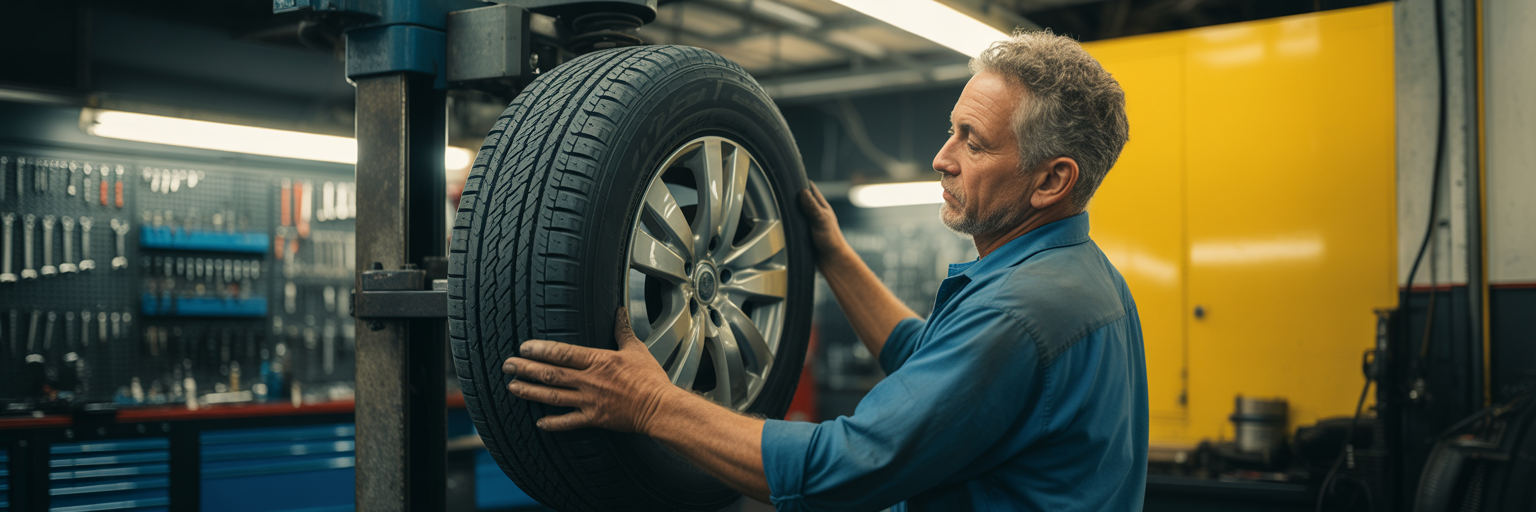
When the time comes to buy new tires, the process can feel overwhelming with all the available options. The best starting point is to consult your vehicle’s original equipment (OE) specifications. This information, found on the placard on the driver’s side doorjamb, provides the recommended tire size, load index, and speed rating that are engineered to work best with your car’s suspension and performance characteristics.
A common question is whether to replace tires in pairs or as a full set of four. While replacing all four is ideal for balanced handling, if you are only replacing two, there is a critical safety rule: the new tires must always be installed on the rear axle. This applies whether your car is front-wheel, rear-wheel, or all-wheel drive. New tires have deeper tread and provide better grip, especially in wet conditions. Placing them on the rear helps prevent oversteer, a dangerous situation where the rear of the car can lose traction and spin out.
Owners of all-wheel drive (AWD) and four-wheel drive (4WD) vehicles must be especially cautious. These complex drivetrain systems are designed to work with four tires that are all rotating at the same speed. Even a small difference in circumference between new and partially worn tires can put significant strain on the center differential and other drivetrain components, potentially leading to expensive damage. For these vehicles, it is often non-negotiable to replace all four tires at once. Always consult your vehicle’s owner’s manual for specific recommendations. The nuances of modern systems are important, as you might find when deciding between a Subaru Crosstrek or Mazda CX-30 for your next AWD crossover.
How Climate and Weather Impact Your Tires
A tire’s performance and lifespan are not universal; they are heavily influenced by the climate where you live and drive. A tire that performs well in a moderate climate may be unsuitable or even unsafe in a region with extreme temperatures. Understanding how weather affects your tires is key to making an informed choice that maximizes both safety and longevity.
In hot climates, such as the American Southwest or Southeast Asia, constant high temperatures and intense UV radiation from the sun accelerate the aging process of rubber compounds. The heat causes the tire to break down faster, while the sun’s rays lead to drying and cracking. This means tires in hotter regions may age out before their tread wears down.
Conversely, cold climates present their own challenges. As the temperature drops, the air inside a tire contracts, causing its pressure to decrease. This makes regular pressure checks even more critical in winter. Furthermore, the rubber compounds in summer or even some all-season tires can become hard and brittle in freezing temperatures, drastically reducing grip on cold pavement, snow, and ice. This is why different tire types exist:
- Summer Tires: Optimized with softer compounds for maximum grip and handling in warm, dry, and wet conditions.
- Winter Tires: Use a special compound that stays flexible in the cold and feature aggressive tread patterns to bite into snow and ice.
- All-Season Tires: A compromise designed to provide acceptable performance in a wide range of moderate conditions, but they do not excel in extreme heat or severe winter weather.
The right tire is also dictated by the vehicle’s purpose, just as the debate over a Jeep Gladiator vs Toyota Tacoma depends on the specific off-road demands.
Caring for Your Overlooked Spare Tire
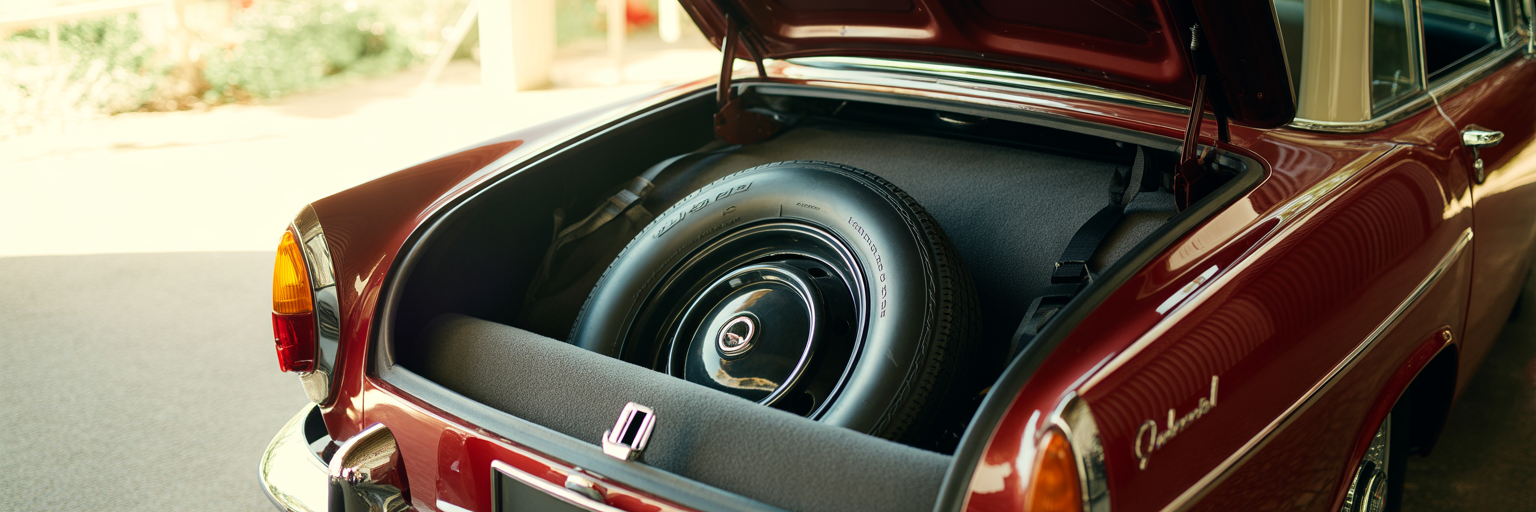
The most neglected tire on any vehicle is almost always the spare. Tucked away in the trunk or mounted underneath the car, it is easy to forget about until it is desperately needed. However, the spare tire ages just like the others, even if it has never touched the road. Proper car tire safety includes giving your spare the attention it deserves.
First, check its age. Find the DOT code on the sidewall and, if the tire is more than ten years old, it should be replaced. The rubber will have become brittle and may not be safe to support the vehicle’s weight, even for a short distance. Next, make its air pressure a part of your regular maintenance routine. Check it at least twice a year; aligning this check with seasonal changes in spring and autumn is a good way to remember. Be aware that the required pressure for a spare is often much higher than for your main tires. The correct pressure is usually listed on the spare’s sidewall or on the vehicle’s tire placard.
Finally, it is crucial to understand the difference between a temporary “donut” spare and a full-size spare. A donut is an emergency solution only. It is smaller, lighter, and not designed for long-term use. These tires have strict speed and distance limitations, typically under 50 mph for no more than 50 miles. Its purpose is solely to get you to a repair shop to have your primary tire fixed or replaced, not to continue on your journey.