The Overlooked Link Between Tires and Fuel Use
It might surprise you to learn that up to 20% of your vehicle’s fuel is spent just overcoming the friction between its tires and the road. This constant battle is a significant, yet often ignored, factor in your overall fuel consumption. The core of this issue lies in a concept called rolling resistance.
Think of it like pushing a shopping cart. A cart with wobbly, underinflated wheels requires a lot more effort to move than one with smooth, well-oiled wheels that glide effortlessly. Your car’s engine faces a similar challenge. Tires that create more friction demand more energy, and therefore more fuel, to keep the vehicle moving forward.
Choosing the right tires can improve your fuel economy by a noticeable margin, often between one and two percent, and sometimes more. While that percentage might seem small, it adds up. Over the typical 50,000 to 80,000 kilometre lifespan of a tire set, those small savings can translate into hundreds of dollars back in your pocket. It’s a practical adjustment that pays for itself over time.
Beyond the economic benefit, this choice has an environmental upside. By reducing your fuel consumption, you are also lowering your vehicle’s emissions. Making a conscious decision about your tires is a simple step that is both financially responsible and better for the planet.
Identifying the Key Features of a Fuel-Efficient Tire
Now that we understand why rolling resistance matters, let’s look at what makes a tire fuel-efficient. It’s not about marketing claims but about specific engineering choices that directly reduce friction. These features are a careful balance of material science and design.
Advanced Rubber Compounds
The magic behind low rolling resistance tires often starts with the rubber itself. Manufacturers use specialised compounds, frequently blending silica or advanced polymers into the mix. These materials are engineered to minimise internal friction and heat generation as the tire flexes and rolls. A standard tire gets warmer as you drive, which is a sign of wasted energy. Fuel-efficient compounds are designed to stay cooler, converting more of your engine’s power into forward motion instead of heat.
Streamlined Tread Design
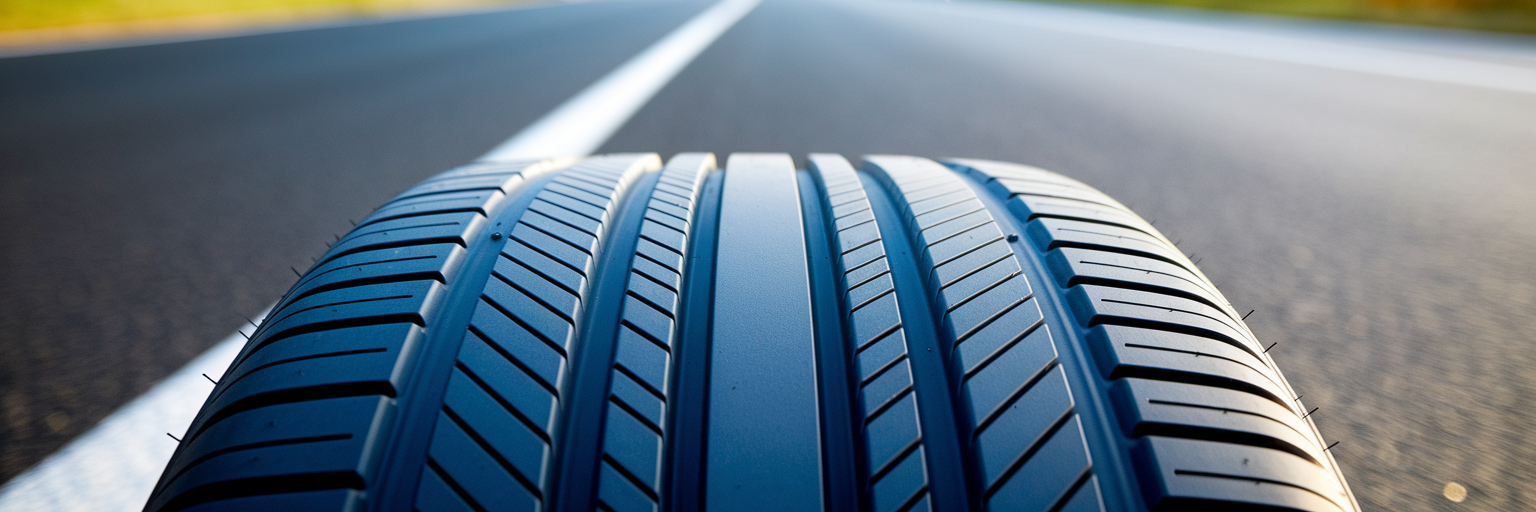
Take a look at the tread pattern. Fuel-efficient tires typically feature smoother, more continuous ribs with fewer deep grooves. This streamlined design reduces the amount of rubber squirming and deforming against the road surface. Contrast this with the aggressive, blocky treads on an all-terrain or winter tire. While those complex patterns are essential for grip in mud or snow, they create significantly more friction on dry pavement, demanding more energy from the engine.
Correct Tire Sizing
One of the most critical yet overlooked factors is sticking to your vehicle manufacturer’s recommended tire size. It can be tempting to install wider or larger tires for a sportier look, but this decision comes with a cost. Larger tires are heavier and increase aerodynamic drag, forcing your engine to work harder. This can easily negate any benefits from a low rolling resistance design. A car is engineered as a complete system, and changing one component can have unintended consequences. For instance, the efficiency of a classic sedan like the first-generation Honda Accord was partly due to its carefully selected tire and wheel combination.
Ultimately, the ideal fuel-efficient tire is an engineered compromise, balancing these features to deliver maximum efficiency without a significant sacrifice in everyday safety and performance.
| Feature | Fuel-Efficient Tire | Standard All-Season Tire |
|---|---|---|
| Rubber Compound | Specialised silica/polymer blends to reduce heat | General-purpose compound for balanced performance |
| Tread Pattern | Smoother, continuous ribs for less friction | More complex patterns with sipes for all-weather grip |
| Rolling Resistance | Low | Moderate |
| Primary Benefit | Maximised fuel economy | Versatility across different weather conditions |
| Potential Trade-off | May have slightly less grip in wet or snowy conditions | Higher fuel consumption |
Decoding Tire Labels for an Informed Choice
Walking into a tire shop can feel overwhelming with rows of black rubber all looking vaguely the same. However, the sidewall of every tire contains a code that tells you everything you need to know. Learning to read this information empowers you to make a choice based on facts, not just a sales pitch.
Let’s break down a common example: P225/60R18 100H.
- Tire Type (P): “P” stands for P-Metric, meaning it’s designed for passenger vehicles.
- Section Width (225): The tire’s width in millimetres from sidewall to sidewall.
- Aspect Ratio (60): The height of the sidewall as a percentage of the width. Here, it’s 60% of 225mm.
- Construction (R): “R” means it has Radial construction, which is the standard for modern cars.
- Wheel Diameter (18): The diameter of the wheel it’s designed to fit, in inches.
- Load Index (100): A code for the maximum weight the tire can support.
- Speed Rating (H): Indicates the maximum speed the tire can safely sustain.
While the sidewall is useful, the most important information is on your vehicle. Open the driver’s side door and look for a placard on the door jamb. This sticker lists the manufacturer’s recommended tire size and inflation pressures. This is the gold standard for your car.
So, how do you find low rolling resistance options? Unfortunately, there isn’t a universal symbol. This is where your research comes in. Look for specific branding from manufacturers, such as “Ecopia,” “Energy Saver,” or “Fuel Max.” Then, verify the claims by checking the official product specifications on the manufacturer’s website. This is a key step in learning how to choose fuel efficient tires. Staying informed about new releases and standards by browsing automotive news can also give you an edge in finding the latest technology.
Essential Maintenance for Sustained Fuel Efficiency
Your work isn’t done once you’ve installed the best tires for gas mileage. Without proper upkeep, even the most advanced fuel-efficient tires will fail to deliver their promised savings. Consistent maintenance is non-negotiable for performance and longevity.
Focus on these three critical tasks to ensure your investment pays off:
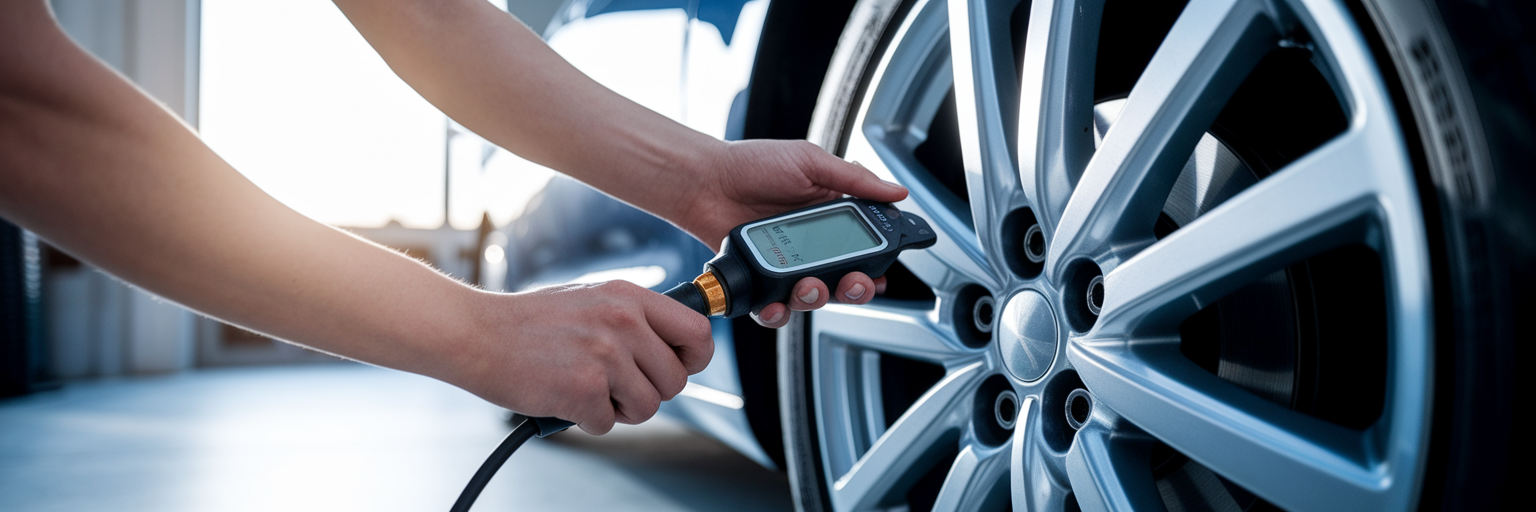
- Correct Tire Pressure: This is the single most important factor in tire maintenance for fuel efficiency. Underinflated tires flatten out, increasing the surface area touching the road. This larger contact patch creates more friction and drags down your fuel economy. Check your tire pressure monthly when the tires are cold, using the recommended value on your vehicle’s door jamb placard, not the maximum pressure printed on the tire’s sidewall. Maintaining the right car tire pressure for mileage is a simple habit with a big impact.
- Regular Rotation and Balancing: Your front and rear tires wear differently due to steering and weight distribution. Rotating them every 8,000 to 10,000 kilometres ensures they wear down evenly. This maintains the tire’s original shape and performance characteristics, preserving its low rolling resistance design and extending its overall life. Balancing prevents vibrations that can also increase resistance and cause premature wear.
- Proper Wheel Alignment: Think of misaligned wheels as constantly fighting each other. Instead of rolling straight, they scrub and drag against the road surface. This not only wastes a tremendous amount of fuel but also rapidly wears out your tires. If you notice your car pulling to one side or hear unusual sounds, it might be a sign of misalignment. Sometimes, these issues manifest as distinct noises, and it helps to understand, for example, why your car might be squeaking when you drive.
Driving Habits That Amplify Tire Performance
The relationship between your tires and fuel tank is also influenced by the person behind the wheel. Fuel-efficient tires create the potential for savings, but your driving habits determine whether you achieve them. Aggressive driving, with its sudden starts and hard braking, generates excess friction and heat, directly counteracting the tire’s low rolling resistance design.
To get the most out of your investment, adopt a smoother driving style. These techniques work in harmony with your tires to maximize efficiency.
- Smooth and Steady: Treat the accelerator and brake pedals gently. Avoid jackrabbit starts from a stoplight and aim for gradual acceleration. On the highway, using cruise control helps maintain a consistent speed, which is far more efficient than constantly adjusting your foot.
- Anticipate the Road: Look far ahead to anticipate changes in traffic. If you see a red light or a slowdown ahead, take your foot off the gas and coast. This conserves momentum and reduces the amount of energy needed to get back up to speed.
- Minimize Unnecessary Weight: A heavier car requires more energy to move and stop. Remove any unnecessary items from your trunk or cabin. Every extra bit of weight puts more strain on your tires and engine, chipping away at your fuel economy.
Combining smart driving with the right equipment is the most effective way to improve fuel economy with tires. As government sources like Natural Resources Canada report, these simple techniques are proven methods for reducing fuel consumption and saving money at the pump.
Making the Final Cost-Effective Decision
Choosing the right tire ultimately comes down to a thoughtful, personal decision. It’s easy to get focused on one feature, but the best choice involves balancing several factors.
First, consider the total cost of ownership. Fuel-efficient tires may have a slightly higher upfront price, but don’t let that deter you. Calculate the potential long-term fuel savings over the life of the tire. Often, the initial extra cost is recovered well before it’s time for a new set.
However, fuel savings mean little if the tire wears out quickly. This is where the UTQG (Uniform Tire Quality Grading) Treadwear rating becomes important. Look for a tire with a good rating, such as 500 or higher, to ensure it offers a long service life. A durable, fuel-efficient tire provides the best overall value.
Finally, it’s crucial to maintain a balanced perspective. There are situations where maximizing fuel economy is not the top priority. For drivers in regions with heavy snowfall, the superior grip of a dedicated winter tire is a safety necessity that outweighs fuel savings. Similarly, someone who enjoys the capabilities of an off-road vehicle like the upcoming 2026 Jeep Grand Cherokee needs durable, aggressive treads for performance on the trail. The “right” tire is the one that best fits your budget, driving needs, and, most importantly, your safety requirements.