Hybrid pickup trucks have emerged as a significant contender in the automotive market, combining traditional internal combustion engines with electric motors to optimize efficiency and performance. As consumers increasingly prioritize sustainability without compromising power, hybrid pickup trucks present an attractive middle ground between gasoline-powered and fully electric models. However, like any automotive technology, they come with their own set of advantages and disadvantages.
Fuel Efficiency: Hybrid Pickup Trucks vs. Traditional and Electric Models
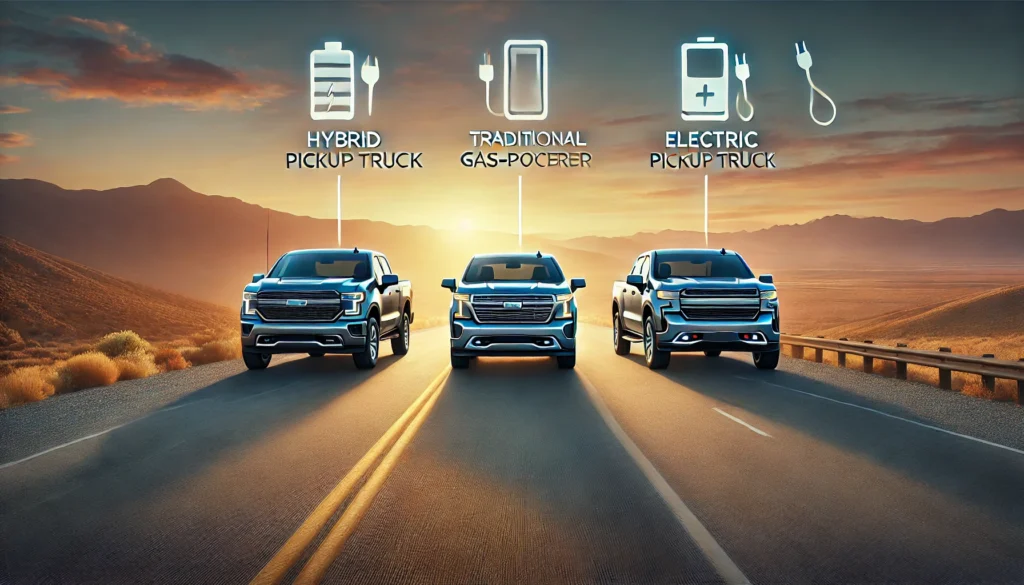
Hybrid pickup trucks provide improved fuel efficiency compared to traditional gasoline models, thanks to the integration of electric motors. This combination allows for reduced fuel consumption, particularly beneficial during city driving and stop-and-go traffic, where electric motors can handle low-speed operation effectively.
Advantages:
- Significantly improved fuel economy compared to traditional gasoline trucks, especially in urban settings.
- Reduced fuel expenses over the vehicle’s lifespan.
- Less reliance on gasoline, contributing to energy independence.
Disadvantages:
- Fuel efficiency gains are less pronounced during highway driving, where gasoline engines typically dominate.
- Still reliant on gasoline, unlike fully electric pickup trucks, which eliminate gasoline usage entirely.
Fully electric pickup trucks, such as the Ford F-150 Lightning or Rivian R1T, offer zero fuel consumption, making them even more efficient than hybrids. However, electric models can face challenges related to range anxiety and charging infrastructure availability, making hybrids a practical compromise for some drivers.
Towing Capacity and Overall Performance
Hybrid pickup trucks maintain impressive towing capacity, often comparable to traditional gasoline-powered trucks. The combination of electric and gasoline power provides strong torque delivery, beneficial for towing and hauling.
Advantages:
- Immediate torque delivery from electric motors enhances towing and hauling capabilities.
- Comparable or superior acceleration and responsiveness compared to gasoline-only models.
- Versatility in handling various terrains and workloads effectively.
Disadvantages:
- Towing heavy loads can significantly reduce fuel efficiency advantages.
- Potentially reduced payload capacity due to heavier hybrid components like batteries and electric motors.
In contrast, fully electric pickups typically offer impressive torque and towing performance. However, heavy towing can dramatically reduce their driving range, posing practical limitations for long-distance or heavy-duty applications. Gasoline trucks remain reliable for sustained heavy-duty tasks due to extensive fueling infrastructure and consistent range.
Initial Cost and Maintenance Expenses
The initial purchase price of hybrid pickup trucks generally exceeds that of traditional gasoline trucks due to advanced technology and battery costs. However, their maintenance expenses can be significantly lower over time.
Advantages:
- Lower long-term maintenance costs due to reduced wear and tear on brakes and engine components.
- Potential eligibility for government incentives, rebates, or tax credits aimed at promoting hybrid vehicle adoption.
- Higher resale value compared to traditional gasoline vehicles, driven by growing consumer demand for fuel-efficient and environmentally friendly options.
Disadvantages:
- Higher upfront costs compared to conventional gasoline trucks, which may deter budget-conscious buyers.
- Battery replacement and hybrid system repairs can be costly if required after warranty expiration.
Fully electric pickup trucks often have even higher initial purchase costs, though they benefit from lower fuel and maintenance expenses in the long run. Gasoline trucks, while cheaper initially, typically incur higher ongoing maintenance and fuel expenses.
Environmental Impact: Hybrid vs. Gasoline and Electric Pickup Trucks
Hybrid pickup trucks offer a significant reduction in emissions compared to traditional gasoline-powered vehicles, making them an appealing choice for environmentally conscious consumers.
Advantages:
- Reduced greenhouse gas emissions compared to gasoline-only trucks.
- Lower fuel consumption, leading to decreased carbon footprint.
- Effective transitional solution for drivers not yet ready to embrace fully electric technology.
Disadvantages:
- Still reliant on fossil fuels, limiting their environmental benefits compared to fully electric trucks.
- Production and disposal of hybrid batteries pose environmental concerns due to resource extraction and recycling challenges.
Electric pickup trucks provide the cleanest operation, producing zero tailpipe emissions. However, the environmental benefits depend significantly on electricity generation sources. Regions relying heavily on renewable energy can maximize electric trucks’ environmental advantages, whereas areas dependent on fossil fuels may see less overall benefit.
Overall Performance and Practicality
Hybrid pickup trucks strike a balance between performance, practicality, and efficiency, making them suitable for a wide range of driving needs and lifestyles.
Advantages:
- Versatile performance suitable for both city driving and off-road adventures.
- Enhanced driving experience due to smooth transitions between gasoline and electric power.
- Reduced noise levels during electric-only operation, improving comfort and driving enjoyment.
Disadvantages:
- Complexity of hybrid systems may lead to occasional performance inconsistencies or software-related issues.
- Slightly reduced cargo and storage space due to battery placement and hybrid components.
Gasoline-powered trucks traditionally offer exceptional reliability and simplicity, but at the cost of higher emissions and fuel expenses. Electric trucks provide cutting-edge technology and quieter operation but require strategic planning around charging infrastructure.
Summary: Choosing the Right Pickup Truck for Your Needs
Selecting among hybrid, gasoline, and electric pickup trucks involves evaluating your specific needs, driving habits, and budget constraints.
Consider hybrid pickup trucks if you:
- Regularly drive in mixed city and highway conditions.
- Seek reduced fuel expenses without compromising performance.
- Desire an environmentally friendlier alternative to traditional gasoline trucks.
However, hybrid pickup trucks might not be ideal if you:
- Frequently tow heavy loads over long distances, diminishing fuel efficiency benefits.
- Prefer the simplicity and lower initial costs of traditional gasoline trucks.
- Have access to reliable charging infrastructure and prefer emission-free driving, making fully electric trucks more appealing.
In conclusion, hybrid pickup trucks offer a compelling compromise, combining the best features of gasoline and electric vehicles. They provide improved fuel efficiency, reduced environmental impact, and robust performance. However, higher initial costs and potential battery-related expenses must be considered. Ultimately, hybrid pickup trucks represent a practical, versatile option for drivers navigating the evolving automotive landscape.