Two Paths to Off-Road Dominance
In the American off-road scene, two names have stood as foundational pillars for decades: the Jeep Wrangler and the Toyota 4Runner. Each commands a fiercely loyal following, yet they represent fundamentally different approaches to conquering the wild. The question isn’t simply which one is better, but rather which one aligns with your personal definition of adventure. This is a classic Jeep Wrangler vs Toyota 4Runner debate, but the answer lies in understanding their distinct philosophies.
The Wrangler is the direct descendant of the original military utility vehicle, a machine born from necessity and refined for pure capability. Its identity is rooted in a singular purpose: to go anywhere, over anything. Every design choice, from its iconic shape to its underlying mechanics, serves the goal of maximum performance on the most demanding trails. It’s a tool, a specialist built for the art of the crawl.
In contrast, the 4Runner emerged from the lineage of the famously indestructible Toyota Hilux pickup. Its engineering prioritizes unwavering reliability and versatile performance for long, self-sufficient journeys. It was designed not just to conquer a single obstacle, but to endure thousands of miles of punishing terrain without complaint. The 4Runner’s identity is one of rugged endurance, a trusted companion for overland expeditions where turning back is not an option.
As we look toward their 2026 iterations, these core identities remain intact. The Wrangler continues to integrate advanced technology, like its 4xe hybrid system, without sacrificing its fundamental trail-conquering DNA. Meanwhile, the 4Runner is expected to carry forward its commitment to proven, rugged mechanics, prioritizing simplicity and longevity over the latest trends. This article will provide a head-to-head analysis of their technical performance, long-term durability, daily livability, and ownership costs. By the end, you will have a clear picture of which off-road legend is the right choice for your specific needs.
Technical Breakdown of Trail Performance
When the pavement ends, theoretical advantages become real-world capabilities. The mechanical differences between the Wrangler and 4Runner are not just minor details; they define how each vehicle interacts with the trail. One is a master of slow, technical articulation, while the other excels at covering rough ground with stability and confidence. Understanding these distinctions is key to choosing the right tool for the job.
Ground Clearance & Trail Geometry
Off-roading is a game of inches, and the numbers that define a vehicle’s geometry tell a clear story. The Wrangler Rubicon vs 4Runner TRD Pro comparison begins here. The Wrangler Rubicon boasts an estimated ground clearance of around 10.5 inches, but its true advantage lies in its aggressive approach and departure angles, approximately 44 and 37 degrees, respectively. These short overhangs allow the Wrangler to attack steep obstacles, like large rocks or sharp inclines, without scraping its bumpers. It can climb up and over terrain that would stop other vehicles in their tracks.
The 4Runner TRD Pro offers a respectable 9.6 inches of ground clearance, but its longer body results in more conservative angles, around 33 degrees for approach and 26 for departure. This geometry is less suited for extreme rock crawling but provides a stable platform for higher-speed trails and uneven fire roads. According to detailed comparisons from automotive experts, the Wrangler’s geometry gives it a distinct edge in technical rock-crawling scenarios. A report by Car and Driver notes that while both are capable, the Wrangler’s design is purpose-built for overcoming extreme obstacles.
Dueling 4×4 Systems
The heart of any off-road vehicle is its four-wheel-drive system. The Wrangler Rubicon features the legendary Rock-Trac part-time 4WD system. Its defining feature is a 4:1 low-range gear ratio. This acts as a massive torque multiplier, allowing the Wrangler to crawl over obstacles at incredibly slow speeds with immense power and control. It’s like having a low gear on a mountain bike, enabling you to tackle the steepest climbs without losing momentum or control. This system is designed for precision and power in the most challenging situations.
The 4Runner TRD Pro uses a proven part-time 4WD system paired with Toyota’s A-TRAC (Active Traction Control) and a locking rear differential. While its low-range ratio is not as extreme as the Rubicon’s, the system is celebrated for its straightforward reliability. A-TRAC works by braking wheels that are slipping, redirecting power to the wheels that have traction. It’s an effective and durable system that provides excellent capability without the complexity of some other setups, reinforcing the 4Runner’s identity as a dependable workhorse.
The Great Suspension Debate: Solid Axle vs. IFS
Here lies one of the most significant philosophical divides. The Wrangler is the last mainstream SUV with a solid front axle. This design connects the front wheels with a single, rigid beam. The primary benefit is superior wheel articulation; when one wheel is pushed up by an obstacle, the other is forced down, keeping both tires in contact with the ground for maximum traction. The Rubicon trim enhances this with an electronic sway bar disconnect, which allows for even greater front suspension travel at the push of a button. The trade-off is a less refined on-road ride.
The 4Runner, like most modern SUVs, uses an Independent Front Suspension (IFS). Each front wheel moves independently, which provides a significantly smoother and more controlled ride on pavement and at higher speeds on rough roads. This makes the 4Runner far more comfortable in daily driving. The compromise is that IFS offers less maximum wheel articulation than a solid axle, which can be a limitation in extreme, uneven terrain where keeping tires on the ground is paramount.
2026 Powertrain Philosophies
The engine options for 2026 reflect each brand’s strategy. Jeep offers a buffet of choices, catering to different priorities. From the standard V6 and a punchy turbo-four to the powerful V8 and the innovative 4xe plug-in hybrid, the Wrangler lineup is about choice and technological advancement. The 4xe, in particular, offers silent, electric-only off-roading and significant torque, representing a modern take on trail capability.
Toyota, on the other hand, is expected to continue its commitment to proven power. The 4Runner will likely stick with a naturally aspirated V6 or a similar engine known for its long-term durability and predictable power delivery. This philosophy is less about chasing horsepower figures and more about ensuring the engine will start and run reliably, whether you are at sea level or a high-altitude mountain pass, 100,000 miles from home. It’s a promise of dependability over cutting-edge performance.
| Specification | Jeep Wrangler Rubicon (2026 est.) | Toyota 4Runner TRD Pro (2026 est.) |
|---|---|---|
| Ground Clearance | ~10.5 inches | ~9.6 inches |
| Approach Angle | ~44 degrees | ~33 degrees |
| Departure Angle | ~37 degrees | ~26 degrees |
| Front Suspension | Solid Axle with Electronic Sway Bar Disconnect | Independent Front Suspension (IFS) |
| Rear Suspension | Solid Axle | Solid Axle |
| Primary 4×4 System | Rock-Trac 4:1 Low-Range Part-Time 4WD | Part-Time 4WD with A-TRAC & Locking Rear Diff |
| Key Advantage | Maximum articulation and rock-crawling geometry | High-speed trail stability and on-road comfort |
Note: Figures are based on current generation models and expected specifications for 2026. This table highlights the fundamental design differences that dictate each vehicle’s primary strengths on the trail.
Built to Last: A Look at Long-Term Ruggedness
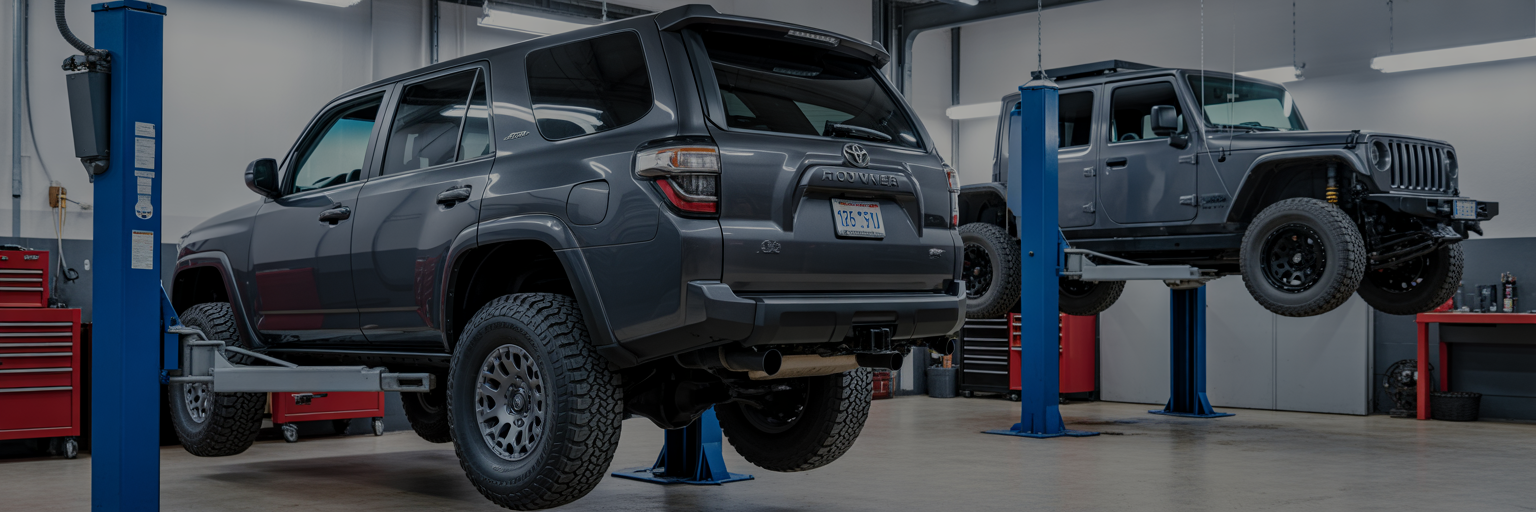
Peak performance on a single trail is one thing; enduring years of abuse is another. This is where the conversation shifts to long-term durability and the core construction of these two icons. Both are built on tough, body-on-frame platforms, a design increasingly rare in the SUV world, but their underlying engineering philosophies reveal different priorities for a life lived off-road.
The 4Runner’s reputation is built upon its legendary foundation. It uses a heavy-duty, fully-boxed frame that is engineered to resist twisting and flexing over hundreds of thousands of miles of rough terrain. Think of it as the backbone of a marathon runner, designed for endurance and resilience against the cumulative stress of long-distance punishment. This robust construction is a key reason why you see so many high-mileage 4Runners still exploring remote backcountry roads.
The Wrangler also uses a strong body-on-frame design, but its frame is engineered with modularity as a core principle. It’s built to be taken apart and customized, which means it’s inherently strong but also designed for a different purpose. Its toughness is that of a gymnast, strong and flexible, ready for intense, dynamic movements. This modularity is a massive part of its appeal, but it presents a different long-term ownership experience compared to the 4Runner’s sealed-for-life approach.
When it comes to off road vehicle reliability, Toyota’s reputation is the industry benchmark. The 4Runner is the embodiment of this legacy. Its components are often overbuilt, and its systems are chosen for their proven track record, not their novelty. It’s common to see these vehicles reach extreme mileage with only routine maintenance. The Wrangler is mechanically tough, but its complexity, especially in higher trims with more electronics and advanced features, can introduce more potential points of failure over a long lifespan. It’s a rugged machine, but it may demand more attention than the Toyota.
Living with these vehicles in harsh American climates highlights another practical difference. The Wrangler’s removable doors and roof offer an unparalleled open-air experience, a core part of its charm. However, this design can be a liability in regions with heavy rain, snow, or dust, as seals can wear over time, leading to potential leaks and a less protected interior. The 4Runner’s traditional, fully sealed SUV body offers superior, hassle-free protection from the elements. There are no tops to wrestle with or doors to realign; it’s simply a secure shelter from the outside world.
Projecting ownership past the 100,000-mile mark, a well-maintained 4Runner is likely to feel just as solid as it did on day one, with few surprises. A well-used Wrangler, particularly one that has seen heavy trail use, may require more proactive care. The very nature of its solid-axle suspension means components like bushings and ball joints are wear items that will eventually need replacement. For owners who are hands-on and prefer to handle their own maintenance, understanding the wear and tear on these vehicles is key. Many common tasks can be managed at home with the right guidance, and for those interested in learning more, exploring a range of our DIY projects can be a great starting point.
Cabin Comfort and Practical Cargo
For most owners, an off-road vehicle must also serve as a daily companion. The experience inside the cabin, from the driver’s seat to the cargo area, often becomes the deciding factor. Here, the 4Runner vs Wrangler daily driver debate reveals two completely different approaches to interior design and everyday usability. One prioritizes insulated comfort, while the other celebrates a raw, connected-to-the-road experience.
The 4Runner’s cabin is designed to be a comfortable refuge. It offers a significantly quieter and smoother ride, with better insulation from road and wind noise. This makes it a far superior choice for long highway road trips, daily commutes, and family hauling. You can have a normal conversation at 70 mph without raising your voice. The Wrangler, by contrast, offers a more visceral experience. More wind and road noise are part of the package, a constant reminder of its rugged nature. For many, this isn’t a flaw but a feature, an authentic connection to the machine. And, of course, with the roof and doors off, it provides an open-air freedom that no other SUV can match.
Their interior design philosophies are just as distinct. The Wrangler’s cabin is unapologetically utilitarian. You’ll find durable, water-resistant surfaces and even drain plugs in the floorboards, designed for easy cleanup after a day of muddy fun. It’s a space built to be used, not just admired. The 4Runner’s interior, while still built with durable materials, leans toward traditional ergonomics and passenger comfort. The seats are generally more supportive for long drives, and the overall layout feels more like a conventional SUV, prioritizing a sense of quality and refinement.
When it comes to hauling gear, the 4Runner has a clear advantage. The four-door model offers a large, unobstructed cargo area with a conventional top-hinged liftgate that provides shelter from rain when open. Some trims even offer a convenient slide-out cargo deck, perfect for tailgating or organizing equipment. The four-door Wrangler Unlimited offers a decent amount of space, but it’s hindered by a side-swinging tailgate with a mounted spare tire. This design can be cumbersome in tight parking spots and requires two separate actions to fully open the cargo area. The two-door Wrangler, while a champion of agility on the trail, offers very limited cargo capacity, making it less practical as a primary vehicle.
Both vehicles will feature modern infotainment systems with touchscreens, Apple CarPlay, and Android Auto for 2026. However, their interfaces reflect their brands’ priorities. Jeep’s Uconnect system is frequently praised for its sharp graphics and intuitive, user-friendly layout. Toyota’s system, on the other hand, typically prioritizes functional reliability. It gets the job done without fuss, but sometimes at the expense of the cutting-edge features or visual flair found in the Jeep. While these two titans battle for off-road supremacy, the broader SUV market offers a wide spectrum of choices. For buyers whose priorities lean more towards efficiency and family use, comparing other popular models can provide valuable perspective. For instance, understanding the differences in a matchup like the Toyota RAV4 vs. Tesla Model Y we analyzed showcases how varied the modern SUV landscape has become.
The Financial Realities of Ownership
Choosing between the Wrangler and 4Runner involves more than just performance and comfort; it’s a significant financial decision. The total cost of ownership extends far beyond the initial sticker price, encompassing maintenance, fuel, and the vehicle’s ability to retain its value over time. Here’s a clear-eyed look at the financial realities of owning each of these off-road legends.
- Upfront Investment
The initial purchase price can vary dramatically based on trim and options. A base model Wrangler Sport often has a lower starting MSRP than a base 4Runner SR5, making it seem like the more accessible entry point. However, this changes as you climb the trim ladder. In the critical Wrangler Rubicon vs 4Runner TRD Pro matchup, prices become highly competitive. A heavily optioned Wrangler Rubicon, especially with the V8 or 4xe powertrain, can easily surpass the cost of a top-trim 4Runner, pushing it into a higher price bracket. - Long-Term Maintenance
This is where the 4Runner’s reputation for reliability pays dividends. With its proven V6 engine and simpler systems, it generally incurs lower lifetime maintenance costs. It’s designed with longevity in mind, and major repairs are uncommon. The Wrangler, while mechanically robust, can present higher service bills over time. Specialized parts for its advanced 4×4 systems, or potential repairs on more complex powertrains like the 4xe hybrid, can be more expensive. Its solid-axle design also has more wear-and-tear components that require periodic attention. - Fuel Costs
The 4Runner offers consistent but unremarkable fuel economy. Its V6 provides adequate power, but it’s not known for being a fuel-sipper. Owners know what to expect, and there are few surprises at the pump. The Wrangler presents a much wider spectrum. The 4xe plug-in hybrid can drastically cut fuel costs for owners with shorter commutes who can charge at home, offering miles of electric-only driving. At the other end, the powerful V8 engine delivers thrilling performance at the cost of frequent and expensive fill-ups. The standard V6 and turbo-four options fall somewhere in between, generally competitive with the 4Runner. For many buyers in this segment, fuel economy is a significant factor in the total cost of ownership. While the Wrangler offers more efficient options, those looking for the absolute best fuel economy in a utility vehicle might also consider what the latest generation of trucks has to offer. Exploring which 2025 trucks we found offer the best towing and fuel economy can provide a broader context. - Depreciation and Resale Value
Both the Wrangler and 4Runner are champions of value retention, consistently ranking among the vehicles with the lowest depreciation. This is a massive financial advantage, as it minimizes the money you lose over the course of ownership. Both vehicles are known for their strong resale value, a key factor in long-term ownership costs. According to data from iSeeCars, which tracks vehicle depreciation, both the Jeep Wrangler and Toyota 4Runner consistently rank among the vehicles that hold their value best over a five-year period. The Wrangler’s iconic status, endless customization potential, and emotional appeal often give it a slight edge in the market. The 4Runner’s value is anchored by its bulletproof reputation for reliability, making it an incredibly safe and predictable long-term investment.
Personalizing Your Adventure: Aftermarket Ecosystems
For many, buying a Wrangler or 4Runner is just the beginning of the journey. The ability to modify and personalize these vehicles is a huge part of the ownership experience, allowing drivers to tailor their rigs to their exact needs and style. Both vehicles are supported by massive aftermarket industries, but the focus and scale of each are quite different.
The Wrangler’s aftermarket is less an industry and more a universe of its own. It is arguably the most customizable vehicle on the planet. Owners see the Wrangler not as a finished product, but as a modular platform. There is a seemingly infinite supply of lift kits, bumpers, fenders, lights, armor, and engine performance parts. This ecosystem ensures that no two Wranglers need to be the same. You can build it into an extreme rock crawler, a beach cruiser, or anything in between. It’s a canvas for personal expression.
The 4Runner’s aftermarket, while also extensive, is more focused and purpose-driven. It primarily caters to the overlanding and long-distance exploration communities. You’ll find a wealth of high-quality suspension systems designed for carrying heavy loads over rough terrain, durable roof racks for rooftop tents, and clever interior drawer systems for organizing gear on extended trips. The modifications are less about aesthetics and more about enhancing the 4Runner’s inherent reliability and capability for self-sufficient travel in remote areas.
The DIY-friendliness of each vehicle also differs. The Wrangler’s simple, bolt-on design often makes it easier for enthusiasts with basic tools to install upgrades in their own garage. Many components are designed to be easily removed and replaced. The 4Runner, with its more integrated construction and Independent Front Suspension, can sometimes require more specialized knowledge or tools for major modifications, particularly when it comes to suspension work. Both brands also offer factory-supported performance parts through Mopar (for Jeep) and Toyota Racing Development (TRD), allowing owners to enhance their vehicles with warrantied components installed by the dealer. The vast aftermarket support for both the Wrangler and 4Runner is a testament to their place in the broader culture of capable vehicles. Enthusiasts looking to explore similar vehicles or stay updated on the latest models and modifications can find a wealth of information by browsing our dedicated categories for trucks and off-roaders.
Making Your Choice: The Right Rig for Your Adventures
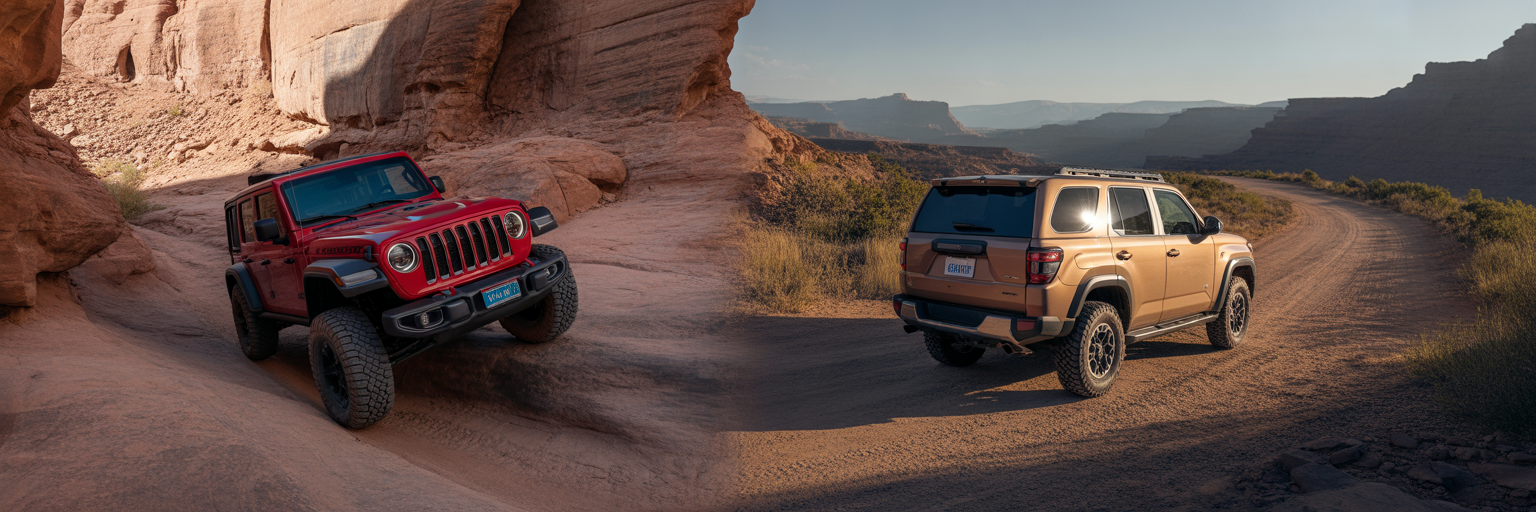
After comparing the philosophies, mechanics, and costs, the choice between a Jeep Wrangler and a Toyota 4Runner becomes clearer. It’s not about finding the single best off road SUV 2026, but about identifying the vehicle that aligns with your life and your definition of adventure. The right choice depends entirely on your priorities.
The ideal Wrangler owner is someone who prioritizes peak off-road capability above all else. This person dreams of tackling technical terrain like the slick rock of Moab or the legendary Rubicon Trail. They value the unique, open-air driving experience and the endless possibilities for customization. They see their vehicle as a hobby and a tool for extreme recreation, and they are willing to accept compromises in on-road comfort, cabin noise, and potentially higher long-term maintenance costs as part of that authentic experience.
The ideal 4Runner owner, on the other hand, values absolute reliability and long-term durability. This individual needs a single, do-it-all vehicle that can confidently handle challenging trails on the weekend and serve as a comfortable, practical, and safe daily driver during the week. They might be planning a multi-state overland trip where dependability is non-negotiable. For them, peace of mind and the ability to haul family and gear in a quiet, refined cabin outweigh the need for maximum rock-crawling articulation.
Of course, there is a middle ground. A modern four-door Wrangler Sahara can be a surprisingly livable daily driver, while a modified 4Runner with an upgraded suspension and armor can become a highly capable trail machine. The lines can blur, but the core DNA of each vehicle remains. To make your final decision, ask yourself a few direct questions:
- What is my primary use case? Will you be tackling extreme, technical trails, or exploring national parks via forest service roads and long-distance overland routes?
- How important is daily comfort? Is a quiet, smooth highway ride essential for your commute and family trips, or do you embrace a more raw, connected driving experience?
- What is my approach to maintenance and modification? Do you enjoy tinkering and personalizing your vehicle, or do you prefer a set-it-and-forget-it machine with a factory warranty?
- What does my budget look like for the next ten years? Are you planning for just the initial purchase, or are you considering the total cost of fuel, maintenance, and potential repairs over a decade of ownership?
Answering these questions honestly will point you not to the “better” vehicle, but to the right vehicle for you.