
The 2026 Minivan Showdown for American Families
For decades, the minivan has been the unsung hero of American family life. While the market has become saturated with three-row SUVs, the minivan remains a purpose-built solution, designed from the ground up for the chaos and comfort of family hauling. In this space, two contenders stand out, each with a distinct philosophy. The central debate for families today is the Kia Carnival vs Chrysler Pacifica.
The Kia Carnival, which Kia labels a “Multi-Purpose Vehicle,” arrives with SUV-inspired styling wrapped around a cavernously practical interior. It leads with a compelling value proposition, offering a wealth of features and an industry-leading warranty that provides peace of mind for the long haul. It’s the challenger that asks if you can get everything you need, and more, for a smarter price.
On the other side is the Chrysler Pacifica, the established innovator in the segment. The Pacifica built its reputation on clever features and exclusive capabilities. It’s the only minivan offering the foul-weather security of all-wheel drive and the gas-saving intelligence of a plug-in hybrid powertrain. It represents a more premium, versatile approach to family transport.
While large SUVs offer their own set of advantages, as we’ve explored in our comparison of full-size family SUVs, the sliding doors and low floors of a minivan offer an unmatched level of daily convenience. This article will provide a head-to-head analysis of the factors that truly matter to families. We will examine everything from car seat logistics and cargo flexibility to long-term ownership costs to help you determine the best family minivan 2026 for your specific needs.
Passenger Space and Car Seat Accommodations
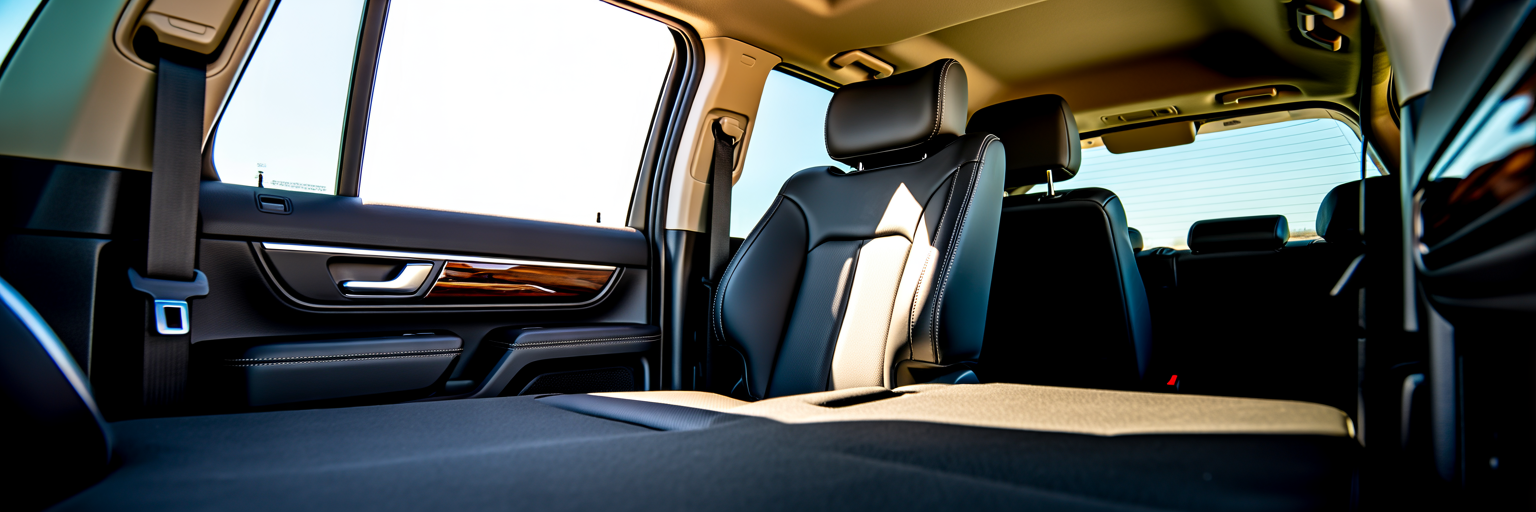
A minivan’s primary job is to move people comfortably and safely. How well the Carnival and Pacifica accommodate passengers, from toddlers in car seats to adults in the third row, is a critical point of comparison.
First and Second-Row Comfort
Up front, both vehicles offer comfortable, command-of-the-road seating positions with ample legroom and headroom for parents. The differences become more apparent in the second row. The Pacifica provides comfortable captain’s chairs that are straightforward and functional. The Carnival, however, offers an optional taste of luxury with its “VIP Lounge Seats.” These heated and ventilated seats recline significantly and include leg extensions, but their practicality for a family with young children is debatable. They create a wide channel to the third row but can feel like an indulgence that complicates the daily routine of loading and unloading kids.
Third-Row Access and Usability
Getting to the back is where minivan design shines. Both vehicles have wide-opening sliding doors, but the ease of third-row access differs. In the Pacifica, the second-row seats tilt forward easily, even with a car seat installed in some positions, creating a decent path to the rear. The Carnival’s “slide-flex” seating allows the middle second-row seat to slide forward, creating a generous walkway without disturbing the outboard seats. For adults, the Pacifica’s third row feels slightly more spacious, but both are genuinely usable for longer trips, unlike the temporary perches found in many SUVs. The right vehicle can make all the difference on a long drive, a topic we cover in our guide to the best family road trip vehicles.
Car Seat Installation: A Parent’s Guide
For families with young children, this is where the decision might be made. The number and accessibility of LATCH anchors are paramount. Here, the Kia Carnival has a significant advantage, making it arguably the minivan with most LATCH seats available.
- Kia Carnival: Offers a total of five LATCH positions. There are anchors in both second-row outboard seats and the second-row center seat, plus two more sets in the third row. This flexibility is a huge benefit for families with multiple children in car seats.
- Chrysler Pacifica: Provides four LATCH positions. It has anchors on the two second-row captain’s chairs and two sets in the third row. While sufficient for many, it lacks the Carnival’s extra position and flexibility.
The real-world implication is that the Carnival can more easily accommodate three-across car seat configurations or provide more options for spacing children out. Both vans offer plenty of cupholders and USB ports, but the Carnival’s superior car seat setup gives it a clear edge for growing families.
Cargo Capacity and Seating Versatility
After people, it’s all about their stuff. A minivan needs to handle everything from a week’s worth of groceries to a dorm room move-out. This is where the two vehicles’ design philosophies diverge most sharply.
Space Behind the Third Row: The Daily Haul
For everyday errands with all seats in use, the Kia Carnival cargo space is the clear winner. It boasts a deep, usable well behind the third row, offering 40.2 cubic feet of space. That’s more than enough for a double stroller, grocery bags, and sports equipment combined. The Pacifica offers a respectable but smaller 32.3 cubic feet in the same configuration. For the daily grind, the Carnival’s extra capacity is a noticeable advantage.
Stow ‘n Go vs. Removable Seats: Two Philosophies
This is the defining difference between the two vans. The Chrysler Pacifica’s exclusive Stow ‘n Go seating is a masterclass in convenience. With a few pulls of a strap, both the second and third-row seats can disappear completely into the floor, transforming the van from a passenger hauler to a cargo van in minutes. There is no heavy lifting and no need to find garage space to store seats. It’s a feature that, once you use it, is hard to live without.
The Kia Carnival takes a more traditional approach. While its third-row seats fold neatly into the floor like the Pacifica’s, the second-row seats do not. To achieve maximum cargo capacity, they must be physically unlatched and removed. These seats are heavy and bulky, making the process a two-person job and requiring a place to store them. This design is the trade-off Kia made to allow for more luxurious second-row seating options.
Maximum Cargo Mode: From Family Hauler to Moving Van
Once you’ve either folded or removed the seats, both vans offer cavernous interiors. The Carnival technically has a slight edge in total volume at 145.1 cubic feet compared to the Pacifica’s 140.5. However, the Pacifica’s completely flat floor, a result of the Stow ‘n Go system, can make it easier to slide in large, heavy items. The choice comes down to convenience versus absolute volume. Do you need maximum space occasionally and are willing to do the work, or do you value the ability to switch from people to cargo mode spontaneously?
| Feature | Kia Carnival | Chrysler Pacifica |
|---|---|---|
| Cargo Behind 3rd Row | 40.2 cubic feet | 32.3 cubic feet |
| Max Cargo Capacity | 145.1 cubic feet | 140.5 cubic feet |
| 2nd-Row Seating System | Seats slide, recline, or must be physically removed | Stow ‘n Go seats fold into in-floor bins (N/A on PHEV) |
| 3rd-Row Seating System | Stowable ’60/40 split-sinking’ seats fold into floor | Stow ‘n Go seats fold into in-floor bins |
| Key Advantage | Greater cargo volume with all seats up | Unmatched convenience for converting to cargo mode |
Note: Data is based on current model year specifications and is projected for 2026 models. The Pacifica PHEV model does not feature second-row Stow ‘n Go seating due to battery placement.
Cabin Technology and On-Road Comfort
The modern family vehicle is a mobile living room, and the technology and comfort inside can make or break the daily drive and long road trips.
Infotainment and Connectivity: Kia Connect vs. Uconnect
Both Kia and Chrysler offer robust infotainment systems. The Carnival features a sleek, wide-screen display running Kia Connect, which is known for its intuitive menus and sharp graphics. Higher trims offer a fully digital instrument cluster that merges seamlessly with the main screen for a high-tech feel. Chrysler’s Uconnect system, displayed on a large central touchscreen, is consistently praised for its user-friendliness and quick response times. It may not look as futuristic as the Kia’s setup, but its simplicity is a virtue when you need to change a setting quickly while driving.
Family-Focused Tech: Keeping an Eye on the Backseat
This is where minivan innovation truly shines. Both vehicles offer features designed to solve the age-old problem of managing the rear rows. “Passenger View” in the Carnival and “FamCam” in the Pacifica use a ceiling-mounted camera to display a live feed of the second and third rows on the main infotainment screen, allowing parents to check on sleeping babies or referee disputes without turning around. Similarly, “Passenger Talk” and “In-Cabin Intercom” use the car’s audio system to project the driver’s voice to the back, ending the need to shout over road noise. Both vans also offer rear-seat entertainment systems to keep passengers occupied on long journeys.
Ride Quality and Cabin Serenity
From a passenger’s perspective, a calm and smooth ride is essential. The Chrysler Pacifica generally delivers a more plush, absorbent ride, soaking up bumps and potholes with composure. It feels settled and comfortable on the highway. The Kia Carnival has a slightly firmer suspension, which contributes to its more SUV-like feel but can also transmit more road imperfections into the cabin. In terms of quietness, both are well-insulated from wind and road noise, creating a serene environment for conversation or a much-needed nap. Both vehicles come equipped with a comprehensive suite of advanced driver-assistance systems (ADAS), including adaptive cruise control, lane-keeping assist, and automatic emergency braking, making long drives safer and less fatiguing.
Powertrain Performance and Unique Capabilities
Under the hood, the Carnival and Pacifica offer different approaches to motivation. One focuses on simplicity and reliability, while the other provides specialized options for specific needs.
Standard V6 Power and Performance
The standard engine in both minivans is a capable V6. The Kia Carnival’s 3.5-liter V6 produces a healthy 290 horsepower, providing brisk acceleration for highway merging and confident passing. It feels strong and responsive in everyday driving. The Chrysler Pacifica’s 3.6-liter V6 makes a similar 287 horsepower. Both engines are paired with smooth-shifting automatic transmissions and deliver more than enough power for a fully loaded van. For most buyers, the performance of these standard engines will be nearly indistinguishable and perfectly adequate.
The All-Weather Advantage: Chrysler Pacifica AWD
Here lies a major advantage for the Pacifica. For families living in the Snow Belt or regions with frequent heavy rain, the availability of all-wheel drive is a significant differentiator. A Chrysler Pacifica AWD review would highlight its ability to provide extra traction for more secure handling in slippery conditions. This system automatically engages when needed, providing peace of mind without requiring any driver input. The Kia Carnival is offered exclusively with front-wheel drive, which, while sufficient for most climates with proper tires, cannot match the all-weather confidence of an AWD system.
The Efficiency Champion: The Pacifica Plug-In Hybrid
The Pacifica’s other exclusive offering is its plug-in hybrid (PHEV) powertrain. The Pacifica plug-in hybrid range is approximately 32 miles on electric power alone. This is a compelling feature for many families, as it means most daily errands, school runs, and short commutes can be completed without using a single drop of gasoline. For longer trips, the gas engine kicks in, eliminating any range anxiety. As noted by publications like Car and Driver, this dual-capability makes the Pacifica unique in its class. However, there are trade-offs: the PHEV model is not available with AWD, and the battery placement means it loses the convenient second-row Stow ‘n Go seats.
Long-Term Ownership Costs and Reliability

The purchase price is only the beginning of a vehicle’s cost. Fuel, maintenance, warranty coverage, and resale value all play a significant role in the total cost of ownership over the years.
Fuel Costs: V6 vs. AWD vs. Plug-In Hybrid
The standard V6 versions of the Carnival and Pacifica have very similar fuel economy ratings, meaning their annual fuel costs will be nearly identical. Opting for the Pacifica AWD will incur a slight fuel economy penalty due to the extra weight and mechanical drag. The real story is the Pacifica PHEV. For families who can charge at home and whose daily driving falls within its electric range, the fuel savings can be substantial, potentially saving thousands of dollars over several years of ownership. It effectively turns your minivan into an electric vehicle for local trips.
Warranty Coverage: Kia’s Decisive Advantage
When it comes to long-term peace of mind, Kia holds a commanding lead. The Carnival comes with an industry-best 10-year/100,000-mile powertrain warranty, double that of the Chrysler. This coverage provides a significant safety net against major repair bills long after the Pacifica’s warranty has expired. For families who plan to keep their vehicle for many years, this is a powerful financial incentive. Proper care is still essential, and knowing how to keep your car’s engine running for years can extend its life even further.
Projected Reliability and Resale Value
Based on historical data from recent years, Kia has established a reputation for average to above-average reliability, often ranking well in dependability studies. Chrysler’s reliability has been more inconsistent, and the Pacifica’s more complex systems like AWD and the PHEV powertrain introduce more potential points of failure over the long term. In terms of resale value, the Carnival’s strong warranty and popular styling are likely to help it hold its value well. The Pacifica’s unique features, especially the PHEV, may appeal to a specific subset of used-car buyers, potentially bolstering its value in the face of rising fuel costs.
| Factor | Kia Carnival | Chrysler Pacifica |
|---|---|---|
| Powertrain Warranty | 10 years / 100,000 miles | 5 years / 60,000 miles |
| Bumper-to-Bumper Warranty | 5 years / 60,000 miles | 3 years / 36,000 miles |
| Projected Reliability | Average to Above Average | Average |
| Key Long-Term Advantage | Industry-leading warranty provides peace of mind | PHEV model offers significant long-term fuel savings |
Note: Projected reliability is based on historical brand data from sources like J.D. Power and Consumer Reports. Warranty terms are based on current offerings and are subject to change.
The Verdict: Which Minivan Fits Your Family?
After a thorough breakdown of the Kia Carnival vs Chrysler Pacifica, it’s clear that there isn’t one single winner, but rather two excellent choices for two different types of families. Both vehicles are safe, practical, and packed with family-friendly features, earning strong safety credentials from sources like KBB, which aggregates official crash test ratings. The best choice truly depends on your family’s non-negotiable priorities.
The Winner for the Value-Focused Family
For the family prioritizing budget, long-term peace of mind, and maximum passenger flexibility, the Kia Carnival is the clear winner. It offers more cargo space behind the third row for daily use, superior car seat accommodations with its five LATCH positions, and an unbeatable warranty that significantly lowers the long-term financial risk. It delivers nearly all the practicality a family needs in a stylish and affordable package.
The Winner for the All-Weather and Eco-Conscious Family
For the family that needs all-weather capability or wants to minimize their carbon footprint and fuel budget, the Chrysler Pacifica is the undeniable choice. It is the only minivan that offers the security of all-wheel drive or the remarkable efficiency of a plug-in hybrid powertrain. The convenience of its Stow ‘n Go seating remains unmatched. If your daily life demands these specialized features, the Pacifica is the only van that delivers.
Ultimately, the decision comes down to identifying what you can’t live without. Is it the Carnival’s warranty and car seat flexibility, or the Pacifica’s AWD and PHEV options? By understanding these core differences, you can confidently choose the minivan that will best serve your family for years to come. For more automotive insights and reviews, you can always find the latest at Car Phanatics.