Defining Your Compact SUV Priorities
The compact SUV has quietly become the default vehicle for modern American life. It’s the do-it-all machine parked in suburban driveways and city garages from coast to coast, a testament to its unmatched blend of practicality and capability. This popularity has created an intensely competitive market, forcing automakers to move beyond one-size-fits-all solutions. Instead, they now craft vehicles with distinct personalities, each excelling in specific areas to appeal to different priorities.
In this crowded field, two contenders stand out for their sharply defined characters: the 2026 Mazda CX-5 and the 2026 Hyundai Tucson. They represent two different answers to the same question of what a modern SUV should be.
The Mazda CX-5 presents itself as the aspirational choice. It’s for the person who believes their daily drive should be more than just a commute. It’s built for those who appreciate the subtle satisfaction of a perfectly weighted steering wheel and a cabin that feels more expensive than its price tag suggests. Mazda has cultivated a reputation for near-luxury refinement, and the CX-5 is the embodiment of that philosophy, offering a sophisticated experience that prioritizes the art of driving.
On the other side of this 2026 compact SUV comparison is the Hyundai Tucson. It is the forward-thinking and pragmatic option. Its aggressive, futuristic design is impossible to ignore, signaling a clear focus on technological innovation and efficiency. With a diverse lineup of powertrains, including highly efficient hybrid models, the Tucson appeals directly to the tech-savvy and budget-conscious buyer who wants a vehicle that is smart, spacious, and sensible for the long haul.
So, the real question isn’t which SUV has a longer feature list. It’s about you. What do you value most? Is the quiet thrill of a winding back road more important than saving a few hundred dollars a year at the pump? Do you need a cavernous back seat for growing kids and their gear, or is a beautifully crafted, driver-focused cockpit your priority? This article is your guide to answering those questions and finding the SUV that truly fits your life.
The Driving Experience: A Tale of Two Philosophies
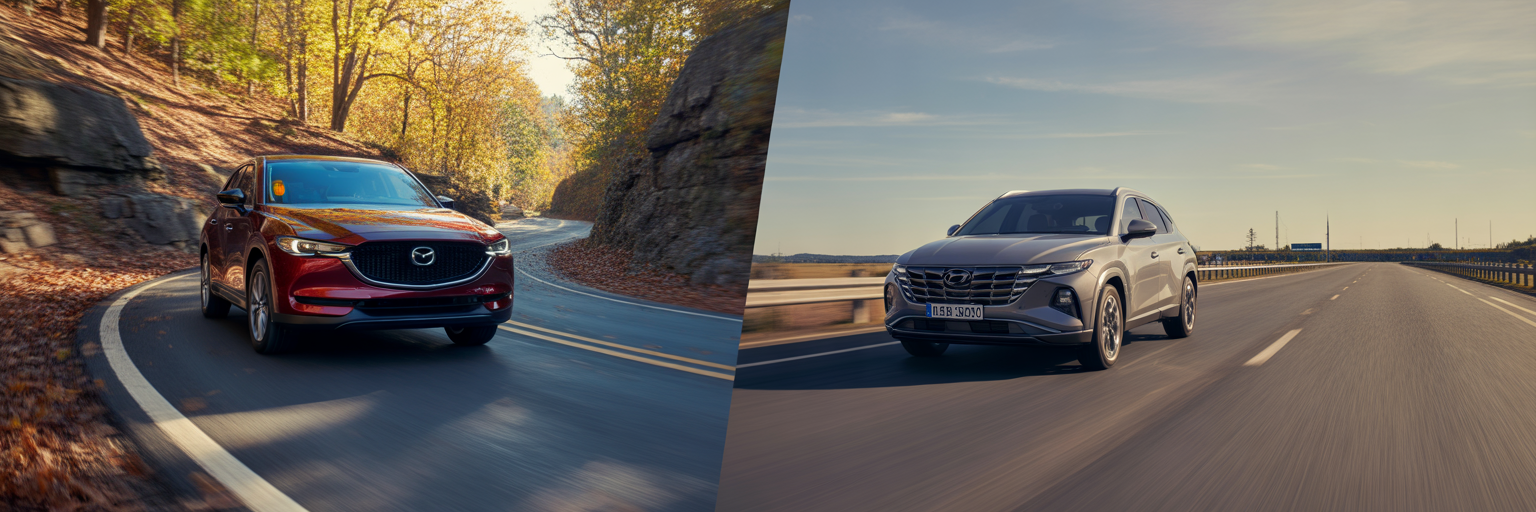
Beyond the spec sheets and window stickers lies the most fundamental difference between these two SUVs: how they feel from behind the wheel. This isn’t about horsepower numbers; it’s about character and intent. The Mazda CX-5 and Hyundai Tucson offer two completely different on-road philosophies.
Mazda’s approach is famously guided by the Japanese concept of Jinba Ittai, or “horse and rider as one.” This isn’t just marketing speak. It translates into a tangible connection between you and the machine. The steering feels direct and communicative, telling you exactly what the front tires are doing. On a curved highway on-ramp, the chassis remains impressively flat and composed, inspiring a level of confidence you might not expect from a family vehicle. This feeling is enhanced by technology like G-Vectoring Control Plus, which makes subtle adjustments to engine torque to improve steering response and stability. The result is a vehicle that feels agile and connected to the road, making every drive, even a trip to the grocery store, more engaging.
The Hyundai Tucson’s mission is entirely different. It prioritizes serenity and comfort. Its suspension is tuned to absorb the harsh realities of American roads, from jarring city potholes to the rhythmic thump of expansion joints on the interstate. The cabin is a quiet, isolated space designed to reduce the fatigue of a long family road trip or the stress of a bumper-to-bumper commute. Where the CX-5 connects you to the road, the Tucson shields you from it. It’s a rolling sanctuary, and for many buyers, that is the ultimate luxury.
This contrast extends to the sensation of acceleration. The CX-5, with its conventional automatic transmission, delivers a responsive and traditional feel. Press the pedal, and you get a direct, predictable surge of power. The Tucson hybrid, however, offers a distinctly modern experience. From a stop, the electric motor provides a smooth, silent pull that feels refined and effortless. The power delivery is seamless, less visceral than the Mazda, but incredibly polished.
Even their all-wheel-drive systems reflect their core philosophies. Mazda’s i-Activ AWD is predictive, constantly monitoring conditions to enhance the CX-5 driving dynamics and improve handling, even on dry pavement. It’s designed to make a good driver feel even better. In contrast, Hyundai’s HTRAC AWD is primarily reactive. It focuses on providing sure-footed grip when it detects slip in rain or snow, prioritizing all-weather stability over outright performance. One is for confidence in the corners; the other is for confidence in a snowstorm.
Exterior Styling and Curb Appeal
How a car makes you feel often starts before you even get inside. The exterior design of the Mazda CX-5 and Hyundai Tucson communicates their different intentions with striking clarity. Each follows a distinct design language that appeals to a different kind of buyer.
The Mazda CX-5 is a study in the brand’s “Kodo: Soul of Motion” design philosophy. It’s an exercise in elegant simplicity. The body panels are clean and uncluttered, with flowing lines that create a beautiful play of light and shadow as you walk around it. There are no jarring angles or aggressive affectations. The front end is sophisticated and mature, giving the CX-5 a timeless quality that helps it look more expensive than it is. It’s the automotive equivalent of a perfectly tailored suit: understated, confident, and always in style.
In sharp contrast, the Hyundai Tucson embraces a philosophy called “Parametric Dynamics.” It is anything but understated. The design is intentionally bold and futuristic, meant to be a conversation starter. Its most defining feature is the aggressive front grille with its integrated “Parametric Jewel” daytime running lights, which are invisible until turned on, creating an unmistakable and dramatic light signature. The body sides are a cascade of sharp, angular creases that give the vehicle an almost architectural presence. This is a design for someone who wants to stand out and make a statement.
Their profiles tell the same story. The CX-5 has classic sports car-inspired proportions, with a longer hood and a cab-rearward stance that visually hints at its dynamic, rear-drive-biased feel. The Tucson, on the other hand, has a more traditional SUV silhouette. Its shape is dictated by the need to maximize interior volume and practicality, prioritizing function over a sleek, sporty form. This visual difference is a direct reflection of their core missions: one is designed for driving pleasure, the other for everyday utility.
Ultimately, your preference here is deeply personal. The CX-5 appeals to the buyer seeking quiet sophistication, a vehicle that conveys quality without shouting. The Tucson is for the trend-setter, the individual who embraces bold design and wants their vehicle to be a reflection of their modern, tech-forward personality. For more insights into automotive news and design trends, you can explore our news section.
Inside the Cabin: Comfort Meets Functionality
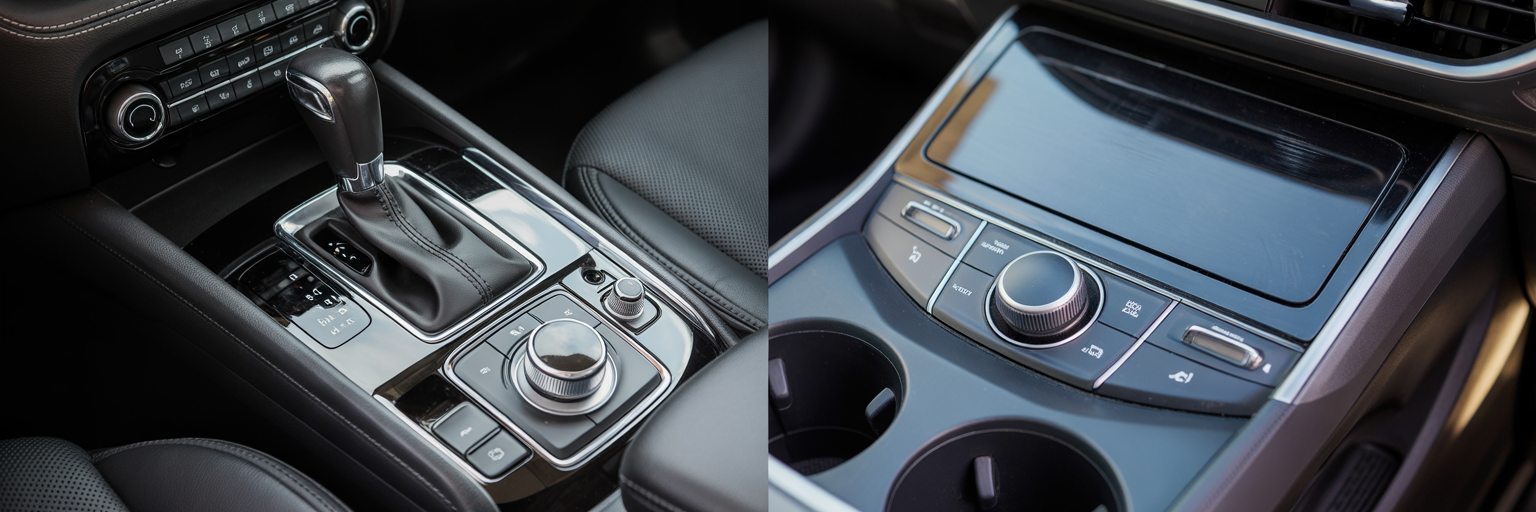
Stepping inside these two SUVs reveals interiors that are as philosophically divided as their exteriors. One is a driver-centric cockpit built with premium materials, while the other is an open, tech-forward lounge designed for maximum space and versatility.
Ambiance and Material Quality
The Mazda CX-5’s cabin is designed around the driver. The layout is clean, symmetrical, and focused, with every control placed for intuitive access. What truly sets it apart is the material quality. Mazda uses an abundance of soft-touch plastics, and on higher trims, you’ll find genuine Nappa leather and real wood or aluminum trim. It’s a level of craftsmanship that feels borrowed from a luxury brand, creating a rich, premium ambiance that makes every journey feel special.
The Hyundai Tucson’s interior, by contrast, feels open, airy, and futuristic. The dashboard flows seamlessly into the door panels, and the centerpiece is a “waterfall” center stack that houses the large infotainment screen and climate controls. Instead of mimicking traditional luxury, Hyundai uses unique fabric textures and ambient lighting to create a modern, lounge-like atmosphere. The dual-screen layout on higher trims further enhances this high-tech feel, making the cabin feel like a contemporary living space.
Passenger and Cargo Space
This is where the Tucson’s practical design pays huge dividends. While the CX-5’s cabin is comfortable for front passengers, the Tucson offers significantly more room for those in the back and for their belongings. The numbers speak for themselves, making the Tucson a top contender for the best compact SUV for families.
What does this mean in the real world? The Tucson’s superior rear legroom makes it far more comfortable for teenagers or adults on long trips. Installing a bulky rear-facing child seat is easier, and the massive cargo advantage means you can haul sports equipment, camping gear, or a big shopping trip without having to play a game of trunk Tetris.
| Interior Dimension | 2026 Mazda CX-5 (Est.) | 2026 Hyundai Tucson (Est.) |
|---|---|---|
| Rear Legroom | ~39.6 inches | ~41.3 inches |
| Cargo Space (Seats Up) | ~30.8 cubic feet | ~41.2 cubic feet |
| Cargo Space (Seats Down) | ~59.3 cubic feet | ~80.3 cubic feet |
| Cabin Philosophy | Driver-centric, premium materials | Open-concept, tech-focused |
Note: Figures are based on current generation models and are estimates for the 2026 model year. These numbers illustrate the Tucson’s significant advantage in passenger and cargo volume.
Ergonomics and User Interface
How you interact with the vehicle’s technology is another key differentiator. Mazda has made a deliberate choice to stick with a physical rotary commander knob to control its infotainment system. Their safety-first rationale is that it allows the driver to build muscle memory and perform common functions without taking their eyes off the road. It’s a tactile, less-distracting approach.
Hyundai fully embraces the digital age with large, vivid touchscreens and capacitive (touch-sensitive) buttons. The interface is graphically rich and looks sleek and modern. However, this approach can demand more of the driver’s visual attention, as changing the temperature or radio station often requires a precise tap on a flat surface. Which do you prefer? The satisfying click of a physical knob or the slick swipe of a screen?
Tech Features for Connectivity and Safety
In the Mazda CX-5 vs Hyundai Tucson debate, technology is a major battleground. Both SUVs come loaded with features, but their implementation reveals their core priorities. Mazda’s tech is designed to support the act of driving, while Hyundai’s tech is often a central part of the vehicle’s appeal.
The infotainment systems are a perfect example. The Mazda Connect system uses a wide, non-touch display mounted high on the dash, designed for quick glances while being controlled by the physical commander knob. Hyundai’s system, with its available 12.3-inch responsive touchscreen, is a bright, graphically rich centerpiece. While both offer standard Apple CarPlay and Android Auto, the method of interaction is fundamentally different.
When it comes to active safety, both Mazda’s i-Activsense and Hyundai’s SmartSense suites cover the essentials like automatic emergency braking and lane-keeping assist. However, each has standout features that cater to different needs.
- Hyundai SmartSense Standouts:
- Highway Driving Assist (HDA): A more advanced semi-autonomous system that combines adaptive cruise control with active lane centering, significantly reducing driver fatigue on long highway stretches.
- Blind-Spot View Monitor: An brilliant feature that displays a live camera feed of your blind spot directly in the digital gauge cluster when you activate the turn signal.
- Remote Smart Parking Assist: This allows you to move the Tucson in and out of a tight parking space from outside the vehicle using just the key fob, a feature that feels like it’s from the future.
- Mazda i-Activsense Standouts:
- Traffic Jam Assist: Provides steering inputs to help keep the vehicle centered in its lane during low-speed, heavy traffic, making stressful commutes more manageable.
- Adaptive Front-lighting System: This system swivels the headlights as you turn the steering wheel, illuminating corners on dark, winding roads for better visibility and safety.
Beyond safety, other unique tech features highlight their differences. Hyundai offers a Digital Key that lets you use your smartphone to unlock and start the car, and even a clever “Baby Mode” that smooths out acceleration to avoid waking sleeping passengers. Mazda focuses on the driver’s experience with features like its premium Bose audio systems and a sophisticated Active Driving Display (head-up display) that projects vital information like speed and navigation directly into your line of sight. For those interested in how other brands stack up, our Toyota RAV4 vs. Tesla Model Y comparison offers another perspective on tech integration.
Performance Under the Hood and at the Pump
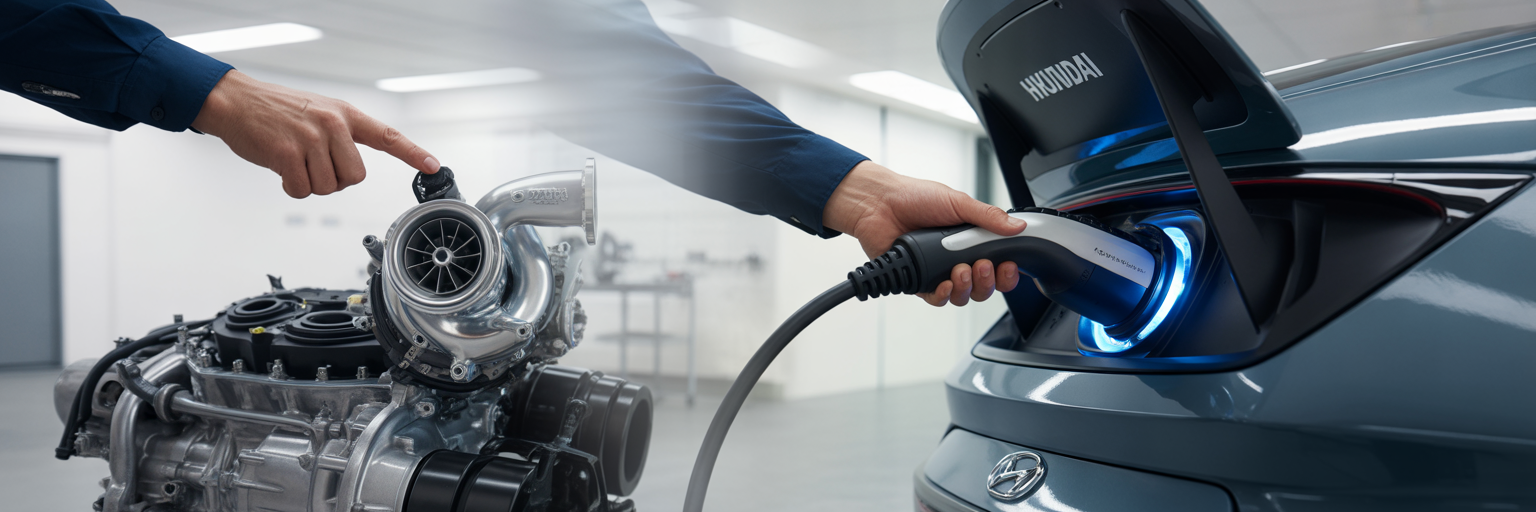
The powertrain choices for the CX-5 and Tucson perfectly encapsulate their differing priorities: engaging performance versus outstanding efficiency. This is where your decision will have a direct impact on both your driving enjoyment and your wallet.
Mazda keeps things straightforward and focused on performance. The CX-5 comes with a capable 2.5-liter four-cylinder engine, and all models feature standard all-wheel drive, a significant value and performance advantage. For those who want more excitement, the available 2.5-liter turbo engine delivers potent, effortless acceleration that makes the CX-5 feel genuinely quick. The trade-off for this responsiveness is fuel economy that is solid but not class-leading. The CX-5 is for the driver who prioritizes a satisfying press of the accelerator over maximizing every last mile per gallon.
The Hyundai Tucson’s greatest strength is its powertrain diversity. It offers something for everyone. There’s a competent base gasoline engine for the budget-conscious buyer. Then there is the highly efficient hybrid (HEV), which has become the sweet spot of the lineup. It provides a fantastic blend of power and efficiency, making it a smart choice for anyone looking to minimize fuel costs. Finally, the plug-in hybrid (PHEV) offers over 30 miles of all-electric range, perfect for drivers with short commutes who can do most of their daily driving without using a drop of gas. The Tucson hybrid fuel economy is a major selling point. According to U.S. News, the most efficient hybrid models can achieve up to 38 mpg combined, a massive advantage over the CX-5.
To see what this means for your budget, let’s look at a simple fuel cost comparison. The difference is compelling.
| Powertrain | Combined MPG (EPA Est.) | Annual Miles | Est. Annual Fuel Cost (@ $3.50/gallon) |
|---|---|---|---|
| Mazda CX-5 (2.5L Non-Turbo) | 26 MPG | 15,000 | $2,019 |
| Hyundai Tucson Hybrid (Blue Trim) | 38 MPG | 15,000 | $1,382 |
| Mazda CX-5 (2.5L Turbo) | 24 MPG | 15,000 | $2,188 |
Note: This calculation demonstrates a potential annual fuel savings of over $600 with the Tucson Hybrid compared to the standard CX-5, a compelling factor for long-term ownership.
This presents the classic dilemma: are you chasing smiles per mile or miles per gallon? While the Tucson hybrids are far more efficient, the CX-5’s traditional six-speed automatic and powerful turbo engine offer a more direct and engaging driving experience that many enthusiasts will prefer. For readers exploring other efficient options, our guide to the best hybrid SUVs under $35k provides more choices.
Long-Term Value and Cost of Ownership
A smart vehicle purchase considers more than just the sticker price. The total cost of ownership, including warranty, reliability, and resale value, plays a huge role in your long-term satisfaction. Here, the Tucson makes an incredibly strong case for itself.
In terms of pricing, the CX-5 often has a slightly higher starting MSRP, but it justifies this by including standard all-wheel drive and a more premium base feature set from the get-go. The Tucson offers a lower point of entry with its front-wheel-drive base models, making it more accessible for buyers on a tighter initial budget.
The most significant factor in this category is Hyundai’s industry-leading warranty. The terms are simple and powerful: a 10-year/100,000-mile powertrain warranty and a 5-year/60,000-mile new vehicle limited warranty. This is directly comparable to Mazda’s solid but shorter 5-year/60,000-mile powertrain warranty. That difference isn’t just a talking point. It represents up to five additional years of protection against a major, unexpected engine or transmission repair bill. For anyone planning to keep their vehicle for a long time, this provides an unparalleled level of financial peace of mind.
When it comes to brand reputation and resale value, the gap has narrowed considerably. Mazda has long been known for building durable, reliable vehicles that hold their value well. However, Hyundai has made enormous strides in quality and is now widely considered to be on par with its top Japanese competitors. While both SUVs are expected to have strong resale values, the Tucson’s highly efficient hybrid models may command a premium in markets with high gas prices or strong environmental incentives.
Routine maintenance costs for both vehicles are comparable. A common question involves the longevity of hybrid batteries, but this concern is largely mitigated by the fact that these expensive components are covered under Hyundai’s long warranty and have proven to be exceptionally durable in the real world. For owners who prefer a hands-on approach to upkeep, our DIY section offers helpful guides for basic maintenance.
Making the Final Choice: Which SUV Is Right for You?
After comparing everything from driving feel to fuel costs, the choice between the 2026 Mazda CX-5 and Hyundai Tucson comes down to a simple question: who are you as a driver and what do you need your vehicle to do? We can summarize the choice with two distinct personas.
- Choose the Mazda CX-5 if you are ‘The Driver.’ You believe the journey is just as important as the destination. You appreciate a refined, minimalist interior and the satisfying feel of a well-tuned machine in your hands. For you, the superior CX-5 driving dynamics, the responsive turbo engine option, and the near-luxury cabin are worth the trade-offs in maximum fuel efficiency and rear-seat space. It’s a vehicle you choose with your heart as much as your head.
- Choose the Hyundai Tucson if you are ‘The Modern Pragmatist.’ You are focused on maximizing value, embracing new technology, and minimizing long-term costs. For you, the Tucson is the clear winner. Its outstanding Tucson hybrid fuel economy delivers real savings year after year. Its spacious, family-friendly interior and bold, tech-forward cabin fit your modern lifestyle, and the unbeatable security of its long warranty provides ultimate peace of mind. It’s the smart, logical choice for today and tomorrow.
Of course, the choice isn’t always so black and white. A high-trim Tucson N-Line can offer a sportier look and feel, while a base-model CX-5 provides a premium driving experience with standard AWD at a very competitive price. The key is to identify your primary, non-negotiable needs before you start shopping.
The best way to make your final decision is to move from the screen to the street. We urge you to test drive both vehicles back-to-back, preferably on a route you travel every day. During the drive, ask yourself some specific questions. Which cabin makes you feel more relaxed in traffic? Which one puts a bigger smile on your face on an open road? Over the next five years, will the Tucson’s fuel savings and warranty bring you more satisfaction than the CX-5’s engaging driving feel? Answering these questions honestly will empower you to make a confident, personalized choice in the Mazda CX-5 vs Hyundai Tucson debate. For more comparisons and automotive insights, visit our homepage.