Choosing Your Family’s Next Adventure Vehicle
The classic American family car has seen quite a transformation. Many of us remember the wood-paneled station wagons of past decades, built for road trips and hauling groceries. Today, that role has been claimed by the modern SUV, and two vehicles stand out as leading interpretations of this concept: the 2026 Subaru Outback and the 2026 Honda CR-V. This guide is designed to help you decide which one truly fits your family’s life, not just to declare a winner.
Think of the Subaru Outback as the evolution of that classic wagon, now equipped with rugged SUV capability. It’s built with all-weather confidence and outdoor adventures in mind, blending wagon-like utility with a go-anywhere attitude. Its identity is rooted in versatility, ready for a spontaneous trip to the mountains or a snowy commute.
The Honda CR-V, on the other hand, is the quintessential compact SUV, engineered for the rhythms of modern family life. Its focus is on urban efficiency, everyday practicality, and a user-friendly experience that simplifies everything from school runs to weekend errands. It’s designed to be an effortless and intelligent partner in a busy household.
To make a clear choice, we will compare them based on what matters most to families: advanced safety systems, interior space and flexibility, performance versus fuel economy, the actual driving experience, and the technology that keeps everyone connected and comfortable. As we explore these areas, consider your own lifestyle. Are you more likely to be hauling skis and muddy boots, or navigating tight city parking lots and congested highways? Answering that question is the first step in finding the best family SUV 2026 for you.
A Deep Dive into Advanced Safety Systems
When you’re carrying precious cargo, nothing is more important than safety. Both Subaru and Honda have built their reputations on protecting families, but they approach it with slightly different philosophies. Understanding these differences helps clarify which system might give you more peace of mind.
Subaru EyeSight vs. Honda Sensing: A Tale of Two Philosophies
At the heart of this comparison are two impressive safety suites: Subaru EyeSight and Honda Sensing. EyeSight uses a pair of stereo cameras mounted near the rearview mirror, which work like a second set of human eyes to process depth and identify potential hazards. This approach is central to Subaru’s philosophy of proactive safety. The system is designed not just to react to danger but to prevent it, working in concert with the standard Symmetrical All-Wheel Drive to maintain stability before a skid ever begins.
Honda Sensing typically employs a combination of a single camera and radar technology. This system excels at driver assistance and collision mitigation in common traffic scenarios. Its strength lies in reducing the stress of daily driving, with features finely tuned for stop-and-go traffic and highway cruising. While both systems offer similar functions, their core logic differs. Subaru prioritizes all-condition stability, while Honda focuses on perfecting assistance for everyday driving environments.
Beyond the Electronics: Structural Integrity and Passive Safety
Advanced electronics are only half the story. The physical structure of a vehicle is your first line of defense in a collision. Both the Outback and CR-V are built on robust platforms designed to absorb and redirect crash energy away from the cabin. The Subaru Global Platform provides exceptional rigidity, which contributes to both safety and a solid, confident ride. Similarly, Honda’s Advanced Compatibility Engineering (ACE) body structure is engineered to distribute frontal crash forces more evenly.
This commitment to structural integrity is why both brands consistently aim for the highest safety accolades. They frequently earn designations like the IIHS TOP SAFETY PICK+, a testament to their deep-rooted engineering priorities in occupant protection.
Real-World Confidence: From Snowy Roads to Stop-and-Go Traffic
So, what does this all mean for your daily drive? For the Outback owner, it translates to confidence on a winding, rain-slicked road or a snowy path to a weekend cabin. The synergy between EyeSight and AWD creates a feeling of being planted and secure. For the CR-V driver, it means a less fatiguing commute. The smooth inputs from its adaptive cruise control and lane-keeping systems make navigating rush hour traffic a calmer experience. Both are considered among the safest SUV for families, but they deliver that safety with a different feel.
Here’s how their core functions stack up:
- Adaptive Cruise Control: Both systems maintain a set distance from the car ahead. EyeSight is often praised for its smooth, human-like braking and acceleration, while Honda’s system is exceptionally reliable in dense traffic.
- Lane Keeping Assist: Both help you stay centered in your lane. Subaru’s system can feel more assertive, while Honda’s provides gentle guidance.
- Pre-Collision Braking: Both can automatically apply the brakes to prevent or mitigate a frontal collision. EyeSight’s stereo cameras are particularly effective at detecting pedestrians and cyclists.
Space for Groceries, Gear, and Growing Families
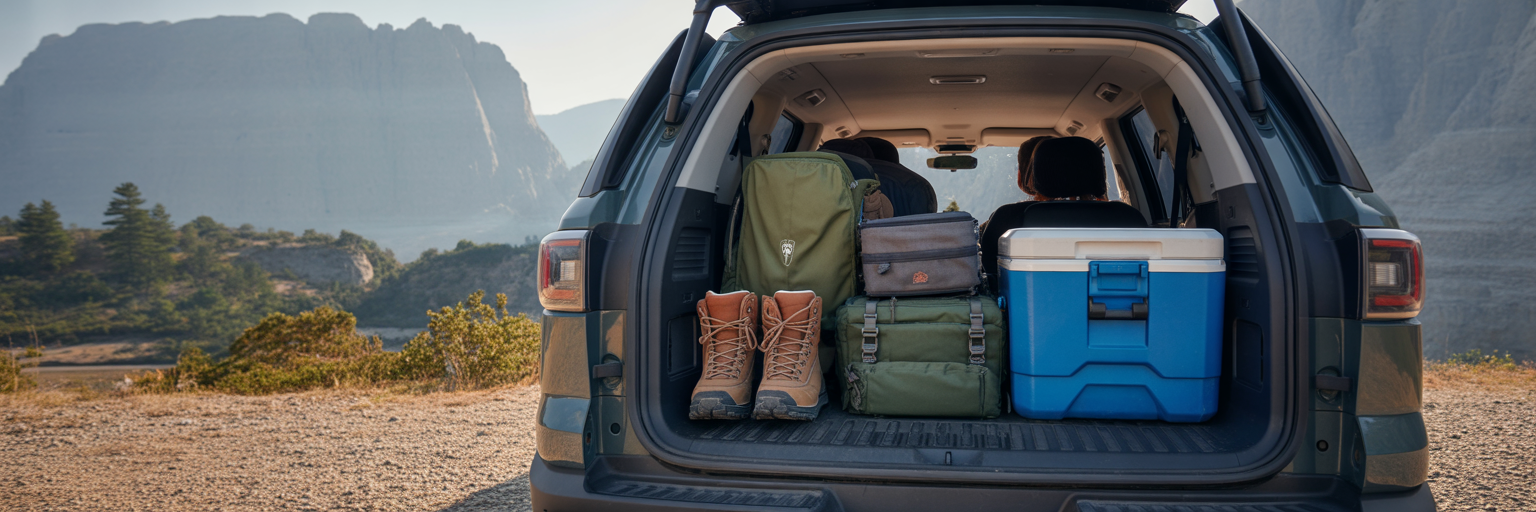
A family vehicle is more than just a mode of transport; it’s a mobile base of operations. It needs to handle everything from the weekly grocery haul to a car full of camping gear. Here, the Outback and CR-V showcase how two different design shapes can serve a family’s needs in unique ways.
Cargo Capacity: It’s About Shape, Not Just Size
When you look at the numbers in the Outback cargo space vs CR-V debate, you only get part of the picture. The real difference is in the shape and accessibility of that space. The Outback, with its wagon-like proportions, offers a long, wide, and flat cargo floor. This is a huge advantage when you need to slide in long items like skis, a flat-pack furniture box, or even a couple of large dog crates. The lower lift-over height also makes loading heavy items like a cooler full of drinks a bit easier on your back.
The CR-V, by contrast, offers a more vertically oriented cargo area. Its taller, boxier shape is perfect for stacking suitcases for a trip to the airport or fitting bulky grocery bags without having to lay them on their side. If your daily life involves more vertical stacking than sliding long objects, the CR-V’s design might be more practical.
Interior Flexibility and Smart Storage Solutions
Both vehicles come with the expected 60/40 split-folding rear seats, allowing for a mix of passengers and cargo. However, each has a clever trick up its sleeve. The Outback features integrated roof rack crossbars that can be swung into place in moments. This means you never have to leave them at home or worry about installing them before a trip; they are always there when you need to mount a kayak or cargo box.
The CR-V’s genius lies within its cabin. Honda is known for its thoughtful interior packaging, and the CR-V is full of clever storage cubbies and a large center console designed to hold everything a family accumulates. The low, flat floor in the second row is another subtle but significant feature, making it easier for kids to slide across the seat and providing more foot room for the middle passenger.
Passenger Room: Comfort for the Whole Crew
For growing families, passenger comfort is non-negotiable. The Outback generally feels a bit wider, which can make a difference when you need to fit three people—or a combination of car seats and passengers—in the back row. The seats are designed for long-haul comfort, perfect for cross-country road trips.
The CR-V, despite its more compact exterior dimensions, feels surprisingly airy and spacious inside. Its upright seating position and large windows create an open atmosphere, and rear passengers are treated to generous legroom. While the CR-V hybrid is a leader in its class, the market for economical family vehicles is growing, with many of the best hybrid SUVs under $35k offering compelling alternatives for families on a budget.
Performance Versus Practicality at the Pump
How a car performs is a balance of power, efficiency, and capability. The Outback and CR-V take distinctly different paths to achieve this balance, offering families a clear choice between potent, all-weather performance and exceptional fuel economy.
Engine Options: Turbo Power vs. Hybrid Efficiency
The Subaru Outback offers two powertrain choices. The standard 2.5-liter boxer engine provides ample power for daily driving and is paired with standard all-wheel drive. For those who need more muscle, the XT models feature a 2.4-liter turbocharged boxer engine. This engine’s significant torque is immediately noticeable when merging onto a fast-moving highway or climbing a steep mountain pass with a car full of gear. It delivers power with confidence and authority.
Honda’s strategy for the CR-V centers on efficiency. It offers a capable 1.5-liter turbocharged engine for its standard models, but the star of the show is the popular and refined hybrid system. This powertrain combines a 2.0-liter engine with electric motors to provide smooth, instant acceleration from a stop, making it feel incredibly responsive in city and suburban driving. It’s an elegant solution for the modern commute.
The Fuel Economy Equation
When it comes to saving money at the pump, the choice is clear. The exceptional Honda CR-V hybrid fuel economy makes it the undisputed winner in this category. For families with long commutes or who simply prioritize low running costs, the hybrid’s impressive MPG figures will translate into significant savings over the life of the vehicle. The Outback’s fuel economy is respectable, especially considering its standard all-wheel drive system is always active, but it cannot compete with the CR-V Hybrid’s efficiency. Families focused on minimizing fuel costs should note the CR-V Hybrid’s significant advantage. Official figures for all new vehicles are available for comparison on the EPA’s FuelEconomy.gov website.
Towing and Hauling: The Capability Trade-Off
That trade-off for the CR-V’s efficiency becomes apparent when it’s time to haul a trailer. The Outback boasts a superior towing capacity, especially in its turbocharged XT form, which can pull up to 3,500 pounds. This is enough for a small camper, a pair of jet skis, or a utility trailer, making it a far more versatile choice for families with weekend toys. The CR-V’s towing capacity is more limited, designed for very light-duty tasks.
2026 Powertrain Comparison: Outback vs. CR-V
| Vehicle & Powertrain | Engine Type | Est. Horsepower | Est. Torque (lb-ft) | Est. Combined MPG | Max Towing (lbs) |
|---|---|---|---|---|---|
| Subaru Outback (Standard) | 2.5L Boxer-4 | ~182 hp | ~176 lb-ft | ~29 MPG | 2,700 lbs |
| Subaru Outback XT | 2.4L Turbo Boxer-4 | ~260 hp | ~277 lb-ft | ~26 MPG | 3,500 lbs |
| Honda CR-V (Standard) | 1.5L Turbo I-4 | ~190 hp | ~179 lb-ft | ~30 MPG (FWD) | 1,500 lbs |
| Honda CR-V Hybrid | 2.0L I-4 + Electric Motors | ~204 hp (total system) | ~247 lb-ft | ~40 MPG (FWD) | 1,000 lbs |
Note: Figures are estimates for the 2026 model year based on current generation data. Official EPA ratings and manufacturer specifications may vary. This table illustrates the core trade-offs between power, efficiency, and capability.
How Each SUV Feels Behind the Wheel

Beyond the spec sheets, the way a vehicle drives is a deeply personal experience. It’s about how it makes you feel, whether that’s secure and connected to the road or relaxed and isolated from the chaos of traffic. The Outback and CR-V offer two very different but equally valid driving characters.
The Outback’s Planted and Confident Ride
Driving an Outback feels uniquely secure. Much of this comes from its boxer engine, whose flat design gives the vehicle a lower center of gravity than most taller SUVs. You can feel this in corners, where it exhibits more car-like stability and less body roll. This planted feeling is amplified by the Symmetrical All-Wheel Drive system, which constantly works to provide traction. The result is a sense of unwavering confidence, whether you’re on a dry highway, a wet backroad, or a gravel trail.
The CR-V’s Smooth and Effortless Maneuverability
If the Outback is about confidence, the CR-V is about ease. Everything in the CR-V is designed to be low-stress. Its light steering, excellent forward visibility, and tight turning radius make it supremely easy to pilot through crowded mall parking lots and narrow suburban streets. We all know that feeling of trying to squeeze into a tight spot, and the CR-V is a master of these situations. Its ride is smooth and composed, effectively isolating you and your family from bumps and road imperfections, creating a calm and quiet cabin environment.
When the Pavement Ends: Off-Road Chops
This is where the two vehicles truly diverge. The Outback is genuinely capable when the pavement ends. With its superior ground clearance and standard X-MODE, which optimizes the all-wheel-drive system for slippery surfaces, it can confidently tackle rough forest service roads, muddy trails, and snowy paths. It’s the real deal for families who venture off the beaten path.
The CR-V’s available all-wheel-drive system is highly competent for ensuring traction in rain or snow. It’s a great tool for all-weather security on paved roads. However, it is not designed for true off-roading. Its lower ground clearance and road-focused suspension mean it’s best to keep it on surfaces where you can see the lines. The Outback’s 3,500-pound towing capacity is impressive for its class, but for those needing even more capability, it’s worth exploring which 2025 trucks offer the best towing and fuel economy in the larger vehicle segment.
Inside the Cabin: Tech and Creature Comforts
A family car’s cabin is a classroom, a dining room, and a quiet retreat. The technology and design inside must be intuitive, durable, and comfortable for everyone. The Outback and CR-V approach their interior environments with different priorities: rugged utility versus clean, modern design.
Infotainment: Tablet-Style vs. Traditional Layout
The centerpiece of the Outback’s dashboard is its large, vertical tablet-style touchscreen. This layout provides an impressive map view for navigation and gives the cabin a high-tech feel. However, integrating most controls, including climate functions, into the screen can present a learning curve. You might find yourself tapping through menus for a function that used to be a simple button press.
The CR-V takes a more traditional approach, and many drivers appreciate it for that. Its infotainment screen is mounted high on the dash, and it retains physical knobs for volume and climate control. We can all picture that moment of fumbling with a touchscreen just to turn down the radio; the CR-V’s simple, tactile controls eliminate that frustration, making common adjustments quick and intuitive.
Connectivity for the Modern Family
Both vehicles come standard with Apple CarPlay and Android Auto, which is a must-have for any modern family. The real battleground is in keeping everyone’s devices charged. Both offer available wireless charging pads and multiple USB-C ports, but their placement can differ. It’s worth checking how many ports are available for rear-seat passengers, as this can be a lifesaver on long trips with teenagers. Both also offer Wi-Fi hotspot capability, turning the vehicle into a mobile connectivity hub.
Cabin Ambiance: Durable Utility vs. Clean Design
The Outback’s interior is built to withstand an active lifestyle. The materials feel robust, and higher trims offer a water-repellent StarTex upholstery that is perfect for families with kids, pets, or muddy hobbies. It’s designed to be wiped down and ready for the next adventure. The focus on durable materials means easier cleanup after muddy adventures, and keeping a vehicle looking its best involves simple upkeep, from the interior surfaces to exterior elements like learning how to clean headlights with toothpaste.
The CR-V’s cabin, in contrast, presents a more modern and clean aesthetic. A signature honeycomb mesh trim neatly conceals the air vents, creating a sleek, uncluttered look across the dashboard. The use of soft-touch materials and thoughtful design touches gives the interior a more premium and contemporary feel. For long road trips, available premium audio systems from brands like Harman Kardon in the Outback or Bose in the CR-V can transform the cabin into a concert hall.
Long-Term Value and Ownership Costs

Buying a car is a major financial decision, and the initial purchase price is just the beginning. Understanding the total cost of ownership, including fuel, maintenance, and resale value, is essential for making a smart choice that fits your family’s budget for years to come.
Purchase Price and Trim Level Value
At first glance, the Outback and CR-V often have similar starting prices. However, the value proposition can shift when you look closer at the trim levels. A key advantage for the Outback is that its capable Symmetrical All-Wheel Drive system is standard on every single model. This means even the base Outback offers all-weather capability, which can make it a better value compared to a base front-wheel-drive CR-V where AWD is an extra cost.
Resale Value: A Strength for Both Brands
Here’s some good news: you can’t really go wrong with either choice. Both Subaru and Honda are renowned for their reliability and enjoy some of the strongest resale values in the industry. This means that when it’s time to sell or trade in your vehicle, you’ll get more of your initial investment back. The Outback’s niche appeal as a rugged, all-wheel-drive wagon can sometimes give it a slight edge in regions with snowy winters or mountainous terrain, where its capabilities are in high demand.
The Bottom Line: Total Cost of Ownership
When you synthesize all the costs, two different pictures emerge. For the high-mileage driver, the CR-V Hybrid is the clear long-term winner. Its superior fuel economy will result in significant savings at the pump over several years, potentially offsetting a slightly higher initial purchase price. Its total cost of ownership is geared toward efficiency.
The Outback’s value is more closely tied to its built-in capability. The cost of adding all-wheel drive and a robust roof rack to a competitor often makes the Outback’s price look much more attractive. Both vehicles are known for strong value retention, a factor recognized by industry experts. Awards like the Kelley Blue Book 5-Year Cost to Own awards often highlight models that excel in minimizing depreciation, maintenance, and fuel costs. Understanding long-term value is a key part of any vehicle purchase, and for more insights and comparisons, CarPhanatics.com is a comprehensive resource for car buyers.
Making the Final Decision for Your Family
After comparing the details, the Subaru Outback vs Honda CR-V decision comes down to which vehicle’s personality best aligns with your family’s. There is no single right answer, only the right answer for you. To help you decide, let’s summarize the findings into two distinct profiles.
The Subaru Outback is the ideal choice for your family if:
- You prioritize all-weather and all-road capability thanks to its standard Symmetrical AWD and higher ground clearance.
- Your lifestyle involves hauling outdoor gear like skis, bikes, or kayaks, and you need maximum cargo versatility.
- You frequently venture onto unpaved roads for camping, hiking, or other adventures.
- You need a higher towing capacity for a small trailer or boat.
The Honda CR-V is the perfect fit if:
- Your driving is primarily urban and suburban, and you value effortless maneuverability in traffic and tight spaces.
- Maximizing fuel economy is a top priority, making the CR-V Hybrid an incredibly compelling option.
- You appreciate a quiet, comfortable commute and a cabin with clever, user-friendly storage solutions.
- You prefer an interior with a clean, modern design and simple, intuitive controls.
Of course, many families live somewhere in the middle. For you, the decision might hinge on a single, decisive feature. Perhaps the CR-V Hybrid’s incredible MPG is too good to pass up, or maybe the Outback’s 3,500-pound towing capacity is the one feature you absolutely need. The best way to break the tie is to move from the screen to the street. We strongly encourage you to test drive both vehicles. Take them on your daily commute, drive them on the highway, and navigate your local grocery store parking lot. Bring the kids, and don’t forget to bring a stroller or a sports bag to see how it fits in the cargo area. The right choice will become clear when you’re behind the wheel.