We all feel that slight wince at the petrol station as the numbers on the pump climb higher. For many drivers, this recurring expense feels like an unavoidable tax on daily life, with hundreds of dollars lost each year to preventable fuel waste. In 2025, the pressure to manage household budgets alongside a growing desire for more responsible living makes this issue more relevant than ever. Learning how to improve fuel efficiency is not a chore. It is an empowering action that puts you back in control of your monthly spending and personal carbon footprint.
Think of your car’s factory-rated mileage as a starting point, not a fixed guarantee. Its actual performance is directly shaped by how well you maintain it. This guide offers simple, actionable car maintenance tips for gas mileage that any owner can follow. You will not need specialised tools or a mechanic’s expertise, just a little attention that leads to significant cumulative savings.
Foundational Checks: Tires and Vehicle Load
Before even thinking about what is under the hood, the easiest wins for better fuel economy are right in plain sight. Your tires and the weight your car carries are two of the biggest, yet most overlooked, factors influencing how much fuel you burn on every trip. Addressing these is the simplest starting point for any driver.
The Science of Tire Pressure and Rolling Resistance
Imagine trying to push a wheelbarrow with a flat tire. It takes a lot more effort, right? Your car’s engine faces a similar struggle. Underinflated tires flatten against the road, creating a larger contact patch. This increases what is known as rolling resistance, forcing your engine to work harder just to move the car forward. Keeping your tires at the correct pressure is one of the most effective ways to reduce this drag. In fact, proper inflation alone can improve your mileage by up to 10%.
How to Properly Check Your Tire Pressure
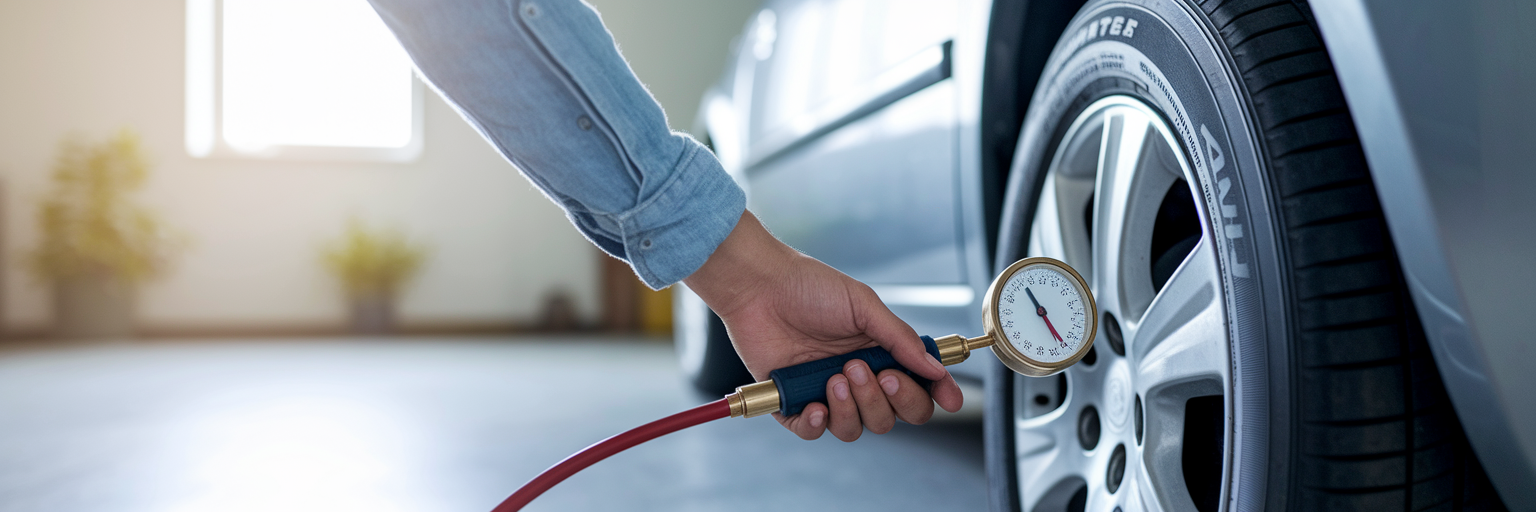
Checking your tire pressure is a simple monthly habit that takes less than five minutes. Here is how to do it correctly:
- Find the Right PSI: Look for the manufacturer’s recommended PSI (pounds per square inch) on a sticker inside the driver’s side doorjamb. Do not use the maximum pressure number printed on the tire’s sidewall, as that is not the optimal pressure for your specific vehicle.
- Check When Cold: For an accurate reading, perform the check when the tires are “cold,” meaning the car has been parked for at least three hours or driven less than a couple of kilometres.
- Use a Gauge: Unscrew the valve cap on the tire and press a standard tire pressure gauge firmly onto the valve stem. You will hear a brief hiss of air, and the gauge will show the current pressure.
- Adjust as Needed: If the pressure is too low, add air at a petrol station pump until you reach the recommended PSI. If it is too high, use the small nub on the back of the gauge to press the pin inside the valve stem and release air in short bursts.
While checking your tires, listen for any unusual sounds. If you are ever wondering why is my car squeaking when I drive, our guide can help diagnose if it is a sign of a deeper issue.
The Hidden Fuel Cost of Excess Weight
Your car is not a storage unit. Every extra item you carry requires more energy to move. As a rule of thumb, every 50 kilograms of unnecessary weight can reduce your fuel economy by about 2%. Take a moment to clear out items that have accumulated in your trunk or cabin, such as old sports equipment, forgotten boxes, or tools you do not need for daily driving. Pay special attention to external carriers like roof or bike racks. When not in use, these carriers disrupt the car’s aerodynamics, creating significant drag that forces the engine to burn more fuel, especially at highway speeds.
Essential Engine and Component Upkeep
Moving from the outside in, a few key components under the hood directly manage your engine’s efficiency. While the term “engine work” might sound intimidating, these checks are straightforward and have an immediate impact on your fuel consumption. Unlike the physical checks of tires and weight, this upkeep focuses on ensuring the combustion process itself is as clean and efficient as possible.
Why a Clean Air Filter is Crucial
Think of your engine’s air filter as its lungs. For fuel to burn properly, it needs a precise mixture of air. A clogged, dirty filter “chokes” the engine, restricting airflow and forcing the car’s computer to compensate by injecting more fuel. This imbalance not only wastes petrol but can also lead to sluggish performance. Replacing a dirty air filter is one of the most cost-effective simple ways to improve mpg, often taking just a few minutes with basic tools.
The Role of Spark Plugs and Oxygen Sensors
Deep within your engine, spark plugs and oxygen sensors work together to manage combustion. Spark plugs provide the spark that ignites the air-fuel mixture. When they become worn, they misfire, leaving fuel unburned and wasted. Similarly, the oxygen (O2) sensor measures the amount of unburned oxygen in your exhaust. It sends this data to the car’s computer, which fine-tunes the fuel mixture in real time. A faulty sensor provides bad information, often leading the engine to run too rich and burn excess fuel. According to automotive experts at AAA, neglecting to replace these worn components can significantly increase car fuel economy once they are fixed. Worn plugs are also a common reason for starting issues; if you’re ever asking, “why wont my car start,” faulty plugs are a likely culprit.
Choosing the Right Engine Oil for Efficiency
Engine oil’s primary job is to reduce friction between moving parts. However, not all oils are created equal. Your vehicle’s manufacturer specifies a certain oil viscosity, such as 5W-30. This rating indicates how easily the oil flows at different temperatures. Using an oil that is thicker than recommended forces the engine to work harder to pump it, creating internal drag that consumes extra energy and fuel. Always use the grade of oil specified in your owner’s manual to ensure your engine runs with the least possible resistance.
| Maintenance Task | Impact on Fuel Economy | Recommended Interval | Difficulty Level |
|---|---|---|---|
| Check Tire Pressure | Up to 10% improvement | Monthly | Beginner |
| Replace Engine Air Filter | Up to 10% improvement | 15,000-30,000 km or annually | Beginner |
| Replace Spark Plugs | Up to 30% improvement (if faulty) | Per manufacturer schedule (e.g., 100,000 km) | Intermediate |
| Replace Oxygen Sensor | Up to 40% improvement (if faulty) | When check engine light is on or per schedule | Intermediate |
| Use Correct Engine Oil | 1-2% improvement | Every oil change | Beginner (if checking) |
Driving Habits for Maximum Mileage
Beyond vehicle maintenance, the single biggest factor in fuel consumption is the person behind the wheel. How you drive can affect your mileage even more than the condition of your car. This is not about mechanics but about technique. Adopting a few mindful habits can transform your driving from a fuel-guzzling chore into a smooth, efficient, and surprisingly relaxing experience.
The Power of Smooth Acceleration and Braking
Have you ever been in a car with a driver who is constantly jumping on the gas and then slamming on the brakes? That aggressive style is a massive fuel waster. Hard acceleration burns fuel unnecessarily, while sudden braking converts your car’s forward momentum into wasted heat. Instead, practice “anticipatory driving.” Look far down the road to anticipate red lights, stop signs, and traffic slowdowns. Ease off the accelerator early and let the car coast to a stop. This smooth approach can improve your efficiency by up to 30% and makes for a much more pleasant ride.
Finding the Fuel Efficiency ‘Sweet Spot’ on Highways
While it might feel like you are saving time by speeding, you are paying for it at the pump. Aerodynamic drag does not increase linearly with speed; it increases exponentially. This means the faster you go, the harder your engine must work to push through the air. As noted by Natural Resources Canada, most cars, trucks, and SUVs are most fuel-efficient when travelling between 50 and 80 km/h. Finding this “sweet spot” on the highway is a simple way to save money on gas without adding much time to your journey. These principles apply to all vehicles, and you can find more information on how they affect popular brands like Honda on our site.
Using Cruise Control Strategically
Cruise control can be a great tool for maintaining a consistent speed, but it requires a balanced perspective. On long, flat stretches of highway, it is excellent for preventing the unintentional “creeping” speed that burns extra fuel. However, on hilly or rolling terrain, cruise control can be inefficient. It will often accelerate aggressively to maintain speed up a hill, burning more fuel than a driver who would naturally ease off the pedal slightly. Use it on flat roads, but switch it off when the landscape gets varied.
Auxiliary Systems and Trip Planning

Some of the most significant fuel waste comes from choices we make before and during a trip. These miscellaneous factors, from running the air conditioning to the route we take, are often overlooked but offer easy opportunities for savings. Unlike continuous driving habits, these are situational decisions that add up over time.
Your car’s air conditioning system runs on a compressor powered by the engine, adding a direct load that consumes fuel. The question is, when is it better to open the windows? A practical rule of thumb is to base it on your speed. At low speeds in the city, opening the windows is more efficient. At highway speeds, however, the aerodynamic drag created by open windows is greater than the load from the AC, making the air conditioner the better choice. The impact of these systems can be especially noticeable in larger vehicles, a topic we explore further in our section on trucks.
Next, consider engine idling. An idling engine gets zero kilometres per litre. It is pure waste. If you anticipate being stationary for more than 60 seconds, whether waiting for someone or at a long railway crossing, it is more fuel-efficient to turn off the engine. Modern engines require very little fuel to restart, making this a clear win.
Finally, think about “trip chaining,” or planning your errands efficiently. A warm engine operates far more efficiently than a cold one. By combining your stops into a single journey, you minimise cold starts and save fuel.
- Combine multiple errands into one trip.
- Plan the most efficient route to avoid backtracking.
- Schedule trips for off-peak hours to avoid stop-and-go traffic.
A Sustainable Approach to Driving
Improving your car’s fuel economy is not about one single trick. It is the result of small, consistent actions that work together. By maintaining correct tire pressure, reducing unnecessary weight, performing regular engine upkeep, and adopting mindful driving habits, you create a powerful cumulative effect. The combined impact of these strategies can lead to a substantial improvement in fuel efficiency, often between 10% and 30%.
The benefits extend far beyond your wallet. A well-maintained and efficiently driven vehicle has a longer lifespan, offers enhanced safety on the road, and reduces your environmental footprint. Every time you get behind the wheel, you have the power to make a tangible, positive impact through these simple, consistent choices. For more guides and insights on getting the most from your vehicle, we invite you to explore everything on the CarPhanatics homepage.