The spec sheet tells you what a sports car is, but the driving experience reveals what it can be. For enthusiasts, unlocking that potential is the ultimate goal, and it does not require a racing team’s budget.
Foundational Principles of Performance Enhancement
True performance is not just a number on a dynamometer. It is a complete package that includes responsive handling, confident braking, and clear driver feedback. While chasing horsepower can be tempting, the most satisfying upgrades often focus on how the car feels in your hands. This holistic view separates smart modifications from purely cosmetic changes that add weight without function.
The core principle is simple: seek the best return on your investment in the driving experience. Think of it this way: what good is an extra 50 horsepower if you cannot carry speed through a corner or trust your brakes at the end of a straight? The goal is not to transform your daily driver into a track monster overnight. Instead, these upgrades are about refining the car’s inherent character.
By focusing on smart mechanical enhancements, you can achieve a sharper, more engaging, and ultimately more enjoyable drive. This is the essence of how to improve car handling on a budget, making every journey feel more connected and purposeful.
Improving Your Engine’s Breathing Efficiency
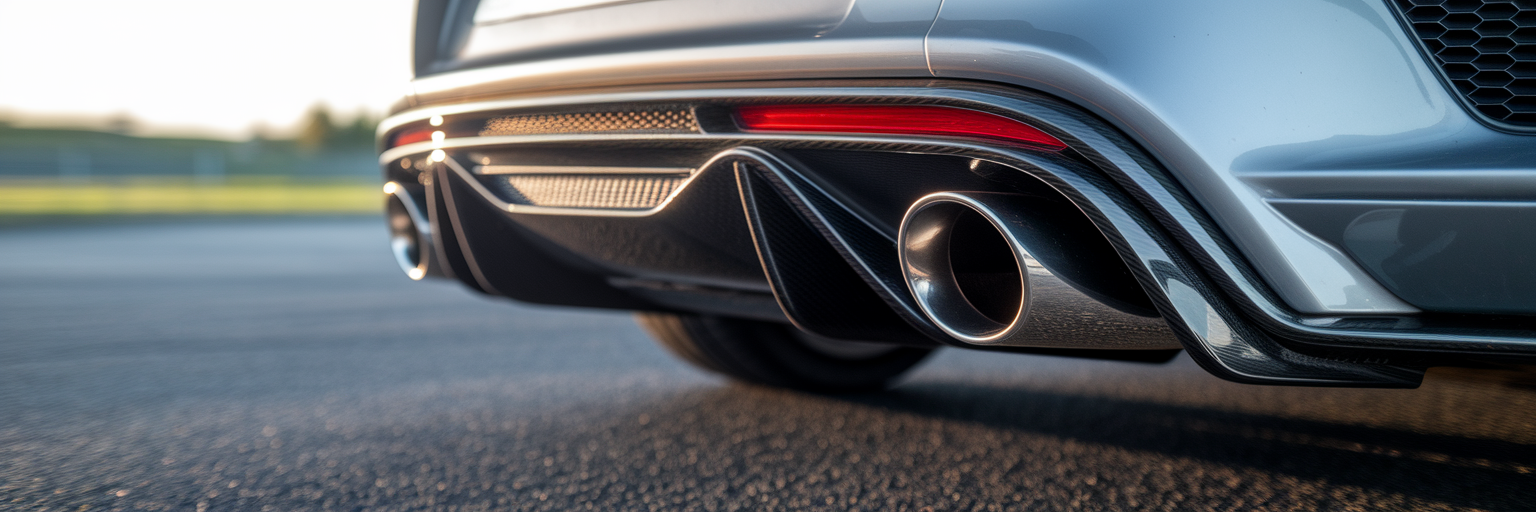
An engine is fundamentally an air pump. The more efficiently it can breathe in cool, clean air and exhale exhaust gases, the better it performs. This process is the starting point for many enthusiasts looking to make noticeable improvements without a massive financial outlay.
Cold Air Intakes for Better Combustion
Factory airboxes are often designed with noise reduction and cost savings in mind, which can restrict airflow. A cold air intake system relocates the air filter away from the hot engine bay, drawing in cooler, denser air. The science is straightforward: cooler air contains more oxygen molecules, which allows for a more potent combustion event. The result is not just a modest power gain but, more importantly, improved throttle response that you can feel every time you press the accelerator. This is a classic strategy for how to increase horsepower cheap.
Cat-Back Exhaust Systems for Reduced Backpressure
Once the engine has used the air, it needs to expel the exhaust gases efficiently. A cat-back exhaust system replaces the piping from the catalytic converter to the muffler, using wider-diameter, smoother-bent pipes to reduce backpressure. This allows the engine to “exhale” more freely, unlocking a small amount of horsepower. However, the most significant change is auditory. A well-designed exhaust gives the car a richer, more purposeful sound, a critical component of the sports car experience and a hallmark of iconic American muscle cars.
The Synergy of Intake and Exhaust
These two modifications are best understood as a system. Installing a high-flow intake without a corresponding exhaust upgrade is like trying to breathe in deeply while only exhaling through a straw. The restrictive exhaust becomes a bottleneck. By upgrading both, you allow the engine to operate at its peak volumetric efficiency, ensuring the air that comes in can get out just as easily. This synergy creates a balanced improvement that you can both feel and hear.
Enhancing Grip, Handling, and Stopping Power
Adding power is only one part of the performance equation. Translating that power to the road and maintaining control is where a car truly comes alive. Upgrades that enhance grip, handling, and braking confidence are often the most impactful you can make, transforming how your car communicates with you and the pavement.
Reducing Unsprung Weight with Lightweight Wheels
Unsprung weight refers to the mass not supported by the suspension, primarily your wheels, tyres, and brakes. Reducing this weight with lightweight alloy wheels has a profound effect. Because there is less mass for the engine to spin and the suspension to control, you will notice quicker acceleration, shorter stopping distances, and a more responsive suspension that can better follow the contours of the road. It is an upgrade that improves performance across the board.
High-Performance Brake Pads for Fade-Free Stopping
Confidence in your brakes is non-negotiable. Standard brake pads are fine for daily commuting, but they can overheat and lose effectiveness during spirited driving, a phenomenon known as “brake fade.” High-performance street pads offer superior heat resistance, providing a consistent and strong bite even after repeated hard stops. They are one of the best cheap car mods for both safety and driver confidence. If you ever hear unusual noises, it is a sign to investigate, which can be related to issues like those that make you wonder, “why is my car squeaking when I drive?“
Chassis Rigidity with Suspension Braces and Sway Bars
A stiff chassis allows the suspension to do its job properly. Over time, especially during hard cornering, a car’s frame can flex, leading to imprecise handling. Simple braces can make a world of difference.
- Strut Tower Braces: These connect the tops of the front or rear suspension towers, preventing the chassis from flexing and keeping your steering inputs direct and precise.
- Sway Bars (Anti-Roll Bars): By linking the left and right sides of the suspension, upgraded sway bars reduce body roll, keeping the car flatter and more stable through turns.
| Brake Pad Type | Primary Use Case | Key Benefit | Consideration |
|---|---|---|---|
| OEM (Organic) | Daily Driving | Quiet operation, low dust | Can fade under high heat |
| Performance Street (Ceramic/Semi-Metallic) | Spirited Driving & Daily Use | Improved heat resistance, consistent bite | Slightly more dust and noise than OEM |
| Track/Racing (Full-Metallic/Aggressive) | Dedicated Track Use | Extreme heat tolerance, maximum stopping power | Noisy, high dust, poor cold performance |
This table outlines the trade-offs between common brake pad types. Choosing the right compound depends on your primary driving style and performance goals.
Unlocking Latent Power with Engine Tuning
After improving your engine’s breathing and your car’s handling, the final frontier for budget-friendly power is software. Your car’s Engine Control Unit (ECU) is the brain of the operation, and it often leaves performance on the table straight from the factory.
ECU Reflashing: Optimizing Factory Settings
Manufacturers program ECUs with conservative software maps to account for varying fuel quality, climates, and emissions standards worldwide. An ECU reflash, or tune, performed by a professional, rewrites these maps. By optimizing parameters like fuel delivery, ignition timing, and throttle response, a tune can safely unlock significant power and torque that was already there. This makes it a prime example of cost effective car tuning, as it maximizes the potential of your existing hardware. As the AMSOIL Blog notes, installing a performance tuner can modify fuel and timing maps to increase performance.
Plug-in Tuners: A User-Friendly Approach
For those who prefer a do-it-yourself approach, plug-in tuners offer a user-friendly alternative. These handheld devices connect to your car’s OBD-II port and upload pre-loaded “canned” tunes. Many offer multiple maps, allowing you to switch between a performance setting for a weekend drive and an economy setting for your daily commute. The tuning community is particularly active for certain brands, with a rich aftermarket for models from manufacturers like Ford.
A Word of Caution on Boost Controllers
For turbocharged or supercharged engines, a manual or electronic boost controller can seem like a simple way to add power. However, this is one area where caution is paramount. Increasing boost pressure without the necessary supporting modifications, such as an upgraded fuel system, a larger intercooler, and a professional tune, puts immense strain on engine components. This is a direct path to catastrophic engine failure. Always treat boost adjustments as part of a comprehensive upgrade plan, not a standalone modification.
Creating Your Upgrade Roadmap for Maximum Impact
With so many options available, it is easy to get lost. The key to success is a logical plan that prioritizes balance and safety. Adding power without control is not just ineffective, it is dangerous. A well-structured upgrade path ensures each modification complements the others, creating a cohesive and rewarding driving machine.
A sensible upgrade order is as follows:
- Grip and Stopping Power: Start with the most important connection to the road. High-quality tyres and upgraded brake pads are the foundation of performance.
- Handling and Control: Next, improve how the car behaves with suspension components like sway bars and strut braces. This ensures you can use the grip you have just added.
- Engine Performance: Finally, with a chassis that can handle it, you can begin adding power through intake, exhaust, and a responsible ECU tune.
Maintenance as a Performance Modification
Before spending a single dollar on new parts, ask yourself: is my car performing at its factory-rated best? Often, the most affordable sports car upgrades are simply good maintenance. Replacing old spark plugs, cleaning a fuel system, or swapping a clogged air filter can restore lost horsepower and responsiveness. Never underestimate the power of a well-maintained vehicle.
The Importance of Vehicle-Specific Research
Not all cars respond to modifications in the same way. The ideal path for a lightweight, nimble Honda will differ greatly from that of a heavy, powerful sedan. Before you buy, do your homework. Join online owner forums and read what others have experienced with their specific model. This research is crucial for finding the best budget performance car mods that deliver real results. For more automotive insights and news to guide your journey, explore what we offer at CarPhanatics.