For decades, American automotive dominance was defined by Detroit’s muscle and innovation. Now, a new rivalry is shaping the future, pitting a Silicon Valley disruptor against a legacy giant in the electric arena. This is more than just a competition between two vehicles; it’s a clash of philosophies. On one side, you have the 2026 Tesla Model Y, a product of aggressive, tech-first thinking. On the other, the 2026 Ford Mustang Mach-E represents an effort to electrify an iconic performance heritage.
Choosing between them isn’t as simple as comparing horsepower or battery size. It’s about deciding which brand’s vision of the future aligns with your own. Do you prefer the raw, unadulterated efficiency of a company born from software, or the familiar, engineered feel of a manufacturer that has been putting cars on the road for over a century? This choice is at the heart of the Tesla Model Y vs Ford Mustang Mach-E debate.
To help you make an informed decision, we will dissect every critical aspect of these two leading electric SUVs. We will examine their powertrain performance, real-world range and charging capabilities, and on-road handling dynamics. We will also step inside to compare their interior technology and design philosophies before looking at long-term ownership costs. This comprehensive breakdown, similar to other vehicle comparisons we’ve conducted, will provide a clear verdict on which of these top-tier EVs best suits your driving style and priorities.
The Electric SUV Rivalry Heats Up
For decades, American automotive dominance was defined by Detroit’s muscle and innovation. Now, a new rivalry is shaping the future, pitting a Silicon Valley disruptor against a legacy giant in the electric arena. This is more than just a competition between two vehicles; it’s a clash of philosophies. On one side, you have the 2026 Tesla Model Y, a product of aggressive, tech-first thinking. On the other, the 2026 Ford Mustang Mach-E represents an effort to electrify an iconic performance heritage.
Choosing between them isn’t as simple as comparing horsepower or battery size. It’s about deciding which brand’s vision of the future aligns with your own. Do you prefer the raw, unadulterated efficiency of a company born from software, or the familiar, engineered feel of a manufacturer that has been putting cars on the road for over a century? This choice is at the heart of the Tesla Model Y vs Ford Mustang Mach-E debate.
To help you make an informed decision, we will dissect every critical aspect of these two leading electric SUVs. We will examine their powertrain performance, real-world range and charging capabilities, and on-road handling dynamics. We will also step inside to compare their interior technology and design philosophies before looking at long-term ownership costs. This comprehensive breakdown, similar to other vehicle comparisons we’ve conducted, will provide a clear verdict on which of these top-tier EVs best suits your driving style and priorities.
Electric Power and Acceleration Face-Off
The silent surge of an electric motor has completely rewritten the rules of acceleration. Both the Model Y and Mustang Mach-E deliver the kind of straight-line speed that was once the exclusive domain of supercars, but they achieve it with distinctly different personalities. This is where the engineering philosophies of Tesla and Ford become most apparent.
Tesla’s Instantaneous Torque Delivery
The 2026 Tesla Model Y Performance is a masterclass in efficient brutality. Its dual-motor all-wheel-drive system is not an assembly of disparate parts but a deeply integrated unit. The moment you press the accelerator, the system delivers its full torque with no hesitation. The result is a 0 to 60 mph time of around 3.5 seconds. Describing it feels clinical because the experience itself is almost unnervingly so. There is no roar, no vibration, just a silent, immense push that pins you to your seat. It’s like being launched by an invisible hand. This is what a Model Y performance review often centers on: the sheer, almost violent efficiency of its launch. It’s a purely digital experience of speed, executed with breathtaking precision.
Ford’s Engineered Performance Feel
Ford, with its deep roots in muscle car culture, took a different path with the Mustang Mach-E GT Performance Edition. While its 0 to 60 mph time of approximately 3.8 seconds is just a few tenths behind the Tesla, the journey there feels intentionally more dramatic. Ford’s engineers crafted a more progressive power curve. Instead of an instant sledgehammer of torque, the Mach-E builds its power in a way that feels potent yet more controllable. It gives you a moment to brace for the surge. Ford also adds an engineered propulsion sound that fills the cabin, a subtle nod to the auditory feedback drivers have associated with performance for generations. It’s a clear attempt to give the electric experience an emotional, familiar character that connects it to the Mustang legacy.
Head-to-Head: The Subjective Experience of Launch
On paper, the Model Y’s 0.3-second advantage seems minor. In real-world driving, is it even noticeable? The answer depends on what you value. The Tesla’s launch is a party trick that never gets old; it’s a raw demonstration of what is technically possible. The Mach-E’s launch, while ferociously quick, feels more like a conversation between the car and the driver. It’s less about the absolute number and more about the sensation of controlled power.
This difference extends to mid-range acceleration. When merging onto a highway or executing an overtake, both vehicles offer immense confidence. The Model Y feels like it teleports into the gap you were aiming for. The Mach-E surges forward with a satisfying swell of power that feels more connected to your throttle input. For those seeking the ultimate thrill of raw, unfiltered acceleration, the Tesla is arguably the best electric SUV for performance. However, drivers who appreciate a more nuanced and emotionally engaging power delivery may find the Mach-E’s approach more rewarding.
Going the Distance: Battery Range and Charging Speed
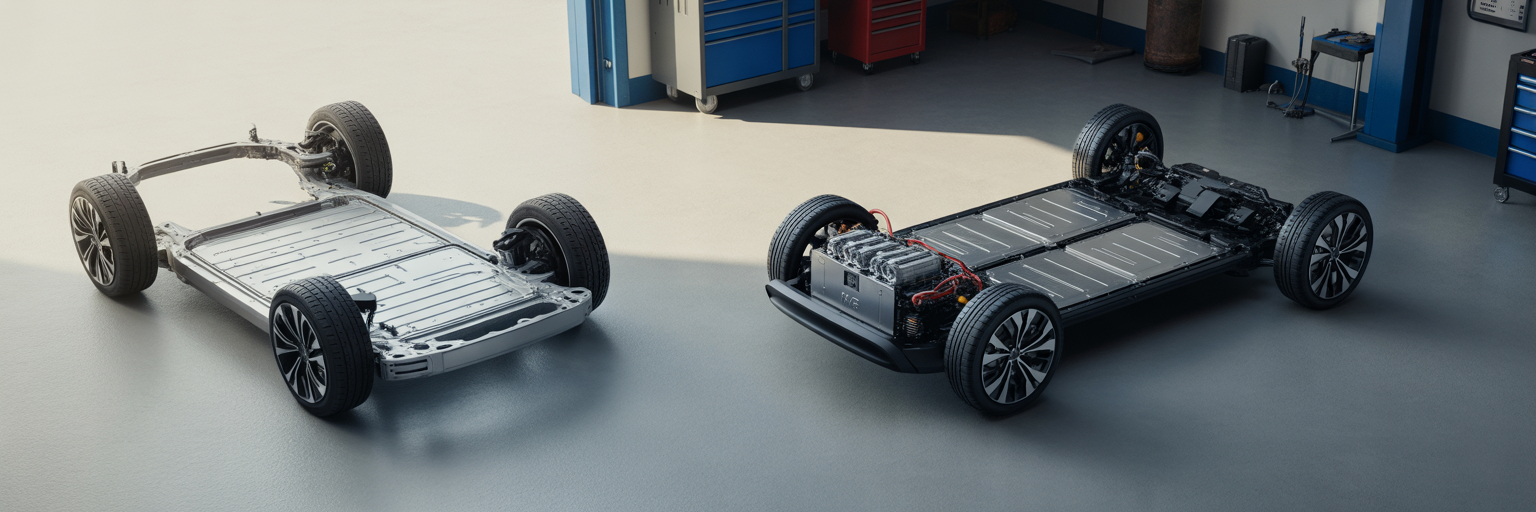
After the initial thrill of acceleration, the practicalities of EV ownership come into focus. For many buyers, range and charging are the most important factors. Here, the battle between the Model Y and Mach-E shifts from raw power to endurance and convenience, highlighting how software and infrastructure can be just as important as battery size.
Model Y’s Efficiency and Class-Leading Range
The 2026 Tesla Model Y Long Range continues to set the benchmark for efficiency, capable of exceeding 330 miles on a single charge. This isn’t just due to a large battery. It’s a result of Tesla’s holistic approach to engineering. Its advanced battery management software, honed over millions of miles of real-world data, squeezes every last drop of energy from the pack. The vehicle’s sleek, aerodynamic design minimizes drag, while the standard heat pump provides cabin climate control with far less energy drain in colder weather. This focus on efficiency is why the Model Y often outperforms competitors with similarly sized batteries, a point we’ve noted when comparing it to other vehicles like in our analysis of the Toyota RAV4 vs the Model Y.
Mach-E’s Real-World Mileage
The Ford Mustang Mach-E with its extended-range battery offers a respectable range of around 300 miles. While slightly less than the Model Y, it’s more than sufficient for the vast majority of daily driving and most road trips. The difference in efficiency stems from a few key factors. The Mach-E has a heavier build and a design that prioritizes its muscular styling over pure aerodynamic slipperiness. These choices, while contributing to its solid road presence and ride comfort, result in slightly higher energy consumption per mile. For a road trip, this might mean one extra charging stop compared to the Tesla, a small but notable consideration for long-distance travelers.
The Charging Network Showdown: NACS and Beyond
For years, Tesla’s Supercharger network was its undeniable ace in the hole. Its reliability, speed, and sheer number of locations made long-distance EV travel seamless. However, by 2026, the landscape has dramatically shifted. With Ford’s adoption of the North American Charging Standard (NACS), the Mach-E now has access to a significant portion of the Tesla Supercharger network, in addition to third-party networks like the BlueOval Charge Network and Electrify America. This move significantly levels the playing field for charging convenience.
When it comes to DC fast charging speeds, the nuances matter. According to a recent analysis by MotorTrend, the Model Y’s charging architecture remains highly efficient, allowing it to add substantial range quickly. The Mach-E also boasts strong peak charging rates, but the overall charging curve and network consistency can sometimes be less predictable than Tesla’s integrated system.
- Tesla Charging Ecosystem: The primary benefit remains its seamless integration. The car’s navigation automatically plans routes with charging stops, pre-conditions the battery for faster speeds, and provides a simple plug-and-charge experience. The network is famously reliable.
- Ford Charging Ecosystem: The key advantage is choice. Mach-E owners can use multiple networks, creating flexibility. The adoption of NACS is a huge win, but the experience can still be fragmented, sometimes requiring different apps or payment methods depending on the charging provider.
On the Road: Dynamics and Driving Feel
Beyond straight-line speed, how a car behaves in corners and handles imperfect roads defines its character. This is where the electric SUV comparison 2026 gets particularly interesting. The Model Y and Mach-E offer fundamentally different driving experiences, moving the conversation from numbers on a spec sheet to the feeling you get behind the wheel.
Model Y: Agile but Firm
The Tesla Model Y drives like a much smaller, sportier car than its crossover shape suggests. Its low center of gravity, a result of the floor-mounted battery pack, keeps it incredibly flat and planted through corners. The steering is quick and direct, responding to inputs with an almost digital immediacy. It’s an agile and confidence-inspiring vehicle to pilot on a smooth, winding road. However, this agility comes with a significant trade-off. The suspension is undeniably firm. On the less-than-perfect pavement common on many American roads, the ride can feel busy and sometimes harsh. You feel every bump and expansion joint, which can become tiring on a long commute.
Mach-E: Composed and Engaging
Ford’s engineers clearly prioritized a more balanced approach with the Mustang Mach-E. The suspension is tuned to be both sporty and compliant, a combination that has earned it widespread praise. It manages to feel connected and engaging in corners without punishing its occupants over rough surfaces. The steering provides more feedback than the Tesla’s, creating a more communicative and organic connection between the driver and the road. It feels less like a computer executing commands and more like a traditional performance car that has been expertly adapted for the electric age. It’s a car that invites you to enjoy the drive, not just the destination.
The Daily Drive: Ride Comfort Comparison
When it comes to the daily grind of commuting, the differences in ride comfort become stark. The Mach-E is the clear winner here. Its more compliant setup does a superior job of absorbing road imperfections, from minor cracks to major potholes. This composure makes it a more refined and relaxing choice for long journeys or stop-and-go city traffic. The Model Y’s appeal comes from its raw, untamed power and sharp reflexes. It’s exciting in short bursts. The Mach-E’s pleasure is derived from its balanced chassis and cornering poise, offering a driving experience that is both fun and comfortable. The choice comes down to a simple question: do you want to feel the road, or do you want to glide over it?
Inside the Cabin: Design Philosophy and Tech
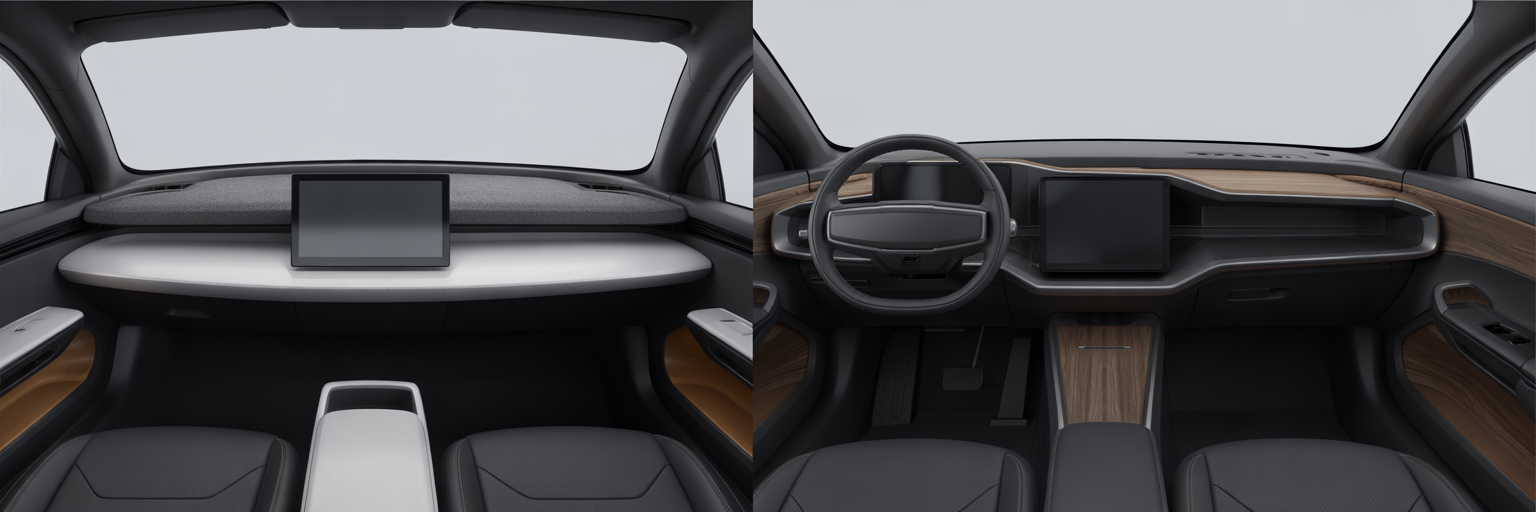
Stepping inside the Model Y and Mach-E is like visiting two different visions of the future. One is a study in radical simplicity, while the other attempts to bridge the gap between traditional automotive design and a screen-centric world. The interior is where you spend all your time, and these contrasting approaches to design, technology, and comfort will be a deciding factor for many buyers.
Tesla’s Radical Minimalism vs. Ford’s Modern Traditionalism
The Model Y’s cabin is defined by what isn’t there. There are no traditional gauges, virtually no physical buttons, and no clutter. Everything is controlled through a single, landscape-oriented 15-inch touchscreen that dominates the dashboard. The aesthetic is clean, open, and airy, with an uninterrupted view over the low dash. For some, this minimalism is a breath of fresh air. For others, the complete reliance on a touchscreen for basic functions like adjusting the wipers or opening the glovebox can feel like a step too far. It demands that you adapt to its way of doing things.
The Mustang Mach-E, by contrast, offers a more familiar layout. It features a large, portrait-oriented 15.5-inch central touchscreen but complements it with a 10.2-inch digital instrument cluster directly in front of the driver. This provides essential information like speed and range right in your line of sight. Ford also includes a prominent physical volume knob integrated into the main screen, a small but brilliant touch that acknowledges the value of tactile controls. The Mach-E’s interior feels like a thoughtful evolution, not a complete revolution.
Infotainment Deep Dive: Tesla OS vs. SYNC 4A
The user experience of the infotainment system is a critical part of the modern car. Tesla’s proprietary operating system is famously fast, responsive, and feature-rich. The navigation and map display are best-in-class, and the system is packed with integrated entertainment options like Netflix, YouTube, and a library of video games to pass the time while charging. It’s a self-contained digital ecosystem.
Ford’s SYNC 4A system is also highly capable, with a clean interface and quick responses. Its biggest advantage, and a key differentiator in the Mustang Mach-E tech features, is its seamless integration of Apple CarPlay and Android Auto. While Tesla stubbornly refuses to support these platforms, the Mach-E allows you to mirror your smartphone’s familiar interface on its large screen. For drivers deeply embedded in the Apple or Google ecosystems, this is a massive benefit.
- Tesla OS Strengths: Unmatched responsiveness, superior navigation, and a deep suite of built-in entertainment apps.
- SYNC 4A Strengths: Excellent Apple CarPlay and Android Auto integration, a physical volume knob, and a dedicated driver display screen.
Auditory Experience: Premium Sound System Showdown
For many, the sound system is a crucial part of the driving experience. Both vehicles offer impressive premium audio options. The Model Y’s unbranded system is known for its clear, immersive sound and deep bass, creating a rich soundstage within the quiet EV cabin. The Mach-E offers an available Bang & Olufsen system that is expertly tuned for the car’s interior. It features a stylish soundbar integrated into the dashboard and delivers crisp highs and well-balanced audio. Choosing between them is subjective, but both represent a significant step up from standard car audio and will satisfy most audiophiles.
The Future of Driving: Autonomy and Safety
Driver-assist systems are no longer a luxury but a core component of modern vehicles. Both Tesla and Ford are at the forefront of this technology, but they pursue it with different philosophies regarding capability and responsibility. This section explores their autonomous features, structural safety, and the role of over-the-air updates in shaping the future of driving.
Tesla Autopilot and the Full Self-Driving Promise
Tesla’s driver-assist suite is offered in two main tiers. Standard Autopilot, included on every car, provides excellent adaptive cruise control and lane centering. It’s a robust system for reducing fatigue on highways. The optional Full Self-Driving (FSD) package is where Tesla’s ambition truly shows. By 2026, FSD is expected to offer features like Autosteer on city streets, traffic light and stop sign control, and automated lane changes. However, it’s crucial to understand that despite its name, FSD is a Level 2 driver-assist system that requires constant driver supervision. Its “beta” status and the ongoing regulatory debates surrounding it mean that while its capabilities are impressive, the driver remains fully responsible at all times.
Ford’s BlueCruise: Hands-Free Highway Confidence
Ford’s approach with its Co-Pilot360 system is more conservative but arguably more transparent. The standout feature is BlueCruise, a true hands-free driving system that operates on a growing network of pre-mapped divided highways across North America. When active, the system takes full control of steering, braking, and acceleration, allowing the driver to relax their hands and feet. An infrared camera monitors the driver’s eyes to ensure they remain attentive. BlueCruise doesn’t promise to drive everywhere like FSD, but within its defined operational domain, it delivers a highly reliable and confidence-inspiring hands-free experience. It’s less about pushing the boundaries of what’s possible and more about perfecting what’s practical today.
Structural Safety and Over-the-Air Updates
Both the Model Y and Mustang Mach-E are built on dedicated EV platforms, which provide inherent safety advantages. The low-slung battery pack creates a low center of gravity, reducing rollover risk, and the absence of an engine block allows for larger front crumple zones. Both vehicles have earned top safety ratings from the NHTSA and IIHS, offering excellent crash protection.
A critical aspect of modern vehicle ownership is over-the-air (OTA) updates. Both Tesla and Ford use OTA updates to deliver new features, improve performance, and fix bugs. Tesla has long been the leader in this space, with frequent and substantial updates that can genuinely make the car feel new. Ford has also embraced OTA technology, though its updates have historically been less frequent and feature-rich than Tesla’s. This capability is vital for improving safety systems and overall EV SUV reliability ratings over the life of the vehicle.
Long-Term Ownership: Reliability and Value

The purchase price is just the beginning of a car’s financial story. To make a truly informed decision, buyers must consider reliability, maintenance, insurance, and resale value. Here, we break down the practical and financial realities of owning a Model Y versus a Mach-E, moving beyond the initial sticker shock to the total cost of ownership.
When it comes to EV SUV reliability ratings, both brands have their strengths and weaknesses. While official long-term data for 2026 models is pending, historical trends reported by sources like U.S. News & World Report indicate Tesla’s powertrain and battery reliability are strong points. However, owner reports frequently mention issues with build quality, such as inconsistent panel gaps, rattles, and trim fitment. The Mustang Mach-E generally earns praise for its more consistent build quality, but it has faced its own software glitches and recalls, typical for a new and complex vehicle platform.
The customer service experience also differs significantly. Tesla operates on a direct-to-consumer model, with service handled through its own centers or a mobile service fleet. This can be convenient but can also lead to long waits in some regions. Ford relies on its extensive and familiar dealership network for sales and service, offering a more traditional and widely accessible support structure. For some buyers, the ability to walk into a local dealership is a major point of comfort.
To provide a clearer financial picture, we’ve estimated the five-year total cost of ownership for comparable trims.
| Cost Factor | Tesla Model Y Long Range | Ford Mustang Mach-E Premium AWD |
|---|---|---|
| Starting MSRP (Est.) | ~$49,000 | ~$48,000 |
| Potential Federal Tax Credit | Varies by model/battery | Varies by model/battery |
| Estimated 5-Year Fuel (Electricity) Costs | ~$3,500 | ~$4,200 |
| Estimated 5-Year Insurance Premiums | ~$10,500 | ~$9,000 |
| Estimated 5-Year Maintenance Costs | ~$1,200 | ~$1,800 |
| Projected 5-Year Resale Value | High (~55-60%) | Average-to-High (~50-55%) |
Note: Figures are estimates for 2026 models based on current market trends, average US electricity prices (16¢/kWh), and typical insurance rates. Tax credits are subject to change based on federal regulations. Resale values are projections based on historical data for both brands.
As the table shows, the Model Y’s superior efficiency and lower maintenance may be offset by higher insurance premiums. Its historically strong resale value remains a significant financial advantage. For buyers looking for other cost-effective options, exploring choices like the best hybrid SUVs under $35k can provide additional market context.
The Final Verdict: Which EV SUV Is for You?
After comparing every facet of these two exceptional electric SUVs, the choice comes down to a fundamental question of priorities. There is no single “better” vehicle; there is only the vehicle that is better for you. The 2026 Tesla Model Y and Ford Mustang Mach-E excel in different areas, catering to two distinct types of drivers.
The core trade-off is clear. The Model Y dominates in objective metrics. It offers faster acceleration, longer range, and access to a more seamlessly integrated charging network. The Mustang Mach-E shines in subjective areas. It provides a more comfortable and engaging ride, a more balanced handling profile, and an interior that expertly blends modern technology with familiar, user-friendly design.
For the performance-oriented buyer who prioritizes raw speed, cutting-edge efficiency, and the most streamlined long-distance travel experience, the Tesla Model Y is the definitive choice. It is the best electric SUV for performance seekers who want to experience the absolute peak of what current EV technology can deliver in a straight line.
For the buyer who values a refined, tech-forward daily driver that is both comfortable and fun to drive, the Ford Mustang Mach-E is the superior option. It is for the driver who wants an engaging connection to the road, a high-quality interior, and the flexibility of systems like Apple CarPlay, all wrapped in a design that carries an iconic legacy. Ultimately, both vehicles represent the pinnacle of the electric SUV market, and the best decision comes from honestly assessing what you value most in your daily drive. To continue your research, you can explore more insights on our homepage.