Decades ago, the pinnacle of off-road capability was a utilitarian 4×4 designed for slow, steady work. Today, that category has been redefined by a new breed of machines engineered for speed, agility, and technological dominance over challenging terrain. The modern high-performance off-road SUV is a far cry from its ancestors, moving beyond simple four-wheel drive into a world of specialised engineering.
This is not just about getting through mud. It is about purpose-built systems like long-travel suspension that absorbs punishing impacts, powerful engines tuned for immediate torque, and reinforced frames that withstand forces far beyond daily driving. Intelligent traction management systems now think faster than the driver, distributing power precisely where it is needed. However, this capability comes with clear trade-offs. These vehicles often carry a higher price tag, deliver lower fuel efficiency, and can sacrifice some on-road comfort for off-road prowess.
Understanding these differences is key to choosing the right vehicle. We will explore three distinct categories of high-performance off-roaders: the technical rock-crawling specialists, the high-speed desert runners, and the versatile overlanding rigs built for long-haul self-reliance.
Masters of Technical Terrain and Rock Crawling
This category is all about slow-speed precision and control. Success on technical trails is not measured in speed but in the ability to overcome seemingly impossible obstacles. The essential attributes for a rock crawler are exceptional ground clearance to clear boulders, extreme axle articulation to keep tyres in contact with uneven ground, and aggressive low-range gearing that multiplies engine torque for effortless climbing.
The Uncompromising Icon: Jeep Wrangler
The Jeep Wrangler remains a benchmark in this space, largely due to its continued reliance on solid front and rear axles. This traditional design choice is its greatest strength, allowing for maximum wheel travel that keeps the vehicle stable and planted over severe obstacles. When one wheel is pushed up, the other is forced down, maintaining traction where other suspension types might lift a wheel off the ground. Combined with an available V-8 engine, the Wrangler has the raw power to crawl up steep inclines with minimal effort. For those curious about its enduring appeal, it is worth exploring the legacy of the Jeep brand.
The Modern Challenger: Ford Bronco
The Ford Bronco enters the ring as a modern challenger with a different philosophy. Its key distinction is the use of an independent front suspension (IFS). While IFS provides a significantly more comfortable and composed on-road ride, it traditionally sacrifices some of the extreme articulation found in solid-axle designs. Ford closes this capability gap with the Sasquatch package, which adds crucial hardware like 35-inch tyres and front and rear locking differentials. This creates a compelling Ford Bronco vs Jeep Wrangler debate. As experts at Edmunds note, the Bronco’s suspension offers a better daily driving experience, while the Wrangler’s solid axles are often preferred by purists for maximum trail performance. The choice ultimately comes down to your priority: uncompromising off-road articulation or a more balanced blend of daily drivability and trail capability.
| Feature | Jeep Wrangler Rubicon | Ford Bronco Sasquatch | Why It Matters for Rock Crawling |
|---|---|---|---|
| Front Suspension | Solid Axle | Independent Front Suspension (IFS) | Solid axles provide superior articulation; IFS offers better on-road comfort. |
| Tire Size (Stock) | 33-inch (35-inch optional) | 35-inch | Larger tires increase ground clearance and improve approach/departure angles. |
| Axle Gearing | 4.10 (4.88 optional) | 4.70 | Lower gearing multiplies torque for slow, controlled climbing. |
| Sway Bar Disconnect | Electronic Front Disconnect | Electronic Front Disconnect | Allows front wheels to move independently, maximizing articulation. |
Engineered for High-Speed Desert Running
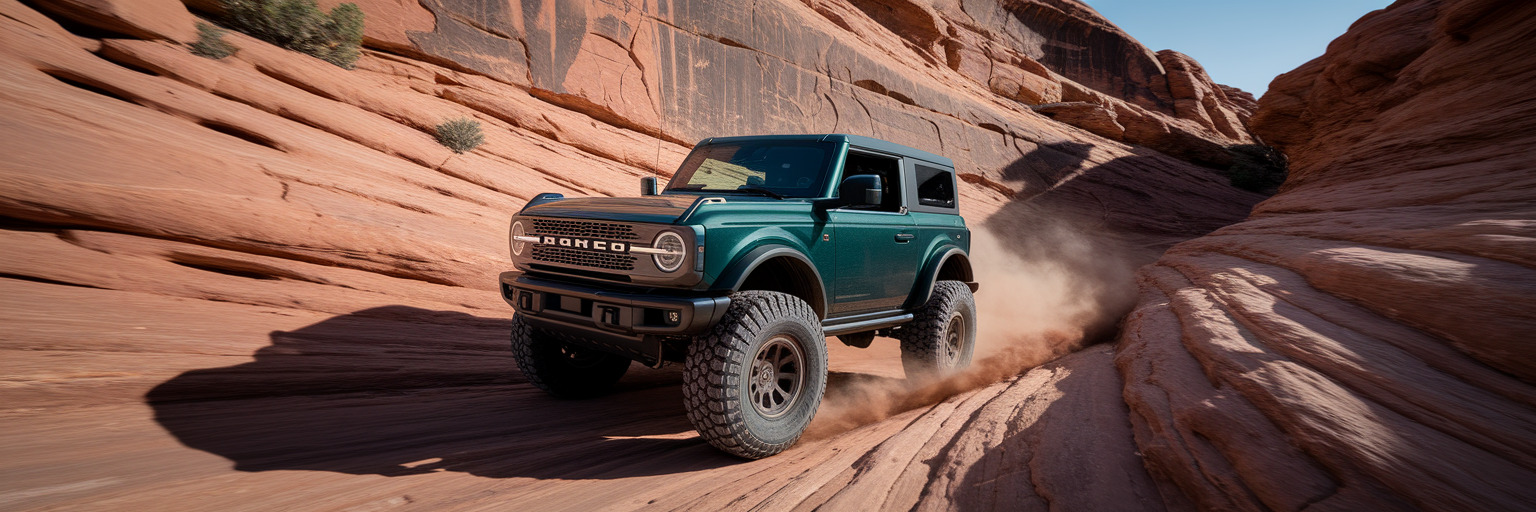
Leaving the slow, methodical world of rock crawling behind, we enter the realm of high-speed desert running. Here, the primary challenge is maintaining stability and control while flying over rough, open terrain at speed. The engineering focus shifts to a suspension system capable of absorbing massive impacts from whoops and jumps without unsettling the vehicle. The “Raptor” style of truck, pioneered by Ford, is the pinnacle of this category, representing some of the best off-road trucks available.
A prime example is the Ford Ranger Raptor. This mid-size truck distills the F-150 Raptor’s DNA into a more agile package. A detailed Ford Ranger Raptor review would highlight its purpose-built features: a reinforced frame, a wider track for stability, and an advanced long-travel Fox Live Valve suspension that actively adjusts damping in real-time. This technology allows it to feel compliant over small bumps yet firm enough to prevent bottoming out after a jump.
Direct competitors like the Chevrolet Colorado ZR2 and GMC Canyon AT4X bring their own motorsport-derived technology to the fight: Multimatic DSSV spool-valve dampers. This sophisticated system provides position-sensitive damping, offering exceptional control over both high-frequency chatter and large G-out events that occur when the suspension compresses suddenly in a dip. These are not simply lifted trucks; they are comprehensively engineered systems designed to withstand abuse that would destroy a standard vehicle. Key enabling technologies include:
- Long-travel suspension systems to absorb large impacts.
- Position-sensitive dampers like Fox Live Valve or Multimatic DSSV.
- Reinforced frames and suspension mounting points for durability.
- Wider track width for enhanced stability at speed.
These are some of the best off-road trucks 2025 has to offer for enthusiasts who prioritise speed and durability above all else.
The Ultimate Rigs for Overlanding Expeditions
Overlanding represents a third distinct style of off-roading, defined by self-reliant, long-distance travel where the journey itself is the goal. Unlike rock crawling or desert running, which focus on conquering specific obstacles or terrains, overlanding prioritises reliability, payload capacity, and the ability to live out of your vehicle for extended periods. The best rig is one that can carry you, your gear, and your supplies safely into remote locations and back again.
The new Toyota 4Runner Trailhunter is a perfect example of a purpose-built overlanding machine. It builds on a foundation of legendary Toyota reliability and adds factory-installed, warrantied overlanding gear from respected brands like ARB. This directly addresses a major pain point for enthusiasts: the complexity, cost, and potential warranty issues of extensive aftermarket modifications. It arrives ready for adventure straight from the showroom.
For those seeking a more premium experience, the Lexus GX Overtrail offers a rare combination of rugged capability and luxury. It features a robust body-on-frame platform, a high payload capacity essential for carrying heavy gear like rooftop tents and refrigerators, and a refined interior that provides comfort on long journeys. It proves that you do not have to sacrifice comfort for capability.
Revisiting a familiar name, the Ford Bronco with the Sasquatch package also shines in this context. While it excels at technical trails, its strong payload rating and versatile nature make it one of the most capable overlanding vehicles 2025 offers. It is an ideal choice for those who want a single rig that can handle both difficult weekend trails and longer expeditions. For those interested in its capabilities, exploring the full lineup from our brand page on Ford provides more context. The best overlanding vehicle is ultimately a careful balance of capability, reliability, and the capacity to carry everything needed for self-sufficiency.
Blending Off-Road Capability with Everyday Luxury
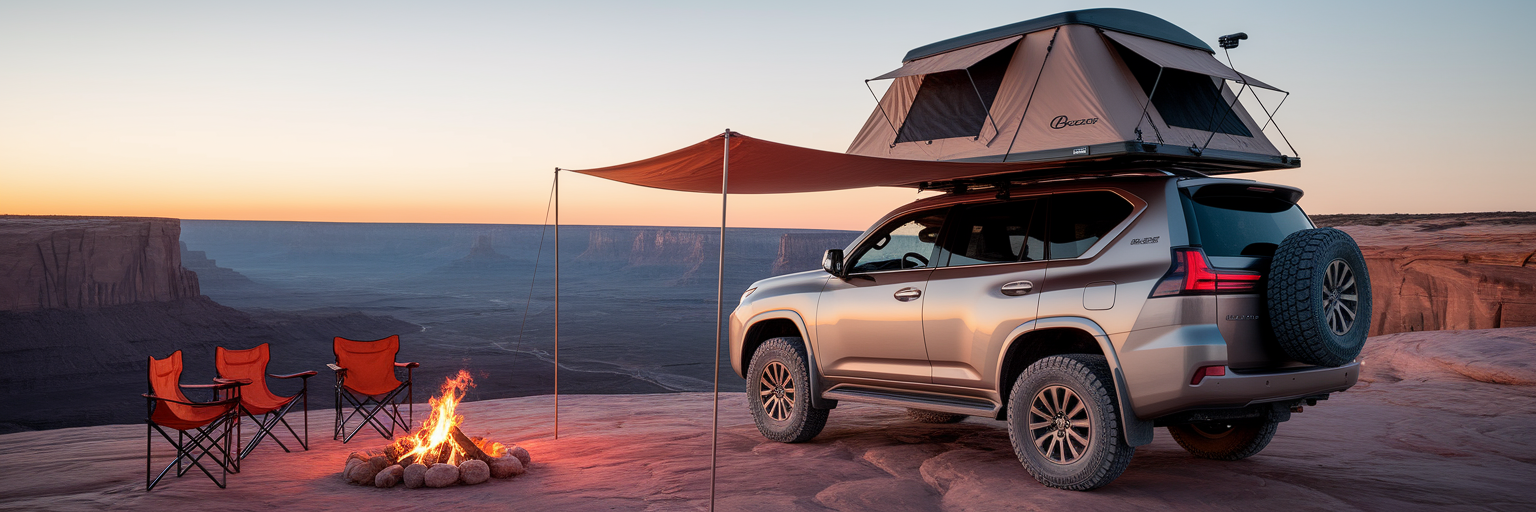
Not every buyer needs a vehicle that can conquer extreme trails or race across the desert. Many are looking for a single, capable all-rounder that serves as a refined daily driver during the week and a competent adventurer on the weekend. This category is about finding the perfect compromise between on-road comfort and off-road readiness.
The 2025 Ram 1500 stands out in this segment. Its class-leading ride quality, a result of its unique multi-link coil-spring rear suspension, sets it apart from many competitors that still use traditional leaf springs. As CarBuzz notes, the Ram 1500 offers car-like handling and luxurious features. This makes for a comfortable commute, yet with the new Hurricane powerplant and available 4×4 systems, it is more than capable of towing a boat or tackling a moderately difficult trail.
The 2025 Chevrolet Tahoe represents the full-size SUV equivalent. It offers powerful V8 and diesel engine choices, a true 4WD system with a low-range transfer case for difficult situations, and a cavernous interior with ample space for family and gear. While these vehicles lack the extreme articulation of a Wrangler or the high-speed damping of a Raptor, their blend of comfort, utility, and capability makes them some of the best 4×4 cars 2025 for a wide range of buyers. For those weighing their options, the upcoming 2025 Ford F-150 also promises to be a strong contender in this popular segment.
Adventurous and Practical Choices for the Family
The desire for adventure does not disappear when you have a family; it just comes with more practical considerations. For families who need a practical, three-row SUV but still want an adventurous edge, a new trend of “ruggedized” trims has emerged. These vehicles, like the Kia Telluride X-Line and Hyundai Palisade XRT, serve as a gateway to the off-road world.
To be clear, these are not hardcore off-roaders designed for extreme trails. Their value lies in specific, practical upgrades that enhance their versatility for family adventures. These improvements provide the confidence to venture slightly off the beaten path without the compromises in comfort, fuel economy, or safety that come with a dedicated off-road machine. The key benefits include:
- Increased Ground Clearance: This provides extra confidence on unpaved roads leading to trailheads, campsites, or remote cabins.
- All-Terrain Tires: These offer significantly better traction in dirt, mud, and snow compared to standard highway tires, adding a layer of safety in varied conditions.
- Advanced AWD Systems: Many include specialized modes like ‘Snow’ or ‘Lock’ that optimize the system for improved control in slippery situations.
- Distinctive Styling: Features like robust roof rails for gear and unique bumpers add to the adventurous aesthetic without compromising daily usability.
These vehicles are the pragmatic choice for families who need one vehicle to handle everything from school runs to ski trips, proving that practicality and a spirit of adventure can coexist. This trend shows how broad the SUV market has become, spanning from practical family haulers to ultra-premium models like the one detailed in our review of the 2026 Genesis GV70.