
The 1968 Camaro: A Refined Muscle Car Icon
The late 1960s marked the height of the American pony car wars, a fierce battle for automotive supremacy fought on showroom floors and drag strips. When Chevrolet launched the Camaro in 1967, it was a direct and potent challenge to the Ford Mustang’s dominance. The 1968 Chevrolet Camaro represented the second, more calculated strike in this conflict. This model year is a crucial chapter in Chevrolet Camaro history, showcasing a period of thoughtful refinement rather than radical reinvention. Engineers and designers took the successful formula of the original and honed its strengths while methodically addressing its initial weaknesses.
This pivotal second-year model built upon the foundation of its predecessor, solidifying its place as a true contender. The intense rivalry with the Mustang served as a catalyst, accelerating innovation across the American auto industry and pushing Chevrolet to deliver more than just style. The 1968 Camaro introduced a series of key changes that distinguished it from the ’67. These included federally mandated safety updates, significant chassis and suspension improvements, and subtle but important styling modifications that gave the car a more polished and mature presence.
While the silhouette remained familiar, the details told a story of evolution. The car became safer, handled better, and offered a wider array of performance packages that catered to every type of driver, from the daily commuter to the dedicated weekend racer. This year was about perfecting the package, creating a machine that was not only fast and attractive but also more capable and durable. The improvements made to the 1968 model laid the groundwork for the even more aggressive styling of 1969, making it a critical link in the evolution of the first generation Camaro. This article explores the engineering, design, and cultural impact that make the 1968 Camaro a unique and highly desirable example of classic muscle cars.
Design Evolution and Safety Mandates
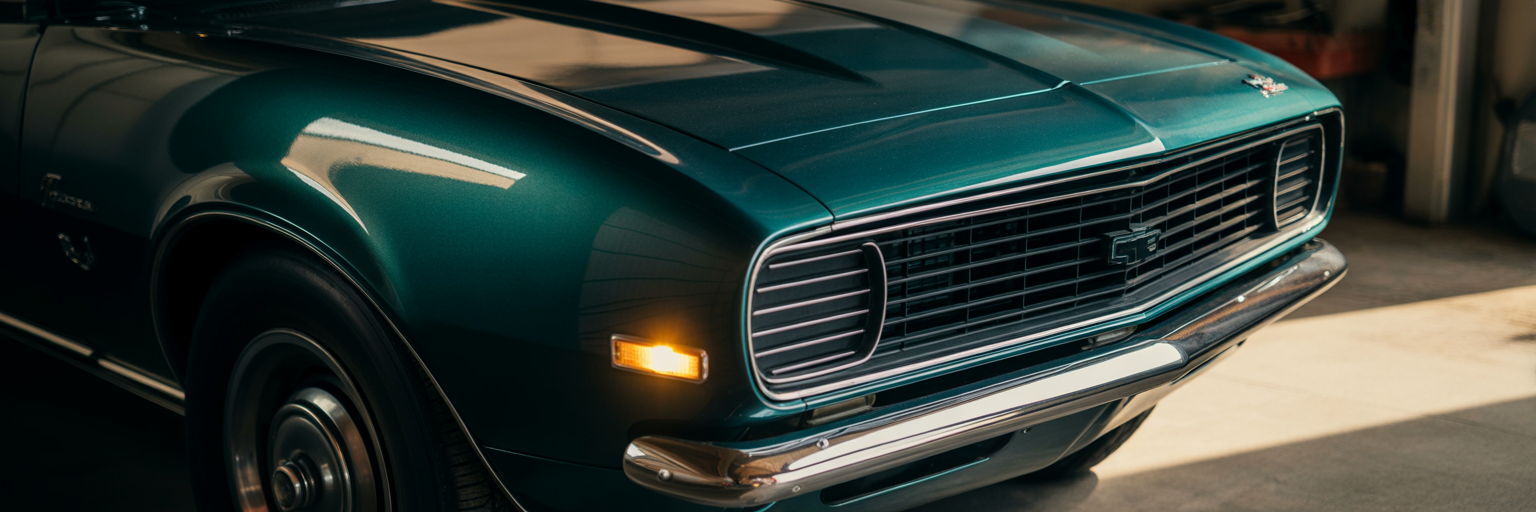
The visual identity of the 1968 Camaro was shaped by both aesthetic choices and new federal regulations. Unlike a complete overhaul, the changes were subtle yet significant, creating a car that was cleaner, safer, and visually distinct from its 1967 counterpart. These modifications focused on refining the exterior profile and bringing the vehicle into compliance with emerging safety standards.
Subtle Exterior Changes with Big Impact
One of the most noticeable exterior updates was the shift from the round front turn signals of the 1967 model to new, rectangular units for 1968. This small change gave the front end a slightly wider and more modern appearance. More importantly, 1968 saw the introduction of federally mandated side marker lights. Small, illuminated rectangles were added to the front fenders and rear quarter panels. These were not merely stylistic flourishes but a legal requirement designed to make the vehicle’s presence and length more visible to other drivers from the side, especially at night.
A Cleaner Profile with Astro Ventilation
A key refinement that dramatically altered the car’s side profile was the elimination of the front side vent windows. In their place, Chevrolet introduced a new flow-through ventilation system called “Astro Ventilation.” This system pulled fresh air in through an intake plenum at the base of the windshield and circulated it through the cabin, exiting through vents in the door jambs. By removing the vent windows, designers were able to use a single piece of glass for the side windows, resulting in a much cleaner, sleeker, and more modern look. This change contributed significantly to the car’s sophisticated aesthetic, moving it away from the more traditional design cues of the mid-60s.
Decoding the Grilles: Standard vs. Rally Sport
The front grille served as a primary identifier for the different Camaro trim levels. The standard 1968 Camaro featured a fine-textured, argent silver painted grille with a prominent “Chevrolet” emblem in the center. While handsome, it was the optional Rally Sport (RS) package that created the most iconic look. The RS package included a striking blacked-out grille with concealed headlights. The vacuum-operated headlight doors would slide horizontally toward the center of the grille when the lights were switched on, revealing the headlamps. This feature gave the RS Camaro a menacing, uninterrupted facade when the lights were off, lending it a premium and aggressive appearance that remains highly sought after by collectors today. The VIN plate was also relocated from the driver’s side door jamb to the top of the instrument panel, making it visible through the windshield. This was another change mandated by federal law to standardize vehicle identification and deter theft.
Under the Hood: A Spectrum of Power
The 1968 Camaro offered a powertrain for nearly every purpose, from economical commuting to all-out racing. Chevrolet’s strategy was to provide a broad spectrum of engine options, allowing buyers to tailor the car’s performance to their exact desires and budget. This versatility was a cornerstone of its appeal and a key factor in its battle against the Mustang.
The Everyday Powerplants: Inline-Six and Small-Block V8s
The entry point into the Camaro lineup consisted of two reliable inline-six engines, the 230 cubic-inch (cid) and the 250 cid, producing 140 and 155 horsepower, respectively. These were the practical choices for buyers who prioritized the Camaro’s iconic style and wanted a dependable daily driver with reasonable fuel economy. For those seeking the signature rumble of a V8 without the insurance premiums of a high-performance model, the base 327 cid V8 offered a respectable 210 horsepower. It provided a significant step up in performance and sound from the six-cylinders, making it a popular and well-balanced option.
The Heart of the Muscle: Super Sport (SS) Big-Blocks
The Super Sport package transformed the Camaro from a stylish pony car into a legitimate street brawler. The standard engine for the 1968 Camaro SS was the new 350 cid small-block V8, rated at 295 horsepower. However, the true heart of the SS legend was the 396 cid big-block V8. Buyers could choose between two potent versions. The L34 396 was a popular option, delivering a robust 350 horsepower suitable for serious street performance. For those who demanded maximum power, the L78 396 was the answer. With solid lifters, a high-lift camshaft, and high-compression pistons, it was factory-rated at a formidable 375 horsepower, turning the Camaro into a dominant force in straight-line acceleration.
The Racing Legend: Z/28 and its High-Revving 302
The 1968 Camaro Z28 was a machine with a singular purpose: to win races. It was a homologation special, built specifically to qualify the Camaro for the SCCA Trans-Am racing series, which had a 5.0-liter (305 cid) displacement limit. At its core was a unique 302 cid small-block V8, created by combining a 327 block with a 283 crankshaft. This high-revving engine featured solid lifters, a performance camshaft, and an aluminum intake manifold, allowing it to breathe at high RPMs. Chevrolet famously underrated its output at 290 horsepower; actual output was closer to 400 horsepower, making it a giant-killer on the road course.
The Secret Weapon: COPO 427 Program
Beyond the official options list was the clandestine Central Office Production Order (COPO) program. This was a backdoor channel that allowed savvy dealers, most notably Don Yenko, to order Camaros equipped with the massive 427 cid V8, an engine officially reserved for the Corvette and full-size Chevrolets. These COPO Camaros, equipped with the 425-horsepower L72 427, were some of the most powerful and feared street machines of the era, built for absolute drag strip dominance. The longevity of these powerful engines depends heavily on proper care, and enthusiasts interested in general maintenance can learn how to keep your car’s engine running for years with our detailed guides.
| Engine Package | Displacement | Advertised Horsepower | Primary Purpose |
|---|---|---|---|
| Base | 230 cid I-6 / 250 cid I-6 | 140 HP / 155 HP | Economical daily driving with iconic style. |
| Base V8 | 327 cid V8 | 210 HP | Entry-level V8 performance and sound. |
| SS-350 | 350 cid V8 | 295 HP | The standard Super Sport performance package. |
| SS-396 (L34) | 396 cid V8 | 350 HP | Popular big-block option for serious street performance. |
| SS-396 (L78) | 396 cid V8 | 375 HP | High-compression big-block for maximum straight-line speed. |
| Z/28 | 302 cid V8 | 290 HP (underrated) | Homologation special for SCCA Trans-Am road racing. |
| COPO (L72) | 427 cid V8 | 425 HP | Dealer-ordered, off-the-books drag racing dominance. |
Taming the Beast: Suspension and Handling Upgrades
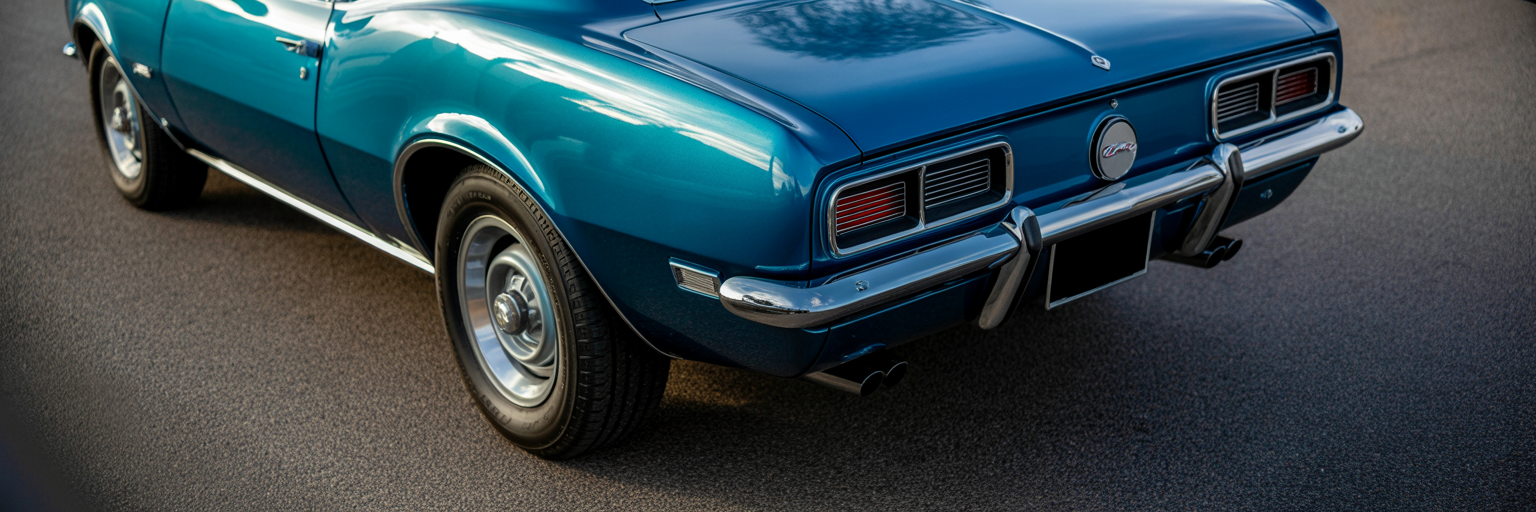
While the 1967 Camaro was celebrated for its style and power, its handling under pressure left room for improvement. Chevrolet engineers dedicated significant effort to refining the chassis for the 1968 model, introducing critical upgrades that transformed the car’s ability to manage its power and navigate corners with greater stability. These changes were essential in making the Camaro a more balanced and capable performance machine.
Solving the Wheel Hop Problem
One of the most significant issues plaguing the 1967 model, particularly those equipped with powerful V8 engines, was a phenomenon known as wheel hop. Under hard acceleration, the rear axle would begin to twist due to the immense torque, causing the leaf springs to deform into an “S” shape. This stored energy would then release violently, causing the rear wheels to bounce or “hop” uncontrollably. This not only wasted power and hindered acceleration but also severely compromised stability, making the car feel unpredictable at the limit.
The Staggered Shock Solution
The primary engineering solution to wheel hop was brilliantly simple yet effective: staggered rear shock absorbers. On V8 models equipped with a four-speed manual transmission, engineers mounted the right-side shock absorber in its standard position behind the rear axle. However, they moved the left-side shock to the front of the axle. This arrangement effectively counteracted the twisting forces of the axle under load. As the axle tried to wrap, one shock would be under compression while the other was under tension, creating a stabilizing effect that kept the tires planted firmly on the pavement. This single change dramatically improved traction and made the Camaro’s power far more usable.
From Mono-Leaf to Multi-Leaf Springs
Another crucial upgrade was the move from mono-leaf to multi-leaf rear springs on high-performance models. The single-leaf springs used in 1967 were found to be susceptible to stress and breakage, especially when subjected to the high torque loads from the 396 big-block engines. For 1968, all SS models and Z/28s received new multi-leaf rear springs. This setup, consisting of several thinner layers of spring steel, provided far superior durability and strength. It also offered more consistent handling characteristics, reducing body roll and improving the car’s overall composure during spirited driving. These two suspension changes worked in concert to tame the Camaro’s raw power.
Beyond the rear suspension, other components contributed to the improved driving experience. While four-wheel drum brakes were standard, the optional front disc brakes were a vital upgrade for any performance-oriented model, offering significantly better stopping power and resistance to brake fade. Buyers could also choose between standard manual steering, which provided direct feedback from the road, and optional power steering, which reduced effort during low-speed maneuvers and parking.
Inside the Cockpit: Interior Trims and Options
The interior of the 1968 Camaro was designed with the driver in mind, blending a functional, no-nonsense layout with a range of options that allowed for a personalized and sportier environment. The dashboard was a defining feature, with its deep-set circular pods for the speedometer and fuel gauge, which was replaced by a tachometer on high-performance models like the Z/28 and SS. This driver-focused ethos was evident throughout the cabin, emphasizing performance and control over pure luxury.
Buyers could enhance the standard interior with several desirable upgrades that added both function and a more finished appearance. These options were instrumental in transforming the Camaro’s cabin from basic to sporty.
- The optional center console provided a convenient storage compartment and a mounting location for the shifter, creating a more cohesive and upscale look between the front bucket seats.
- A floor-mounted shifter, available for both manual and automatic transmissions, offered a much sportier feel compared to the standard column-mounted shifter.
- When ordered with the console, an auxiliary gauge cluster could be added, providing the driver with vital information on oil pressure, coolant temperature, battery amperage, and fuel level.
- One of the most unique and sought-after options was the “tic-toc-tach,” a clever gauge that combined a 7,000-RPM tachometer with a clock integrated into its center.
The main appearance packages also brought their own unique elements to the car’s interior and exterior. The Rally Sport (RS) package, known for its hidden headlights, also included distinctive backup lights mounted below the rear bumper instead of being integrated into the taillights, along with bright wheel well and roof drip moldings. The Super Sport (SS) package announced its performance intentions with non-functional “ice cube tray” hood louvers and the signature “bumblebee” stripe that wrapped around the car’s nose.
Crucially, these packages could be combined to create what many enthusiasts consider the ultimate factory-spec 1968 Camaro: the RS/SS. This highly desirable combination merged the premium appearance of the RS, including its iconic concealed headlights and upgraded trim, with the potent V8 performance and badging of the SS package. The result was a car that had both aggressive looks and the power to back them up, representing the best of both worlds and a pinnacle of first-generation Camaro design.
A Legacy Forged in Competition and Culture
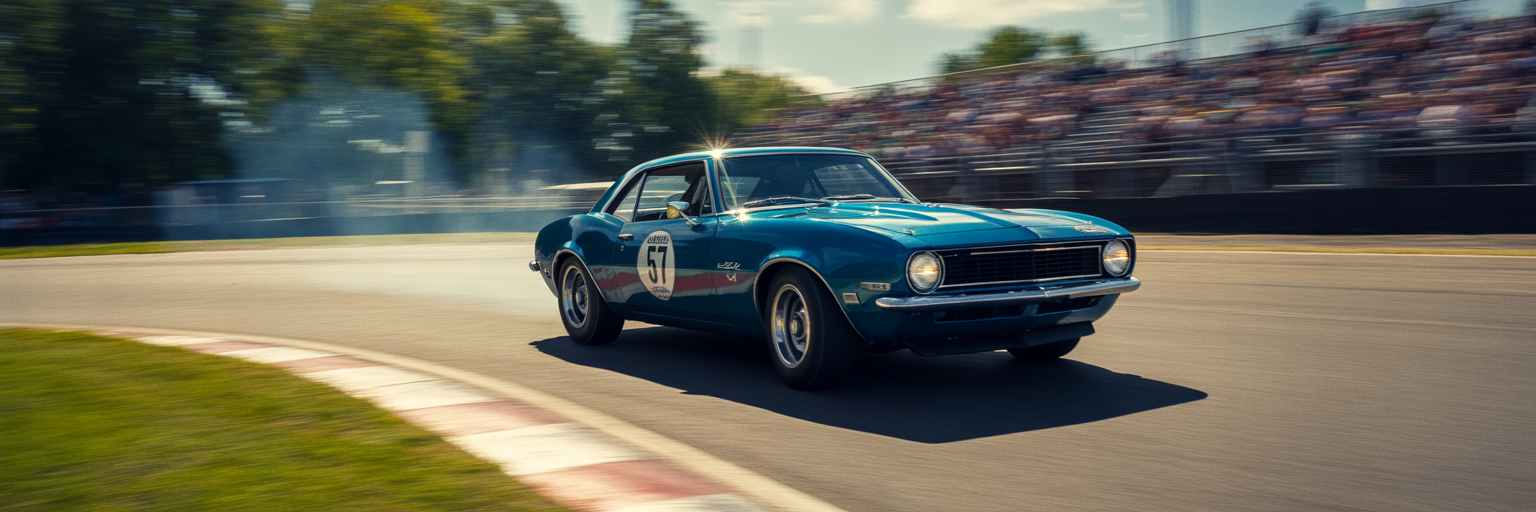
The 1968 Camaro did more than just sell well; it earned its reputation on the racetracks and drag strips of America, cementing its place in automotive culture. Its success in competition validated Chevrolet’s engineering efforts and created a performance pedigree that resonated deeply with enthusiasts. This legacy was built on two distinct fronts: road racing dominance and straight-line supremacy.
The 1968 Camaro Z28 became a legend in the SCCA Trans-Am racing series. Under the expert guidance of team manager Roger Penske and driven by the talented Mark Donohue, the Z/28 proved to be a formidable competitor. The team’s meticulous preparation and Donohue’s skillful driving led them to victory in 10 of the 13 races that season. This dominant performance secured the manufacturer’s championship for Chevrolet and forever linked the Z/28 name with road racing excellence. The Z/28 wasn’t just a car with a racing stripe; it was a proven champion.
While the Z/28 conquered the road courses, the big-block Camaros owned the drag strip. The 1968 Camaro SS 396 and the ultra-rare COPO 427 models became weekend heroes at drag strips across the country. Their immense torque and horsepower made them natural-born acceleration monsters, capable of impressive quarter-mile times right off the showroom floor. This grassroots racing success reinforced the Camaro’s image as a powerful and accessible muscle car, a machine that could win trophies on Sunday and drive to work on Monday.
Beyond the track, the 1968 Camaro was a key player in the cultural landscape of the late 1960s. It was a symbol of the golden age of American muscle, representing freedom, individuality, and youthful rebellion. It was a car that captured the spirit of its time. The head-to-head battle with the Ford Mustang was more than just a sales competition; it was a rivalry for the hearts and wallets of American buyers, fueling a golden era of performance innovation. Such rivalries are a cornerstone of the automotive world, and readers can explore more classic and modern vehicle comparisons on our site to see how these competitions continue to drive progress.
Buying and Restoring a 1968 Camaro Today
For enthusiasts looking to own a piece of muscle car history, the 1968 Camaro is a compelling choice. However, purchasing a vehicle over five decades old requires careful inspection and due diligence. Understanding where to look for trouble and how to verify a car’s authenticity is essential for making a sound investment.
Pre-Purchase Inspection: Where to Look for Trouble
Like many cars from its era, the first generation Camaro is susceptible to rust. A thorough pre-purchase inspection is non-negotiable. Pay close attention to the most common problem areas:
- Rear quarter panels, especially the area behind the rear wheels where moisture and debris collect.
- The floor pans and trunk floor, which can rust from the inside out due to trapped moisture under carpets and mats.
- The base of the front and rear windows, specifically the cowl area below the windshield and the package tray area under the rear glass.
- The front subframe and its mounting points to the unibody, as well as the rocker panels beneath the doors.
Decoding the Numbers: Verifying Authenticity
Verifying a 1968 Camaro’s authenticity is crucial for determining its value, especially for high-performance models like the SS and Z/28. The two most important identifiers are the Vehicle Identification Number (VIN) on the dashboard and the cowl trim tag on the firewall. The VIN reveals the car’s model, assembly plant, and production sequence. The cowl tag provides a wealth of information, including the body build date, paint color code, interior trim code, and codes for certain factory-installed options. Learning to decode these tags is the best way to confirm if a car is a genuine SS or Z/28, or if it’s a “clone” built to look like one. As a point of authority, dedicated resources like the information compiled on NastyZ28.com provide extensive data for decoding these vehicles.
The Restoration Journey: Parts and Costs
One of the biggest advantages of restoring a first generation Camaro is the excellent availability of reproduction parts. Nearly every component, from sheet metal and interior pieces to mechanical parts, is being manufactured today. This makes restoration projects feasible and accessible for enthusiasts with varying skill levels. However, for a concours-level restoration aiming for factory correctness, the journey becomes more challenging. Sourcing date-code-correct, original parts can be a difficult and expensive endeavor. The market value for a 1968 Camaro varies widely. Base models with six-cylinder or small-block V8 engines are the most affordable entry point. Convertibles, genuine 1968 Camaro SS 396 models, and especially the rare 1968 Camaro Z28 command significant premiums. A well-bought or properly restored ’68 Camaro is a blue-chip classic, but understanding vehicle longevity is key. Insights into why some high mileage cars age better than others can provide valuable context for any classic car buyer assessing a potential purchase.
Why the 1968 Model Remains a Sweet Spot
Among the celebrated first-generation models, many enthusiasts consider the 1968 Camaro the “sweet spot” of the trio. It successfully blended the purer, simpler lines of the 1967 original with the critical performance and handling improvements that were desperately needed. The car retained the classic, uncluttered look with its vent-window-free doors and subtle styling, yet it benefited from the sophisticated engineering that tamed its power and made it a more complete performance car.
The 1968 model served as the essential bridge to the iconic 1969 Camaro. The engineering lessons learned and perfected in ’68, such as the staggered shock absorbers and multi-leaf springs, set the stage for the final and most aggressive year of the first generation. Without the solutions developed for the 1968 car, the even more powerful and heavier 1969 models would not have been as capable. It was a year of crucial development that solidified the Camaro’s mechanical foundation.
The 1968 Camaro’s lasting influence on Chevrolet’s brand identity cannot be overstated. Its success in the showroom and its dominance on the racetrack solidified Chevrolet’s reputation as a leader in performance. This legacy of accessible power and competitive spirit continues in the modern Camaros of today. Its unique combination of classic style, improved performance, and rich historical significance makes it a true pillar of the American muscle car era. For any enthusiast, owning a 1968 Camaro is possessing a prized piece of automotive history, a testament to a time when style and power ruled the road. For those who share this passion for iconic cars, Car Phanatics is a home for enthusiasts to explore reviews, news, and guides covering the entire automotive world.