Why Hybrid Vehicles Are a Smart Financial Choice
With the sustained cost of fuel weighing on American households in 2025, fuel efficiency has shifted from a bonus feature to a financial necessity. We all feel that pinch at the pump, where every dollar counts. This is where hybrid vehicles step in, offering a practical solution to rising transportation costs. This is more than just a trend; it’s a fundamental part of a modern hybrid car buying guide.
At its core, a hybrid vehicle is straightforward. It pairs a traditional gasoline engine with an electric motor. The two work together, with the electric motor assisting during acceleration and sometimes powering the car on its own at low speeds. This teamwork is what cuts down on fuel use. Features like regenerative braking capture energy that is normally lost when you slow down, using it to recharge the battery. Think of it like your car giving itself a small power boost every time you hit the brakes in traffic.
For anyone on a budget, the key question is about the “payback period.” This is the time it takes for your fuel savings to cover the slightly higher initial price of a hybrid. With advancing technology and fluctuating gas prices, this period is getting shorter. For many drivers, the financial crossover happens within just a few years. Beyond the numbers, hybrids offer a noticeably quieter ride and the satisfaction of producing fewer emissions, making them a smart choice for both your wallet and the environment.
Top Contenders for Maximum Fuel Economy
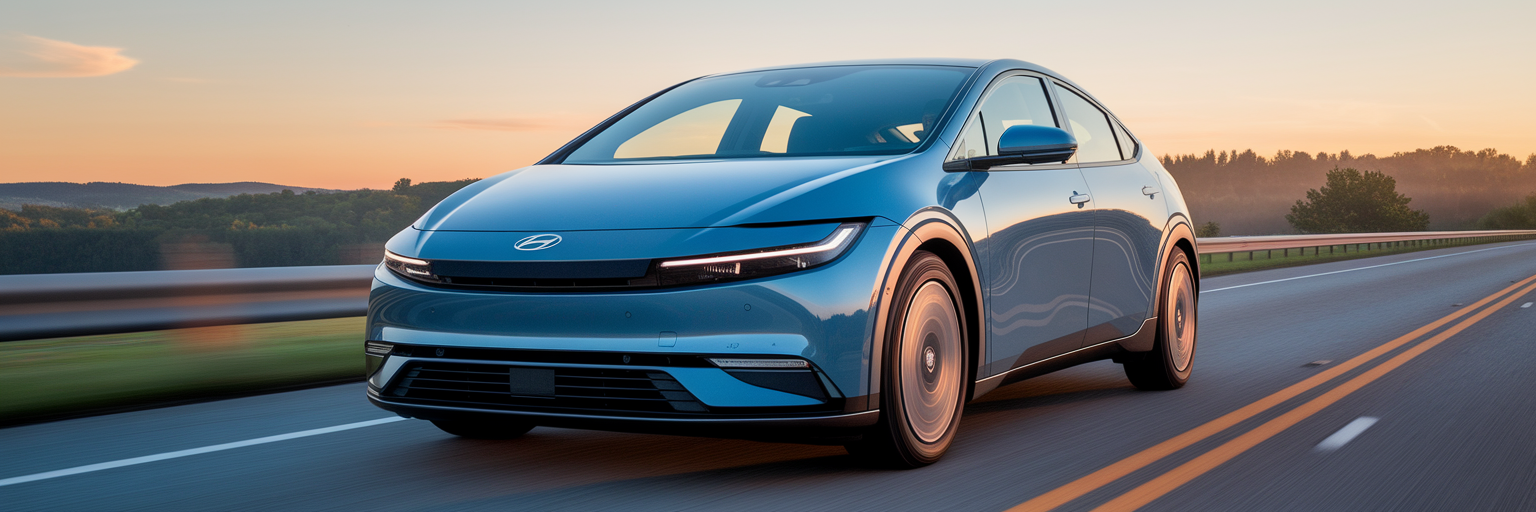
When your primary goal is to visit the gas station as little as possible, two models stand out from the pack. This is where we focus purely on miles per gallon and the value that efficiency brings. Forget cargo space for a moment; this is about the numbers that define the most fuel efficient hybrids 2025 has to offer.
First is the undisputed champion of efficiency, the Toyota Prius LE FWD. The Toyota Prius fuel economy is legendary for a reason. Its latest iteration achieves an exceptional 57 MPG combined, a figure made possible by its wind-slicing aerodynamic shape and a highly refined powertrain. As CarBuzz notes, the Prius LE FWD shines best in the city, where it achieves an average gas mileage of 57 mpg. For drivers who want to absolutely minimize their long-term running costs, the Prius remains the benchmark.
Challenging the champion is the Hyundai Elantra Hybrid. Our Hyundai Elantra Hybrid review finds it to be a compelling alternative, delivering a stellar 54 MPG combined. Its main draw is the combination of a lower starting price, a sleek and modern design, and one of the industry’s best warranties. It appeals to the buyer who wants outstanding efficiency but is unwilling to compromise on style or upfront cost. It proves you do not have to sacrifice aesthetics for savings.
So, which one is right for you? The Prius is the purist’s choice for ultimate long-term fuel savings and proven reliability. The Elantra, however, presents a stronger immediate value proposition with its lower price and eye-catching design. Your decision rests on whether you prioritize the lowest possible running costs over several years or a better deal from day one.
| Metric | Toyota Prius LE FWD | Hyundai Elantra Hybrid |
|---|---|---|
| Combined Fuel Economy | 57 MPG | 54 MPG |
| Approx. Starting Price | ~$29,000 | ~$25,500 |
| Approx. Range per Tank | ~644 miles | ~594 miles |
| Key Advantage | Unmatched fuel efficiency and proven reliability | Lower initial cost, modern styling, and strong warranty |
Note: Prices are estimates for base models and may vary. Fuel economy figures are based on EPA estimates. This table provides a direct comparison to help buyers weigh upfront cost against long-term fuel savings.
Best Hybrid Sedans for Families and Commuters
Moving beyond pure MPG, many buyers need a vehicle that balances efficiency with the practical demands of daily life. For families and commuters, factors like space, comfort, and all-weather capability become just as important as fuel savings. Here, a different set of contenders emerges from the list of best affordable hybrid cars.
The Toyota Camry Hybrid has long been the standard for midsize family sedans. It masterfully combines a spacious interior where everyone has room to stretch with a smooth, comfortable ride that takes the stress out of long trips. Achieving around 51 MPG, it offers impressive efficiency for its size. Crucially, its available all-wheel-drive (AWD) system provides an extra layer of confidence for families living in regions with snowy or rainy weather, making it a secure and sensible choice.
For those who want their daily driver to have a bit more flair, the Hyundai Sonata Hybrid is the tech-forward alternative. Its sophisticated exterior design and well-appointed cabin feel a step above its price point. While delivering a competitive 47 MPG, its true appeal lies in the modern features and premium feel it brings to the daily commute. It is for the driver who believes their car should be as stylish as it is smart.
Then there is the Honda Civic Hybrid, a car for those who refuse to believe that fuel efficiency must be boring. Known for its engaging and sporty handling, the Civic makes city driving genuinely fun. Its modern interior is both functional and attractive, creating a great environment for any trip. This model continues a long legacy of reliable and enjoyable commuters, a history you can explore by learning about models like the first-generation Honda Accord we’ve covered.
- Toyota Camry Hybrid: The ideal choice for families needing space, comfort, and the security of available AWD.
- Hyundai Sonata Hybrid: Best for commuters who value sophisticated design, a feature-rich interior, and strong efficiency.
- Honda Civic Hybrid: The perfect match for drivers seeking a fun, sporty ride combined with excellent fuel economy in a compact form.
Affordable Hybrid SUVs Offering Extra Versatility

The demand for SUVs continues to grow, and automakers have responded with hybrid options that deliver extra utility without a huge fuel penalty. While you will not see sedan-level MPG figures, the trade-off for more cargo space and a higher driving position is one many buyers are happy to make.
Among the best affordable hybrid cars in the SUV category, the Kia Sportage Hybrid is a clear standout. It hits a sweet spot with a starting price often under $30,000, a practical and surprisingly spacious interior, and a solid 43 MPG combined. This combination makes it a default choice for small families, outdoor enthusiasts, or anyone who needs to haul more than what a sedan can handle. It offers the versatility of an SUV without the traditional pain at the pump.
It is important to set realistic expectations here. The larger size and heavier weight of an SUV mean its fuel economy will naturally be lower than a comparable sedan’s. This is not a design flaw; it is a simple law of physics. You are trading a few miles per gallon for the ability to pack more gear for a weekend trip or navigate a snowy road with greater confidence. The hybrid SUV market is expanding, with exciting models on the horizon like the upcoming 2026 Jeep Grand Cherokee, but for now, the Sportage Hybrid offers one of the most compelling packages of price, space, and efficiency available.
Calculating Your True Hybrid Savings
The sticker price is just the beginning of a car’s story. To make a truly informed decision, you need to look at the Total Cost of Ownership (TCO). This includes not just the purchase price but also fuel, insurance, maintenance, and resale value. It gives you a complete financial picture, preventing surprises down the road. Learning to calculate hybrid fuel savings is the most empowering step you can take.
Here is a simple way to figure out your payback period:
- Step 1: Find the price difference between the hybrid model and its gasoline-only equivalent (the “Hybrid Premium”).
- Step 2: Estimate your annual mileage and divide it by the gas car’s MPG to find gallons used per year. Multiply that by your local gas price to get your annual fuel cost.
- Step 3: Repeat Step 2 for the hybrid model to find its annual fuel cost.
- Step 4: Subtract the hybrid’s annual fuel cost from the gas car’s to find your “Annual Fuel Savings.”
- Step 5: Divide the Hybrid Premium by your Annual Fuel Savings to determine your payback period in years.
Your personal driving habits play a huge role. Hybrids excel in stop-and-go city traffic, where regenerative braking constantly recharges the battery. On long, constant-speed highway drives, the gasoline engine does most of the work, and the fuel savings are less pronounced. Finally, let’s address the old myth about battery replacement. Modern hybrid batteries are designed to last the life of the vehicle and are covered by manufacturer warranties for 8 to 10 years or 100,000 miles. Early failure is rare and covered, so you can avoid worrying about unexpected issues like common car noises signaling expensive repairs. In fact, a recent analysis by Consumer Reports shows that the fuel savings from many popular hybrids can offset their price premium within just a few years.
| Cost Factor | Gasoline Sedan (30 MPG) | Hybrid Sedan (50 MPG) |
|---|---|---|
| Initial Price Premium | $0 | +$2,500 |
| Annual Fuel Cost (@12k miles, $3.50/gal) | $1,400 | $840 |
| 5-Year Fuel Cost | $7,000 | $4,200 |
| Total 5-Year Cost (Fuel + Premium) | $7,000 | $6,700 |
| Net 5-Year Savings | – | $300 |
Note: This is a simplified example and does not include insurance, maintenance, or resale value. It illustrates how fuel savings can overcome the initial price premium over time.
A Glimpse into Luxury and Future Affordability
Hybrid technology is no longer confined to economy cars. It has scaled across the market, even into the luxury segment. Take the Lexus ES 300h, for example. While it is not a budget vehicle, its impressive 44 MPG rating makes it a financially astute choice for a luxury sedan buyer. It demonstrates that efficiency and premium comfort can coexist, a trend seen across high-end brands like the ones we review in our luxury section.
This mainstream adoption is great news for all buyers. As the technology becomes more common, production costs decrease, and we can expect to see an even wider array of affordable and diverse hybrid options in the coming years. From compact cars to family SUVs and even trucks, efficiency is becoming a standard feature, not an expensive add-on.
For the average American car buyer in 2025, the choice is clear. Models like the Toyota Prius, Hyundai Elantra, and Toyota Camry offer a winning formula: an accessible purchase price, outstanding fuel economy, and the everyday practicality needed for modern life. They represent the smartest way to navigate the road ahead. To stay current on all automotive trends, we invite you to explore more at CarPhanatics.