The Leap from Assisted to Truly Autonomous Driving
Many of us have experienced a taste of autonomy in modern cars. Features like adaptive cruise control and lane-keeping assist feel futuristic, but they are merely the opening act. The real transformation is the jump from these driver-assist systems to genuine level 4 autonomous driving. This isn’t about the car helping you drive; it’s about the car driving itself entirely within a specific environment, like a geofenced downtown core or a designated highway, with no human intervention required.
Making this leap possible are three technological pillars that are rapidly maturing. First, advanced sensor suites combining LiDAR, radar, and cameras are becoming both more powerful and more affordable. Second, high-definition maps provide vehicles with pinpoint location accuracy, allowing them to understand their position down to the centimeter. Finally, artificial intelligence is making huge strides in real-time decision-making, processing vast amounts of data to react to the unpredictable nature of the road. The complexity of these integrated systems is an automotive marvel, not unlike the sophisticated technology we’ve explored in our analysis of top fuel engines.
This isn’t a distant dream. As highlighted in a report from McKinsey, by 2033, over 15% of new passenger cars sold in North America could feature these Level 4 capabilities. This signals a fundamental shift in the automotive market and the beginning of the true future of autonomous cars.
A Safer and Smoother Commute

Beyond the technology, what does this shift actually mean for your daily drive? The most profound impact will be on self driving car safety. Human error is a factor in the vast majority of traffic collisions. By removing that variable, we can create dramatically safer roads. A National Highway Traffic Safety Administration research report projects that widespread Level 4 operation could cut total traffic fatalities by up to 80%. Imagine a world where the most common causes of accidents simply disappear.
This enhanced safety also brings a smoother, more efficient commute. Autonomous vehicles will use Vehicle-to-Everything (V2X) communication to talk to each other and to the surrounding infrastructure. This constant dialogue allows them to form coordinated “platoons,” driving closer together at optimized speeds. Think of it like a flock of birds or a school of fish, moving in perfect harmony. This coordination increases road capacity without needing to build a single new lane of highway.
The result is time back in your day. The World Economic Forum estimates these efficiencies could cut commute times in major US cities by an average of 12 minutes during peak hours. A future with fewer human-error collisions could also fundamentally change how we approach the question we’ve all asked: why is my car insurance so high? Fewer accidents should logically lead to lower premiums for everyone.
Reshaping American Cities and Suburbs
The changes brought by autonomous vehicles extend far beyond the roads themselves. As mobility-on-demand services become more common, our relationship with the automobile could shift from a possession to a utility. Why own a car that sits idle most of the day when you can summon one whenever you need it? This change in behavior is central to the future of autonomous vehicles urban planning.
The most visible transformation will be the reclamation of land currently dedicated to parking. With fewer privately owned cars, the need for vast parking lots and multi-story garages will shrink dramatically. Analysis from the World Economic Forum predicts that cities could repurpose up to 35% of land currently used for parking. Picture the sprawling asphalt lots at your local mall or the concrete garages downtown. Now, imagine them replaced with public parks, affordable housing, pedestrian plazas, or new local businesses. This isn’t just about easing traffic; it’s about creating more livable, green, and human-centric community spaces.
The Hurdles on the Path to Full Autonomy

While the destination is promising, the road to full autonomy is filled with significant hurdles. The primary bottleneck is not technology, but regulation. Federal agencies are still developing a complete framework for self driving car regulations US, creating uncertainty for automakers and tech companies. This includes establishing clear standards for safety validation, data reporting, and cybersecurity to protect vehicles from malicious attacks.
The question of legal liability looms large. In a crash involving an autonomous vehicle, who is at fault? Is it the owner who was a passenger, the automaker who built the car, or the company that wrote the software? This ambiguity is a major barrier to consumer confidence and makes insurers hesitant. This is a world away from the simple diagnostics we cover when asking why a car is squeaking when you drive; the question for an AV becomes “who is responsible for the code that failed?” Adding to the complexity is a confusing patchwork of state-level rules, which slows down a unified national rollout and has the industry calling for a single federal standard.
| Challenge Area | Specific Problem | Primary Stakeholders |
|---|---|---|
| Regulatory Framework | Lack of unified federal standards for safety validation and data reporting. | NHTSA, Congress, State DMVs |
| Legal Liability | Unclear determination of fault in the event of an accident. | Automakers, Software Developers, Insurers, Vehicle Owners |
| Cybersecurity | Protecting vehicles from malicious hacking and ensuring data privacy. | Tech Companies, Federal Agencies (e.g., CISA), Automakers |
| Public Trust | Overcoming consumer skepticism about safety and reliability. | Media, Advocacy Groups, Manufacturers |
New Economic Frontiers and Job Markets
The economic transformation driven by the future of autonomous cars will create entirely new industries. We will see the rise of “Mobility-as-a-Service” (MaaS), where companies sell transportation access rather than physical cars. McKinsey projects this could become a $200 billion market by 2032, representing a massive shift in the automotive business model.
The logistics and freight industry is poised for a revolution. Autonomous trucks can operate nearly 24/7, stopping only for refueling and maintenance. This continuous operation, combined with fuel optimization from computer-controlled driving, could reduce operating costs by up to 25%. This efficiency will reshape the American supply chain, making goods cheaper and delivery faster.
This new era will also spur a boom in infrastructure development. The creation of “smart roads” embedded with sensors, V2X communication nodes, and dedicated AV lanes will require huge investment. This will create a wave of new jobs in the construction, engineering, and technology sectors, building the physical and digital backbone for our autonomous future.
Ensuring an Equitable and Green Future
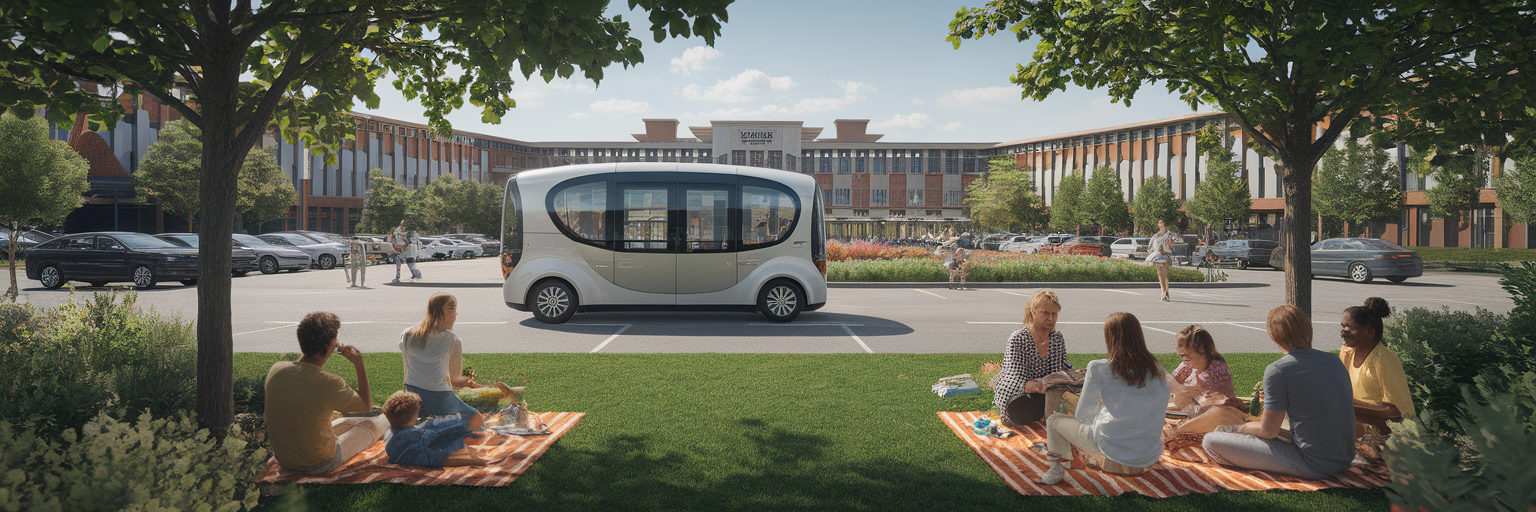
As we move forward, it’s critical to ensure this transformation benefits everyone. There is a real risk that autonomous services could primarily serve affluent, dense urban areas, leaving rural, low-income, or disabled populations behind. As Todd Litman’s AV Impact Project report warns, without deliberate and inclusive policies, we could worsen existing mobility gaps rather than close them.
The environmental impact is also a double-edged sword. The potential benefits are clear, but so are the risks. The push for autonomous fleets to be electric is a critical part of this equation, tying directly into the broader consumer interest in electric vehicles and the ongoing debate we’ve explored between different types of eco-friendly cars, such as the Toyota RAV4 vs. Tesla Model Y.
- Pro: Widespread adoption of electric autonomous vehicles (EAVs) could cut transportation greenhouse gas emissions by up to 30%.
- Pro: Optimized, computer-controlled driving patterns reduce harsh acceleration and braking, improving energy efficiency.
- Con: The convenience of cheap, autonomous travel could induce a “rebound effect,” leading to a significant increase in total vehicle miles traveled.
- Con: If the autonomous fleet is not rapidly electrified, this surge in travel could lead to a net increase in emissions, undermining environmental goals.
Ultimately, the path to an autonomous future requires more than just technological innovation. It demands thoughtful planning to ensure the benefits of safety, efficiency, and convenience are shared by all.