The Proactive Approach to Sports Car Ownership
The precision components inside a modern sports car operate under forces and temperatures that standard vehicles rarely experience. Every gear change, corner, and acceleration pushes materials to their limits. This is why owning a performance vehicle requires a different mindset. It’s not about fixing things when they break; it’s about the proactive ritual of care that keeps the machine ready for action.
This approach is fundamental to performance car care. It ensures your safety when driving at speed, preserves the car’s incredible dynamic capabilities, and protects its financial value. We all know that sinking feeling when a dashboard light appears or an unfamiliar noise starts. Proactive maintenance helps you avoid that anxiety, replacing it with the confidence that your car will respond exactly as its engineers intended.
Think of it less as a chore and more as part of the joy of ownership. To help you adopt this mindset, we’ve broken down care into five essential pillars: the engine, tires, brakes, exterior, and fluids. Mastering these areas shifts your focus from reacting to problems to preventing them entirely, ensuring your sports car remains a source of excitement, not stress.
Tip 1: Prioritize Engine Health with Regular Oil Changes
The engine is the heart of your sports car, and its oil is the lifeblood. In a high-output engine, oil does much more than just lubricate. It serves three critical functions: it lubricates parts moving at immense speeds, it cools components under extreme thermal load, and it cleans away microscopic metallic debris that can cause wear over time.
For this demanding environment, we stand firm in our belief that full-synthetic oil is the only choice. Unlike conventional oil, its engineered molecules resist chemical breakdown under intense heat. According to industry analysis from sources like the American Petroleum Institute (API), full-synthetic oils offer significantly better protection against viscosity breakdown at high temperatures, a common condition in sports car engines. This stability ensures a protective film remains on critical parts, even during aggressive driving.
Your manufacturer’s recommended oil change interval is a baseline, not a rule. If you enjoy spirited drives or participate in track days, that interval shortens dramatically. Neglecting this can have severe consequences for sports car engine health, leading to premature wear, a noticeable drop in performance, and eventually, the potential for catastrophic engine failure. An oil change is inexpensive insurance against a very expensive problem.
| Property | Conventional Oil | Full-Synthetic Oil |
|---|---|---|
| Thermal Stability | Prone to breakdown at high temperatures | Maintains integrity under extreme heat |
| Lubrication | Adequate for standard use | Superior film strength for high-revving parts |
| Purity & Uniformity | Contains natural impurities | Engineered with uniform molecules for consistency |
| Change Interval | Shorter (e.g., 3,000-5,000 miles) | Longer (e.g., 7,500-10,000 miles, but varies) |
| Cost | Lower initial cost | Higher initial cost, but better long-term protection |
This table compares key performance characteristics. While full-synthetic oil has a higher upfront cost, its superior protection and stability make it the recommended choice for the demanding environment of a sports car engine.
Tip 2: Master Tire Care for Optimal Grip and Safety

Let’s be clear: your tires are the single most important performance and safety component on your vehicle. Every input you make, from acceleration and braking to steering, is transmitted to the road through four contact patches roughly the size of your hand. Their condition directly dictates how your car behaves.
Mastering sports car tire pressure is a non-negotiable skill. Here’s how to do it right:
- Always check pressure when the tires are cold. Driving heats up the air inside, giving you an inaccurate, inflated reading.
- Use a quality digital or dial gauge. The pencil-style gauges are notoriously inaccurate.
- Inflate to the specific PSI listed on the sticker in the driver’s side door jamb. The pressure listed on the tire sidewall is the maximum the tire can hold, not the recommended operating pressure for your car.
Next, get in the habit of inspecting your tread. Look for the small, raised “wear bars” in the grooves. If your tread is flush with these bars, it’s time for new tires. Also, look for uneven wear patterns. Wear on the outer edges suggests underinflation, while wear in the center points to overinflation. These patterns can also signal alignment issues that need professional attention. Finally, regular tire rotation and wheel balancing are crucial for extending the life of expensive performance tires and ensuring a smooth, vibration-free ride at speed.
Tip 3: Inspect and Maintain the Braking System
A core principle of performance driving is that a car must stop as well as it goes. Your confidence to use the car’s power is built directly on the reliability of its braking system. Learning to listen to your brakes is a critical skill for any owner.
Pay attention to these common warning signs of brake wear:
- A high-pitched squeal: This is often caused by a built-in wear indicator telling you the pads are getting low. If you’re wondering why is my car squeaking when I drive, worn brake pads are one of the most common culprits.
- Grinding noises: This is a serious red flag. It means the pads are completely worn away, and metal is grinding against metal, damaging the rotors.
- A ‘soft’ or spongy pedal feel: This could indicate air in the brake lines or old brake fluid.
- The vehicle pulling to one side under braking: This often points to a stuck caliper or unevenly worn pads.
Brake fluid is another crucial but often overlooked component. It is hygroscopic, meaning it absorbs moisture from the air over time. This water lowers the fluid’s boiling point, which can lead to a dangerous condition called brake fade during spirited driving, where the pedal goes soft and braking power is lost. Remember, sports car brake components like large rotors and multi-piston calipers are specialized for performance and require diligent inspection to function correctly.
Tip 4: Preserve the Exterior for Aesthetics and Value
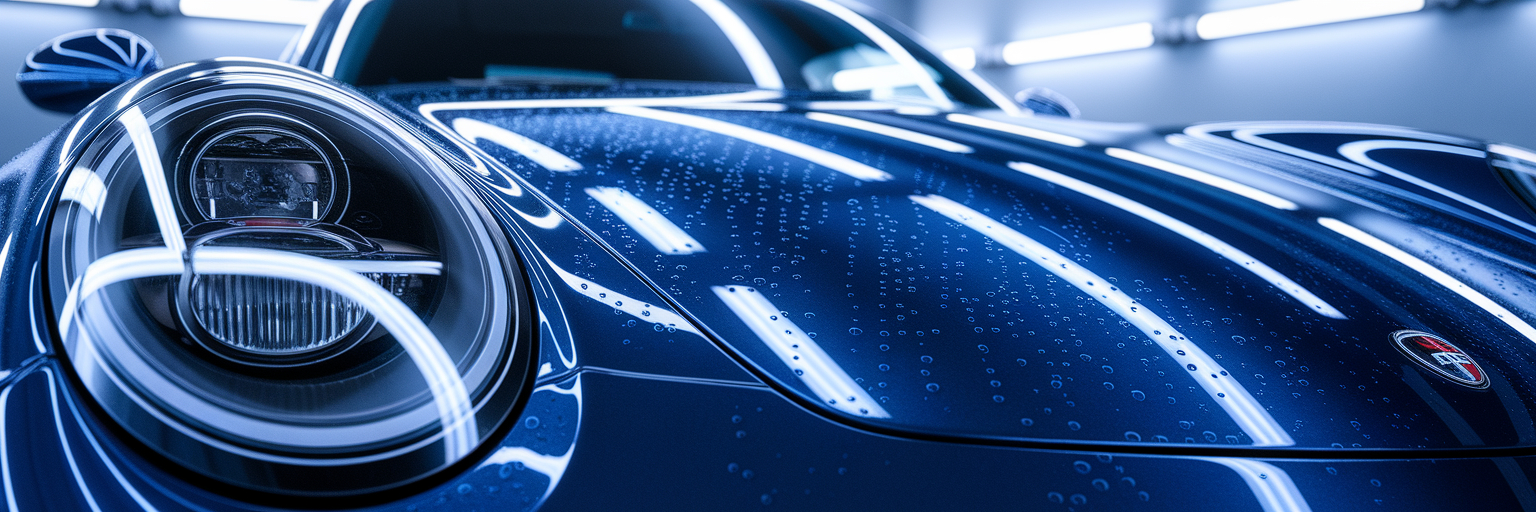
Thinking about how to maintain a sports car often brings the engine to mind, but exterior care is a vital investment-protection strategy. A flawless finish isn’t just about pride of ownership; it directly impacts your car’s resale value by shielding the paint from environmental contaminants like bird droppings, tree sap, and harsh UV rays.
The way you wash your car matters. To avoid inflicting fine scratches and swirl marks, use the two-bucket method: one bucket with soapy water and another with clean water to rinse your wash mitt. This simple technique prevents you from dragging dirt back across the paint.
Beyond washing, modern paint protection technologies offer a significant upgrade over traditional waxing. A professionally applied ceramic coating creates a hard, sacrificial layer that provides incredible gloss, makes cleaning easier, and offers long-term protection. For the ultimate defense, Paint Protection Film (PPF) is a clear, durable film that provides a physical barrier against rock chips and scratches. For owners of precision-engineered vehicles, like those from Genesis, maintaining a flawless exterior is part of the ownership experience. Don’t forget the interior, either. Regularly cleaning and conditioning materials like leather or Alcantara prevents them from drying out and cracking, preserving the cabin’s look and feel.
Tip 5: Conduct Routine Fluid Level Checks
Think of this final tip as a quick but critical health check for your car’s circulatory system. Beyond engine oil, several other fluids are essential for keeping your sports car running smoothly. Making these checks a weekly or bi-weekly habit can help you spot small issues before they become major problems.
Consult your owner’s manual for the correct checking procedures, but here are the key fluids to monitor:
- Coolant (Antifreeze): Its primary job is to prevent the engine from overheating. A low coolant level can lead to severe engine damage.
- Brake Fluid: As mentioned earlier, this hydraulic fluid is essential for brake operation. A low level is a major safety concern.
- Transmission Fluid: This lubricates and cools the transmission, ensuring smooth gear changes.
- Power Steering Fluid: This makes steering effortless. A low level can make the wheel difficult to turn and damage the steering pump.
It’s important to have a balanced perspective. While you can check most of these yourself, some modern systems, like sealed automatic transmissions, require professional service. Knowing what you can and cannot do is key. In severe cases, transmission or engine issues stemming from poor fluid maintenance can lead you to wonder, why won’t my car start? Regular checks are your first line of defense.
Long-Term Performance Through Consistent Care
The secret to enjoying your sports car for years to come isn’t a secret at all. It’s the consistent application of these five habits: vigilant oil changes, meticulous tire care, regular brake inspections, dedicated exterior preservation, and routine fluid checks. These are the cornerstones of any effective maintenance routine.
To make it manageable, consider creating a simple logbook or using a mobile app to track these tasks. This turns maintenance from a vague worry into a structured schedule. While these sports car maintenance tips empower you as an owner, it’s also wise to build a relationship with a trusted specialist mechanic who understands your specific make and model. Their expertise is invaluable for more complex diagnostics and repairs.
Ultimately, proactive care is what allows a performance machine to deliver the exhilarating experience it was designed for, day after day. This dedication to maintenance is what keeps legendary muscle cars and modern marvels on the road for decades, ready for the next thrilling drive.