Why Your Car’s Suspension Matters for a Safe Ride
Poor road conditions in the United States contribute to billions of dollars in vehicle maintenance costs for drivers each year. While we often blame potholes for flat tires, they inflict just as much damage on a system we tend to ignore until it fails: the suspension. This system is not a single part but a team of components, including shocks, struts, springs, and linkages, all working in unison. Their job is twofold. They absorb road imperfections to give you a smooth ride, and more importantly, they keep your tires pressed firmly against the road for maximum control.
A healthy suspension is a critical safety feature. It directly affects your vehicle’s stability during sudden maneuvers and can significantly shorten your braking distance in an emergency. Thinking about proactive care is a smart financial decision. A single worn-out part can trigger a cascade of failures, turning a minor fix into a major expense. Maintaining your suspension is an investment in your safety and your wallet.
Tip 1: Recognize the Early Warning Signs
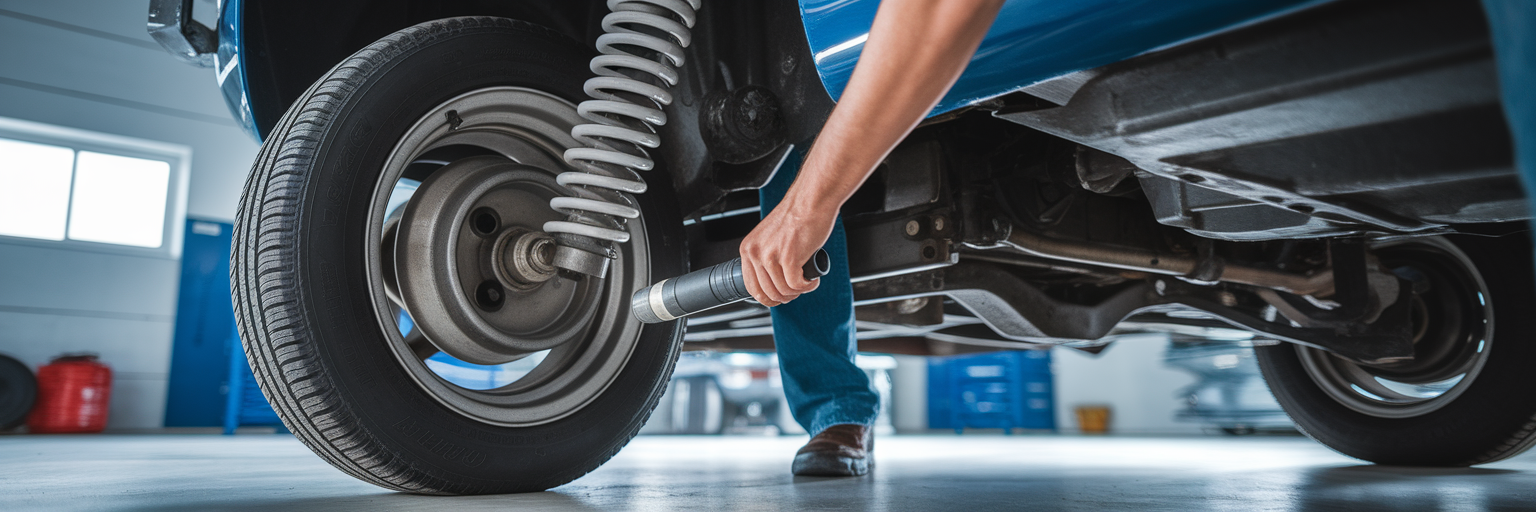
Long before you need a mechanic, your car will tell you something is wrong. The key is to pay attention to the changes in how it feels and sounds from the driver’s seat. One of the first clues is a ride that has become noticeably harsh or bouncy. If you feel every single crack in the pavement or the car continues to bounce long after hitting a bump, your shocks or struts are likely worn out. Another common symptom is a feeling of the car drifting or the car pulling to one side during turns, which suggests worn components are struggling to keep the vehicle stable.
Pay close attention to how the car behaves when you brake. A classic indicator of failing front shocks is a distinct “nose-dive,” where the front end of the car dips down sharply. You might also hear new noises. These auditory cues are often the clearest signs of bad suspension. While some noises point to the suspension, you can learn more about what it means if you hear your car squeaking when you drive to better diagnose the issue.
| Symptom | What It Feels or Sounds Like | Likely Cause |
|---|---|---|
| Rough Ride | Feeling every bump and crack in the road; excessive bouncing after hitting a bump. | Worn-out shocks or struts. |
| Drifting or Pulling | The car pulls to one side during turns or even while driving straight. | Worn shocks, bad alignment, or tire issues. |
| Nose-Diving | The front of the car dips down significantly when you brake. | Worn front shocks or struts. |
| Clunking Noises | A ‘clunk’ or ‘knock’ sound when driving over bumps or uneven surfaces. | Worn shock mounts or suspension bushings. |
| Squeaking or Creaking | A persistent squeaking noise, especially at lower speeds or over bumps. | Dry ball joints or bushings needing lubrication. |
Note: These symptoms are common indicators of suspension issues. A professional diagnosis is recommended to pinpoint the exact cause.
Tip 2: Conduct Regular Visual Inspections
You don’t need to be a mechanic to spot potential suspension problems. A few simple visual checks can give you valuable information and help you catch issues early. The easiest place to start is with the “bounce test.” With the car parked on a level surface, press down firmly on one corner of the vehicle and release it quickly. A healthy suspension should rebound once and then settle. If it continues to bounce two, three, or more times, the shock or strut on that corner is failing.
After the bounce test, take a closer look at the components themselves. This is a straightforward way for anyone wondering how to check car suspension at home. Use a flashlight to inspect the shocks and struts. If you see an oily or greasy film covering the body of the component, it means fluid is leaking out, and the part needs to be replaced. While you’re there, examine the rubber bushings and mounts for any visible cracks, tears, or signs of deterioration. Finally, look at the large coil springs to ensure they aren’t broken or heavily corroded. These simple steps can save you from a costly surprise down the road.
Tip 3: Keep Your Tires in Top Condition
Your tires and suspension system are codependent partners. The tires are the first line of defense against road imperfections, and their condition directly impacts the health of your suspension. Start with tire pressure. Underinflated or overinflated tires cannot absorb impacts correctly, which transfers extra stress directly to your shocks and struts, forcing them to work harder and wear out faster. Always inflate your tires to the pressure recommended on the sticker inside the driver’s door jamb, not the number on the tire itself.
Uneven tire wear is also one of the most telling signs of bad suspension. Look for a specific pattern called “cupping” or “scalloping,” which appears as uneven, diagonal dips across the tread. This pattern is created when a failing shock or strut allows the tire to bounce erratically on the road surface instead of rolling smoothly. Regular tire rotations and balancing are also essential. They ensure wear is distributed evenly, preventing unbalanced forces from straining individual suspension components. Owners of heavier vehicles like the 2025 Ford F-150 should be particularly vigilant, as the extra weight can amplify the effects of poor tire condition on the suspension.
Tip 4: Don’t Skip Wheel Alignments
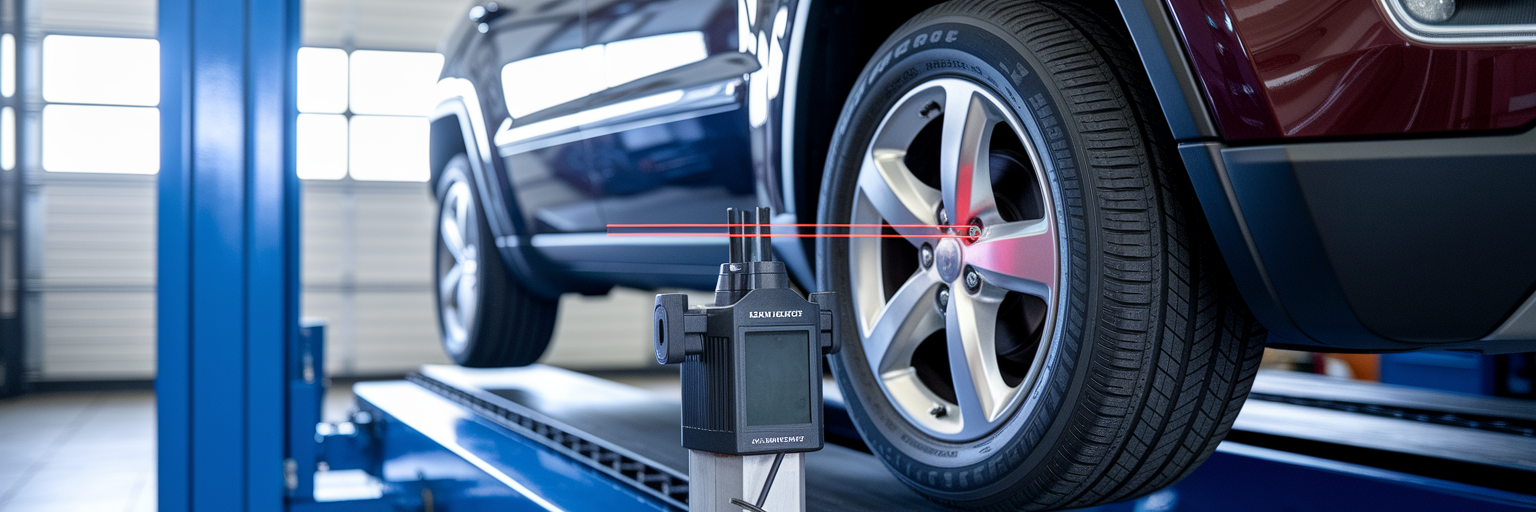
A wheel alignment is one of the most important yet often overlooked maintenance services for your suspension. In simple terms, an alignment adjusts the angles of your wheels so they are perfectly parallel to each other and perpendicular to the ground. It’s not just about preventing tire wear; it’s about ensuring your entire suspension system operates as designed. Hitting a deep pothole or scraping a curb can easily knock your alignment out of specification, forcing suspension components to fight against each other.
This constant strain leads to premature wear on bushings, ball joints, and other critical parts. If you notice your steering wheel is off-center while driving straight or the car pulling to one side, an alignment is likely needed. To keep everything in check, follow these guidelines:
- Get an alignment checked annually.
- Always get an alignment after installing new tires.
- Schedule an alignment after any suspension parts are replaced.
- Get it checked immediately if you notice pulling or an off-center steering wheel.
Precise alignment is crucial for all vehicles to maintain proper handling and prevent unnecessary wear. Even a sophisticated vehicle like the 2026 Genesis GV70 relies on correct alignment to deliver its intended performance and comfort.
Tip 5: Adopt Smoother Driving Habits

One of the most effective car suspension maintenance tips costs nothing at all: becoming a more mindful driver. The way you drive has a direct impact on the longevity of your suspension components. Start by actively scanning the road ahead. Safely maneuvering around potholes instead of hitting them head-on can save your shocks and struts from sudden, damaging impacts. When you encounter speed bumps, railroad crossings, or rough patches, slow down significantly rather than bracing for a jolt.
Aggressive driving habits put immense stress on the entire system. Hard braking, sharp cornering, and rapid acceleration create repetitive, forceful loads on shocks, bushings, and ball joints, causing them to fail much sooner. Additionally, be mindful of your vehicle’s weight limits. Consistently overloading your car or truck puts constant strain on the springs and shocks, leading to sagging and a loss of performance. A smoother driving style is a direct investment in a longer-lasting suspension.
Tip 6: Address Worn Components Immediately
When you notice a problem with your suspension, procrastination is your worst enemy. A single worn-out component can set off a domino effect of damage throughout the system. For example, a bad shock absorber doesn’t just make your ride bumpy. It allows the tire to bounce, causing uneven wear. That extra vibration then puts stress on the wheel bearing and control arm bushings, potentially damaging them as well. This is how a single, relatively inexpensive part replacement can quickly become a multi-component, costly repair job.
This is a key factor in deciding when to replace shocks and struts. Don’t wait for a complete failure. When you do replace parts, choosing quality components is an investment in safety and reliability. Furthermore, it is a professional standard to replace shocks and struts in pairs, meaning both fronts or both rears at the same time. Replacing only one side creates an imbalance in handling and braking performance, which can be dangerous. Addressing issues promptly and correctly ensures your vehicle remains safe and predictable on the road.
Tip 7: Trust a Professional for Complex Repairs
While visual checks and the bounce test are great for DIY diagnosis, most suspension work is best left to experts. A professional suspension repair job often requires specialized equipment like spring compressors, hydraulic presses, and alignment racks that the average home mechanic does not own. Attempting to work on these systems without the right tools and knowledge can be extremely dangerous.
The coil springs, in particular, store an immense amount of energy when compressed. If one were to release unexpectedly during a DIY strut replacement, it could cause severe injury. For your safety, it’s wise to know your limits. When seeking a mechanic, look for shops that employ ASE (Automotive Service Excellence) certified technicians. This certification is the industry standard for demonstrating a mechanic’s competence and professionalism. You can easily find a local, trusted repair shop by using the official search tool on the ASE website.
Your Roadmap to a Smoother, Safer Ride
Maintaining your car’s suspension is a combination of awareness, proactive checks, and smart decisions. By learning to recognize the early warning signs, performing regular inspections, and caring for your tires, you can catch problems before they become severe. Adopting smoother driving habits and addressing worn parts immediately will prevent small issues from turning into expensive, cascading failures.
The benefits are clear: improved safety through better vehicle control, a more comfortable ride for you and your passengers, and significant long-term cost savings. Viewing suspension maintenance not as a chore but as a crucial investment in your vehicle’s health and your safety on the road is the best approach. For more insights into vehicle care and the latest automotive news, Carphanatics is your go-to resource.