
The demand for capable pickup trucks has remained a constant in the automotive world, but finding one that balances durability, utility, and a reasonable price tag is a significant challenge. For buyers in 2026, the $25,000 mark represents a critical threshold where smart choices lead to years of dependable service, and poor ones lead to financial regret.
Finding Reliable Used Trucks Under $25,000 in 2026
The search for value in the used truck market can feel like navigating a minefield. A budget of $25,000 is substantial, yet it requires a strategic approach to avoid vehicles with costly hidden problems. Finding reliable used trucks under $25,000 is less about luck and more about understanding the fundamental trade-offs you face as a buyer. This used truck buying guide is designed to equip you with the knowledge to make an informed decision based on your specific needs, not just brand reputation.
Your first major decision point revolves around a clear choice: a newer, more comfortable midsize truck or an older, more powerful full-size model. The midsize option often provides better fuel economy and a more manageable size for daily driving and tight parking spots. In contrast, an older full-size truck typically delivers superior towing and payload capacity, making it the default choice for serious work or hauling heavy recreational toys. This decision directly impacts your ownership experience, from daily commutes to weekend projects.
It is also time to redefine what “reliability” truly means. It is not simply about the badge on the grille. True dependability is found in specific model years that have ironed out initial production issues, proven engine and transmission combinations with a history of longevity, and most importantly, a verifiable maintenance history. A truck from a brand with a stellar reputation can still be a poor investment if it was neglected by its previous owner. This focus on upkeep is crucial, as you will find that some high mileage cars age better than others due to meticulous care.
Before looking at specific listings, take a moment to honestly assess your primary use case. Will this truck be your daily commuter that occasionally hauls garden supplies? Is it a dedicated work vehicle for a construction business? Or is it your ticket to remote off-road trails and towing a camper on holidays? Your answer will guide you toward the right category and help you filter out the noise, ensuring the vehicle you choose is a tool that fits your life perfectly.
Midsize Champions for Versatility and Comfort
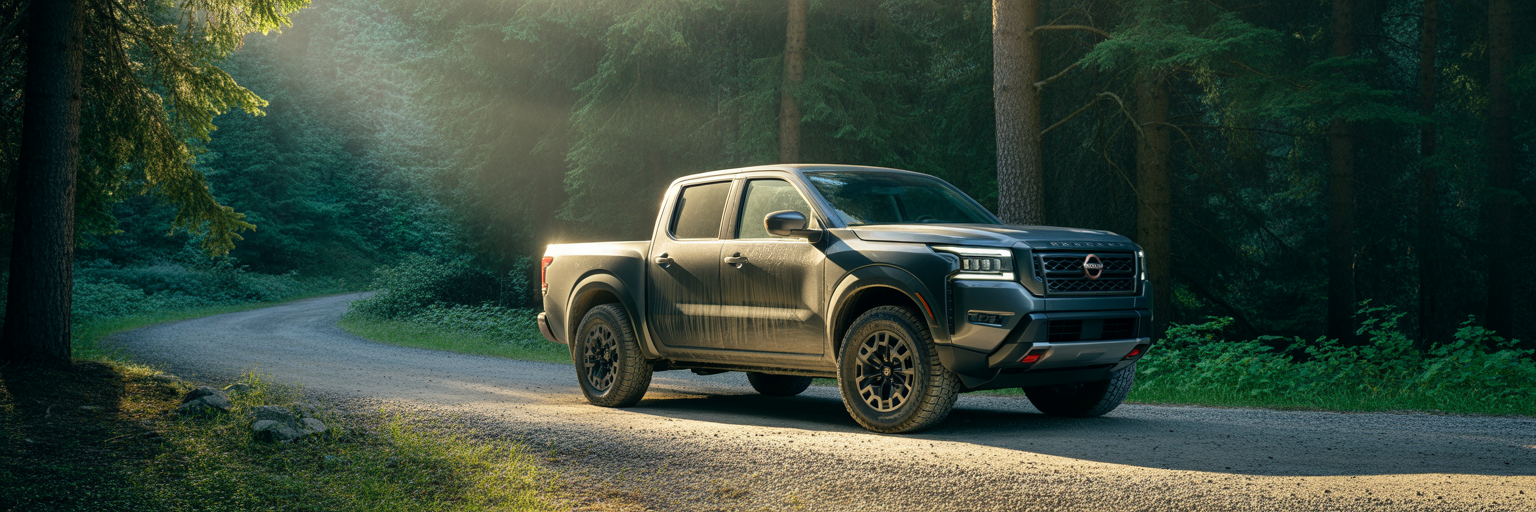
For many buyers, a midsize truck hits the sweet spot between capability and daily usability. Within this category, two models stand out for entirely different reasons, representing a clear fork in the road for anyone with a $25,000 budget. One prioritizes on-road comfort and clever features, while the other champions traditional toughness and mechanical simplicity. Understanding their core philosophies is key to choosing the right partner for your needs.
The Comfort-First Choice: Honda Ridgeline (2018-2022)
The Honda Ridgeline has always been an outlier in the truck world, and for the right buyer, that is its greatest strength. Built on a unibody platform similar to an SUV, its on-road manners are unmatched in the segment. The ride is smooth, handling is composed, and the cabin is quiet, making it an excellent choice for long commutes or family road trips. This unique blend of comfort and utility raises interesting questions, similar to the debate around which truck fits normal life better when comparing models like the Ridgeline and its smaller counterparts.
Beyond its comfortable ride, the Ridgeline is packed with practical features. The standard all-wheel-drive system provides confidence in various weather conditions, and its independent rear suspension contributes to its superior handling. The real party trick, however, is the lockable in-bed trunk, which offers secure, weatherproof storage without sacrificing bed space. The dual-action tailgate, which can either fold down or swing open, is another thoughtful touch that simplifies loading and unloading. The primary trade-off is capability. The Honda Ridgeline towing capacity is generally rated at 5,000 pounds, which is sufficient for small trailers or boats but falls short of what traditional body-on-frame trucks can handle.
The Traditionalist’s Pick: Nissan Frontier (2021 & Older)
If the Ridgeline is the sophisticated suburbanite, the Nissan Frontier is the rugged traditionalist. For years, the pre-2022 Frontier was celebrated for its no-frills, body-on-frame construction and reputation for mechanical durability. This is a truck built on a proven platform, prioritizing longevity over the latest technology. A used Nissan Frontier review will almost always highlight its straightforward nature. The engines, particularly the long-running 4.0L V6, are known for being robust and relatively easy to work on.
This simplicity is its core appeal. There are fewer complex electronic systems to fail, and its tough chassis is well-suited for off-road adventures and demanding job sites. While its interior may feel dated compared to the Ridgeline, its controls are intuitive and built from hard-wearing materials. For buyers who see a truck as a tool first and a comfort item second, the Frontier offers immense value. For those weighing the Frontier against other key players in the segment, a direct Nissan Frontier vs Chevrolet Colorado comparison can offer additional clarity on where each truck excels.
Making the Choice: Daily Driver vs. Rugged Adventurer
The decision between these two midsize champions comes down to lifestyle. The Honda Ridgeline is the ideal choice for someone who needs the utility of an open bed for weekend projects, camping trips, or sports gear but does not want to compromise on the comfort and efficiency of a daily driver. It is a practical, intelligent solution for modern truck needs. The Nissan Frontier, on the other hand, appeals to the buyer who values proven toughness and off-road potential above all else. It is a dependable workhorse that is ready for rougher treatment and less-than-perfect roads, offering a more authentic, old-school truck experience.
Full-Size Workhorses with Proven Power
When the job calls for serious towing, heavy payloads, or simply the commanding presence of a full-size truck, the midsize category will not suffice. For a $25,000 budget, the market offers several compelling older full-size options. The key is to focus on specific model years and powertrains that have a proven track record for durability, allowing you to get maximum capability without inheriting someone else’s expensive problems. Here, we focus on two of the most popular models, highlighting their specific strengths and weaknesses.
The Rust-Resistant Hauler: Ford F-150 (2015-2017)
The 13th-generation Ford F-150, introduced for the 2015 model year, represented a significant shift in truck manufacturing with its aluminum-alloy body. For buyers in regions where road salt is a winter reality, this is a massive advantage. The aluminum body panels eliminate the threat of rust, a common killer of older steel-bodied trucks. This feature alone can add years to the vehicle’s usable life and preserve its resale value.
When it comes to Ford F-150 reliability within this generation, the powertrain choice is critical. While the EcoBoost V6 engines offer impressive power and torque, early versions had some documented issues with timing chains and turbochargers that can be costly to repair. For this reason, the most recommended engine is the naturally aspirated 5.0L “Coyote” V8. This engine has a long and proven track record in both the F-150 and the Mustang, known for its straightforward design, durability, and a wide availability of parts. It delivers ample power for most towing and hauling needs without the complexity of a turbocharged system.
The Parts-Friendly Powerhouse: Chevrolet Silverado (2014-2016)
The Chevrolet Silverado from this era is the quintessential American work truck. Its primary strengths lie in its widespread availability and the affordability of its parts. Decades of production mean that nearly every mechanic is familiar with its architecture, and a vast network of aftermarket and OEM parts keeps repair costs reasonable. The go-to engine in these trucks is the 5.3L EcoTec3 V8, a workhorse known for its strong low-end torque, making it one of the best used work trucks for towing and heavy-duty use.
However, buyers must be aware of one significant potential issue: the Active Fuel Management (AFM) system. Designed to improve fuel economy by deactivating cylinders under light load, this system can lead to premature lifter failure. This is a well-documented problem, and any pre-purchase inspection should include listening for a “ticking” sound from the top of the engine. It is crucial to check service records for any evidence of lifter replacement or to see if a previous owner had the AFM system professionally deactivated, which is a common and effective solution. For those whose primary reason for buying a full-size truck is hauling, exploring the best used trucks for towing a camper under $35,000 can provide even more specialized recommendations.
| Factor | Ford F-150 (2015-2017) | Chevrolet Silverado (2014-2016) |
|---|---|---|
| Recommended Engine | 5.0L ‘Coyote’ V8 | 5.3L EcoTec3 V8 |
| Key Advantage | Aluminum body resists rust | Excellent parts availability and affordability |
| Major Issue to Check | Early EcoBoost turbo/timing chain issues | Active Fuel Management (AFM) lifter failure |
| Best For | Long-term body durability, especially in salt belts | Ease and low cost of long-term maintenance |
| Towing Focus | Excellent all-around capability | Proven workhorse with strong aftermarket support |
This table summarizes the critical trade-offs between the two leading full-size options. Data is based on common knowledge from automotive repair forums, long-term owner reports, and mechanic consensus.
The Toyota Tacoma Premium Paradox
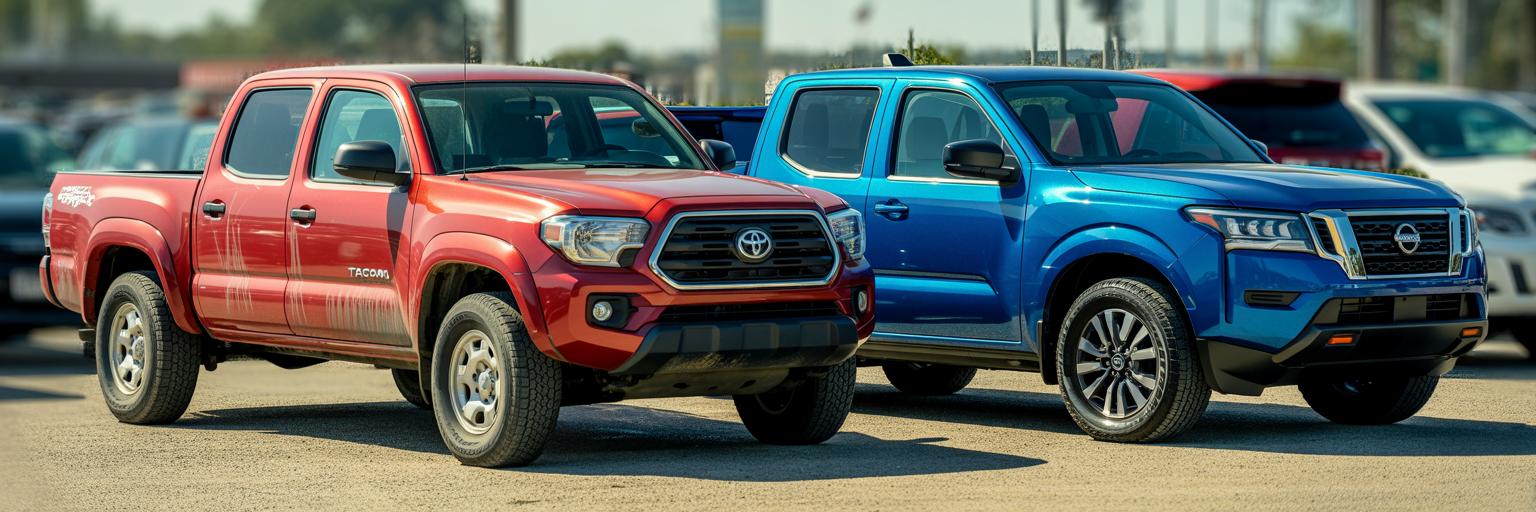
No discussion about reliable used trucks is complete without mentioning the Toyota Tacoma. Its reputation for indestructibility and off-road prowess is legendary, and for good reason. These trucks are known to run for hundreds of thousands of miles with basic maintenance, and they hold their value better than almost any other vehicle on the road. However, this sterling reputation creates a unique challenge for buyers on a $25,000 budget: the “Tacoma Tax.”
The Tacoma Tax is the informal term for the price premium these trucks command on the used market. Their popularity and high resale value mean that a $25,000 budget often gets you a significantly older and higher-mileage Tacoma compared to its competitors. This phenomenon is well-documented by market data. For instance, a study by iSeeCars.com on vehicle depreciation consistently ranks the Tacoma among the top vehicles for value retention, which directly translates to higher prices on the used market.
This presents a difficult paradox for the buyer. Is a 10-year-old Tacoma with 150,000 miles a better purchase than a 5-year-old Nissan Frontier with 75,000 miles for the same price? The Tacoma may have a better long-term reliability record, but the Frontier is newer, has half the mileage, and likely offers more modern features and a more comfortable interior. The older Tacoma may also be closer to needing significant maintenance items like suspension components or other wear-and-tear parts replaced simply due to its age and use.
Ultimately, the decision comes down to priorities. If your primary goal is to own a vehicle with the highest possible resale value and a proven track record of minimal powertrain issues, a well-maintained Tacoma can still be a justifiable choice, even with higher mileage. However, for buyers who prioritize value and want to get the most truck for their money in terms of age, mileage, and features, the Tacoma Tax often makes other models a more logical and financially sound option. A Tacoma is rarely a bad purchase, but it is not always the best value.
Essential Pre-Purchase Inspection Checklist
Finding the right model is only half the battle. The most critical step in buying any used truck is a thorough inspection. A well-maintained vehicle with a solid service history is always a better investment than a low-mileage truck with a questionable past. This checklist moves beyond the spec sheet and empowers you to identify a great truck and avoid a potential money pit. Think of this as the most important part of your used truck buying guide.
Before you even look at the truck, ask for the service records. This is your golden rule. A stack of receipts is a sign of a meticulous owner. Look for consistent oil changes, and more importantly, records of transmission and differential fluid services. These are often neglected but are vital for the long-term health of a truck’s drivetrain. A thorough engine check is non-negotiable, and understanding how to keep your car’s engine running for years will pay dividends long after the purchase.
Once you are with the vehicle, follow this systematic process:
- Frame Inspection: This is non-negotiable, especially for trucks from snowy climates. Get on the ground with a flashlight and look at the main frame rails, body mounts, and suspension shackle mounts. Differentiate between light surface rust, which is normal, and deep, flaky structural rust that compromises safety. Use a small hammer or the handle of a screwdriver to tap along the frame. A solid “ping” indicates healthy metal, while a dull “thud” can reveal thinning metal hidden under paint or undercoating.
- Cold Start Test: Always insist on starting the engine when it is completely cold. This is when many underlying problems reveal themselves. Listen for any loud knocks, ticks, or rattles upon startup that may disappear as the engine warms up. These sounds can indicate issues like piston slap, lifter problems, or timing chain wear.
- Test Drive Dynamics: During the test drive, go through a mental checklist. Does the transmission shift smoothly, or does it hesitate or slam into gear? If it is a 4×4, find a safe place to test the engagement of both 4-High and 4-Low. Pay attention to the brakes. Does the truck pull to one side when braking, or does the pedal or steering wheel shudder? These are signs of potential brake or suspension issues.
- Tire Wear Analysis: The tires can tell you a story about the truck’s alignment and suspension health. Excessive wear on the inner or outer edges suggests an alignment problem. Wear in the center of the tread points to over-inflation, while wear on both outer edges indicates under-inflation. Uneven, “cupped” wear patterns can be a sign of worn-out shocks or struts.
- The Professional Pre-Purchase Inspection (PPI): Even if you are mechanically inclined, always budget for a PPI by a trusted, independent mechanic. For around $150 to $250, a professional will put the truck on a lift and perform a comprehensive inspection that you simply cannot do in a driveway. This is not an expense, it is an investment that can save you thousands of dollars in future repairs or give you leverage to negotiate a lower price.
Calculating Total Cost and Making Your Final Choice
You have done the research, identified the right models for your needs, and know what to look for during an inspection. The final step is to look beyond the sticker price and calculate the true total cost of ownership to make a confident and logical decision. The best deal is not always the truck with the lowest price tag.
Start by considering the running costs. A full-size V8 like an F-150 or Silverado will have a noticeably higher fuel bill than a V6 midsize like a Ridgeline or Frontier. Call your insurance agent to get quotes for your top choices, as premiums can vary significantly between models. Finally, budget for potential repairs. If you are considering a Silverado from the AFM era, it is wise to set aside funds for a potential lifter repair or deactivation kit. If you are buying an older, higher-mileage truck of any brand, anticipate that components like shocks, brakes, and tires may need replacement sooner rather than later.
Let’s summarize the core choices. The Honda Ridgeline is for the buyer who values daily comfort and clever utility over raw capability. The Nissan Frontier is the pick for those seeking proven, affordable toughness and a traditional truck feel. For maximum capability, the aluminum-bodied Ford F-150 with a 5.0L V8 and the parts-friendly Chevrolet Silverado are the best used work trucks, provided you vet them for their specific known issues.
One of the most valuable insights from seasoned truck buyers is that a well-maintained, higher-trim model with a complete service history is often a much better purchase than a spartan base model with low miles and no records. The higher-trim vehicle was likely more expensive when new and cared for by a more invested owner. Making a major purchase like this requires not just data, but self-assurance. Learning how to turn interview nerves into genuine confidence can be a surprisingly relevant skill, helping you trust your research and negotiate effectively.
In the end, your path to the right truck is clear. Define your needs, research the specific model years and engines that fit those needs, prioritize a verifiable service history above all else, and never, ever skip a thorough frame inspection and professional PPI. By following these steps, you will not just be buying a used truck, you will be making a smart investment that serves you well for years to come.