Why Your Tire’s Code Matters for Safety and Performance
That string of letters and numbers on your tire’s sidewall is not a random code. It is a universal language that communicates everything about a tire’s capabilities, acting as its essential DNA. Understanding this information is one of the most important responsibilities of any car owner, as it directly impacts how your vehicle behaves on the road.
Before we break down the code itself, it is important to grasp what do tire numbers mean for your daily drive. This code is fundamentally about safety. It confirms whether a tire is built to handle your vehicle’s weight, including you, your passengers, and any cargo you might be carrying. Using a tire that is not rated for your car’s weight is like asking a marathon runner to carry a weightlifter’s barbell. It creates unnecessary strain and invites failure.
Beyond basic safety, this information dictates performance. The right tire ensures your car handles corners with precision, brakes effectively in emergencies, and even contributes to better fuel economy. The wrong tire can make your steering feel vague and unresponsive, increase your stopping distance, and wear out other expensive components on your vehicle.
Ignoring this code introduces serious risks. It can lead to poor handling in wet conditions, uneven wear on your suspension parts, or in the worst-case scenario, a catastrophic tire failure at speed. Think of the tire code not as technical jargon, but as the manufacturer’s promise of what that tire can safely do. Your job is to make sure that promise matches what your vehicle needs.
Decoding the Primary Tire Size Sequence
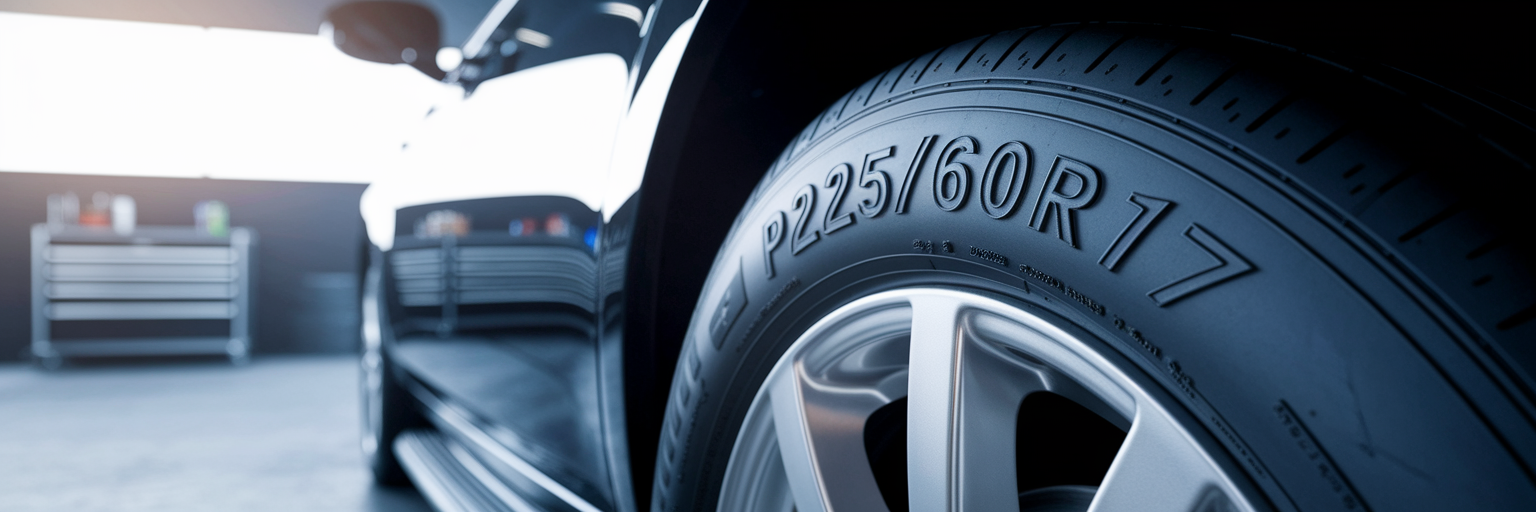
Now that you understand why the code is so important, let’s walk through how to read it. We will use a common example like P225/60R17 to explain each part. Learning how to read tire size is a straightforward process once you know what each segment represents. It provides a complete picture of the tire’s physical dimensions.
Tire Type: The First Letter
The first letter, if present, indicates the type of vehicle the tire was designed for. The most common you will see is ‘P’ for Passenger Car. This is the standard for most sedans, minivans, and smaller SUVs. Other letters include:
- LT: Light Truck. These are built for heavier loads and more demanding conditions. You will find them on many of the powerful trucks and large SUVs designed for towing or hauling.
- ST: Special Trailer. These are for trailers only and should never be used on a passenger vehicle.
- T: Temporary. This indicates a spare tire with limited speed and mileage capabilities.
It is critical not to mix these types. Installing a ‘P’ tire on a vehicle that requires ‘LT’ tires compromises its load-carrying capacity and safety.
Tire Width: The Three-Digit Number
Following the letter is a three-digit number, like 225 in our example. This is the tire’s width in millimeters, measured from one sidewall to the other. A larger number means a wider tire. You can think of this as the width of the tire’s footprint on the road. A wider footprint can offer more grip, but it must fit within your vehicle’s wheel wells without rubbing.
Aspect Ratio: The Sidewall Height Percentage
The next number, 60, is the aspect ratio. This is one of the most misunderstood parts of the car tire size explained. It is not a direct measurement but a percentage. It means the sidewall’s height is 60% of the tire’s width. A lower aspect ratio (e.g., 45) results in a shorter, stiffer sidewall, which provides sharper handling and a sportier look. A higher aspect ratio (e.g., 70) means a taller, more flexible sidewall that absorbs bumps better and delivers a more comfortable ride.
Construction Type: The ‘R’ for Radial
The letter ‘R’ stands for Radial, which refers to how the tire is constructed. The internal layers, or plies, run radially across the tire from bead to bead. Radial construction is the modern standard for virtually all passenger vehicles because it offers better flexibility, a smoother ride, and improved fuel efficiency compared to older bias-ply designs.
Wheel Diameter: The Final Number
The final number, 17, indicates the diameter of the wheel in inches that the tire is designed to fit. This number is non-negotiable. A tire with a ’17’ must be mounted on a 17-inch wheel. Trying to fit it on a 16-inch or 18-inch wheel is impossible and unsafe.
Understanding Load Index and Speed Rating
Beyond the physical dimensions, your tire’s sidewall contains two other critical codes: the load index and the speed rating. These numbers follow the main size sequence (e.g., P225/60R17 98H) and define the tire’s operational limits. They are just as important as the size for ensuring safety and performance.
The first number, the load index, is a code that corresponds to the maximum weight a single tire can safely support when properly inflated. It is not the weight itself in pounds or kilograms. For example, a load index of 98 does not mean the tire can carry 98 pounds. Instead, it corresponds to a specific load capacity on a standardized chart. According to tire manufacturer Bridgestone, this is a critical safety metric for ensuring your tires can handle your vehicle’s fully loaded weight. You can find more details on how to determine tire size and ratings on their safety page.
Next is the speed rating, a letter that indicates the maximum sustained speed a tire can safely handle. The tire speed rating meaning is directly related to the tire’s ability to dissipate heat. Driving faster generates more heat, and exceeding a tire’s speed rating can cause it to fail. High-performance vehicles, including many modern and classic muscle cars, require tires with higher speed ratings (like V, W, or Y) to match their powerful engines and handling capabilities. It is essential to choose a tire with a speed rating that meets or exceeds your vehicle manufacturer’s recommendation.
| Rating/Index | Meaning | Typical Use Case |
|---|---|---|
| Speed Rating ‘S’ | Up to 112 mph (180 km/h) | Family sedans and minivans |
| Speed Rating ‘T’ | Up to 118 mph (190 km/h) | Common on standard passenger cars |
| Speed Rating ‘H’ | Up to 130 mph (210 km/h) | Sport sedans and coupes |
| Speed Rating ‘V’ | Up to 149 mph (240 km/h) | Performance cars |
| Load Index ’91’ | 1,356 lbs (615 kg) per tire | Common on mid-size sedans |
| Load Index ’95’ | 1,521 lbs (690 kg) per tire | Common on small SUVs and crossovers |
| Load Index ‘100’ | 1,764 lbs (800 kg) per tire | Common on larger SUVs and minivans |
This table provides examples of common speed ratings and load indices. Always refer to your vehicle’s placard for the specific ratings required for your car. The speed rating indicates maximum sustained speed, while the load index corresponds to maximum weight capacity per tire.
Where to Find Your Vehicle’s Recommended Tire Size
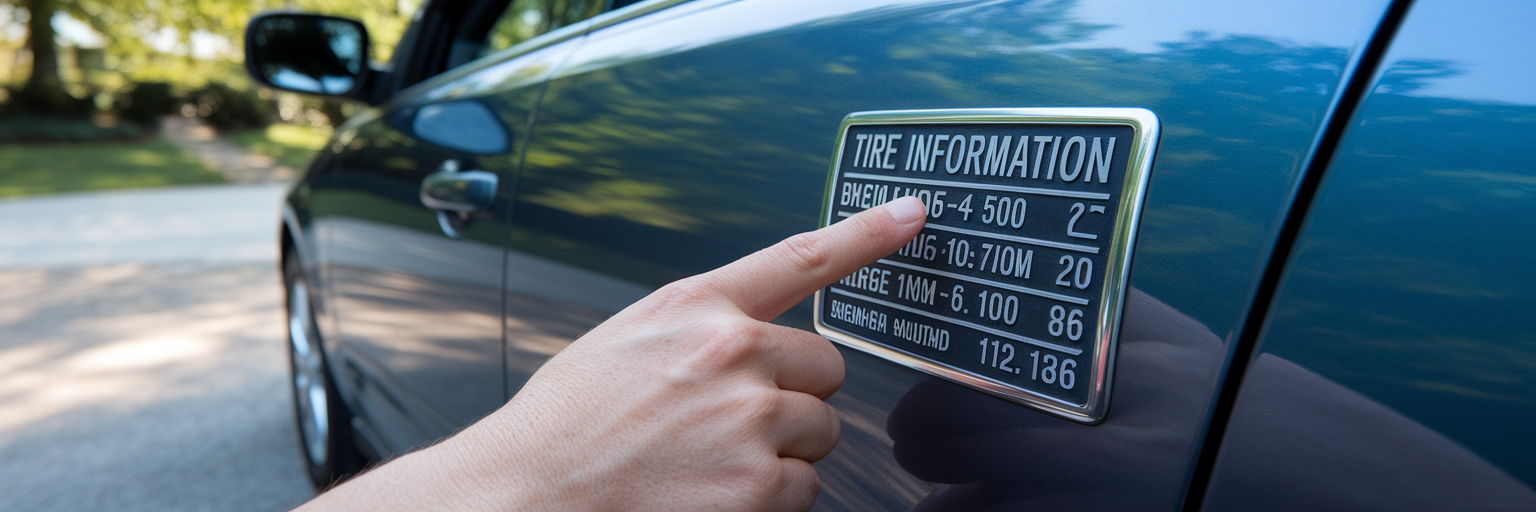
Now that you know how to interpret the code, the next step is finding my car tire size as recommended by the people who built it. Here is a counterintuitive but crucial piece of advice: do not automatically assume the tires currently on your car are the correct ones. A previous owner may have installed the wrong size for aesthetic reasons or out of ignorance.
The most reliable source of information is your vehicle’s tire and loading information placard. This sticker contains the exact specifications your car needs. You can usually find it in one of these locations:
- On the driver’s side doorjamb
- Inside the glove box door
- On the inner side of the fuel filler door
Your owner’s manual is an equally authoritative secondary source. The placard provides the complete, correct tire code, including the size, load index, and speed rating. This information is essential for any vehicle, whether it is a family sedan or a rugged model like the upcoming 2026 Jeep Grand Cherokee. The placard also lists the recommended cold tire inflation pressures, another vital piece of information for maximizing safety, performance, and tire longevity.
The Risks of Choosing an Incorrect Tire Size
Choosing a tire size that deviates from the manufacturer’s recommendation is not a minor adjustment. It introduces tangible risks that can affect everything from your safety to your wallet. These consequences go far beyond just a different look.
First and foremost are the immediate safety hazards. An incorrectly sized tire can alter your vehicle’s stability, especially during emergency maneuvers like a sudden swerve to avoid an obstacle. It can also cause your speedometer to give an inaccurate reading. A larger tire will make you travel faster than your speedometer indicates, while a smaller one will show a higher speed than your actual velocity, which can also affect your odometer and trip computer.
Performance and comfort are also compromised. Tires that are too large can rub against the fenders or suspension components, especially during turns or when driving over bumps. This can create unusual sounds, which are a clear indicator of a problem. If you are ever wondering, “why is my car squeaking when I drive?“, an improper tire fit could be a potential cause. Conversely, tires that are too small can result in a harsher ride and reduce the vehicle’s load-carrying capacity.
Over the long term, using the wrong tire size puts additional strain on your vehicle’s mechanical systems. It can stress the transmission as it works harder to turn improperly sized wheels and can also lead to premature wear of suspension and braking components. These are repairs that can become quite costly. Finally, mismatched tires often have higher rolling resistance, which directly hurts your fuel efficiency and means more frequent trips to the petrol station.
Making a Confident Tire Purchase
With this knowledge, you are now equipped to make a confident and informed tire purchase. The process is simple when you follow a clear plan. You no longer have to rely on guesswork or potentially flawed advice.
Here is your straightforward action plan:
- Locate your vehicle’s tire information placard on the doorjamb, glove box, or fuel door.
- Write down the complete tire code, including the full size, load index, and speed rating.
- Use this exact information as the non-negotiable foundation for your tire search.
We stand firm in our belief that you should always match or exceed the original equipment (OE) specifications for the load index and speed rating. Choosing a lower rating is a direct compromise on safety. While you can select a tire with a higher rating, it is often an unnecessary expense for a daily driver and may result in a firmer ride. If you have any doubts, consult a trusted tire professional. Think of it as a smart final check, not a sign of weakness.
Understanding the code on your tires transforms you from a passive customer into an empowered owner. You can now make decisions based on safety, performance, and value, ensuring your vehicle is equipped correctly for every journey. To continue learning, you can explore the latest automotive news and stay informed about your vehicle.