The Modern Truck Buyer’s Dilemma
For decades, the pickup truck was a straightforward symbol of raw power. Fuel consumption was a distant second thought to sheer towing prowess. That equation has fundamentally changed. Today’s truck buyers face a genuine conflict: the need for serious hauling capability clashes with the reality of high fuel prices and a growing environmental consciousness.
We have all felt that wince at the gas pump after a long weekend of hauling a boat or camper. This tension is no longer an impossible compromise to solve. The 2025 model year introduces a new era where fuel efficient trucks for towing are not a myth. Advancements in hybrid systems, downsized turbocharged engines, and sophisticated electric powertrains have redefined what is possible. The choice is no longer a simple one between a gas guzzler and an underpowered alternative.
This article serves as your 2025 truck towing guide, designed to help you navigate the top options. We will explore how modern engineering allows you to match a vehicle to your specific hauling needs without breaking your fuel budget. For those interested in the full spectrum of modern pickups, our comprehensive guide to trucks offers further reading.
Balancing Towing Capacity and Fuel Consumption
To make an informed decision, it is essential to understand the mechanics behind the numbers. The relationship between power and efficiency is not always obvious. Think of torque as the rotational force that gets a heavy load moving from a standstill, like the initial shove needed to get a boat and trailer up the launch ramp. Horsepower is the power that keeps it all moving at highway speed. Both are critical for a good towing experience.
However, the engine is only part of the story. Several other factors directly influence both towing capacity and the miles per gallon you will actually see. The trade-off between towing capacity vs mpg is affected by:
- Axle Ratios: A higher numerical ratio, like 4.10, gives you more pulling power off the line but makes the engine work harder at speed, consuming more fuel. A lower ratio, like 3.23, is better for highway efficiency but can feel sluggish with a heavy trailer.
- Transmission Gearing: Modern transmissions with eight, nine, or ten speeds allow the engine to stay in its most efficient RPM range more often, whether you are cruising on the flat or climbing a grade.
- Vehicle Weight: It is simple physics. A heavier truck requires more energy to get moving and to stop, impacting fuel economy even when you are not towing.
- Aerodynamics: A truck’s boxy shape already creates significant wind resistance. When you add a large, slab-sided trailer, the drag increases dramatically, and fuel consumption can plummet at highway speeds. As a feature from MotorTrend confirms, real-world fuel use can drop by as much as 50% when towing near a truck’s maximum capacity.
Understanding these elements empowers you to look beyond the sticker and make a smarter choice.
| Powertrain Type | Towing Strengths | Fuel Economy Profile | Best Use Case |
|---|---|---|---|
| Turbocharged Gas (e.g., 2.7L I-4) | Excellent low-end torque for its size; power on demand. | Efficient when not towing; consumption increases significantly under heavy load. | Daily driving with occasional to moderate towing needs. |
| Traditional V8 | Proven reliability; smooth power delivery across the RPM range. | Generally lower MPG in all conditions; less efficient for daily commuting. | Frequent, heavy towing where consistent power is prioritized. |
| Performance Hybrid (e.g., Tundra i-FORCE MAX) | Instant electric torque for powerful acceleration from a stop. | Modest MPG gains, as the system prioritizes power over pure efficiency. | Hauling heavy loads where performance and acceleration are key. |
| Full Electric (EV) | Instant, silent, and seamless torque; superior control and stability. | Excellent efficiency when unladen; range can be halved when towing. | Predictable routes with available charging; early adopters. |
Compact and Mid-Size Champions of Efficiency
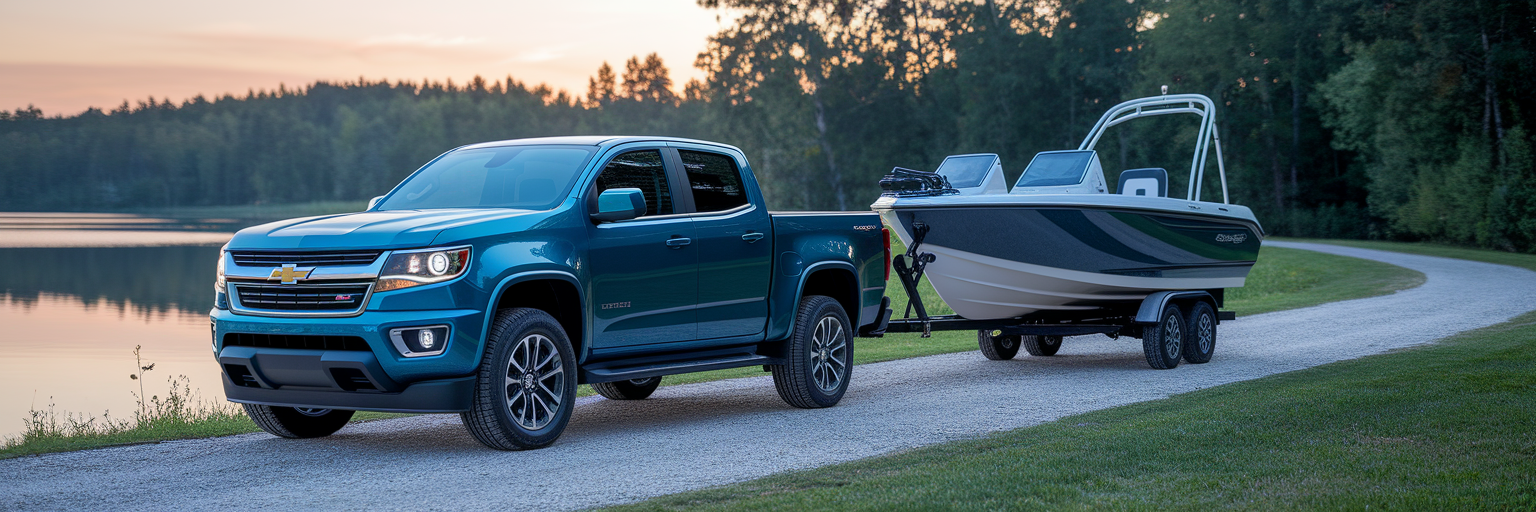
With those core principles in mind, let’s see how they apply to the real world. Not everyone needs to pull a ten-thousand-pound trailer. For many buyers, a smaller, more efficient truck offers the perfect blend of utility and economy. These models prove that you can handle weekend projects and family adventures without committing to a full-size rig.
The Light-Duty Leader: 2025 Ford Maverick Hybrid
The Ford Maverick Hybrid stands in a class of its own. With an exceptional 37 MPG combined rating, it is the undisputed champion of fuel savings in the truck world. This makes it an ideal choice for urban drivers or suburban homeowners who need the utility of a small bed for trips to the garden center or for hauling a small utility trailer. The trade-off for this incredible efficiency is a modest 2,000-pound towing capacity. It is not designed for heavy work, but for those whose needs are light, its value is unmatched. For those loyal to the blue oval, exploring other models from Ford can provide a wider perspective on their offerings.
The Versatile Workhorse: 2025 Chevrolet Colorado
The redesigned Chevrolet Colorado hits a sweet spot in the mid-size segment. Equipped with its 2.7L turbocharged engine, it delivers a fantastic balance of capability and daily-drivable efficiency. It achieves a respectable 22 MPG combined while offering a substantial 7,700-pound maximum towing capacity. This makes it a true “do-it-all” truck. It is capable enough for a family with a mid-size camper or a small business owner hauling equipment, yet it remains maneuverable and reasonably efficient for the daily commute.
The Proven Contender: 2025 Nissan Frontier
For buyers who may be wary of newer turbo or hybrid technologies, the 2025 Nissan Frontier offers a compelling, traditional alternative. It comes standard with a robust 3.8L V6 engine that delivers strong, reliable power. While its 21 MPG combined is slightly less than the Colorado’s, it provides a confident and proven towing experience. The Frontier represents a straightforward approach: a powerful engine in a right-sized package, making it a dependable choice for those who value proven performance and a solid balance of power and reasonable fuel economy.
Full-Size Hybrids and Powerful All-Rounders
Moving into the full-size category, the engineering challenge becomes more complex. These trucks are expected to perform serious work, and modern powertrains are rising to the occasion. Here, the focus shifts from pure MPG to delivering immense capability with greater intelligence and refinement than ever before. These are some of the best 2025 trucks for towing when the loads get serious.
Performance-Oriented Hybrid: 2025 Toyota Tundra Hybrid
It is crucial to understand that not all hybrids are built solely for fuel economy. The 2025 Toyota Tundra with its i-FORCE MAX powertrain is a prime example of a performance hybrid. The electric motor is engineered to work in concert with the twin-turbo V6, filling in torque gaps to deliver instant, powerful acceleration. The result is a commanding 12,000-pound towing capacity and an effortless feel when pulling heavy loads. While it offers some efficiency gains, its main purpose is to boost performance, making it one of the leading hybrid trucks with high towing capacity for those who need to haul with authority.
The Refined Powerhouse: 2025 GMC Sierra 1500
The 2025 GMC Sierra 1500 is all about choice and capability. It offers a wide range of powertrains, but two stand out for towing enthusiasts. The available 3.0L Duramax turbodiesel provides exceptional low-end torque and impressive fuel economy for its class, while the powerful 6.2L V8 is a master of hauling heavy loads with confidence. With a maximum towing capacity of up to 13,300 pounds, the Sierra is a top choice for those towing large travel trailers, horse trailers, or boats without needing to step up to a heavy-duty model. Its premium interior and advanced technology also make long trips more comfortable. While the Sierra is a strong contender, the upcoming 2025 Ford F-150 continues to be a benchmark in this category, offering its own array of powertrains and towing features.
The Electric Frontier of Hauling
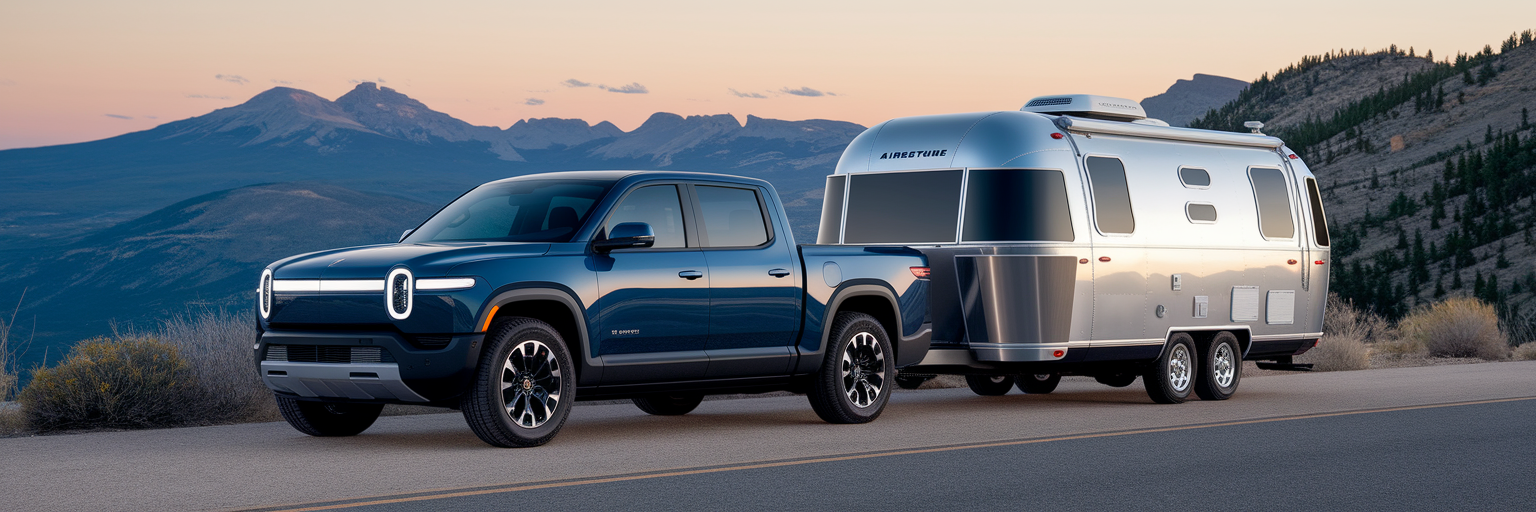
The arrival of all-electric trucks represents a true paradigm shift in towing. The 2025 Chevrolet Silverado EV is a leading example of this new frontier. The experience of towing with an electric powertrain is fundamentally different. The instant, seamless torque provides incredibly smooth and silent acceleration, eliminating the engine roar and vibration that contribute to driver fatigue on long trips. The low center of gravity also enhances stability, making for a more confident ride.
However, it is important to approach EV towing with a balanced perspective. The biggest challenge is the significant impact of trailer weight and aerodynamics on battery range. Under a heavy load, an EV truck’s range can be reduced by 50% or more. This is a critical factor to consider. Furthermore, the logistics of public charging can be complicated, as many stations are not designed to accommodate a truck with a trailer attached.
As Towlos.com notes, the Silverado EV is projected to offer a future max-tow package with a capacity of up to 20,000 pounds, placing it in a class of its own. For now, it is a forward-looking choice for early adopters with predictable routes, those who can charge at home or a dedicated depot, or drivers for whom the unique experience outweighs the current range limitations. For more insights into battery-powered vehicles, our dedicated section on electric cars and trucks is a valuable resource.
Making the Right Choice for Your Hauling Needs
The best truck is ultimately a personal decision based on a realistic assessment of your life. Before you even look at a window sticker, ask yourself a few honest questions:
- How often do you actually tow? Is it a daily job, a monthly camping trip, or a once-a-year favor for a friend? Be realistic about your frequency.
- What is the maximum weight you will ever pull? Find the weight of your trailer, boat, or equipment and add a 15% safety margin. Never tow at 100% of your truck’s rated capacity.
- What percentage of your driving is done without a trailer? If 95% of your miles are for commuting, a super-efficient model like the Maverick might be a smarter financial choice.
- What is your budget? Consider not just the purchase price but the long-term fuel and maintenance costs associated with each powertrain.
Beyond the powertrain, look for features that reduce the stress of towing. We believe these are non-negotiable for anyone who tows regularly:
- Integrated Trailer Brake Controllers: A factory-installed system that syncs with your truck’s brakes is far superior and safer than aftermarket units.
- Extended Blind-Spot Monitoring: Look for systems that can be configured to account for the length of your trailer, which is a huge help when changing lanes.
- Advanced Camera Systems: Features like hitch-assist views and “transparent trailer” technology make connecting and maneuvering significantly easier and safer.
If your needs exceed 20,000 pounds, then you must look to the heavy-duty segment, such as a Ram 3500 or Ford F-350. For everyone else, the 2025 market offers an ideal balance of power and efficiency. By honestly evaluating your needs, you can find the perfect fit. For the latest news, reviews, and guides, CarPhanatics.com is your go-to source for everything on four wheels.