
The rise of adventure sports has transformed pickup trucks from simple workhorses into versatile lifestyle vehicles. This shift creates a new challenge for owners who need to securely transport expensive gear, which brings us to a common problem: how do you fit two modern mountain bikes completely hidden under a locked tonneau cover? For enthusiasts who value both their truck and their bikes, the goals are security from theft and protection from the elements. This is a search for the best midsize truck for mountain bikes, one that accommodates the gear without compromising security.
To find a definitive answer, we are conducting a practical investigation into the 2026 midsize truck lineup. Our cargo consists of two contemporary adult mountain bikes with 29-inch wheels, a common choice for serious riders. We will assume a realistic wheelbase of around 1250mm and a handlebar width of 780-800mm, dimensions that make them too long to simply lay flat in a standard short bed. Our contenders are the 2026 Ford Ranger, Chevrolet Colorado, GMC Canyon, Toyota Tacoma, Nissan Frontier, and Honda Ridgeline.
This analysis goes beyond a simple spec sheet comparison. We will explore real-world issues like handlebar and pedal interference, the usable height beneath different tonneau cover types, and the practicality of various loading methods. Modern consumer expectations demand that function and form coexist, a trend seen everywhere from vehicles to personal accessories. As noted in an article on Cocomii, even something as simple as a phone case is expected to have a sleek, functional design. We apply that same practical scrutiny to these trucks, seeking a solution that is both elegant and effective.
Why a Midsize Truck for Mountain Bikes Is a Puzzle
The task of fitting two large bikes into a midsize truck bed under a cover is a geometric puzzle with tight constraints. The primary limitations are the bed dimensions themselves. Typical bed depth ranges from 19 to 21 inches, which immediately challenges the height of a bike even when laid flat. The most critical measurement, the width between the wheel wells, often falls between 41.5 and 48.2 inches. This narrow channel is the main bottleneck for placing bikes side by side. Combined with a standard 5-foot bed length, the challenge becomes clear.
Using our assumed bike dimensions, a fully assembled 29er mountain bike with an overall length exceeding 74 inches simply cannot fit straight into a 60-inch bed. Even positioned diagonally, the 800mm handlebar width creates an obstruction that prevents a tonneau cover from closing. This geometric impossibility forces us to evaluate several loading methods: bikes fully assembled, with front wheels removed, with both wheels removed, positioned diagonally, mounted upright with fork mounts, or laid flat. Each method introduces its own set of compromises.
The tonneau cover itself is a significant variable. A simple roll-up or folding cover minimally impacts usable space, but a retractable cover’s storage canister can consume 8 to 12 inches of valuable bed length at the cab end. This lost space can be the difference between a closed tailgate and one left ajar. To understand these limitations, a look at the 2026 midsize truck bed dimensions is essential. The following data, compiled from industry sources like those found at Truck Report Geeks, provides a baseline for our comparison.
| Truck Model | Bed Length (in.) | Max Width (in.) | Width Between Wheel Wells (in.) | Bed Depth (in.) |
|---|---|---|---|---|
| Ford Ranger | ~60.0 | ~62.4 | ~48.2 | ~20.8 |
| Chevrolet Colorado | ~61.7 | ~58.0 | ~45.5 | ~21.4 |
| GMC Canyon | ~61.7 | ~58.0 | ~45.5 | ~21.4 |
| Toyota Tacoma (Short Bed) | ~60.3 | ~56.4 | ~44.7 | ~21.2 |
| Nissan Frontier (Short Bed) | ~59.5 | ~61.4 | ~44.5 | ~19.4 |
| Honda Ridgeline | ~64.0 | ~60.0 | ~50.0 (at floor) | ~16.7 |
| Note: Dimensions are approximate for 2026 models based on current generation data and may vary slightly by trim. The Ridgeline’s width is measured at the floor as it lacks traditional wheel wells. | ||||
Ford Ranger and Honda Ridgeline: The Short Bed Challenge
Our investigation begins with two trucks that share a fundamental constraint in the U.S. market: they are exclusively offered with a short bed. This single factor heavily influences their utility for our specific bike-hauling test, presenting a significant challenge from the outset.
2026 Ford Ranger Analysis
The 2026 Ford Ranger features a 5-foot bed that, while boasting a generous width of nearly 48.2 inches between the wheel wells, is ultimately constrained by its 60-inch length. Its tie-down points are functional for general cargo, but they offer little help when trying to secure two awkwardly shaped bikes in a tight space. After conceptually testing each loading method, the conclusion is stark. Fitting two 29er mountain bikes under a closed tonneau cover with the tailgate shut is practically impossible without removing both wheels from each bike. This requires carefully arranging the frames and wheels like a puzzle, a time-consuming process that most riders would find highly impractical for regular use. For Ranger owners, an external 2026 Ford Ranger bike rack or a tailgate pad becomes an almost necessary accessory for frequent transport.
2026 Honda Ridgeline Analysis
The 2026 Honda Ridgeline stands apart with its unibody construction, which provides some unique advantages. Its bed floor is wide and completely flat, with no wheel well intrusions to navigate. This, combined with the innovative dual-action tailgate that can swing open like a door, simplifies loading. However, the in-bed trunk presents a mixed bag. While it is a brilliant, lockable space for storing wheels, tools, and gear, its lid sits slightly proud of the main bed floor, creating an uneven surface. The bed’s shallow 16.7-inch depth also severely limits vertical clearance under a tonneau cover. While its composite bed material is durable enough to handle occasional pedal strikes, the non-negotiable 64-inch bed length is the primary limiting factor. As we explored in our comparison of the Honda Ridgeline vs. Ford Maverick, this truck excels at daily utility but faces constraints with oversized gear. For this specific task, the short bed proves to be its Achilles’ heel.
Chevrolet Colorado and GMC Canyon: A Tale of Two Beds
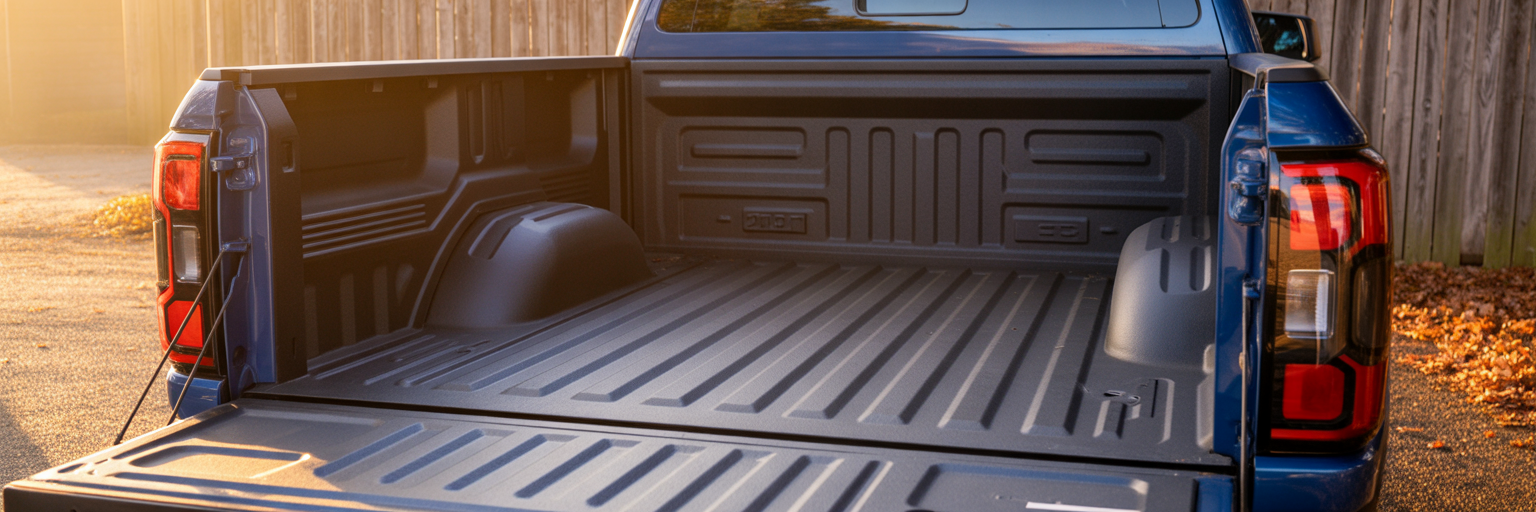
The mechanically similar 2026 Chevrolet Colorado and GMC Canyon are analyzed together, as they share the same platform and, critically, the same bed configuration. This generation of GM’s midsize trucks presents a modern package with some clever features, but a key decision by the manufacturer defines their capability for our test.
Bed Dimensions and Features
Both the Colorado and Canyon come with a single bed option in North America: a 5-foot-2-inch (61.7-inch) box. This length offers a marginal improvement over a standard 5-foot bed but is still insufficient for a fully assembled 29er. The bed provides eight standard fixed tie-down points, which are sturdy but lack the positioning flexibility needed for securing bikes. GM does offer accessory movable tie-points that can be installed in various locations along the bed walls, enhancing utility, but the fundamental space constraints remain.
The StowFlex Tailgate Advantage
A standout feature on certain trims is the StowFlex tailgate, an integrated, lockable storage compartment built directly into the tailgate itself. This is an intriguing solution for gear management. We investigated its usefulness for our scenario: could it hold two 29-inch front wheels? The answer is no. The compartment is approximately 45 inches long and 4 inches deep, making it perfect for storing tools, recovery straps, or emergency gear, but it is not large enough to house even one mountain bike wheel. While a clever feature, it does not solve the primary challenge of stowing the bulky parts of the bikes.
The Long-Bed Question
It is important to directly address a common question. While previous generations of the Colorado and Canyon offered a long-bed option, the current generation, including the 2026 model year, is exclusively available with the 5-foot-2-inch short bed in North America. This decision streamlines manufacturing but is a significant limitation for anyone needing to haul longer items. As we noted when comparing the Nissan Frontier vs. Chevrolet Colorado, bed length is a major differentiator. For the task of fitting two bikes under a closed tonneau, this short-bed-only approach makes it highly improbable without complete disassembly of the bikes.
Toyota Tacoma: The Deck Rail Advantage
The Toyota Tacoma has long been a favorite among outdoor enthusiasts, making its performance in this test particularly relevant. Its reputation for durability and off-road prowess means many owners will expect it to handle their adventure gear with ease. The key to the Tacoma’s potential lies in its available bed configurations and a standout cargo management feature.
The 6-Foot Long-Bed: The Prime Candidate
The analysis shifts dramatically when we consider the Tacoma’s available 6-foot (73.5-inch) long-bed. This configuration is the first one in our test that presents a genuinely feasible solution. With the extra length, the geometric puzzle becomes solvable. By removing the front wheels from both bikes, they can be positioned diagonally within the bed, overlapping slightly. The additional length provides the necessary clearance for the rear wheels and frames, allowing the tailgate to close without issue.
The Deck Rail System Explained
The Tacoma’s main advantage for this task is its standard Deck Rail System. This feature includes rails on the sides of the bed with heavy-duty, adjustable cleats. Unlike fixed tie-down loops, these cleats can be slid along the rail and locked into any position. This flexibility is crucial for securing bikes at awkward diagonal angles. You can place a cleat precisely where it’s needed to strap down a frame or rear wheel, preventing any movement. This system is a core component of successful 2026 Toyota Tacoma bike transport. Even with the long bed, however, the handlebars on modern trail bikes may still need to be loosened and rotated downward to provide enough clearance for a hard tonneau cover to close.
Short-Bed and Aftermarket Considerations
The 5-foot short-bed Tacoma faces the same fundamental constraints as its competitors, making it an impractical choice for this specific challenge. However, the Tacoma’s greatest strength might be its massive aftermarket support. An unparalleled ecosystem of tonneau covers, bed racks, and accessories are designed specifically to work with the Deck Rail System. This makes it easier to find a compatible and effective solution. As highlighted in our Jeep Gladiator vs. Toyota Tacoma comparison, the Tacoma’s blend of factory features and aftermarket potential makes it a top choice for adventurers who need to customize their rig.
Nissan Frontier: Utili-track System Under Review
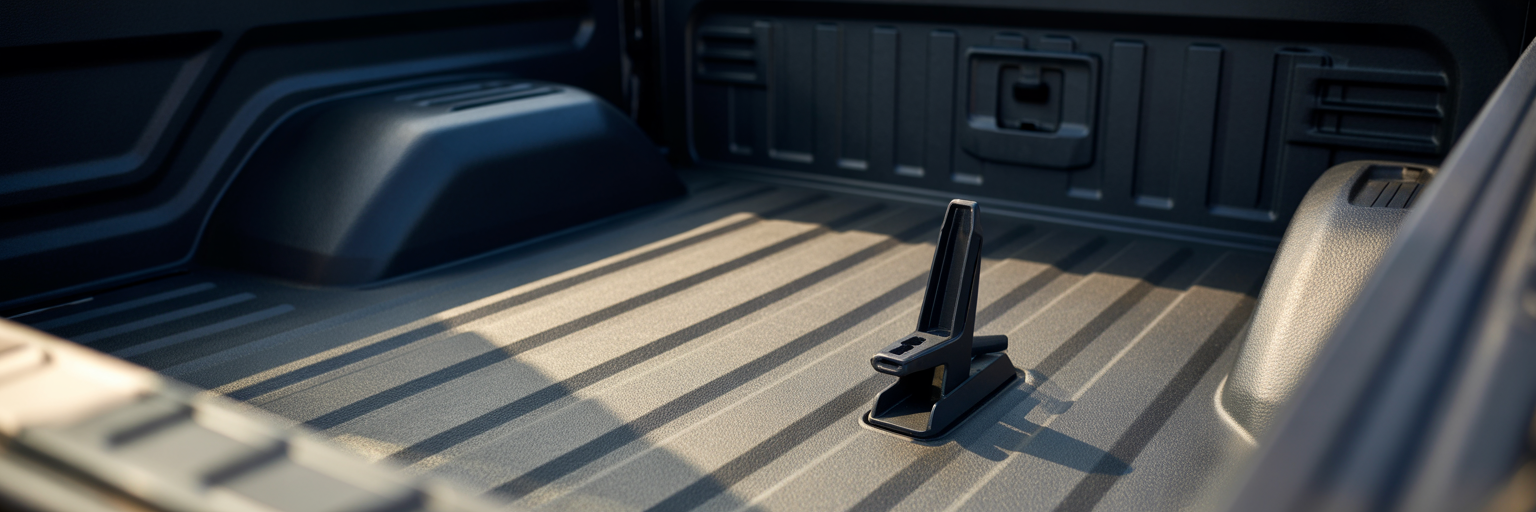
The Nissan Frontier emerges as a strong and direct competitor to the Tacoma, particularly when equipped with its own long-bed option and a sophisticated cargo management system. Often flying under the radar, the Frontier presents a compelling case for mountain bike enthusiasts looking for a capable hauler.
Analyzing the 6-Foot Long-Bed
Similar to the Tacoma, the Frontier is available with a 6-foot bed that completely changes the dynamic of this test. With this extra length, the process of fitting bikes in a truck bed becomes manageable. By removing the front wheels and positioning the two bikes diagonally, the frames and rear wheels fit within the confines of the bed, allowing the tailgate to close securely. The Frontier’s bed depth of 19.4 inches is slightly shallower than some rivals, which could be a factor depending on the profile of the tonneau cover, but the overall volume is sufficient for the task.
Utili-track vs. Deck Rail
The Frontier’s key feature is the Utili-track Channel System. This system provides a focused and valuable comparison to Toyota’s Deck Rail. The Utili-track system often includes three or even five channels: two on the bed floor, two on the upper bed rails, and one on the header rail at the front of the bed. This offers more potential tie-down locations than the Tacoma’s side-rail-only system. The forged aluminum cleats are robust and slide easily along the channels. For securing bikes, having channels on the floor can be particularly useful for stabilizing the rear wheels. While the Tacoma’s system benefits from a larger aftermarket, the Utili-track is arguably more comprehensive right from the factory.
Short-Bed Limitations
Unsurprisingly, the 5-foot short-bed version of the Frontier shares the same fundamental issues as every other short-bed truck in this comparison. The length is simply inadequate for containing two large mountain bikes under a cover without significant, impractical disassembly. The conclusion is clear: for this specific purpose, the 6-foot long-bed Frontier is not just a viable option but a highly capable alternative to its main rival.
The Alternative Solution: Racks Above the Cover
After analyzing the significant challenges of fitting two large bikes under a cover, it is clear that for most setups, the solution involves major compromises. This brings us to the most practical and popular real-world approach: carrying the bikes above the tonneau cover. This method pivots from trying to solve a difficult geometric puzzle to adopting a purpose-built system that offers security and convenience.
The concept relies on bed rack systems, such as crossbars or modular racks, that are designed to be compatible with specific tonneau covers. Many modern retractable and hard-panel folding covers feature integrated T-slots along their rails precisely for this purpose. A tonneau cover bike rack mounts directly to these rails, creating a platform for bike mounts above the bed. The benefits of this setup are immediate and substantial.
- Bikes are securely mounted on top using standard fork-mount or upright bike carriers, keeping them stable and separate.
- The tonneau cover remains fully functional, creating a large, weatherproof, and lockable storage area for wheels, riding gear, tools, and luggage.
- It completely solves the height, width, and length problems associated with fitting bikes inside the bed.
While this configuration makes the bikes visible, they can be securely locked to the rack itself. Meanwhile, all other valuable gear remains completely hidden and protected in the bed below. As guides from sources like Offroad Tents demonstrate, this combination of a bed rack and tonneau cover is widely regarded as the best-of-both-worlds solution for serious enthusiasts, delivering unmatched security and versatility.
Final Verdict: The Best Truck for Your Bikes
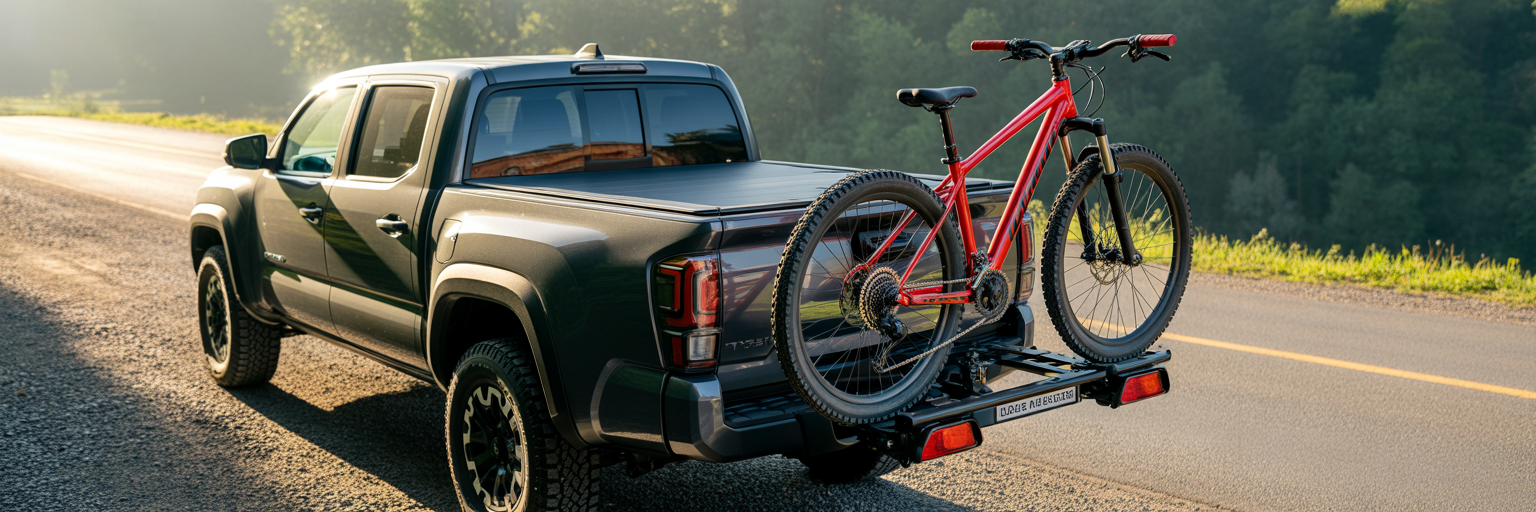
After a detailed investigation, the overarching conclusion is clear: no 2026 midsize truck can realistically carry two fully assembled 29er mountain bikes under a closed and locked tonneau cover without significant compromises. However, by making one key modification, a clear winner emerges. Here are our final verdicts.
- Best Truck with Front Wheels Removed: The 2026 Toyota Tacoma with the 6-foot long-bed is the top choice. Its combination of sufficient length and the highly flexible Deck Rail System provides the best factory setup for securing two bikes diagonally under a cover.
- Best Factory Cargo-Management System: This is a close contest between the Toyota Deck Rail and Nissan Utili-track systems. We give the edge to the Toyota Deck Rail, not because it is inherently superior in function, but because it is standard on more trims and benefits from a vastly larger aftermarket ecosystem of compatible accessories.
- Most Secure Setup: The ultimate solution for security and versatility is the combination of a high-quality retractable or hard-panel tonneau cover equipped with an over-the-bed T-slot rack system. This keeps all your gear locked and hidden while the bikes are securely mounted above.
- Truck Requiring Fewest Bike Modifications: Any model with a 6-foot bed, namely the Toyota Tacoma or Nissan Frontier, is the winner here. The extra bed length is the single most important factor in reducing the amount of disassembly required.
- Best Overall Midsize Truck for Carrying Two Mountain Bikes Under Cover: The 2026 Toyota Tacoma with the 6-foot bed is crowned the winner for this specific, challenging task. Its winning formula of a versatile cargo system, durable composite bed, proven reliability, and unmatched aftermarket support makes it the most effective platform for the job.
While we have identified the best truck for this specific scenario, every owner has different needs. To continue your research, you can explore our comprehensive reviews and comparisons of all trucks on our main category page.