
You’re cruising on the highway, music on, when you feel it. A subtle vibration starts in the steering wheel as you pass 60 mph, growing more noticeable at 65, and then maybe it even smooths out a bit by the time you hit 75. That unnerving shake isn’t random. It’s a clear signal from your car, and understanding it begins not with a wrench, but with a bit of physics.
The Physics of High-Speed Vibration
The reason a steering wheel shakes at highway speeds often comes down to a principle called resonant frequency. Think about pushing a child on a swing. If you give small pushes at just the right moment in the swing’s arc, it goes higher and higher. Pushing at the wrong time does almost nothing. Your car’s suspension, steering components, and tires act like that swing, with their own natural frequency at which they prefer to vibrate.
An out-of-balance tire is like that small, rhythmic push. At lower speeds, the rotation is too slow to get the “swing” going. But as you accelerate, the frequency of the tire’s rotation increases. When it hits that sweet spot, typically between 55 and 75 mph, it matches the natural frequency of your suspension components. This creates resonance, amplifying the small imbalance into a very noticeable vibration that travels right up the steering column to your hands.
This also explains why the car shakes at 60 mph but might feel fine at 40 mph. The rotational speed is too slow to excite the system. It can also explain why the shake might lessen at 80 mph. At that speed, the tire is rotating too fast, moving past the resonant peak. The “pushes” are now out of sync, and the vibration can diminish. Understanding this concept is the first step, because it tells you that you’re not looking for a problem that gets progressively worse with all speed, but one that is specific to a certain rotational frequency.
Primary Suspects: Wheel and Tire Problems
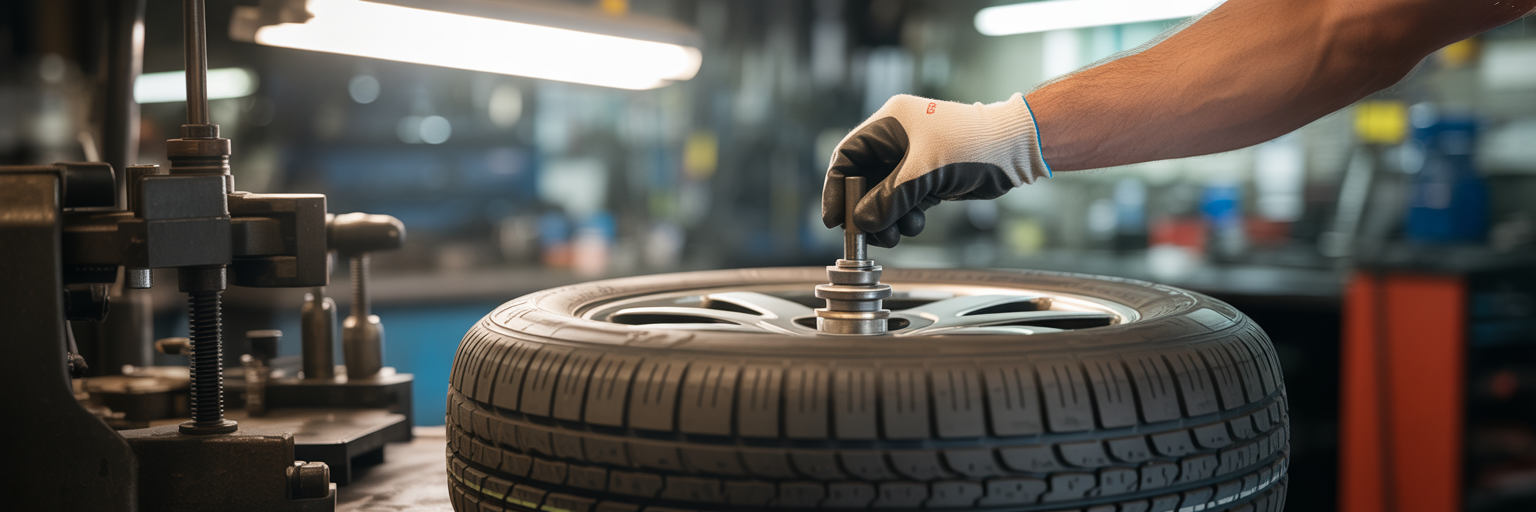
Now that we understand the physics, we can look at the physical culprits. More often than not, the source of that highway-speed shake is the wheel and tire assembly. These are the spinning components that create the rhythmic “pushes” we talked about, and even small imperfections can cause big problems.
Incorrect Wheel Balance: The Number One Cause
This is the most common reason for a steering wheel vibration. When a new tire is mounted, a technician uses a machine to spin the wheel and identify heavy spots. They then apply small weights to the rim to counteract these spots, ensuring the assembly rotates smoothly. If one of these weights falls off, which can happen from hitting a curb or just over time, the wheel is no longer balanced. That tiny imbalance becomes a significant shake at highway speeds.
Damaged Wheels and Defective Tires
Physical damage is another major contributor. Anyone who has driven through a city like Chicago or New York knows the jarring impact of hitting a deep pothole. That single event can be enough to put a slight bend in a wheel. The bend might be invisible to the naked eye, but it’s enough to cause a consistent wobble at speed. Tires can also be the problem. A manufacturing defect can lead to tire belt separation, where the internal steel belts separate from the rubber, creating a bulge or high spot on the tire. Other issues include uneven wear patterns like “cupping” or developing flat spots from being parked for an extended period.
Improper Tire Setup and Installation
Sometimes the problem isn’t damage but an incorrect setup. Several factors can introduce the causes of steering wheel vibration, and they often relate to how the wheels are installed or maintained. These issues highlight why some high-mileage cars age better than others; proper maintenance of these simple things makes a huge difference.
- Mismatched Tires: Running different brands, sizes, or even tires with significant tread depth differences on the same axle can cause imbalances.
- Incorrect Tire Pressure: Both under-inflation and over-inflation change the tire’s contact patch with the road, affecting its stability and how it wears.
- Trapped Debris: It sounds simple, but a chunk of mud, snow, or ice stuck to the inside of the wheel acts as a counterweight, throwing the balance completely off.
- Improper Installation: A wheel must sit perfectly flush against the hub. Rust or debris on the mounting surface can prevent this. Likewise, lug nuts must be tightened to the correct torque in a star pattern to apply even pressure.
Decoding the Vibration: Steering Wheel vs. Seat
Before you head to the shop, you can do some initial diagnostic work from the driver’s seat. The key is to pay close attention to where you feel the vibration most strongly. Your body is a surprisingly effective tool for narrowing down the location of the problem.
If the steering wheel shakes at highway speeds, the issue is almost certainly on the front axle. There is a direct mechanical connection from the front tires to your hands. The vibration travels from the tire, through the wheel hub, knuckle, tie rod, steering rack, and straight up the steering column. It’s a direct path, making front-end issues impossible to ignore.
On the other hand, if you feel the vibration primarily through your seat, the floor, or the whole body of the car, the problem is likely located at the rear. A vibration from a rear wheel or axle component travels through the car’s chassis and frame. You feel this through your main point of contact with the car’s body: the seat. While a very severe issue anywhere on the vehicle can make the entire car shake, identifying where the vibration starts or is most intense is the most important clue you can give a technician. Is it in your hands, or is it in your seat? The answer to that question cuts the diagnostic work in half.
Mechanical Issues That Cause High-Speed Shakes
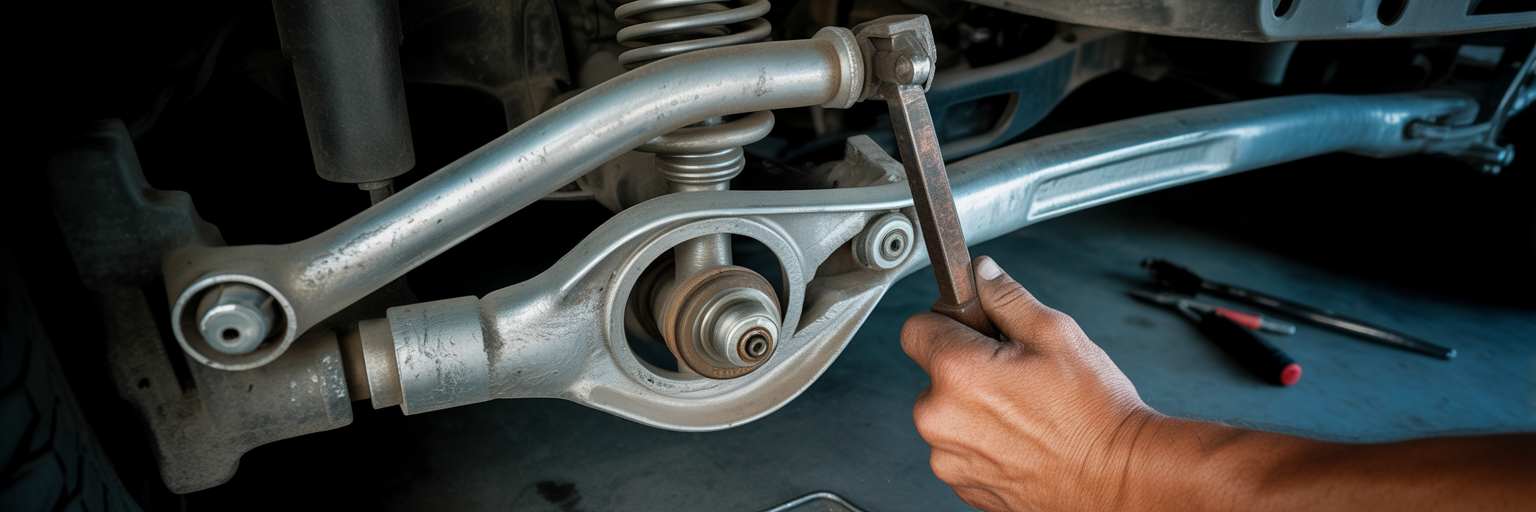
If the wheels and tires have been balanced and checked for damage, but the shake persists, it’s time to look deeper into the steering and suspension systems. Wear and tear on these mechanical parts can also introduce the instability that leads to a high-speed vibration.
Worn Steering and Suspension Joints
Components like tie-rod ends and ball joints are critical pivot points that connect your wheels to the car. Over time, they wear out, creating excessive “play” or looseness. This slack means the wheel is no longer held rigidly in place. At highway speeds, the wheel can begin to oscillate back and forth within that slack, creating a shimmy or shake that you feel in the steering wheel.
Failing Control Arm Bushings
Control arm bushings are rubber or polyurethane insulators that absorb road shock and keep the suspension components in precise alignment. As they age, the rubber can crack, degrade, and fail. When a bushing fails, it can no longer hold the control arm securely, allowing for unwanted movement that can manifest as a vibration or a clunking noise over bumps.
Bad Wheel Bearings
A worn wheel bearing can cause a vibration, but it usually comes with a distinct calling card: a noise. A bad bearing typically creates a humming or grinding sound that gets louder with speed and may change in pitch when you turn. While a severely worn bearing can cause a shake, the accompanying noise is often the key differentiator from a simple tire balance issue.
Driveline Component Failures
The parts that deliver power to the wheels can also be a source of vibration. On a front-wheel-drive car, a worn inner CV (Constant Velocity) joint can cause a shake, particularly under acceleration. For rear-wheel-drive or all-wheel-drive vehicles, an imbalanced driveshaft or worn U-joints are common culprits for vibrations felt through the floor and seat. These types of driveline and suspension issues are especially important to inspect on older vehicles, including some of the best used German cars that are actually worth owning, which often feature complex designs that require diligent maintenance.
Braking-Induced Shudder vs. Constant Vibration
Here’s a critical diagnostic question you must ask yourself: does the shaking happen only when you press the brake pedal? If the answer is yes, you can almost certainly rule out tire balance and focus on the brake system. This is a completely different symptom from a constant highway-speed vibration.
The primary cause of a braking-induced shudder is warped brake rotors. A rotor isn’t perfectly flat; it has what’s called “lateral runout,” or tiny high and low spots across its surface. When you apply the brakes, the pads clamp down on this uneven, spinning surface. As the pads move over the high and low spots, it creates a pulsing feedback that travels through the brake caliper and suspension, resulting in a violent shake in the steering wheel (for front brakes) or a pulsation in the brake pedal itself.
Rotors typically warp from excessive heat, such as during long descents down a mountain pass, which causes the metal to distort. Other causes include improper lug nut torque, which can stress the rotor and cause it to deform, or even just low-quality materials that are more susceptible to heat damage. If the shake disappears the moment you take your foot off the brake, your investigation should start and end with the brake system.
Why a Recent Repair Might Trigger a Shake
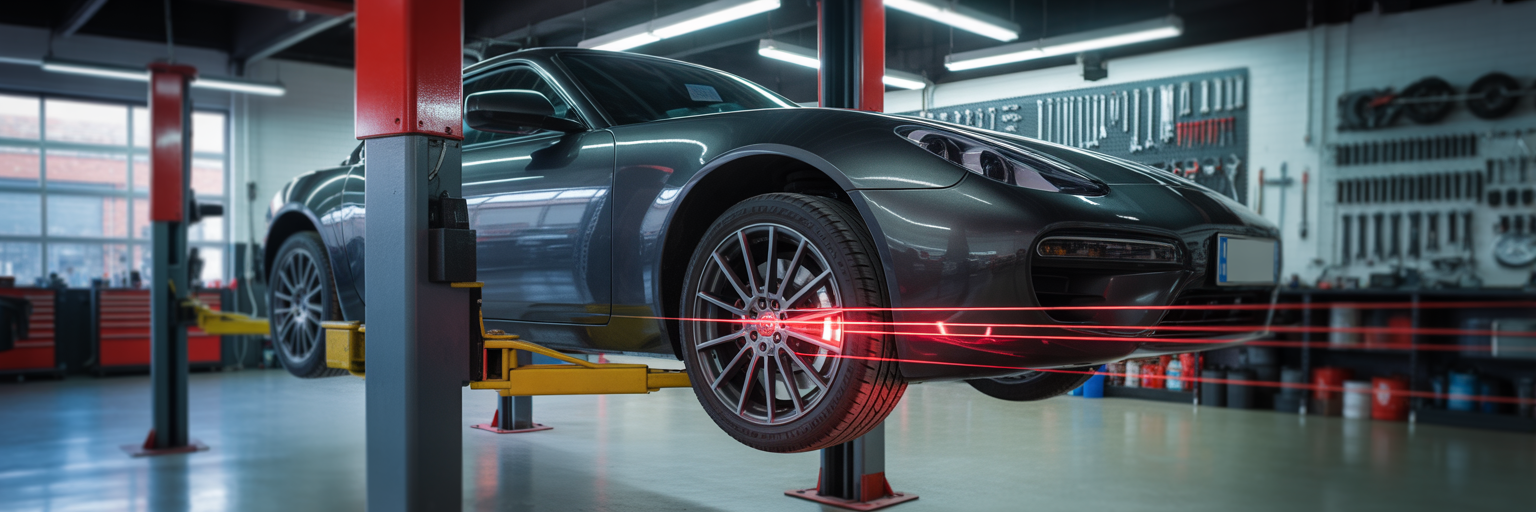
One of the most confusing situations is when a vibration appears right after you’ve had work done, like a tire rotation or replacement. Your first thought might be that the mechanic made a mistake, but that’s not always the case. Sometimes, a routine service simply uncovers a pre-existing issue.
The most common scenario involves a tire rotation. A slightly out-of-balance tire on the rear of the car might go completely unnoticed because those vibrations don’t travel to the steering wheel. However, when that same tire is rotated to the front, the imbalance becomes immediately obvious through the steering wheel. The problem was always there; its location just changed.
With new tires, the issue could be a faulty balance job or, less commonly, a manufacturing defect in the tire itself. Another possibility is that your old, worn tire was actually masking a bent wheel. Its uneven wear pattern might have coincidentally counteracted the wheel’s wobble. When a new, perfectly round tire is installed on that same bent wheel, the vibration suddenly becomes apparent. Similarly, a wheel alignment corrects the angles of your suspension but cannot fix worn parts. A new, proper alignment might put different stresses on a worn ball joint or bushing, causing a vibration that was previously hidden to surface. Understanding these scenarios is a key part of being an informed car owner, and we aim to provide more of this kind of informative content to help you navigate these situations.
Advanced Diagnostics: Road-Force Balancing
What if you’ve had your tires balanced multiple times, but a stubborn vibration just won’t go away? This is where you need a more advanced diagnostic tool: a road-force balancer. This is the expert-level solution for hard-to-find shakes.
A standard dynamic balancer has a limitation: it spins the wheel in the air and assumes the tire is perfectly round and uniform. In reality, no tire is perfect. A road-force machine addresses this by using a large roller that presses against the spinning tire with hundreds of pounds of force, simulating the vehicle’s weight on the road. This process allows the machine to measure two things a standard balancer cannot see: “road force variation” and “radial runout.”
Road force variation refers to stiffness differences in the tire’s sidewall and tread. Even a perfectly balanced tire can vibrate if it has a stiff spot that “hops” down the road. Radial runout is simply the measure of how out-of-round the tire and wheel assembly is. The road force balancing explained simply is that it detects these imperfections that are only apparent under load. Once identified, the technician can perform “match mounting,” which involves rotating the tire on the wheel so the tire’s stiffest point is aligned with the wheel’s lowest point, effectively canceling out the imperfections of both. It’s the definitive way to solve persistent vibration mysteries.
Your Step-by-Step Vibration Diagnostic Checklist

To help you diagnose car vibration, here is a checklist that synthesizes everything we’ve discussed. By noting when and where the shake occurs, you can narrow down the potential causes before you even talk to a mechanic. This is an especially useful process when inspecting a vehicle for purchase, such as one of the best used cars for first-time buyers under $12,000.
- Only at highway speeds (55-75 mph): This points directly to a wheel and tire balance issue. Your first check should be to look for missing wheel weights or packed mud and snow inside the wheels.
- Only during braking: This is almost certainly caused by warped brake rotors. Note whether the shake is in the steering wheel, the brake pedal, or both.
- Only while accelerating: Suspect a worn inner CV joint (especially on FWD cars), a driveshaft problem (RWD/AWD), or potentially a failing engine or transmission mount that is allowing movement under load.
- Only while turning: This often indicates a worn outer CV joint, which usually makes a clicking noise as well. It could also be a failing wheel bearing, which will typically produce a humming or grinding sound.
- Right after hitting a pothole: Immediately suspect a bent wheel, a broken tire belt, or a damaged suspension component like a tie rod. This requires prompt inspection.
- Right after a tire rotation or new tires: The problem was likely moved from the rear to the front or introduced during the service. Start by having the wheel balance re-checked, preferably with a road-force machine.
- Vibration in steering wheel vs. seat: Remember this is your primary clue. A shake in the steering wheel points to the front axle, while a shake felt in the seat points to the rear.
Is It Safe to Drive with a Shaky Steering Wheel?
This is often the most pressing question: is it safe to drive with a shaky steering wheel? The answer is nuanced. A very mild, consistent vibration that only appears in a narrow speed band is not usually an immediate emergency, but it should be treated as a clear warning sign that needs attention soon.
Ignoring the vibration is a bad idea. At best, it will cause accelerated and uneven tire wear. At worst, it puts continuous, excessive stress on expensive suspension components like wheel bearings, ball joints, and steering parts, leading to more costly repairs down the road. However, there are several “red flag” symptoms that make the vehicle unsafe to drive and demand immediate inspection. If you experience any of the following, pull over safely and call for assistance.
- The shaking is severe, violent, or getting progressively worse.
- The steering feels loose, vague, or unstable.
- The vehicle pulls strongly to one side.
- There are visible bulges or damage on the tire’s sidewall.
- The vibration is accompanied by loud clunking, grinding, or popping noises.
When your car demands this level of attention, it is crucial to focus on driving safely and avoid distractions. Things like your phone and other everyday essentials can wait until you are safely off the road.
Frequently Asked Questions About Highway Vibrations

Here are quick answers to some common follow-up questions about steering wheel vibrations.
How much do highway-speed vibration repairs cost?
Costs can vary widely, but here are some general estimates. A simple wheel balance is often the cheapest and most effective first step.
| Repair Service | Estimated Cost Range (USA) | When It’s Needed |
|---|---|---|
| Standard Wheel Balancing | $15 – $30 per tire | For most highway speed vibrations. |
| Road-Force Balancing | $25 – $50 per tire | For persistent vibrations a standard balance can’t fix. |
| Four-Wheel Alignment | $80 – $150 total | If the car pulls to one side or after suspension work. |
| Brake Rotor Replacement | $300 – $700 per axle | For vibrations that occur only when braking. |
| Wheel Bearing Replacement | $250 – $600 per wheel | For vibrations accompanied by a humming or grinding noise. |
Note: These costs are estimates and can vary significantly based on vehicle make/model, location, and the repair shop.
Will a wheel alignment fix a vibration?
Only if the vibration is caused by incorrect alignment angles creating odd tire wear. An alignment corrects steering pull and ensures even tire wear, but it does not correct an imbalance in the wheel itself.
Is wheel balancing part of routine maintenance?
Not exactly. Unlike a tire rotation, which should be done at regular intervals, wheel balancing is typically only performed when new tires are installed or when a vibration appears.
Can a bad wheel bearing cause a vibration without making noise?
Yes, in the early stages of failure, a wheel bearing can create a slight vibration before the characteristic humming or grinding noise becomes obvious.
What is the difference between tire rotation and balancing?
Tire rotation is the process of moving tires from one position to another (e.g., front to back) to ensure they wear evenly. Balancing is the process of adding small weights to the wheel to ensure it spins smoothly without wobbling.
For more in-depth automotive guides, reviews, and news, be sure to explore everything we have to offer at Car Phanatics.