The New Rules of Towing Efficiency in 2025
Every truck owner understands the dilemma. You need a vehicle with the muscle to pull a boat, a work trailer, or a camper, but the sting of high fuel prices makes every trip a calculated expense. The 2025 truck market is defined by this very conflict, shifting focus from raw, unthinking power to intelligent, economical performance. This isn’t about compromising capability. It’s about achieving it more smartly.
This evolution is driven by significant engineering advancements. Automakers are now blending power with efficiency through innovative hybrid powertrains, highly capable turbo-diesel engines, and the strategic use of lightweight materials. By replacing traditional steel with high-strength steel and aluminum alloys in frames and body panels, trucks can shed weight without sacrificing toughness. This reduction in mass directly translates to better fuel economy, both with and without a trailer attached.
Let’s be clear: towing will always reduce your miles per gallon. The laws of physics are non-negotiable. However, the gap between towing and non-towing efficiency is shrinking. The goal is no longer just to find the most powerful truck, but to find the most effective one for your specific needs. The right choice depends on whether you’re planning a weekend fishing trip or hauling equipment to a job site every day. Understanding this new landscape is the first step toward finding the right fuel efficient trucks for towing, and as you’ll see, today’s pickups are far more complex and capable than the simple workhorses of the past. For those curious about the sheer variety available, exploring the broader range of modern trucks reveals just how far they’ve come.
Gas, Diesel, Hybrid, or Electric for Towing?
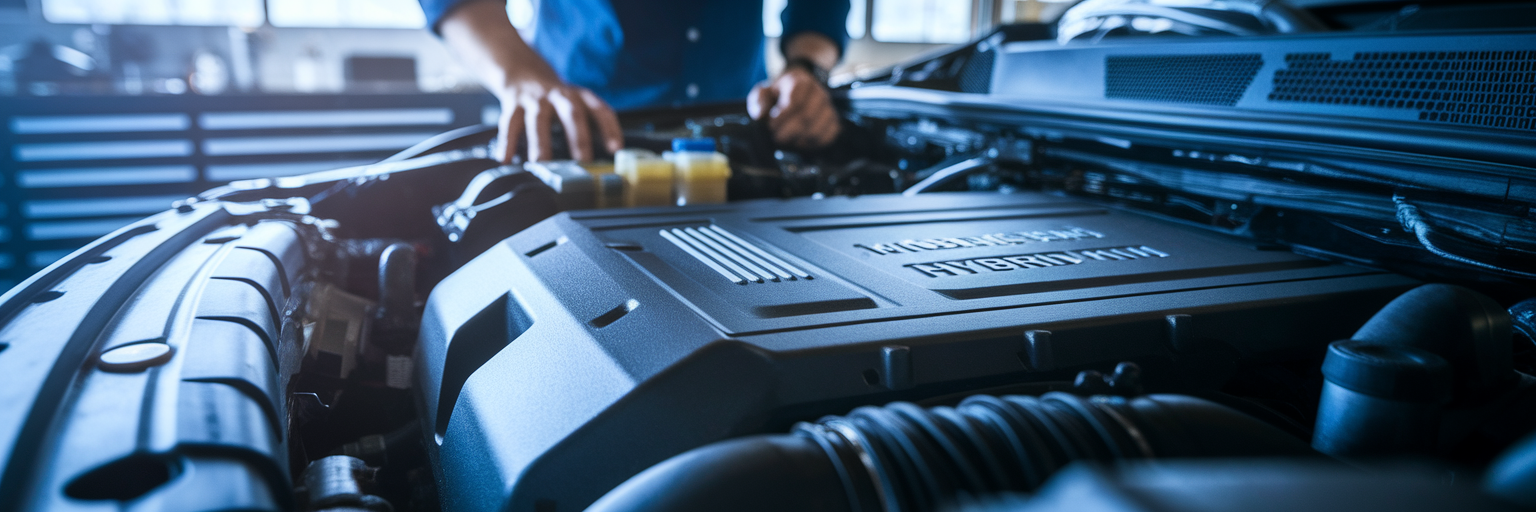
With the groundwork of modern efficiency laid, the next question is which powertrain best suits your towing needs. Each option presents a distinct set of trade-offs, and the right answer depends entirely on how you use your truck. It’s less about which is “best” and more about which is best for you.
Gasoline engines remain the default for many due to their lower upfront cost and widespread availability. They offer plenty of power for occasional or light-duty towing. However, their efficiency drops noticeably under load. If you only tow a few times a year, a gas engine is a practical and affordable choice. For those who tow frequently, the fuel costs can quickly add up.
Diesel engines are the undisputed champions of long-distance and heavy hauling. Their advantage lies in immense low-end torque, which allows them to pull heavy loads without constantly straining. This results in superior fuel economy on the highway while towing. The higher initial purchase price and maintenance costs are often justified for anyone who regularly pulls a large travel trailer, a horse trailer, or heavy equipment.
Hybrid trucks for towing represent a compelling middle ground. They combine a gasoline engine with an electric motor to deliver excellent fuel economy in mixed city and suburban driving. When towing, the electric motor provides an instant torque boost, helping with acceleration from a stop. While their towing efficiency gains can vary depending on the specific hybrid system and the load, they offer a fantastic balance for the owner who needs a capable daily driver that can also handle moderate weekend towing duties.
Finally, all-electric (EV) trucks offer incredible performance, with instant torque that makes pulling heavy loads feel effortless. The low cost of electricity compared to gasoline or diesel is also a major draw. However, their Achilles’ heel is range. Towing a heavy trailer can cut an EV truck’s range by 50% or more, turning a straightforward trip into a logistical puzzle of finding compatible charging stations. For short-distance towing with predictable routes, they are a viable option, but long-haul towers should be aware of this significant limitation. This is a key consideration for anyone exploring the growing electric vehicle market.
| Powertrain Type | Best Use Case | Primary Advantage | Primary Disadvantage |
|---|---|---|---|
| Gasoline | Infrequent or light-duty towing | Lower upfront cost and wide availability | Lower fuel efficiency, especially under load |
| Diesel | Frequent, long-distance, or heavy towing | High torque and superior highway MPG | Higher initial purchase price and maintenance costs |
| Hybrid | Mixed daily driving and moderate towing | Excellent city/suburban MPG, good power | Towing efficiency gains vary by system and load |
| Electric (EV) | Short-distance towing with access to charging | Instant torque and low ‘fuel’ cost | Significant range reduction when towing heavy loads |
Efficient Trucks for Weekend Hauls and Mid-Size Trailers
Understanding the powertrain options is one thing; seeing how they perform in the real world is another. For the majority of truck owners, towing involves weekend adventures and mid-size loads. Here’s how specific 2025 models fit into these common scenarios.
The Compact Hybrid Champion
For those who live in a city or suburb and only need to tow light loads, a full-size truck can feel like overkill. This is where a model like the Ford Maverick Hybrid shines. It’s perfectly suited for pulling a pair of personal watercraft, a small utility trailer for a weekend project, or a pop-up camper. Its hybrid powertrain delivers outstanding fuel economy during the daily commute, and its compact size makes it easy to park and maneuver. You must respect its limitations, as it’s not designed for heavy trailers, but for light-duty tasks, it offers an unbeatable combination of utility and efficiency.
The Long-Haul Diesel Workhorse
If your weekends involve hitching up a 25-foot travel trailer or a boat for a long drive to the lake, a mid-size or full-size diesel is your best bet. A truck like the Chevrolet Silverado 1500 equipped with the Duramax diesel engine is built for this exact purpose. The engine’s abundant torque allows it to maintain highway speeds effortlessly, even on inclines, without the constant downshifting and high RPMs of a gas engine. This translates directly into better fuel economy over long distances, making those multi-hour trips far less costly and more relaxed.
The Versatile Full-Size All-Rounder
What if you need a truck that can do it all? One that serves as a comfortable family vehicle during the week but has the muscle for serious hauling on the weekend? This is the domain of the full-size all-rounder, and the Ford F-150 is a prime example. With a wide array of engine choices, including a powerful hybrid option, it can be configured to meet nearly any need. It offers a refined ride for daily driving while still providing substantial towing and payload capacities. For many, a well-equipped F-150 is the best truck for towing and gas mileage because it strikes a near-perfect balance between everyday usability and rugged capability. As you can see in the specs for the 2025 Ford F-150, its configurations are designed for this versatility. According to Motor1.com, some trucks in this class, like the GMC Sierra 1500, can trailer up to 13,200 pounds, demonstrating the serious capability available.
Heavy-Duty Towing with an Eye on Fuel Costs
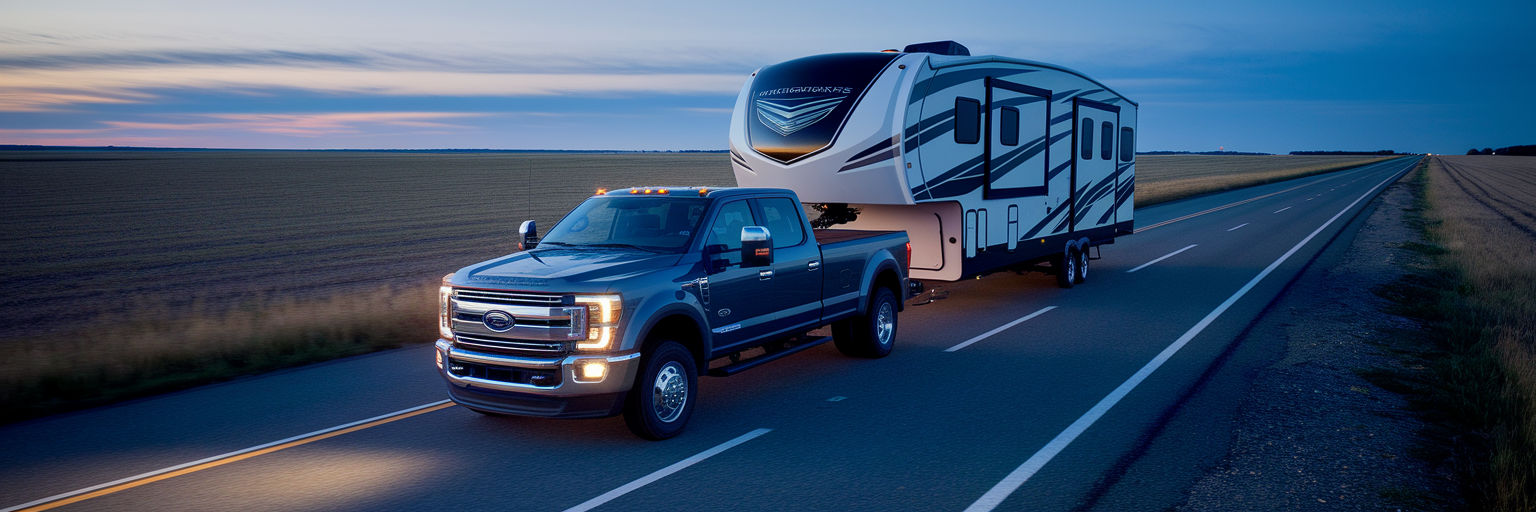
When the job calls for pulling a fifth-wheel RV, a large horse trailer, or heavy construction equipment, the conversation shifts from mid-size versatility to heavy-duty power. In this segment, absolute fuel economy takes a backseat to raw capability, but that doesn’t mean efficiency is irrelevant. The focus here becomes relative efficiency, making the most cost-effective choice within a category built for extreme work.
The primary decision is between a large-displacement gasoline V8 and a heavy-duty turbo-diesel like Ford’s Power Stroke or Ram’s Cummins. While a gas HD truck has a lower initial purchase price, a diesel is the smarter long-term investment for anyone who tows heavy and often. The reason is torque. A heavy-duty diesel engine produces massive torque at low RPMs, allowing it to pull immense loads without feeling strained. This efficiency under load means better fuel economy and less wear and tear on the engine over time.
A critical factor often overlooked by buyers is the axle ratio. Think of it like the gears on a bicycle. A “taller” gear (lower numerical ratio) is good for highway cruising without a load, while a “shorter” gear (higher numerical ratio) provides more leverage for getting a heavy load moving. Choosing the correct axle ratio for your typical towing weight is one of the most important decisions you can make. It ensures the engine operates in its most efficient powerband, optimizing both performance and fuel consumption. With a properly configured truck, the 2025 truck towing capacity can be staggering. For instance, a powerhouse like the Ford Super Duty can be equipped to tow up to 40,000 pounds, a testament to modern heavy-duty engineering.
Driving Techniques and Prep for Better Fuel Economy
Beyond choosing the right truck and powertrain, how you drive and prepare your vehicle can have a significant impact on fuel consumption. These actionable tips can help you figure out how to improve towing mpg, regardless of what you drive.
First, adjust your driving style. Aggressive acceleration and hard braking force the engine to work harder and burn more fuel. When towing, smooth and steady inputs are key. Use your truck’s tow/haul mode, which adjusts transmission shift points to keep the engine in its optimal power range and reduce gear hunting. On open highways, using cruise control can help maintain a consistent speed, further improving efficiency.
Second, focus on load management. A properly balanced trailer is not only safer, but it also creates less strain on the tow vehicle. Ensure the tongue weight is correct (typically 10-15% of the total trailer weight) to prevent trailer sway. Just as important is to remove any unnecessary weight from both the truck and the trailer. Every extra pound requires more energy to move.
Finally, don’t neglect aerodynamics and maintenance. An open truck bed creates significant aerodynamic drag. Adding a tonneau cover can smooth the airflow over the truck and measurably improve fuel economy, especially at highway speeds. Most importantly, check your tire pressure. Underinflated tires on either the truck or the trailer dramatically increase rolling resistance, forcing your engine to burn more fuel to maintain speed. It’s one of the easiest and most effective ways to maximize efficiency. Proactive vehicle care is crucial, as small issues can lead to bigger problems and worse fuel economy. Keeping an ear out for unusual sounds, for example, is a simple habit that can help you catch problems early, much like the issues discussed when you wonder, “why is my car squeaking when I drive?“