
The 2026 Ram 1500 HEMI vs Hurricane Powertrain Dilemma
The choice of an engine has always been central to the identity of a pickup truck. For the 2026 Ram 1500, this decision represents a significant turning point, pitting a legendary powertrain against its technologically advanced successor. The debate over the 2026 Ram 1500 HEMI vs Hurricane is more than a simple comparison of specifications; it is a choice between two distinct engineering philosophies. On one side stands the venerable 5.7L HEMI V8, an engine celebrated for its visceral sound, immediate response, and decades of proven service. On the other is the new 3.0L twin-turbo Hurricane inline-six, a modern marvel of efficiency and power born from data-driven design.
This decision goes beyond what is written on a spec sheet. It touches on the emotional connection drivers have with their vehicles. The HEMI offers a familiar, rumbling character that has defined American trucks for a generation. In contrast, the Hurricane presents a compelling case built on superior output, improved fuel economy, and a refined driving experience. For potential buyers, the question is not just which engine is better, but which engine is better for their specific needs and desires.
To help you make an informed choice, this guide will dissect the key differences between these two powertrains. We will explore raw performance and acceleration, real-world towing and hauling capabilities, and the practicalities of fuel economy and daily driving costs. Furthermore, we will consider long-term reliability and the overall driving experience each engine delivers. For 2026, Ram offers two compelling but very different paths to power, making the final decision a personal one that depends entirely on what you value most in a truck.
A Deep Dive into the 3.0L Hurricane Inline-Six

Technical Architecture and Twin-Turbo Power
The 3.0L Hurricane engine represents a fundamental shift in powertrain engineering for Ram. At its core is an inline-six configuration, a design inherently smoother and more balanced than a V-engine due to its perfect primary and secondary balance. This architecture results in less vibration and a more refined operational character. The real story, however, lies in its induction system. The Hurricane employs a twin-turbocharging setup where two smaller, low-inertia turbos are each responsible for feeding three of the six cylinders. This design is critical for minimizing turbo lag, the slight delay in power delivery often associated with turbocharged engines. By using smaller turbos that can spool up quickly, the engine provides a broad and responsive torque curve that feels potent across the entire rev range.
Performance Figures and Driving Dynamics
The engineering translates directly into impressive output. The standard-output version of the Hurricane delivers formidable numbers that eclipse its V8 predecessor. The official Ram Hurricane engine specs are 420 horsepower and 469 lb-ft of torque. These figures are not just for bragging rights; they have a tangible impact on the driving experience. The substantial torque, available low in the rev range, provides strong, confident acceleration from a standstill. On the highway, this power translates into effortless passing and merging, as the engine does not need to work hard to deliver a surge of speed. The power delivery is less about a dramatic roar and more about a relentless, smooth push that builds speed with surprising urgency.
The Engineering Philosophy: Efficiency Meets Power
The primary goal behind the Hurricane’s development was to achieve a difficult balance: surpass the V8’s power and torque while delivering a significant improvement in fuel efficiency. This was accomplished through a suite of modern technologies. High-pressure direct fuel injection ensures a precise and efficient combustion process, maximizing power extraction from every drop of fuel. Advanced thermal management systems help the engine reach its optimal operating temperature quickly, further boosting efficiency, especially on short trips. The entire package is a testament to a philosophy of “right-sizing,” where a smaller, more technologically dense engine can outperform a larger, naturally aspirated one. The Hurricane was engineered not just to replace the HEMI, but to set a new benchmark for what a modern truck powertrain can achieve in both performance and economy.
Understanding the Enduring Appeal of the 5.7L HEMI V8
Proven Specifications and Character
While the Hurricane boasts superior numbers, the 5.7L HEMI V8 remains a compelling choice rooted in familiarity and trust. Its specifications are well-known and respected in the truck world, producing a stout 395 horsepower and 410 lb-ft of torque. For years, this level of Ram 5.7 HEMI performance has been the benchmark for a work-ready, daily-drivable pickup. It offers more than enough power for most towing and hauling tasks while providing the confident acceleration drivers expect from a full-size truck. The HEMI is not about chasing the highest possible output; it is about delivering reliable, accessible power from a powertrain with a long and celebrated history.
The Intangible V8 Experience
The appeal of the HEMI extends far beyond its specifications. It offers an intangible experience that numbers on a page cannot capture. The moment you start the engine, you are greeted with the signature, deep exhaust note that is unmistakably a V8. This auditory feedback is a core part of the truck’s character. On the road, its power delivery is perfectly linear. As a large, naturally aspirated engine, there is no delay or waiting for turbos to spool. The throttle response is immediate and direct, creating a connected feeling between the driver’s right foot and the rear wheels. This analog character provides a sense of control and predictability that many enthusiasts cherish. For those who believe a truck should sound and feel a certain way, the HEMI delivers an authentic experience that modern, smaller engines often struggle to replicate.
Mechanical Simplicity and Reliability
In an era of increasing complexity, the HEMI’s traditional architecture is one of its greatest strengths. Its pushrod design is mechanically simpler than the Hurricane’s dual overhead cam setup. It forgoes the turbos, intercoolers, and extensive plumbing required for a forced-induction engine. This simplicity is valued by many owners and mechanics for its perceived long-term durability and more straightforward maintenance. After decades in production, the 5.7L HEMI is a known quantity. Technicians across the country are familiar with its workings, potentially leading to easier and more affordable repairs down the line. For buyers who prioritize a proven track record and the peace of mind that comes with a less complex design, the HEMI represents a solid, dependable choice. It is a reminder that how to keep your car’s engine running for years often begins with a foundation of proven engineering.
Head-to-Head: Acceleration and On-Road Performance
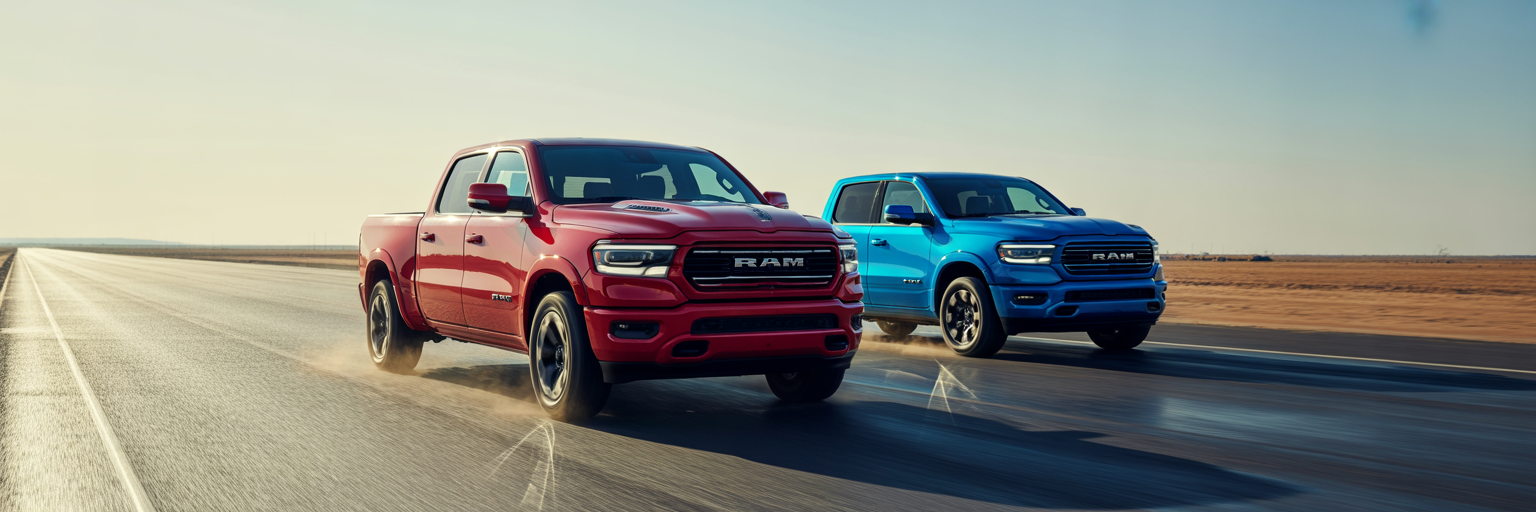
When the two engines are compared directly in motion, the differences in their engineering philosophies become immediately apparent. Quantifiably, the Hurricane-equipped Ram 1500 is the quicker truck. Its advantage in both horsepower and torque gives it a clear edge in straight-line acceleration, particularly in 0-60 mph sprints. As reported by Car and Driver, testing shows the Hurricane-powered Ram is notably quicker than its HEMI V8 predecessor, confirming what the specifications suggest. This makes the Hurricane feel decidedly more athletic and responsive when you demand maximum power.
However, the qualitative differences in power delivery are just as important. The HEMI V8 is defined by its instant, off-the-line grunt. The power is immediate and linear, providing a satisfying shove from the moment you touch the accelerator. In the Hurricane I6 vs V8 debate, this is the HEMI’s signature trait. In contrast, the Hurricane’s power feels most potent in the mid-range. While there is a brief moment of spool-up from a dead stop, the twin-turbos quickly come to life, delivering a powerful surge that makes highway passing and on-ramp merges feel effortless. The engine pulls relentlessly through the middle of the rev range, providing a wave of torque that the HEMI cannot match.
Modern engineering has done an admirable job of minimizing turbo lag in the Hurricane, but a subtle difference in immediacy remains compared to the HEMI’s naturally aspirated response. The choice comes down to driving style. If you value that instant, classic V8 feel, the HEMI delivers. If your priority is all-out acceleration and dominant highway passing power, the Hurricane is the clear winner.
| Metric | 5.7L HEMI V8 | 3.0L Hurricane I6 (Standard Output) |
|---|---|---|
| Horsepower | 395 hp | 420 hp |
| Torque | 410 lb-ft | 469 lb-ft |
| Power Delivery | Linear, instant response | Strong mid-range surge |
| Signature Sound | Deep, rumbling V8 note | Refined, smooth inline-six hum |
| Best for… | Immediate throttle feel, classic character | All-out acceleration, highway passing |
Towing Prowess and Hauling Capability
For many truck buyers, the ability to perform under load is the most critical measure of an engine’s worth. In this arena, the Hurricane’s engineering provides a distinct advantage. The key metric for towing is torque, and the Hurricane’s 469 lb-ft significantly outmuscles the HEMI’s 410 lb-ft. This extra twisting force is what gets a heavy trailer moving and keeps it at speed, especially on inclines. The Hurricane’s twin-turbos are designed to deliver this peak torque much lower in the rev range than the naturally aspirated HEMI. This means the engine does not have to work as hard to pull a heavy load.
This translates into a more relaxed and confident towing experience. When pulling a trailer up a grade, the Hurricane-powered Ram can often hold a gear and maintain speed at lower RPMs, resulting in a quieter and less strained journey. The HEMI, while fully capable, may need to downshift more frequently and rev higher to access the core of its power band. This difference in character can have a significant impact on driver fatigue and confidence over a long haul. The Hurricane simply feels more effortless when put to work.
This performance challenges the long-held perception that a V8 is inherently superior for towing. Modern powertrain design has shown that a smaller, turbocharged engine with a well-managed torque curve can be more effective. The Hurricane’s ability to generate substantial low-end power is precisely what is needed for demanding tasks, a principle that is consistent with how we evaluate powertrains in similar to how other truck comparisons weigh low-end power. While the Ram 1500 towing capacity is influenced by more than just the engine, the Hurricane’s torque profile makes it the more capable and composed choice for those who frequently tow or haul heavy loads.
Fuel Economy and Daily Driving Realities
Beyond performance, the practicalities of day-to-day ownership play a huge role in the engine decision. The Hurricane inline-six was engineered with efficiency as a primary goal, and it is expected to deliver better fuel economy ratings across city, highway, and combined cycles compared to the 5.7L HEMI V8. While official EPA figures can vary by configuration, the advantage for the Hurricane is clear. For a driver covering average distances, this difference can translate into meaningful savings at the pump over the course of a year.
To put this into perspective, consider the potential annual savings for a driver who travels 15,000 miles per year:
- A 2 MPG improvement in combined fuel economy could save over $300 annually (assuming gas at $3.50/gallon).
- A 3 MPG improvement could push those savings closer to $500 per year.
The daily driving experience also differs in terms of refinement. The Hurricane’s inherently balanced inline-six design and modern sound insulation make for a quieter, more serene cabin during cruising. The HEMI, by contrast, provides a more constant, satisfying rumble that is always present, reminding you of the V8 under the hood. The choice between these two sound profiles is entirely subjective.
However, there is a crucial nuance to consider. Real-world fuel economy is heavily influenced by driving style. The Hurricane’s efficiency advantage is most pronounced during steady-state cruising and gentle acceleration. If a driver frequently demands maximum power and keeps the turbos spooled up, its fuel consumption can drop sharply. The HEMI’s fuel economy, while lower overall, tends to be more consistent regardless of driving habits. This means an aggressive driver might see a smaller real-world efficiency gap between the two engines than the official numbers suggest.
Long-Term Reliability and Maintenance Considerations
For any truck owner, long-term reliability is a paramount concern. Here, the two engines present a classic trade-off between proven simplicity and modern complexity. The 5.7L HEMI V8 has a multi-decade track record, making it a well-understood and trusted powertrain. The Hurricane, while built with robust materials and subjected to extensive durability testing by Stellantis, is a newer and more intricate piece of machinery.
The key differences from a mechanical standpoint can be broken down:
- Core Design: The HEMI utilizes a simple and durable pushrod V8 architecture that has been refined over many years. The Hurricane features a more complex dual overhead cam (DOHC) design, which is more efficient but has more moving parts.
- Component Count: The Hurricane’s twin-turbo system adds significant components, including the turbochargers themselves, intercoolers, wastegates, and extensive plumbing. Each of these represents a potential point of failure over a high-mileage lifespan that does not exist on the naturally aspirated HEMI.
- Maintenance and Repairs: The HEMI is a familiar engine to nearly any mechanic in North America, which can lead to simpler diagnostics and more affordable repairs. The new Hurricane may require more specialized knowledge or tools, particularly in its early years on the market.
This does not mean the Hurricane is unreliable. It is engineered to withstand the rigors of truck duty. However, the HEMI’s mechanical simplicity offers a certain peace of mind for buyers who prioritize a long history of dependability. The choice involves weighing the HEMI’s proven, time-tested design against the advanced engineering of the Hurricane. It is a decision that touches on the core principles of understanding why some high-mileage cars age better than others, where simplicity often correlates with longevity.
Configuration Availability, Trims, and Cost
Practical purchasing considerations can often be the deciding factor, and the availability of each engine across the 2026 Ram 1500 lineup is a critical detail. For 2026, the 3.0L Hurricane inline-six is positioned as the mainstream powertrain. It is offered across a wide variety of trims and configurations, including different cab sizes, bed lengths, and both 4×2 and 4×4 drivetrains. This makes the Hurricane the default and most accessible choice for the majority of buyers.
In contrast, the 5.7L HEMI V8 sees its availability significantly restricted. For the 2026 model year, it is expected to be offered only in specific, and often higher-end, configurations, such as certain Crew Cab 4×4 models. This is a crucial point for a buyer with specific needs. If you require a Quad Cab or a 4×2 truck, the HEMI may not even be an option, making the decision for you. This strategy positions the HEMI as more of a specialty choice for traditionalists who are willing to select a specific configuration to get it.
The cost implications are closely tied to this availability. Rather than being a simple standalone option with a clear price premium, the engine choice is often dictated by the trim level itself.
- Lower to mid-range trims will likely feature the standard-output Hurricane as the primary engine.
- The HEMI V8 may be bundled within specific packages on trims like the Laramie or Limited, effectively tying its cost to other premium features.
- The High-Output version of the Hurricane is reserved for top-tier performance models like the RHO.
This approach means buyers must align their budget and desired features with the available powertrain for that specific trim. It is a practical constraint that makes browsing our other head-to-head comparisons a useful exercise in understanding how manufacturers package their options.
The Final Verdict: Which Engine Makes Sense for You?
After analyzing performance, towing, efficiency, and reliability, it is clear that there is no single “winner” in this comparison. Instead, Ram offers two excellent but fundamentally different powertrains, each appealing to a distinct type of truck buyer. The decision of which is the best engine for Ram 1500 depends entirely on your personal priorities and what you value most in a vehicle.
The Ideal Hurricane Buyer: This individual prioritizes cutting-edge performance and modern technology. They are drawn to objective metrics: faster acceleration, higher torque for towing, and better fuel economy. They appreciate the engineering that allows a smaller engine to outperform a larger one and are comfortable with the complexity that comes with it. For them, the Hurricane represents the most capable, efficient, and powerful truck available, and they want the best that modern engineering has to offer.
The Ideal HEMI Buyer: This is an enthusiast who values the emotional connection and character of their truck. The iconic V8 sound, the immediate throttle response of a naturally aspirated engine, and the peace of mind from a mechanically simpler, time-tested design are their top priorities. They are willing to trade some on-paper performance and fuel efficiency for an authentic, visceral driving experience. For this buyer, the way the truck feels and sounds outweighs the numbers on a spec sheet.
Ultimately, Ram has created a fantastic choice for consumers. It is a decision between the future of truck performance, embodied by the sophisticated and powerful Hurricane, and the celebrated peak of a classic American formula, represented by the charismatic HEMI. By understanding your own needs and desires, you can confidently choose the path that is right for you as you explore the world of modern trucks.