
A New Powertrain Dilemma for Off-Road Enthusiasts
The automotive industry is steadily moving away from large-displacement engines, favouring smaller, more efficient turbocharged powerplants. Yet, in a surprising move for 2026, Ram is offering buyers a genuine dilemma. This comprehensive 2026 Ram 1500 Rebel review explores the choice between two distinct engineering philosophies. The standard engine is the modern 3.0L twin-turbo Hurricane inline-six, but buyers can also opt for the return of the legendary 5.7L HEMI V8. This decision is not simply about old versus new technology. It represents a choice between two different definitions of performance, sound, and driving character.
For off-road enthusiasts, the Ram Rebel has always been a formidable option. Now, the powertrain choice adds a critical layer to the decision making process, much like when comparing other segment leaders. This guide will dissect the performance of each engine to help you determine which Rebel is the right fit for your adventures. We will compare them across several key areas:
- Raw power and technical specifications
- On-road acceleration and daily driving manners
- Core off-road performance in varied terrains
- Towing and payload capabilities
- Fuel efficiency and long-term value
- The subjective, but crucial, elements of sound and feel
Understanding these differences is essential. The goal of this analysis is to provide the detailed insights needed to choose the powertrain that aligns perfectly with your priorities. Whether you value the tradition and sound of a V8 or the cutting-edge performance and efficiency of a twin-turbo six cylinder, we will equip you to make an informed decision.
Comparing the 2026 Ram Rebel HEMI and Hurricane Engines
Before exploring how these trucks feel on the road and trail, it is important to understand the fundamental engineering that defines them. The choice between the HEMI and the Hurricane is a choice between two distinct approaches to generating power. While both are paired with the same excellent eight speed automatic transmission, their on paper specifications tell very different stories about their intended strengths and weaknesses.
The Legacy Powerplant: 5.7L HEMI V8
The 5.7L HEMI V8 is a familiar and respected engine. As a naturally aspirated powerplant, it produces its 395 horsepower and 410 lb-ft of torque through sheer displacement. Its design is known for delivering power in a smooth, linear fashion, building progressively as the RPMs climb. For years, the 2026 Ram Rebel HEMI has been synonymous with dependable, predictable muscle. This engine has earned a strong reputation for reliability and a straightforward character that many truck owners appreciate.
The Modern Contender: 3.0L Hurricane I-6
The 3.0L Hurricane represents Stellantis’s forward-looking engineering strategy. This inline-six engine uses two turbochargers to produce an impressive 420 horsepower and a substantial 469 lb-ft of torque from a much smaller displacement. The Ram Rebel Hurricane engine is designed for efficiency and potent performance, with a focus on delivering strong torque in the low to mid RPM range, where drivers need it most for acceleration and towing.
Engineering Philosophies: V8 vs. Turbo I-6
The core difference lies in how each engine delivers its power. The naturally aspirated HEMI V8 offers an immediate and predictable throttle response. What you ask for with your right foot is exactly what you get, with no delay. In contrast, the turbocharged Hurricane relies on exhaust gases to spin its turbines and force more air into the engine. While modern anti-lag technology has dramatically reduced turbo lag, there is still a fundamental difference in how power builds compared to a large displacement V8. Another significant factor is weight. The more compact inline-six engine is lighter than the V8, reducing weight over the front axle. This change positively impacts the truck’s front-end weight distribution, which can improve agility and contributes to a higher overall payload capacity.
| Specification | 5.7L HEMI V8 | 3.0L Hurricane I-6 (Standard Output) |
|---|---|---|
| Engine Type | Naturally Aspirated V8 | Twin-Turbocharged Inline-6 |
| Displacement | 5.7 Liters | 3.0 Liters |
| Horsepower | 395 hp | 420 hp |
| Torque | 410 lb-ft | 469 lb-ft |
| Transmission | 8-Speed Automatic | 8-Speed Automatic |
| Power Delivery | Linear, predictable build-up | Strong low-to-mid-range torque surge |
| Relative Weight | Heavier | Lighter |
This table provides a direct, at-a-glance comparison of the core technical data for both engine options. The figures are based on manufacturer-provided specifications for the 2026 model year.
On-Road Acceleration and Daily Drivability
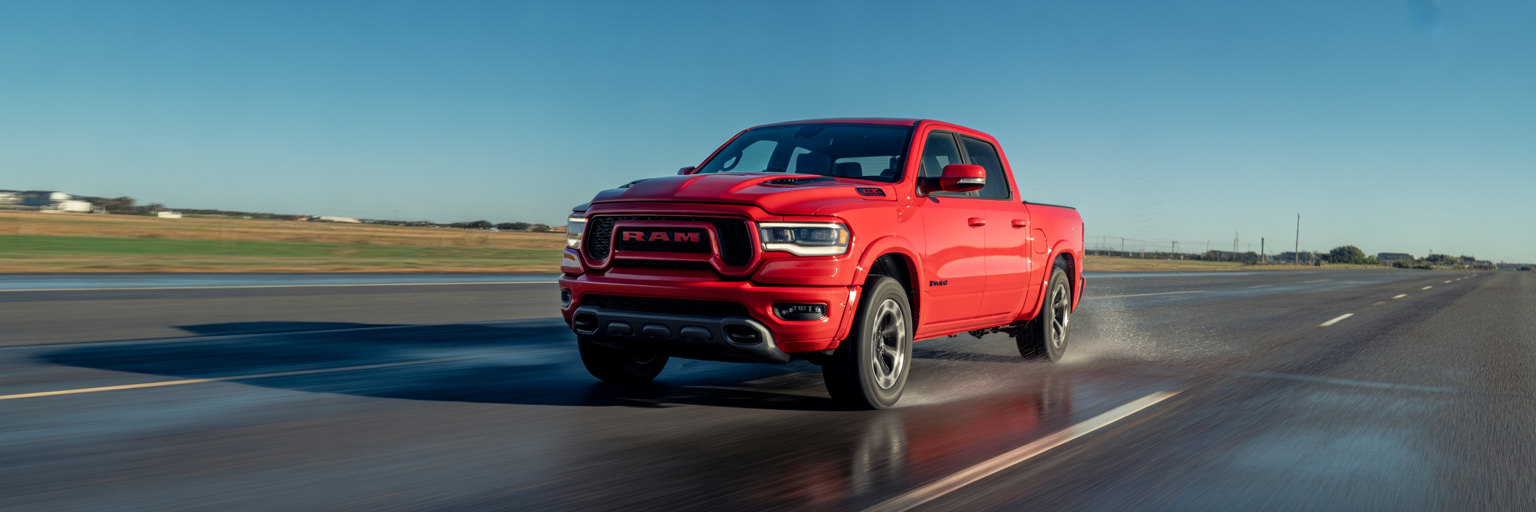
Moving from the spec sheet to the pavement, the differences between the HEMI and Hurricane become immediately apparent. How these trucks accelerate and behave in everyday traffic reveals their distinct personalities. This is where the on-paper numbers translate into tangible driving experiences, shaping everything from highway merges to navigating city streets.
Straight-Line Speed: The Hurricane’s Clear Advantage
In a straight-line acceleration test, the Hurricane engine has a decisive edge. With its higher horsepower and torque figures, the Hurricane-powered Rebel can sprint from 0 to 60 mph in approximately 5.1 seconds. This is a full second faster than the HEMI, which accomplishes the same run in about 6.1 seconds. On the road, this translates to a feeling of abundant, readily available power. Merging onto a busy highway or executing a quick pass is effortless. The twin turbos provide a strong surge of torque that pushes you back in your seat, making the truck feel impressively quick and responsive for its size.
Daily Driving with the HEMI: Smooth and Predictable
While the Hurricane wins on outright speed, the HEMI offers a different kind of satisfaction in daily driving. Its power delivery is exceptionally smooth and deliberate. There are no sudden surges, just a confident, linear build-up of speed that many traditional truck owners find reassuring and enjoyable. The HEMI provides a relaxed driving character. It never feels strained, cruising comfortably with a satisfying hum that speaks to its large displacement. This predictable nature makes for a very smooth and composed ride, whether you are running errands around town or settling in for a long road trip.
Commuting Considerations: Stop-and-Go Performance
In the common scenario of stop-and-go city traffic, the two engines again show their different traits. The HEMI’s linear throttle response makes it very easy to modulate power from a complete stop. You can pull away from a traffic light smoothly without any jerkiness. The Hurricane, with its eagerness to build boost, can feel a bit more energetic off the line. While easily managed, its responsiveness requires a slightly more delicate touch on the throttle to achieve the same level of smoothness as the HEMI. The trade-off is clear: the Hurricane offers a more thrilling and responsive on-road experience, while the HEMI provides a more classic, relaxed, and arguably smoother driving character for daily commutes.
Core Off-Road Performance Showdown
When the pavement ends, the true test for any Rebel begins. Both the HEMI and Hurricane versions are built on an exceptionally capable platform, but their different power delivery characteristics make them better suited for different types of off-road challenges. Understanding these nuances is key to choosing the right truck for the trails you plan to conquer.
Shared Foundation of Off-Road Capability
First, it is crucial to recognize that both engine options share the same formidable off-road hardware. This shared foundation ensures that every 2026 Rebel is a highly capable machine right from the factory, putting it in direct competition with other capable off-road trucks. Key standard features include:
- Bilstein performance-tuned shock absorbers
- A factory 1-inch suspension lift for improved ground clearance
- Aggressive 33-inch all-terrain tires
- Protective skid plates for the front suspension, transfer case, and fuel tank
- An electronic-locking rear differential for maximum traction
This equipment, along with the optional Active-Level air suspension available for both models, means the core platform is identical. The primary differentiator in the HEMI vs Hurricane off-road debate is how the driver utilizes each engine’s unique powerband.
The HEMI’s Domain: Technical Rock Crawling
The 5.7L HEMI V8 truly shines in low-speed, technical terrain. When navigating a challenging rock garden or a tight, obstacle-ridden trail, precise throttle control is paramount. The HEMI’s linear power delivery allows the driver to apply torque with surgical precision. There are no sudden power surges that could cause a tire to slip or the truck to lurch unexpectedly. This predictability gives the driver immense confidence to slowly creep over obstacles, making the HEMI the preferred choice for those who frequent slow, methodical trails where control is more important than outright power.
The Hurricane’s Strength: Momentum and Power
Where the HEMI excels in finesse, the Hurricane dominates with force. Its massive wave of low-end torque is a significant advantage in situations that require momentum. When powering through deep sand, thick mud, or charging up a steep, loose incline, the Hurricane’s ability to quickly generate and maintain wheel speed is invaluable. The twin turbos spool up rapidly, providing the instant grunt needed to keep the truck moving forward without getting bogged down. This makes the Hurricane-powered Rebel an ideal companion for high-speed desert running or tackling soft, challenging terrain.
Hypothetical Trail: Putting Both to the Test
Imagine a mixed trail that starts with a tricky rock garden. The HEMI-powered Rebel would navigate this section with ease, the driver carefully modulating the throttle to place each wheel perfectly. The engine’s predictable response would prevent wheel spin and allow for a controlled ascent. Now, picture the trail opening up into a high-speed dirt section followed by a steep, sandy climb. Here, the Hurricane-powered Rebel would pull ahead. The driver could keep the engine in its powerband, using the immense torque to maintain momentum through the fast sections and effortlessly power up the sandy hill where the HEMI might need to work harder. Ultimately, the better off-road engine truly depends on the type of terrain you encounter most often.
Towing and Payload Hauling Comparison
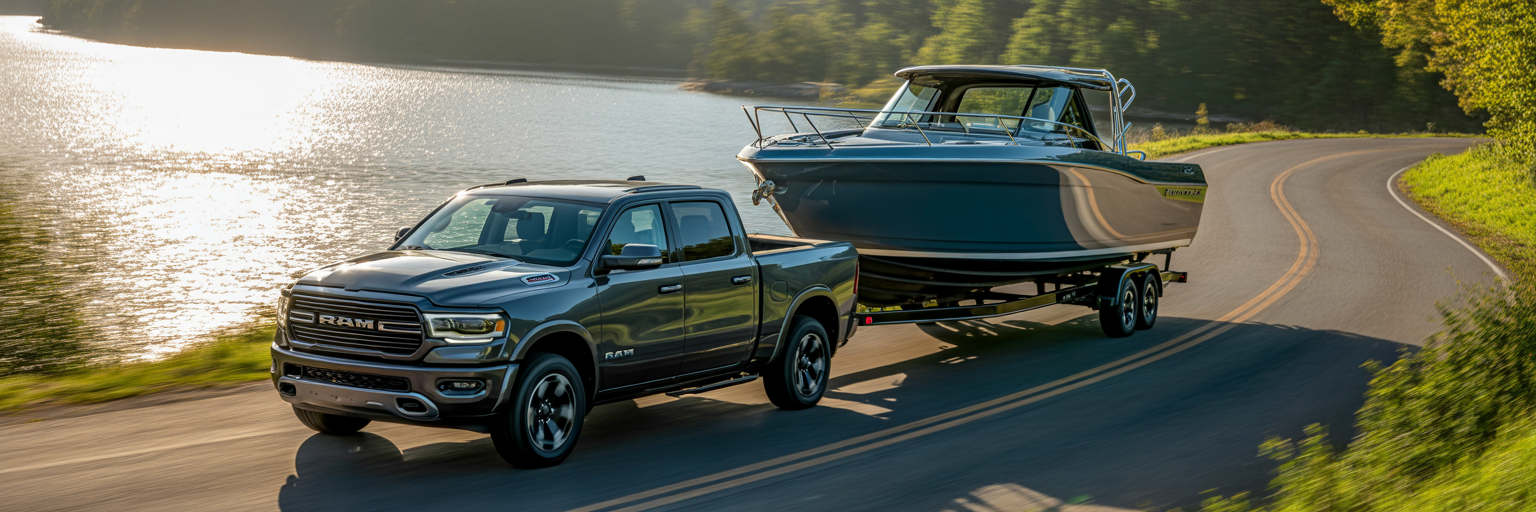
For many truck owners, capability is measured in pounds. The ability to confidently tow a trailer or haul a heavy load in the bed is a non-negotiable requirement. In this arena of pure utility, the engineering differences between the HEMI and the Hurricane create a clear hierarchy, with one engine demonstrating a distinct advantage for work-related tasks.
Torque is King: The Hurricane’s Towing Prowess
When it comes to towing, torque is the most critical figure, and the Hurricane engine delivers it in abundance. With 469 lb-ft of torque available at lower RPMs, it is purpose-built for pulling heavy loads. Imagine towing a large camper or a boat up a steep mountain pass. The Hurricane-powered Rebel can maintain its speed with far less effort. The transmission does not need to constantly downshift to find power, resulting in a smoother, quieter, and more stable towing experience. The engine operates in its efficiency sweet spot, providing confident pulling power without feeling strained.
The HEMI’s Towing Character
The HEMI V8 is certainly a capable tow vehicle, and its official Ram Rebel towing capacity is nothing to dismiss. However, its character under load is different. To access its peak torque of 410 lb-ft, the HEMI needs to rev higher. This means that when faced with the same incline, the HEMI will be working harder. The engine will be louder, and the transmission will be busier as it shifts to keep the V8 in its powerband. While it will get the job done, the experience is less relaxed compared to the Hurricane. This makes it a solid choice for occasional towing, but for those who frequently pull heavy loads, the Hurricane’s effortless performance is a significant benefit, similar to what you’d find in some of the best used trucks for towing.
Payload Capacity: A Clear Win for the Hurricane
The advantage for the Hurricane extends to payload as well. Payload capacity is the total weight a truck can carry in its cab and bed, and it is directly affected by the vehicle’s own curb weight. Because the 3.0L Hurricane inline-six is significantly lighter than the 5.7L HEMI V8, that weight savings is passed directly on to the user in the form of increased payload capacity. For those who plan to haul heavy materials like gravel, lumber, or heavy equipment in the bed, the Hurricane-powered Rebel offers a higher maximum rating, making it the more practical choice for a work truck.
Efficiency, Cost, and Long-Term Value
Beyond performance and capability, the practical considerations of cost and efficiency often play a major role in the final purchase decision. Analyzing the upfront price, ongoing fuel expenses, and long-term ownership prospects reveals another set of trade-offs between the HEMI and Hurricane powertrains. These financial factors can help clarify which engine offers the better overall value for your specific situation.
Fuel Efficiency and Real-World Costs
On paper and in the real world, the 3.0L Hurricane engine is the more efficient choice. Official EPA ratings give it a slight edge, and real-world reports consistently show an advantage of 1-2 miles per gallon over the HEMI V8 in mixed driving conditions. While that may not sound like much, it adds up over time. For a driver covering 15,000 miles per year, that 2 MPG difference could translate into significant annual fuel savings. In an era of fluctuating gas prices, this ongoing reduction in running costs is a compelling argument in favour of the modern, smaller-displacement engine.
Initial Purchase Price
The financial advantage for the Hurricane begins at the dealership. For the 2026 model year, the 3.0L Hurricane I-6 is the standard engine in the Ram Rebel. The 5.7L HEMI V8, despite being the older technology, is offered as a cost option, typically adding around $1,200 to the sticker price. This means that choosing the more powerful, more efficient Hurricane engine actually saves you money upfront. The extra cost for the HEMI is an intentional investment made by buyers who specifically want the V8 experience, not because it offers a performance benefit.
Long-Term Ownership and Warranty
Some buyers may have concerns about the long-term reliability of a new, complex twin-turbo engine compared to the time-tested HEMI V8. To address this, Ram offers the same comprehensive powertrain warranty on both engines: 10 years or 100,000 miles. This warranty provides significant peace of mind and effectively levels the playing field, ensuring that owners are protected against major component issues regardless of their choice. Proper maintenance is key to longevity for any engine, and following a good service schedule will help you keep your car’s engine running for years. The value proposition is clear: the Hurricane offers immediate savings on the purchase price and ongoing savings at the pump, while the HEMI’s extra cost is a deliberate payment for its unique sound and feel.
The Intangibles: Sound and Driving Character
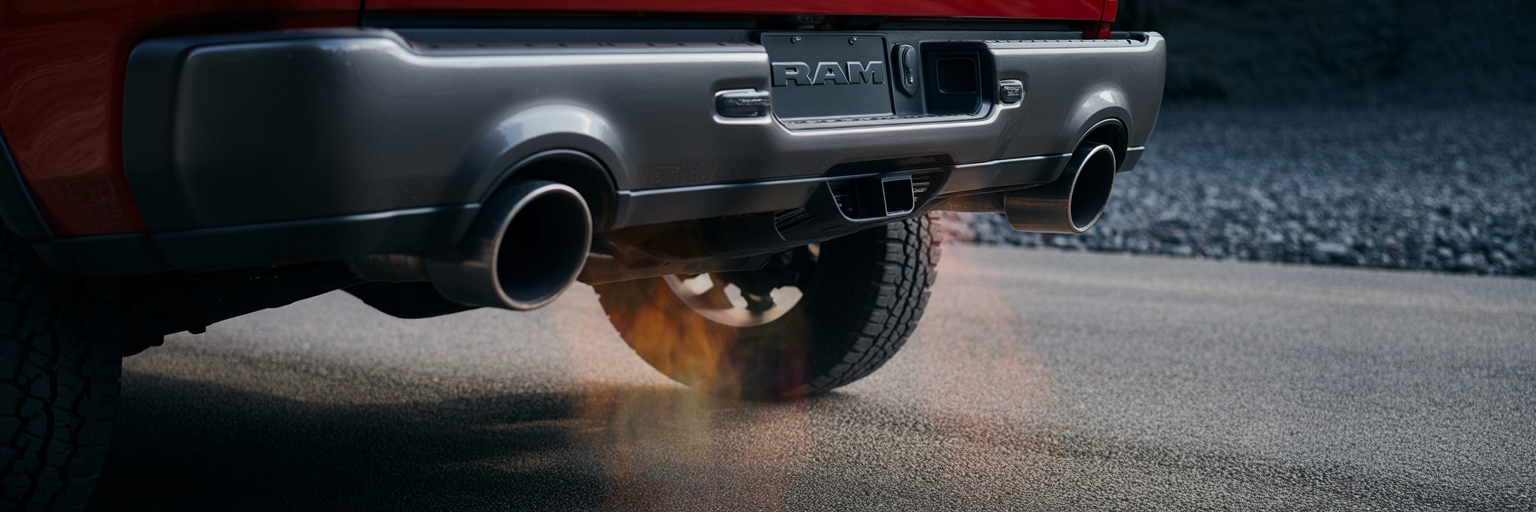
For many automotive enthusiasts, a vehicle is more than just a collection of specifications and performance figures. It is an emotional purchase, driven by subjective factors like sound, feel, and overall character. This is where the battle between the HEMI and the Hurricane becomes less about logic and more about passion. The auditory experience and driving personality of each truck are profoundly different, and for many buyers, this will be the ultimate deciding factor.
The 5.7L HEMI V8 offers an iconic soundtrack that is, for many, non-negotiable. At idle, it settles into a deep, throaty rumble that promises power. Under acceleration, that rumble builds into a powerful, muscular roar that is quintessentially American V8. Even at cruising speeds on the highway, there is a satisfying hum that constantly reminds you of the large-displacement engine at your command. This auditory experience is visceral and deeply connected to the traditional idea of a powerful truck. It feels raw, mechanical, and nostalgic.
In contrast, the sound profile of the 3.0L Hurricane I-6 is more modern, refined, and technologically focused. It lacks the traditional V8 rumble, instead offering a smoother, more subdued note at idle and during gentle acceleration. When you demand power, the dominant sound is the distinct whistle of the twin turbochargers spooling up. It is the sound of efficient, forced-induction performance. As noted in a comparison test by MotorTrend, the Hurricane’s acceleration is quantifiably faster, but the HEMI’s appeal lies in its classic character. The Hurricane feels potent, advanced, and incredibly responsive, but its soundtrack speaks of modern engineering rather than old-school muscle.
This brings the decision to a very personal question. It is a choice between two different types of satisfaction. Do you want the heart-thumping, visceral soundtrack of a classic V8 that connects you to a long heritage of performance? Or do you prefer the quiet confidence and potent, whooshing hum of advanced, modern engineering? There is no right answer, only the one that resonates most with you.
Which Rebel Powertrain Is Right for You?
After analyzing the technical specifications, on-road manners, off-road strengths, and practical costs, the choice between the 2026 Ram Rebel HEMI and Hurricane comes down to individual priorities. There is no single “best” engine. The correct choice is the one that best aligns with how you plan to use your truck and what you value most in a driving experience. To make the decision easier, we have outlined two distinct buyer profiles.
You should choose the HEMI if:
- You prioritize the traditional sound and feel of a V8 engine above all else.
- Your off-roading consists primarily of slow, technical trails and rock crawling where linear throttle control is key.
- You are less concerned with maximizing fuel economy or achieving the fastest acceleration times.
- You view the engine’s character as an essential part of the ownership experience and are willing to pay a premium for it.
The Hurricane is the right choice for you if:
- You want the maximum available performance, including faster acceleration and superior towing capability.
- You prioritize fuel efficiency and lower running costs for your daily driver and workhorse.
- Your off-roading involves high-speed trails, sand, or mud where momentum and low-end torque are critical.
- You value modern technology and want the most capable and versatile powertrain available from the factory.
Ultimately, both powertrains are housed within an exceptional chassis, making the Rebel a top contender for the best off-road truck 2026. Whether you opt for the nostalgic roar of the HEMI or the modern muscle of the Hurricane, you are getting one of the most capable and well-rounded pickups on the market. We encourage you to explore our other reviews of trucks to see how the Rebel stacks up against the competition.