
For decades, the Toyota Tacoma has been the undisputed leader of the mid-size truck segment, a benchmark for reliability and off-road capability. Now, after years of anticipation, its first major redesign introduces a pivotal choice for enthusiasts. The decision facing buyers of the new 2026 Tacoma TRD Off-Road is no longer just about color or options, but about the very heart of the machine: its powertrain. This choice is between a traditional turbocharged gasoline engine and an advanced hybrid system, representing a crossroads of engineering philosophies.
Built upon the robust new TNGA-F platform, which it shares with its larger Tundra and Sequoia siblings, the new Tacoma is fundamentally stronger and more refined than its predecessor. Yet, the most significant conversation revolves around what lies under the hood. On one side is the 2.4L i-FORCE turbocharged four-cylinder, a modern take on a conventional power source. On the other is the i-FORCE MAX hybrid, a system that pairs that same engine with an electric motor for a substantial boost in performance. This presents a compelling dilemma between proven, straightforward engineering and cutting-edge, power-focused technology.
It is important to establish that both versions are immensely capable right from the factory. Every TRD Off-Road model, regardless of powertrain, comes equipped with the same essential hardware for conquering the trail. This includes a locking rear differential for maximum traction, Bilstein monotube shocks for superior damping, and Toyota’s sophisticated Multi-Terrain Select (MTS) and Crawl Control systems. The foundation for adventure is identical.
This article serves as a definitive guide to help you navigate this choice. We will methodically compare the gas and hybrid models across the metrics that matter most: technical specifications, low-speed trail performance, towing and hauling credentials, daily drivability, and overall value. Our goal is to provide the clarity needed to make a confident decision that aligns perfectly with how you plan to use your new truck.
Under the Hood: A Technical Look at i-FORCE vs i-FORCE MAX
Before exploring how these trucks behave on the trail, it is essential to understand the engineering that defines them. The choice between the i-FORCE and i-FORCE MAX powertrains is more than just a preference for gas or electric assistance; it is a decision that impacts weight, complexity, and even transmission availability. Here, we break down the technical differences that set the stage for their distinct performance characteristics.
The i-FORCE Gas Engine: A Modern Workhorse
The standard powertrain in the TRD Off-Road is the 2.4L turbocharged i-FORCE engine. This is not the simple, naturally aspirated engine of old but a thoroughly modern unit designed for a broad powerband and improved efficiency. It produces a healthy 278 horsepower and 317 lb-ft of torque when paired with the eight-speed automatic transmission. These figures represent a significant improvement over the previous generation’s V6, delivering torque much lower in the rev range. This engine is the workhorse of the lineup, engineered for reliability and predictability. It offers a familiar driving experience for long-time truck owners, providing linear power delivery and a character that feels direct and mechanical.
The i-FORCE MAX Hybrid: A New Dimension of Power
The optional i-FORCE MAX system is where Toyota’s engineering takes a bold step forward. It uses the same 2.4L turbocharged engine as its foundation but integrates a 48-hp electric motor directly into the eight-speed automatic transmission. This motor is powered by a 1.87-kWh Nickel-Metal Hydride battery pack located under the rear seats. The result of this synergy is a class-leading output of 326 horsepower and a massive 465 lb-ft of torque. A comprehensive Tacoma i-FORCE MAX review reveals that the system is designed not primarily for fuel economy, but for performance. The electric motor provides instant torque fill at low RPMs, eliminating turbo lag and delivering a surge of power that is both immediate and smooth.
Transmission and Drivetrain Philosophy
One of the most significant distinctions for driving purists lies in the transmission options. The i-FORCE gas engine offers something increasingly rare in the truck world: a six-speed intelligent manual transmission (iMT) with automatic rev-matching. This option, which slightly detunes the engine to 270 horsepower and 310 lb-ft of torque, provides a level of driver engagement and control that many off-roaders crave. In contrast, the i-FORCE MAX hybrid is available exclusively with the eight-speed automatic transmission. While this automatic is tuned for performance and works seamlessly with the hybrid system, the lack of a manual option for the most powerful Tacoma will be a deciding factor for some.
The Physics of Performance: Weight and Balance
The addition of a battery pack and electric motor means the i-FORCE MAX hybrid is heavier than its gasoline-only counterpart. This extra mass, estimated to be a few hundred pounds, has tangible effects on the truck’s dynamics. While the weight is mounted low in the chassis, helping to maintain a stable center of gravity, it still alters the vehicle’s overall balance and feel. The lighter gas model, particularly with the manual transmission, promises a more nimble and agile character on twisting trails and paved roads alike. The hybrid, while more powerful, carries more inertia, which influences everything from suspension tuning to braking distances and payload capacity.
| Specification | i-FORCE (Gas) | i-FORCE MAX (Hybrid) |
|---|---|---|
| Engine | 2.4L Turbocharged Inline-4 | 2.4L Turbocharged Inline-4 with Electric Motor |
| Combined Horsepower | 278 hp | 326 hp |
| Combined Torque | 317 lb-ft | 465 lb-ft |
| Transmission | 8-Speed Automatic or 6-Speed Manual | 8-Speed Automatic Only |
| Key Advantage | Lighter weight, manual option, lower complexity | Instant torque, higher output, smoother power delivery |
| Weight Impact | Lower curb weight for better agility | Higher curb weight, affects payload and balance |
Trail Dominance: Low-Speed Control and High-Impact Performance
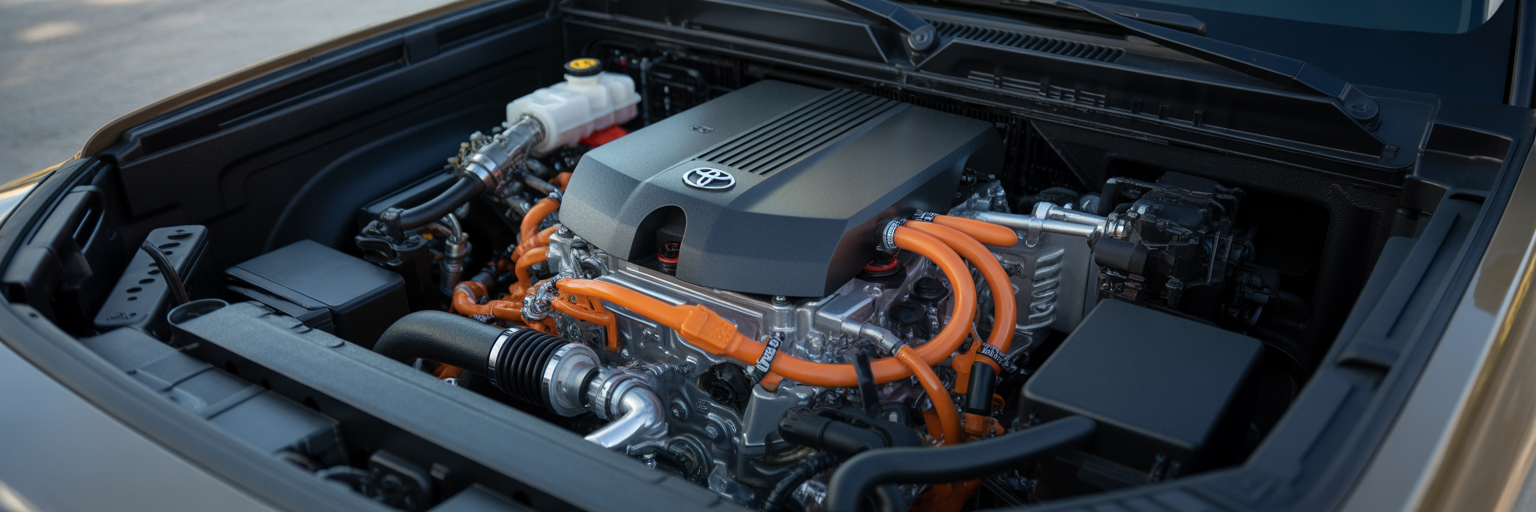
With the technical specifications established, the crucial question becomes how these differences translate to performance where it counts most: off the pavement. While both TRD Off-Road models share the same suspension and fundamental off-road aids, their powertrains create two distinct personalities on the trail. This is not just about raw power, but about how that power is delivered and controlled in challenging situations.
In the world of technical rock crawling, precision is paramount. This is where the i-FORCE MAX hybrid demonstrates a clear advantage. The instant torque from its electric motor allows for incredibly fine throttle modulation at near-zero speeds. Imagine trying to ease the tire onto a specific point on a rock ledge. The hybrid can deliver a small, precise burst of torque without the need to build engine revs, preventing the jerky movements that can cause a loss of traction or an unsettling lurch. It operates with the finesse of a surgeon’s scalpel, allowing the driver to “walk” the truck over obstacles with supreme confidence. The gas engine, while capable, requires more careful use of the throttle and brake to manage its power, feeling more like a hammer in situations that call for delicate taps.
This difference is magnified on steep, challenging inclines. The hybrid’s massive 465 lb-ft of torque is available just off idle, allowing it to ascend difficult grades with an unnerving lack of effort. It can maintain a slow, steady crawl up slick rock or loose dirt where the gas model would likely need more momentum and higher RPMs. This reliance on momentum can increase the risk of wheel spin and requires a more aggressive approach, whereas the hybrid simply relies on its immense torque reserve to pull itself up and over.
However, the narrative shifts in certain loose-terrain conditions like deep sand or thick mud. In these scenarios, the gas model’s lower curb weight can become a tangible asset. The lighter truck has a better chance of “floating” over the surface rather than digging in, providing an agility that the heavier hybrid may struggle to match. While the i-FORCE MAX can often use its sheer power to muscle through these obstacles, the lighter gas model’s nimbleness presents a different, and sometimes more effective, strategy. This creates a fascinating dynamic in any off-road truck comparison, where less weight can be as valuable as more power.
Finally, consider the shared electronic aids like Crawl Control and Multi-Terrain Select. While the underlying software is identical, the user experience is subtly different. Crawl Control, which acts as a low-speed off-road cruise control, feels exceptionally refined in the hybrid. The system can make smoother and quieter adjustments because the electric motor can add or subtract torque more precisely than a combustion engine alone. This results in a less mechanically intrusive operation, enhancing the feeling of controlled, automated progress over the toughest terrain. For readers interested in how the Tacoma stacks up against other key players in the off-road space, our detailed comparison of the Jeep Gladiator vs Toyota Tacoma offers further insights into what makes a truck truly capable off-road.
Workhorse Credentials: Towing, Hauling, and Payload
A truck’s worth is often measured by its ability to do work, and for many buyers, towing and hauling capabilities are non-negotiable. Here, the choice between the i-FORCE and i-FORCE MAX powertrains presents a counterintuitive outcome. Despite the hybrid’s commanding torque advantage, it is the simpler gasoline model that boasts the higher maximum tow rating.
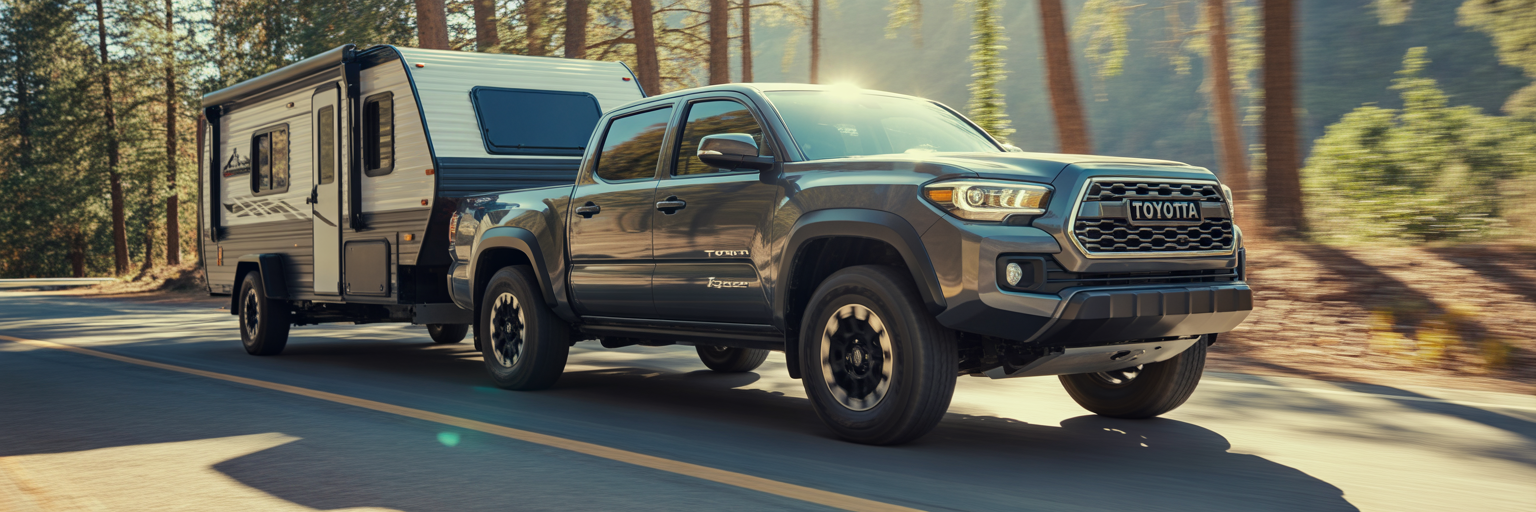
Let’s start with the most critical numbers. The gas-powered 2026 Tacoma TRD Off-Road has a maximum Toyota Tacoma towing capacity of 6,500 pounds when properly equipped. The i-FORCE MAX hybrid model, by contrast, is rated for a maximum of 6,000 pounds. The conclusion is straightforward: for buyers who consistently need to tow trailers, boats, or campers weighing between 6,000 and 6,500 pounds, the gas model is the only option in the TRD Off-Road lineup.
The engineering behind this rating provides important context. A vehicle’s tow rating is not determined by engine torque alone. It is a holistic calculation that involves the powertrain’s cooling capacity, the braking system’s effectiveness, and the chassis’s ability to remain stable under sustained heavy loads. The hybrid system, with its additional battery and power electronics, generates more heat that must be managed. The simpler, lighter i-FORCE gas setup likely has a thermal management and chassis tuning advantage that allows engineers to certify it for a higher maximum load, even with less peak power.
However, the objective data does not tell the whole story. For towing loads under the 6,000-pound limit, the subjective experience in the hybrid can feel superior. The instant electric torque makes accelerating from a stop with a heavy trailer feel effortless. There is no waiting for the turbo to spool up; the truck simply moves with authority. Climbing highway grades is also less dramatic, as the hybrid powertrain can maintain speed with lower engine RPMs and less apparent strain compared to the gas engine, which will need to downshift more frequently to stay in its powerband.
Finally, payload capacity is a critical consideration, especially for the overlanding community. Payload is the total weight a truck can carry in its cab and bed, including passengers and gear. Because the i-FORCE MAX hybrid’s components add several hundred pounds to the truck’s curb weight, its maximum payload capacity is inherently lower than that of the equivalent gas model. For adventurers planning to add heavy equipment like steel bumpers, a rooftop tent, a bed rack, and a full complement of recovery gear, the gas model’s higher payload rating provides a more robust foundation to build upon. While the new Tacoma offers impressive capabilities, those looking for maximum towing value might also consider options in the used market. Our guide to the best used trucks for towing a camper under $35,000 can provide additional perspective on finding the right workhorse for your needs.
From Trailhead to Tarmac: Daily Driving and Fuel Efficiency
While off-road prowess and workhorse credentials are vital, most trucks spend the majority of their lives on paved roads. The daily driving experience, including fuel efficiency and on-road refinement, is a critical part of the ownership equation. In this arena, the two powertrains offer distinctly different characters and financial implications.
The most anticipated benefit of the i-FORCE MAX hybrid is improved fuel economy. This advantage will be most pronounced in city and mixed driving conditions. During stop-and-go traffic, low-speed cruising, and initial acceleration, the electric motor can do much of the work, allowing the gasoline engine to shut off or operate at a lower load. This significantly reduces fuel consumption in the urban environments where traditional trucks are often at their least efficient. The hybrid system recaptures energy during braking to recharge the battery, further enhancing its efficiency in daily commutes.
Beyond fuel savings, the hybrid offers a more refined on-road demeanor. The powertrain is exceptionally smooth and quiet. Power delivery is seamless, with the electric motor masking the shifts of the automatic transmission and filling in any torque gaps from the turbocharged engine. This gives the i-FORCE MAX Tacoma a premium, almost luxury-like feel during normal driving, making it a more comfortable and relaxing companion for long trips or navigating busy streets. In contrast, the standard i-FORCE gas engine provides a more conventional truck experience. You hear more of the engine’s induction and exhaust notes, and you feel the transmission shift. For some, this auditory and tactile feedback is a desirable part of the experience.
It is important to manage expectations regarding highway efficiency. At sustained highway speeds, the electric motor’s contribution is minimized, and the 2.4L gas engine does the vast majority of the work in both models. While the hybrid will likely still hold a slight edge, the fuel economy gap between the two powertrains will narrow considerably on long road trips compared to city driving. The primary efficiency gains are found in varied-speed environments.
Ultimately, the decision involves a financial trade-off. The i-FORCE MAX hybrid will command a higher initial purchase price than its gasoline counterpart. Buyers must weigh this upfront cost against the potential for long-term fuel savings. This calculation is personal; it depends heavily on your annual mileage, the percentage of city versus highway driving you do, and the price of fuel in your area. For a high-mileage commuter, the break-even point could be reached in just a few years. For a weekend adventurer, the financial case is less compelling. When discussing the on-road feel, particularly of the traditional powertrain, it is worth noting the unique appeal of the manual option. As Car and Driver’s testing of the 2026 Toyota Tacoma TRD Off-Road 6MT highlights, the manual transmission offers a level of driver engagement that simply cannot be replicated by an automatic, a key factor for driving purists.
Calculating Value: Price, Upgrades, and Onboard Power
The concept of “value” extends far beyond the sticker price. It encompasses what you get for your money, both in terms of initial features and long-term utility. The gas and hybrid TRD Off-Road models present two fundamentally different value propositions. One offers financial flexibility and a blank canvas for personalization, while the other provides integrated technology and unparalleled convenience.
The most straightforward advantage of the i-FORCE gas model is its lower initial cost. This price difference, likely amounting to several thousand dollars, is a significant factor for many buyers. It not only lowers the barrier to entry for owning a new Tacoma but also frees up capital that can be invested directly into personalizing the truck. For the enthusiast who views their vehicle as a platform for a custom build, the gas model is the smarter financial starting point. The money saved on the powertrain could fund a host of popular and effective aftermarket upgrades, transforming the truck’s capability and appearance. Consider what that budget could cover:
- A complete 2-3 inch suspension lift kit for increased ground clearance and wheel travel
- A set of larger, more aggressive all-terrain or mud-terrain tires for superior traction
- Protective steel bumpers and rock sliders to guard against trail damage
- A high-quality winch for self-recovery and assisting others
- An overland-style bed rack and rooftop tent for remote camping adventures
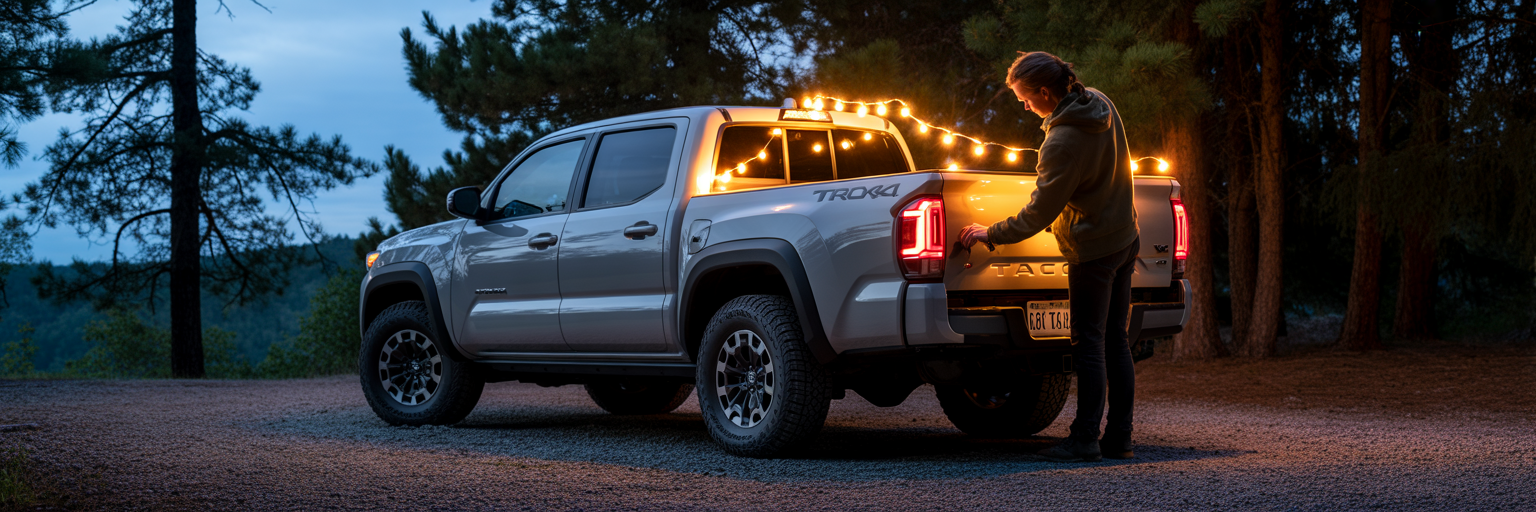
Conversely, the i-FORCE MAX hybrid delivers a unique and powerful value proposition through its standard equipment. The headline feature is the 2400-watt AC power inverter, with outlets located in both the cab and the truck bed. This is not a simple accessory; it is a fully integrated mobile power station. The practical benefit of this feature cannot be overstated for anyone who spends time away from the grid. It can run a portable refrigerator, power bright camp lights, charge laptops and camera gear, and even operate power tools without the need for a separate, noisy, and cumbersome generator. For overlanders, campers, and even tradespeople, this built-in utility is a massive asset that adds immense real-world value.
This frames the two distinct value philosophies. The gas model offers value through a lower purchase price and the freedom to build a truck that perfectly matches your vision and budget. The hybrid offers value through integrated technology, superior on-road refinement, and the game-changing convenience of its onboard power system. For those seeking the most capable and feature-rich truck straight from the factory, the hybrid makes a compelling case as the best off-road pickup 2026. This choice between a factory-equipped powerhouse and a customizable platform is common in the automotive world. For more head-to-head analyses, you can explore our other truck comparisons.
Final Verdict: Which TRD Off-Roader Is Right for You?
After analyzing the technical specifications, trail performance, utility, and value of both powertrains, the choice between the i-FORCE gas and i-FORCE MAX hybrid comes down to individual priorities. There is no single “better” truck, only the truck that is better for you. To make the decision clearer, we have outlined our recommendations based on distinct user profiles.
For the technical trail master who seeks the ultimate in off-road performance, the i-FORCE MAX hybrid is the clear winner. If your weekends are spent navigating challenging rock gardens, steep and slick climbs, and tight, technical terrain, the hybrid’s instant electric torque and precise throttle control provide an undeniable advantage. This powertrain allows for a level of finesse and effortless authority in low-speed situations that the gas engine cannot match. It is the choice for the driver who wants maximum capability right out of the box.
For the budget-conscious builder who loves the process of personalizing a vehicle, the i-FORCE gas model is the ideal choice. Its lower entry cost provides the financial freedom to create a truly custom rig. The money saved can be allocated to a high-quality suspension lift, larger tires, armor, and recovery gear, resulting in a truck that is not only highly capable but also uniquely tailored to your specific needs and aesthetic preferences. This is the platform for the enthusiast who sees their truck as a project, not just a purchase.
The decision is most complex for the overlanding adventurer. This user profile presents a genuine dilemma. The hybrid’s standard 2400W onboard power system is an incredible asset for extended stays in the backcountry, capable of running fridges and other essential electronics. However, the gas model offers a slightly higher payload capacity, which is critical for carrying heavy gear, along with a higher maximum tow rating. It also provides the financial headroom to invest in other overland-specific equipment. This choice requires a careful assessment of whether built-in power or maximum payload and budget flexibility is the higher priority.
In the end, the core conflict of the gas vs hybrid trucks debate in the 2026 Tacoma is one of philosophy. The i-FORCE MAX offers unmatched technical prowess, modern convenience, and a more refined driving experience. The i-FORCE gas model champions value, a higher towing limit, customization potential, and the traditional, engaging appeal of a simpler powertrain, especially with the available manual transmission. By understanding where your priorities lie, you can make your final decision with confidence. No matter which Tacoma you choose, understanding how to care for it is key. Our informative guides can help you keep your vehicle running strong for years to come.