
Understanding the 2026 Truck Lowest Bed Lift-In Height
When searching for the truck with the lowest bed lift-in height 2026 models can offer, it is tempting to look for a single, definitive answer. However, the reality is more complex. No single truck holds the title outright because bed height is not a fixed number. Instead, it is a dynamic measurement influenced by a host of configuration choices and engineering designs. This variability means the “lowest” truck is often a specific version of a model, not the entire model line itself.
To begin, it is crucial to define what “bed lift-in height” actually means. This is the vertical distance from the ground to the floor of the truck bed, typically measured at the tailgate. It is the single most important dimension for anyone who has to lift heavy tools, groceries, or equipment into the back. This measurement is often confused with bed depth, which is the distance from the bed floor to the top of the bed rails. While manufacturers frequently advertise bed depth as a measure of volume, lift-in height is what determines the ergonomic strain of loading and unloading.
Think of it like a kitchen counter. The height of the counter itself determines how comfortably you can work, while the depth of the sink is a separate measurement related to capacity. A low counter is easy to use, regardless of how deep the sink is. Similarly, a low lift-in height makes a truck bed more accessible, no matter its overall volume.
Several core variables dictate this crucial height. The suspension system, whether it is a standard steel spring setup or an adjustable air system, forms the foundation. Tire size and drivetrain configuration, such as two-wheel drive versus four-wheel drive, also play a significant role. Finally, specific trim levels and optional packages can add or subtract inches. As we look toward the 2026 model year, our analysis is based on current-generation trends and confirmed manufacturer features, providing a clear picture of what to expect, even as final specifications may see minor adjustments before release.
Key Factors That Determine Truck Bed Height
A truck’s final stance is the result of several interconnected engineering decisions. Each component, from the suspension to the tires, contributes to the bed’s accessibility. Understanding these factors allows you to look past marketing claims and identify the configuration that truly meets your needs for a low lift-in height.
Suspension Systems: The Foundation of Ride Height
The suspension is the primary determinant of a truck’s height. Traditional systems, like leaf springs on the rear axle, are valued for their durability and simplicity under heavy loads but offer a fixed ride height. More modern multi-link coil spring setups, found on trucks like the Ram 1500, provide a better ride quality but are also generally fixed. The most significant innovation for accessibility comes from trucks with air suspension. These advanced systems, like Ram’s Active-Level™ Four Corner Air Suspension, allow the driver to manually lower the entire vehicle, effectively reducing the lift-in height by several inches for easier loading and unloading.
The Role of Tires and Drivetrain Configuration
The connection between tire size and bed height is direct and simple: taller tires make the truck sit higher. A base model two-wheel drive truck often comes with smaller, road-focused tires that contribute to a lower stance. In contrast, a four-wheel drive model equipped with a factory off-road package will feature larger, more aggressive all-terrain tires. This change alone can add an inch or more to the overall vehicle height, which translates directly to a higher bed floor. The 4WD system itself, with its additional components like a front differential and transfer case, often necessitates a slightly taller frame height to begin with.
How Trim Levels and Off-Road Packages Impact Height
Manufacturers bundle features into different trim levels, and these packages can have a major impact on bed height. A basic work truck trim is designed for utility and often has the lowest stance. As you move up to specialized off-road trims like the Ford F-150 Tremor or Chevrolet Silverado Trail Boss, the suspension is lifted from the factory by one to two inches to improve ground clearance. While this is great for clearing obstacles on a trail, it directly compromises ease of access to the bed for daily tasks.
The Dynamic Factor: Payload and Suspension Compression
Finally, bed height is not static. When you place a significant amount of weight in the bed, the rear suspension compresses, lowering the tailgate height. A truck with a half-ton of gravel in the back will have a noticeably lower lift-in height than an empty one. While not a feature you can control on demand without a load, it is a practical reality to consider for those who frequently haul heavy materials. Understanding these mechanical nuances is similar to how a specialist in any field masters their tools. For example, as detailed in an article on Mastering Abalone Resin Lures for Big Game, an expert angler must understand the subtle properties of lure materials to achieve peak performance. In the same way, a truck buyer benefits from knowing how suspension design affects daily usability.
Full-Size Truck Contenders for Best Bed Access
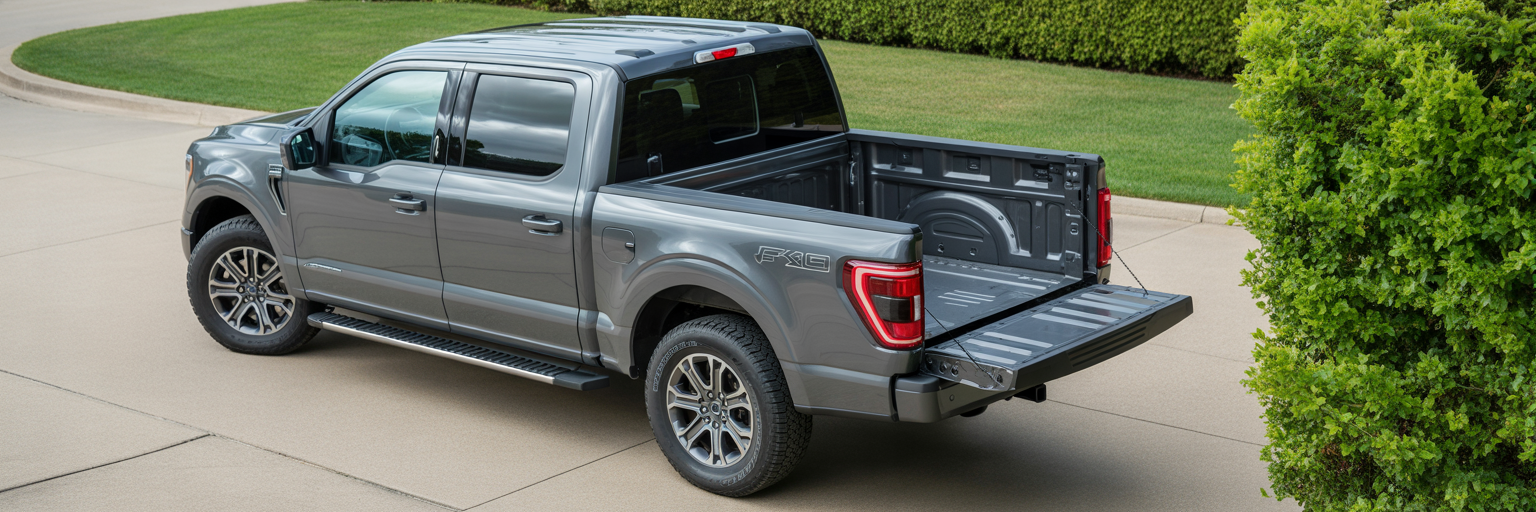
In the competitive full-size truck market, manufacturers have recognized that not every owner needs towering ground clearance. As a result, they have developed innovative solutions to improve bed accessibility. The approaches vary, with some brands focusing on lowering the truck itself while others provide clever ways to climb up. This is a key area of differentiation, much like the distinct advantages seen when comparing midsize trucks where each brand has a unique philosophy.
Ford F-150: Solving Height with Technology
Ford’s approach acknowledges the inherently high Ford F-150 bed height on many popular trims, especially 4×4 models. Instead of focusing solely on lowering the chassis, Ford offers sophisticated assistance features. The available power-deployable running boards provide a convenient step along the side of the truck, useful for reaching into the front of the bed. More importantly, the optional integrated tailgate step and handle have become a signature feature. This system provides a sturdy, retractable step that makes climbing into the bed much safer and easier, effectively mitigating the challenge of a tall lift-in height.
Ram 1500: The Air Suspension Advantage
Ram takes a more direct approach with its class-exclusive Active-Level™ Four Corner Air Suspension. This system is a standout for those prioritizing easy loading. With the push of a button, the driver can activate the Ram 1500 entry mode, which lowers the entire truck on its suspension. This can reduce the lift-in height by up to two inches, bringing the bed floor closer to the ground. This feature is particularly beneficial for anyone who frequently loads heavy or awkward items like furniture or coolers without assistance, as it reduces the physical strain of lifting.
Chevrolet Silverado and GMC Sierra: The Ergonomic Approach
General Motors focuses on ergonomics with its clever tailgate and bumper designs. For years, the CornerStep rear bumper has been a simple yet effective feature, providing integrated footholds at the corners of the truck. This allows you to step up and swing a leg over the side of the bed. More recently, the available Multi-Flex (Chevrolet) and MultiPro (GMC) tailgate has added another layer of utility. This “tailgate within a tailgate” can fold down to create a large step capable of holding hundreds of pounds, providing a secure platform for climbing into the bed or a lower surface to load items onto.
Toyota Tundra and Nissan Titan: Traditional Utility with Modern Aids
The Toyota Tundra and Nissan Titan generally follow a more traditional path, with fixed steel suspensions that result in bed heights comparable to their domestic rivals. However, they are not without their own access solutions. Both manufacturers offer an optional rear bumper step. This is typically a simple, manually deployable step that tucks away under the corner of the bumper when not in use. While less complex than an air suspension or multi-function tailgate, it provides a crucial foothold that makes getting into the bed significantly easier than relying on the tire alone.
| Truck Model | Primary Access Feature | Mechanism of Action | Ideal Use Case |
|---|---|---|---|
| Ford F-150 | Power Running Boards & Tailgate Step | Deploys a step along the side and a step from the tailgate for climbing. | Users who need help getting into the bed and accessing side-mounted toolboxes. |
| Ram 1500 | Active-Level™ Air Suspension | Lowers the entire vehicle’s chassis, reducing the lift-in height by several inches. | Frequently loading heavy or bulky items directly from the ground. |
| Chevrolet Silverado / GMC Sierra | MultiPro/Multi-Flex Tailgate & CornerStep | Tailgate unfolds into a step; bumper has integrated footwells. | Gaining a foothold to climb in or creating a closer workstation. |
| Toyota Tundra / Nissan Titan | Optional Rear Bumper Step | A simple, deployable step that provides a foothold at the corner of the bumper. | Budget-conscious buyers needing a basic, reliable step-up solution. |
Why Unibody and Mid-Size Trucks Excel in Accessibility
While full-size trucks use clever features to overcome their height, another class of trucks is designed with accessibility at its core. Unibody and mid-size pickups offer a fundamentally lower lift-in height due to their smaller scale and different construction, making them an excellent choice for buyers who prioritize ease of use over maximum capability.
The Honda Ridgeline stands as the undisputed benchmark in this category. Its unibody construction, which it shares with the Honda Pilot SUV, allows for a much lower floor pan than any traditional body-on-frame truck. This results in a bed floor that is several inches closer to the ground, making it dramatically easier to load. The exceptional Honda Ridgeline bed access is further enhanced by its unique dual-action tailgate, which can either fold down or swing open like a door, and the class-exclusive In-Bed Trunk®, a lockable storage compartment located beneath the bed floor that is accessible without having to lift items over the tailgate.
Beyond the Ridgeline, the entire mid-size truck segment, including models like the Ford Ranger and Chevrolet Colorado, naturally offers better accessibility than their full-size counterparts. Their smaller overall dimensions, shorter wheelbases, and standard smaller-diameter tires all contribute to a lower stance. For many buyers, the reduced payload and towing capacities are a worthwhile compromise for a vehicle that is easier to park, maneuver, and load. This presents a clear choice for consumers, similar to the decision between the Ridgeline and a more compact truck like the Maverick, where lifestyle fit becomes the deciding factor.
These trucks prove that extreme capability is not always the most important metric. For daily tasks like hauling garden supplies, sports equipment, or groceries, a lower bed height adds a level of convenience that larger trucks struggle to match. Features like integrated bumper steps, once a novelty, are becoming increasingly common in the mid-size class, adding significant practical value for owners who use their truck bed regularly.
The Height Challenge of Heavy-Duty Trucks
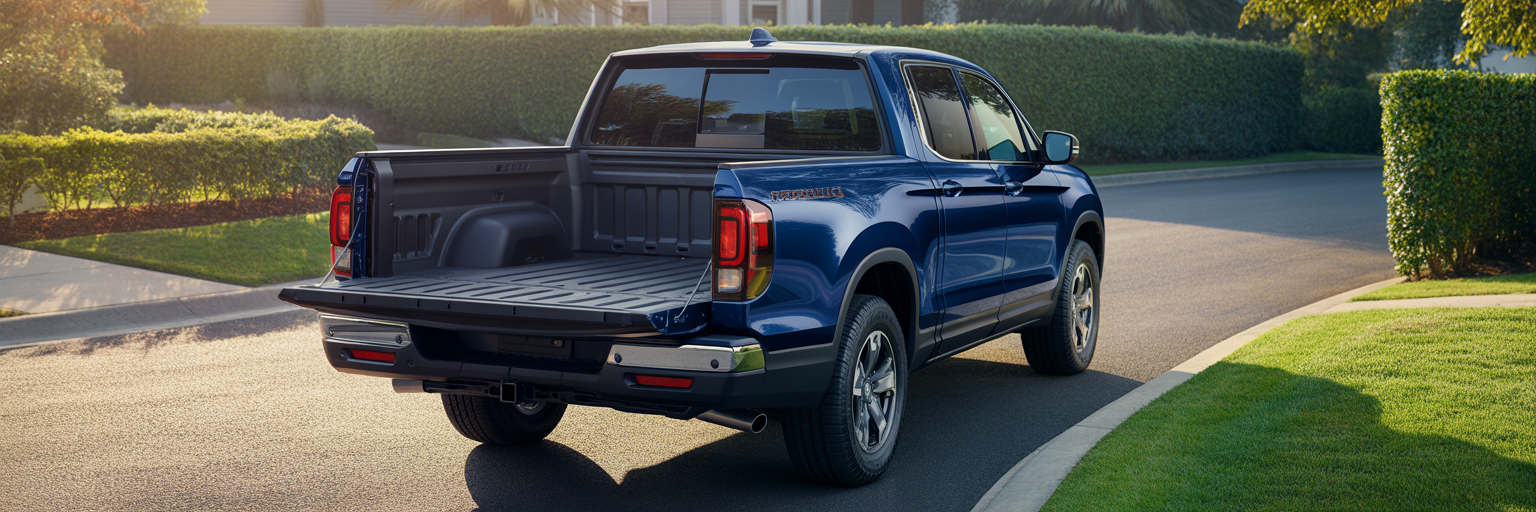
At the opposite end of the spectrum from accessible mid-size trucks are the heavy-duty models. Trucks in the Heavy-Duty (HD) category, such as the Ford F-250/F-350 and Ram 2500/3500, are intentionally tall for a very specific reason: to maximize capability. Understanding their purpose is key to realizing why they are often the wrong choice for anyone whose primary concern is a low bed height.
The engineering of an HD truck is focused entirely on towing and hauling immense weight. This requires a larger, more robust frame, heavy-duty solid axles, and massive rear leaf spring packs designed to support thousands of pounds in the bed or on a fifth-wheel hitch. These components are physically larger and require more ground clearance, which pushes the entire vehicle upward. As a result, the bed lift-in height on many HD trucks can easily exceed 35 inches, making them some of the most challenging vehicles to load from the ground.
For a contractor who needs to tow a 15,000-pound excavator or a rancher hauling a large livestock trailer, this height is a necessary byproduct of the truck’s strength. For these users, the ability to handle extreme loads is paramount, and they often rely on machinery like forklifts for loading. Our guide to the best trucks for towing highlights just how specialized these vehicles are. However, for a homeowner who just needs to pick up mulch or help a friend move a couch, this towering height becomes a significant daily inconvenience.
While manufacturers do offer access aids on HD trucks, such as power-deployable side steps and integrated tailgate steps, these should be viewed as necessary mitigations rather than convenience features. They make a very tall truck manageable, but they do not change the fundamental fact that the bed floor is far from the ground. Choosing an HD truck for its looks or perceived toughness without needing its capability often leads to frustration with its everyday usability.
How Accessories and Modifications Affect Bed Height
The height of a truck bed is not set in stone the moment it leaves the factory. The choices you make after purchase, from protective liners to suspension upgrades, can alter its accessibility for better or for worse. Understanding the impact of these common accessories is crucial for maintaining or improving your truck’s usability.
One of the first additions many owners make is a bed liner. A spray-in liner is a popular choice that adds a durable, textured coating to the bed. Because it is applied directly to the metal, its impact on bed height is negligible. A drop-in plastic liner, however, is a molded tub that sits inside the bed. Its thicker floor can raise the lift-in height by as much as half an inch, a small but noticeable difference.
For trucks without factory-installed steps, the aftermarket offers excellent solutions. Retractable bed steps, like the popular AMP Research BedStep, can be mounted to the corner of the frame and deploy with a push of your foot. This provides a sturdy, convenient foothold for climbing into the bed and is a highly effective way to improve access on a tall truck.
Suspension modifications have the most dramatic effect. Lift kits, which are popular for off-road enthusiasts seeking to fit larger tires and increase ground clearance, will significantly raise the bed height and make loading much more difficult. Conversely, lowering kits can reduce the bed height, but this is a more specialized modification often seen in the street truck scene. Lowering a truck can also compromise its payload and towing capacity, so it is a trade-off that requires careful consideration.
Finally, other common accessories can create obstacles even if they do not change the height. A tonneau cover must be rolled or folded out of the way before you can load tall items. Bed-mounted toolboxes and racks can block access to certain parts of the bed, requiring you to climb in to reach items stored at the front.
A Practical Guide to Measuring Bed Height at the Dealership
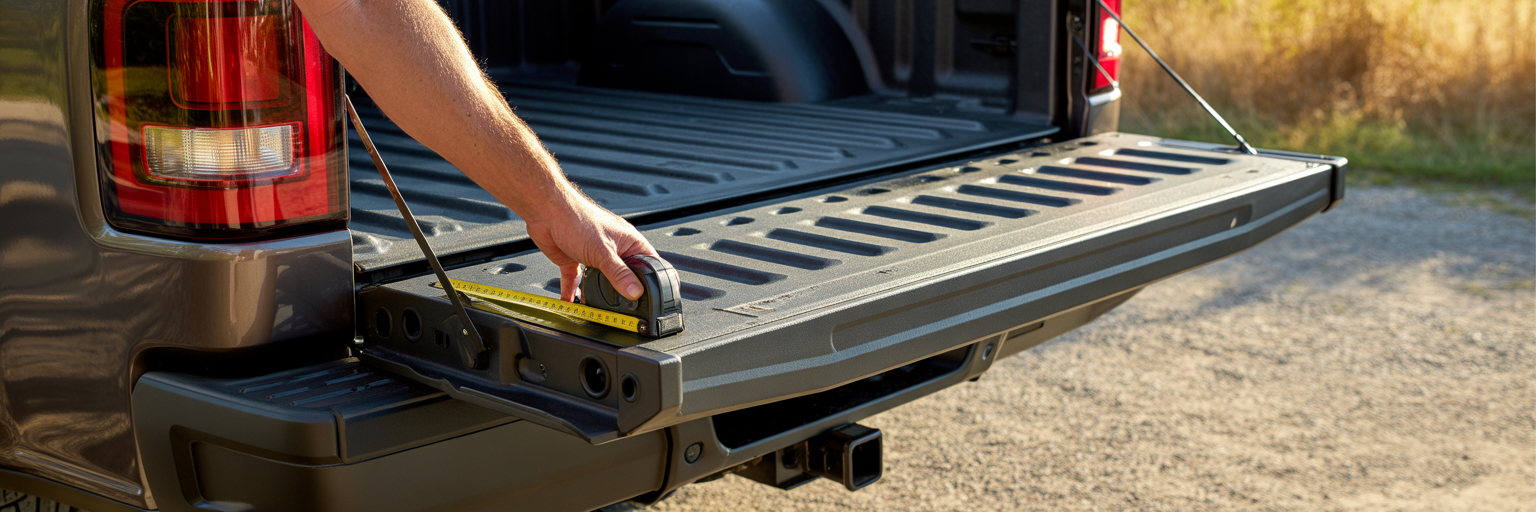
With so many variables in play, the most reliable way to find the truck with the right bed height for you is to measure it yourself. Arming yourself with a tape measure and a clear methodology will empower you to cut through the noise and find the perfect fit. Following a few simple steps on how to measure truck bed height will give you the definitive answer for any specific model you are considering.
Here is a step-by-step guide to use at the dealership:
- Bring a Tape Measure. This is the most important tool for your evaluation. A standard retractable tape measure of at least 10 feet will be more than sufficient.
- Use the Correct Technique. Ensure the truck is parked on a level surface. Extend the tape measure from the ground straight up to the flat floor of the bed, right at the opening where the tailgate rests when closed. Do not measure to the top of the bed rail or the top of the open tailgate; you want the height you will have to lift items over.
- Document the Truck’s Configuration. The measurement is only useful if you know what you are measuring. Create a checklist and note the key details from the window sticker: the exact trim level (e.g., XLT, Laramie, LT), whether it is 2WD or 4WD, and if it has any special packages like an off-road or towing package. Also, look at the tire sidewall to note the exact tire size.
- Compare and Test. If possible, measure a base trim model and then an off-road trim of the same truck to see the difference firsthand. More importantly, physically test the access aids. Deploy the tailgate step, use the corner bumper step, or ask the salesperson to demonstrate the air suspension’s entry mode. See how it feels to you.
By taking these direct measurements, you move from speculation to certainty. You will be able to compare a Ram 1500 Limited with air suspension directly against a Ford F-150 Lariat with the tailgate step and know precisely which one offers better real-world accessibility for your needs. This hands-on approach is the final step in making an informed decision, and our collection of informative articles can help guide you through other aspects of your vehicle search.
The Final Verdict on the Lowest 2026 Truck Bed
After exploring the many factors that determine lift-in height, it is clear that there is no single 2026 truck with the lowest bed. The answer is entirely dependent on a model’s configuration and the specific needs of the buyer. The most important takeaway is that you must define your priorities before you start shopping.
Based on our analysis, the recommendations fall into distinct categories:
- For the Absolute Lowest Lift-In Height: The Honda Ridgeline is the definitive winner. Its unibody construction gives it a bed floor that is fundamentally closer to the ground than any body-on-frame competitor, making it the easiest truck to load by a significant margin.
- For Full-Size Utility with the Best Access: The choice is between two excellent systems. A Ram 1500 equipped with the Active-Level™ Air Suspension offers the ability to lower the entire truck, which is ideal for loading heavy items directly from the ground. Alternatively, a Ford F-150 with the integrated tailgate step provides an outstanding solution for climbing into the bed.
Ultimately, the best strategy is a personal one. First, determine the balance you need between outright capability and daily convenience. Second, identify the features that best address your access needs, whether it is a lowering suspension, a clever step system, or the inherent low height of a mid-size truck. Finally, perform a physical measurement at the dealership on the exact configuration you intend to buy.
As truck ownership continues to expand to a more diverse audience, manufacturers are placing a greater emphasis on innovative accessibility solutions. This trend ensures that finding a truck that is not only capable but also comfortable to live with will only get easier. To continue your research and explore everything from in-depth reviews to practical guides, we invite you to see what our platform has to offer.