
For decades, the Toyota Tacoma has been the undisputed leader of the mid-size truck segment, earning a reputation for reliability and off-road capability. The arrival of the new generation marks a pivotal moment, splitting its off-road philosophy into two distinct paths. This brings a critical question for enthusiasts: which version of the 2026 Tacoma TRD Off-Road is the right tool for your adventure? Is it the familiar, versatile legend, or the new, purpose-built expedition machine?
On one side, you have the TRD Off-Road, the evolution of the truck that so many have come to love. It remains a highly capable and adaptable platform, serving as a perfect blank canvas for drivers who enjoy the process of personalization. This is the truck for weekend trail runs, daily driving duties, and a build that grows with your ambitions. Its legacy is built on a foundation of versatility, a quality we’ve explored in our detailed analysis against key competitors.
On the other side stands the Trailhunter, Toyota’s bold new statement. It arrives as a turnkey overlanding vehicle, meticulously engineered and fully equipped from the factory for serious, multi-day journeys into remote territory. This truck is designed for the adventurer who wants to pack their gear and depart immediately, bypassing months of aftermarket research and installation. It represents a commitment to a specific type of exploration, straight from the showroom floor.
This comparison is defined by the powertrain dilemma. The TRD Off-Road offers a choice between a traditional turbocharged gas engine and the powerful i-FORCE MAX hybrid system. The Trailhunter, however, comes exclusively with the hybrid. This fundamental difference sets the stage for a deep dive into what separates these two incredible machines.
Powertrain Breakdown: Gas vs i-FORCE MAX Hybrid
The choice between the TRD Off-Road and Trailhunter begins with what lies under the hood. Toyota offers two distinct i-FORCE powertrains, each with a unique character that profoundly influences the driving experience both on and off the pavement. Understanding their differences is the first step in choosing the right truck for your needs.
The Standard i-FORCE 2.4L Turbo Engine
Available on the TRD Off-Road, the standard i-FORCE engine is a turbocharged 2.4-liter four-cylinder producing a healthy 278 horsepower and 317 lb-ft of torque. While these numbers are a significant improvement over the previous generation’s V6, the engine’s most compelling feature for many will be its transmission pairing. This is the only powertrain that can be optioned with a six-speed manual transmission, a feature that offers a level of mechanical engagement and control that many driving purists crave. For those who believe driving is a tactile experience, this option alone could be the deciding factor.
The i-FORCE MAX Hybrid: A New Level of Power
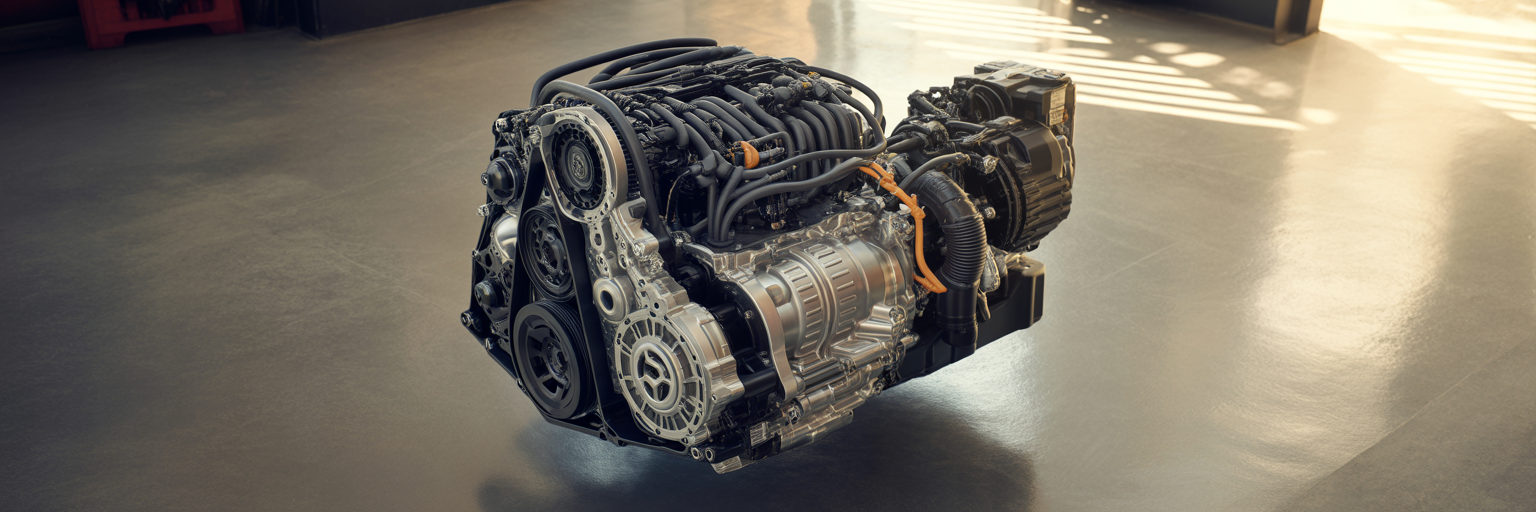
Standard on the Trailhunter and optional on the TRD Off-Road, the i-FORCE MAX hybrid system is the main event. It pairs the same 2.4-liter turbo engine with a 48-hp electric motor integrated directly into the eight-speed automatic transmission. This combination elevates output to a commanding 326 horsepower and an enormous 465 lb-ft of torque. As reported by sources like Car and Driver, this powertrain transforms the Tacoma’s character. The i-FORCE MAX hybrid performance is not just about peak numbers; it’s about how that power is delivered.
Translating Torque to Trail Performance
That massive 465 lb-ft of torque, available almost instantly thanks to the electric motor, is a huge advantage. Think of it like the difference between a gas-powered drill that needs to spool up and a cordless electric drill that delivers instant twisting force. On the trail, this translates to precise, low-speed control when crawling over rocks or navigating tight obstacles. On the highway, it means effortless acceleration for merging and passing. The immediate response from the powertrain provides a sense of confidence in nearly every driving situation.
Powertrain Trade-Offs: Cost, Weight, and Engagement
The choice is not without its compromises. The standard gas engine offers a lower initial purchase price and the irreplaceable experience of a manual gearbox. The hybrid system delivers superior power and refinement but comes at a higher cost and adds considerable weight. This extra mass has downstream effects on everything from payload capacity to handling dynamics, creating a series of trade-offs that we will explore further.
Suspension and Off-Road Hardware Comparison
Beyond the powertrain, the hardware separating the TRD Off-Road and Trailhunter reveals their distinct purposes. One is a versatile all-rounder, while the other is a specialized tool for long-range exploration. This difference is most apparent in their suspension, protection, and tire choices, which we’ve seen in many head-to-head truck comparisons.
Suspension Showdown: Bilstein vs. Old Man Emu
The TRD Off-Road is equipped with Bilstein monotube shocks featuring remote reservoirs. This setup is tuned for versatility, providing excellent control during higher-speed trail runs while still offering the articulation needed for more technical terrain. It strikes a balance that makes it competent in a wide variety of off-road situations. In contrast, the Trailhunter features specialized Old Man Emu (OME) 2.5-inch forged monotube shocks, co-developed with ARB. This suspension is engineered specifically for the demands of overlanding, providing superb control when carrying heavy loads over long distances and rough terrain.
Factory Armor: Built-in Protection for the Trailhunter
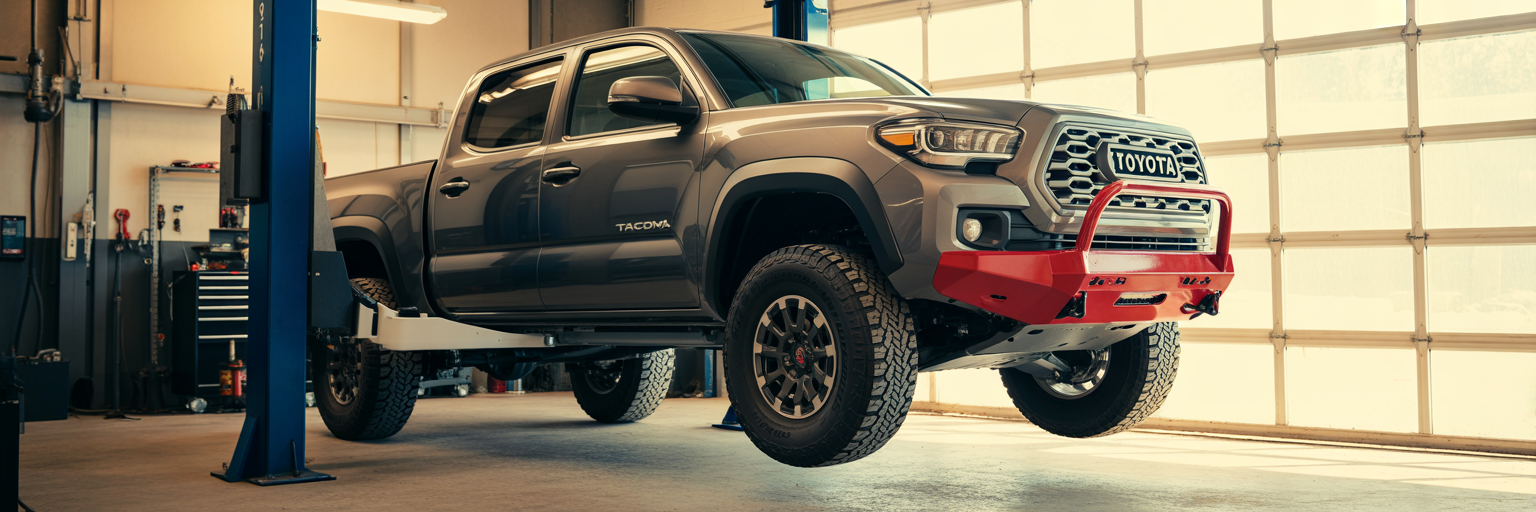
Here, the Trailhunter’s mission becomes crystal clear. It comes standard with a suite of protective gear that would represent a significant aftermarket investment on a TRD Off-Road. This includes high-clearance steel bumpers, robust frame-mounted steel rock rails, and extensive hot-stamped steel skid plates protecting the engine, transfer case, and fuel tank. This factory-installed armor provides peace of mind for tackling remote and unforgiving trails right out of the box.
Wheels and Tires: The Ground-Up Advantage
The final point of contact with the trail, the tires, further separates the two models. The TRD Off-Road wears capable 32-inch all-terrain tires suitable for a mix of on-road and off-road use. The Trailhunter steps up to more aggressive 33-inch Goodyear Wrangler Territory R/T tires. This one-inch difference in diameter provides an immediate advantage in ground clearance, approach and departure angles, and overall traction, giving the Trailhunter a superior footing before it even starts moving.
| Component | 2026 Tacoma TRD Off-Road | 2026 Tacoma Trailhunter |
|---|---|---|
| Suspension | Bilstein Monotube Shocks with Remote Reservoirs | Old Man Emu (OME) 2.5-inch Forged Monotube Shocks |
| Tires | 32-inch All-Terrain Tires | 33-inch Goodyear Wrangler Territory R/T Tires |
| Front Bumper | Standard Composite Bumper | High-Clearance Steel Bumper (ARB Co-developed) |
| Rock Protection | Optional Accessory | Frame-Mounted Steel Rock Rails (Standard) |
| Underbody Armor | Standard Front Skid Plate | Extensive Steel Skid Plates (Engine, Transfer Case, Fuel Tank) |
Capability on Varied Terrains
Specifications on paper only tell part of the story. How these trucks apply their hardware in the real world is what truly matters. By imagining them in different off-road scenarios, we can see where each model’s unique philosophy gives it an edge, and what makes the best off-road truck 2026 so dependent on its intended use.
Scenario 1: Technical Rock Crawling and Tight Trails
In this environment, agility is key. The standard TRD Off-Road, particularly the lighter gas-powered model, holds a distinct advantage. Its lower curb weight and slightly smaller footprint contribute to greater nimbleness on tight, wooded trails or through complex rock gardens. It feels more maneuverable and easier to place precisely where you want it, allowing the driver to navigate obstacles with more confidence and less risk of body damage.
Scenario 2: Multi-Day Overlanding Expeditions
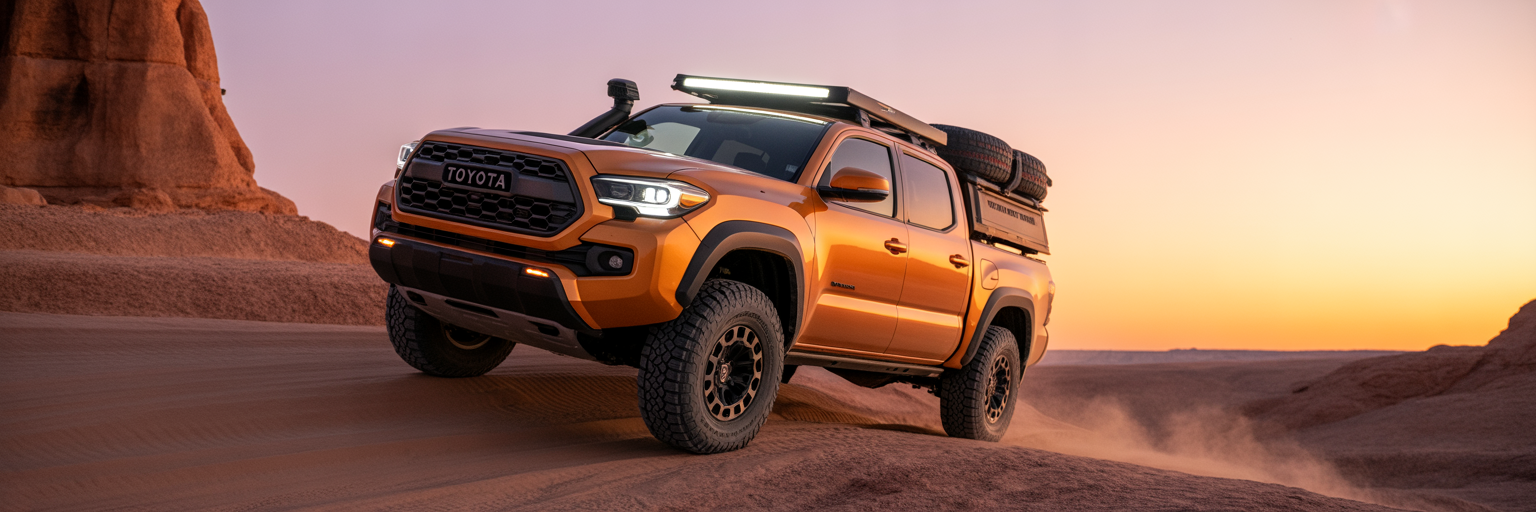
This is the Trailhunter’s home turf, and it is the undisputed champion here. Its purpose-built OME suspension is designed to handle the weight of rooftop tents, refrigerators, and extra fuel without compromising control. The factory armor provides the necessary protection for remote travel, while the integrated high-mount air intake offers a safeguard against water crossings and dusty conditions. The Trailhunter is engineered from the ground up for self-sufficient, long-distance travel far from civilization.
Scenario 3: High-Speed Desert Running
The comparison becomes more nuanced in wide-open desert landscapes. The TRD Off-Road’s Bilstein suspension is tuned for a lively and responsive feel, making it engaging for a driver who enjoys actively managing the truck through whoops and fast corners. The Trailhunter, with its OME setup, offers a different kind of performance. It is designed for composed, predictable control even when fully loaded with expedition gear, soaking up large impacts with stability rather than playful energy. It prioritizes safety and control over spirited feedback.
In all these scenarios, the i-FORCE MAX hybrid powertrain offers a significant benefit. Its immense, instant low-end torque allows for incredibly precise throttle modulation. This helps maintain traction on steep, loose climbs and gives the driver the ability to apply just the right amount of power when navigating obstacles, a key advantage for both the hybrid-optioned TRD Off-Road and the standard Trailhunter.
Fuel Efficiency and Daily Driving Experience
While off-road prowess is a major focus, most of these trucks will spend considerable time on paved roads. The practicalities of daily driving, including fuel economy and ride comfort, are critical factors in the ownership experience. For those concerned with long-term ownership, understanding how to keep your engine running for years is always a valuable consideration.
The MPG Numbers: A Modest Hybrid Advantage
When it comes to fuel consumption, the hybrid offers a real but modest benefit. Official figures place the gas-powered model around a combined 21 MPG, while the hybrid is estimated to achieve approximately 23 MPG combined. This two-mile-per-gallon advantage is welcome, but it is not dramatic enough to quickly offset the higher initial purchase price of the hybrid powertrain. Buyers should not expect huge fuel savings to be the primary reason for choosing the i-FORCE MAX.
Beyond MPG: The Hybrid’s On-Road Performance Feel
The true daily-driving benefit of the hybrid system is its refined and responsive performance. The instant torque from the electric motor makes city driving feel effortless. The truck pulls away from a stop with a smooth, quiet surge of power that the gas engine cannot match. On the highway, this same torque provides confident passing power without the transmission needing to hunt for gears. It creates a more premium and powerful driving sensation that makes the truck feel more sophisticated in everyday use.
Ride Comfort and Cabin Experience
Here, the different suspension philosophies create a noticeable trade-off. The TRD Off-Road’s Bilstein setup is tuned to provide a comfortable ride that effectively balances on-road manners with off-road capability. In contrast, the Trailhunter’s heavy-duty OME suspension and aggressive R/T tires, while brilliant off-road, can result in a noticeably firmer and more “truck-like” ride on pavement, especially when unladen. Additionally, factors like cabin noise are affected; the Trailhunter’s larger tires and standard snorkel may contribute to more wind and road noise at highway speeds.
Analyzing the Cost and Long-Term Value
The financial aspect is often the final hurdle in any vehicle purchase decision. The Tacoma TRD vs Trailhunter cost comparison reveals a significant gap, but a closer look at what that price includes is necessary to understand the true value proposition of each truck. The choice ultimately comes down to how you value your time, money, and peace of mind.
The Price Gap: Breaking Down the Numbers
The price difference is substantial. A 2026 Tacoma TRD Off-Road starts around $43,000 for a gas model, with the hybrid option pushing it closer to $48,000. The Trailhunter, which comes standard with the hybrid powertrain and a full suite of off-road equipment, has a starting price of approximately $63,500. This nearly $15,000 to $20,000 premium is the central financial question for potential buyers.
The DIY Route: Costing an Aftermarket Build
To put the Trailhunter’s price into perspective, it is helpful to analyze the cost of upgrading a TRD Off-Road to a similar specification using high-quality aftermarket parts. As the table below illustrates, the cost of a comparable suspension system, tires, steel bumpers, rock rails, and skid plates can quickly add up, often exceeding $10,000 in parts alone before factoring in thousands for professional installation.
| Upgrade | Estimated Aftermarket Cost | Included on Trailhunter? |
|---|---|---|
| High-Performance Overland Suspension (e.g., OME) | $3,000 – $5,000 | Yes (Standard) |
| 33-inch R/T Tires (Set of 5) | $1,800 – $2,500 | Yes (Standard) |
| High-Clearance Steel Front Bumper | $1,500 – $2,500 | Yes (Standard) |
| Frame-Mounted Steel Rock Rails | $800 – $1,500 | Yes (Standard) |
| Full Steel Skid Plate Package | $1,000 – $1,800 | Yes (Standard) |
| Onboard 2,400W AC Inverter | $2,000 – $3,000+ (Complex Install) | Yes (Standard) |
| Total Estimated Aftermarket Cost | $10,100 – $16,300+ | N/A |
Note: Aftermarket costs are estimates and do not include installation labor, which can add several thousand dollars. This analysis illustrates that while the Trailhunter’s price is high, it reflects the significant cost of quality, professionally installed components.
The Value of a Factory Warranty and Integration
Beyond the raw cost, the Trailhunter offers an intangible but significant benefit: a single, comprehensive factory warranty. All its components are engineered, tested, and tuned to work together as a cohesive system. This eliminates the potential headaches of dealing with multiple aftermarket warranties, diagnosing compatibility issues, or having a dealer deny a claim due to modifications. This integrated, warrantied approach provides a level of assurance that a custom build cannot match. Just as finding the right professional path requires a plan, choosing the right truck requires aligning its purpose with your goals. For a broader perspective on making such important life choices, you might consider this guide on creating your blueprint for a career that actually fits you.
Utility, Towing, and Practical Features
A truck is a tool, and its practical utility is just as important as its off-road performance. The new Tacoma lineup introduces several features that enhance its workhorse capabilities, with some of the most compelling being exclusive to the hybrid models and the Trailhunter trim.
The 2,400-Watt Inverter: A Mobile Power Station
Perhaps the single most significant utility feature of the i-FORCE MAX hybrid is the standard 2,400-watt onboard AC inverter. This transforms the truck into a mobile power source, a massive advantage for overlanders, campers, and even contractors. It provides clean, reliable power far from any electrical grid, opening up new possibilities for remote self-sufficiency.
The Trailhunter’s 2,400-watt inverter can transform a remote campsite into a powered base of operations, capable of running equipment such as:
- A portable refrigerator/freezer to keep food fresh for days.
- Power tools like drills or saws for on-trail repairs.
- An electric coffee maker or induction cooktop.
- Extensive camp lighting systems.
- Laptops, drones, and camera batteries for content creators.
Towing and Payload: The Weight Trade-Off
The relationship between power and capability presents an interesting trade-off. While the hybrid powertrain is significantly more powerful, the Trailhunter’s higher curb weight from its standard armor and equipment reduces its maximum towing capacity to 6,000 pounds. A properly configured gas-powered TRD Off-Road can tow up to 6,500 pounds. This is a critical detail for those who prioritize towing, a topic we cover in our guide to the best used trucks for towing a camper. Similarly, while the Trailhunter is built to carry gear, its higher base weight means its official payload rating is comparable to, or in some cases slightly less than, a lighter TRD Off-Road.
Trailhunter-Exclusive Utility Features
Reinforcing its identity as a purpose-built tool, the Trailhunter includes several other unique utility features. The standard high-mount air intake, or snorkel, provides cleaner air to the engine in dusty conditions and adds a margin of safety during water crossings. It also features a bed-mounted utility panel with pre-wired switches, simplifying the process of adding auxiliary lighting and other powered accessories. These thoughtful additions underscore its readiness for serious adventure.
The Final Verdict: Which Tacoma Is Right for You?
After breaking down the powertrains, hardware, costs, and capabilities, the choice between the 2026 Tacoma TRD Off-Road and the Trailhunter becomes clearer. It is not about which truck is better, but which truck is better for you. By creating a few distinct buyer profiles, we can help you find your place in the new Tacoma lineup and explore other trucks in our review section.
Profile 1: The Versatile Enthusiast (TRD Off-Road Gas)
This is the traditional Tacoma buyer. You need a single vehicle that can handle daily commutes, weekend trips to the hardware store, and spirited trail runs. You value flexibility and may want the pure mechanical engagement of a manual transmission. You enjoy the process of slowly customizing your truck over time, adding parts as your budget and skills allow. For you, the cost-effective and adaptable gas-powered TRD Off-Road is the most logical and satisfying choice.
Profile 2: The Power-Focused Customizer (TRD Off-Road Hybrid)
You want the ultimate in power and performance. The instant, massive torque of the i-FORCE MAX hybrid is a must-have for conquering the most challenging terrain or simply enjoying effortless on-road acceleration. However, you still want the freedom to build your truck your way, choosing your own specific suspension, armor, and wheels from the aftermarket. You are willing to pay the premium for the hybrid powertrain but want to retain full control over your build. The TRD Off-Road with the optional hybrid system is your perfect platform.
Profile 3: The Dedicated Overlander (Trailhunter)
Your primary focus is multi-day, self-sufficient, vehicle-based adventure. You see the Trailhunter’s premium price not as an expense, but as an investment in a complete, factory-warrantied, and seamlessly integrated system. Time is your most valuable asset, and you would rather spend it exploring than in a garage installing parts. Features like the 2,400-watt inverter and purpose-built OME suspension are non-negotiable. This Tacoma Trailhunter review concludes that for you, the turnkey capability and peace of mind of the Trailhunter are worth every penny.
So, is the hybrid worth it? The answer is a definitive yes, but only if your needs align with its specific benefits. It is worth it if you are the dedicated overlander who sees value in the Trailhunter’s complete package, or if you are the power-focused customizer who demands its unique performance on a TRD Off-Road. For many others, the excellent, more affordable, and endlessly versatile gas-powered TRD Off-Road remains the smarter choice.