
Can a 4×8 Sheet of Plywood Fit in a 2026 Ford Maverick?
The weekend trip to the hardware store is a familiar ritual for countless American DIY enthusiasts. You have a project, a list, and the determination to get it done. For many, the vehicle of choice for these excursions is the 2026 Ford Maverick. It represents a smart compromise, offering more utility than an SUV without the oversized footprint and fuel consumption of a full-size pickup. Yet, as you pull up to the loading area, a common question arises, one that serves as the ultimate test of this compact truck’s practicality: can it actually handle a standard 4×8 sheet of plywood?
At first glance, the answer seems to be a clear no. The rise of compact trucks has been driven by a desire for versatility, but a quick look at the Ford Maverick bed size reveals its inherent limitation. It is visibly shorter than the beds of traditional trucks, which can create immediate doubt for anyone needing to transport large sheet goods. This apparent shortcoming has led many potential buyers and new owners to wonder if they made the right choice for their home improvement needs. The sheet is eight feet long, and the bed is clearly not.
This visual mismatch is precisely what makes the question so compelling. It challenges the very definition of what a small truck can accomplish. Fortunately, Ford’s engineers anticipated this exact scenario. The solution is not about forcing the material to fit; it is about understanding and using the clever features built directly into the truck. This guide will provide a definitive answer, explaining not just if you can haul that plywood, but exactly how to do it safely and efficiently, turning your Maverick into the capable workhorse it was designed to be.
Understanding the Maverick’s FLEXBED System
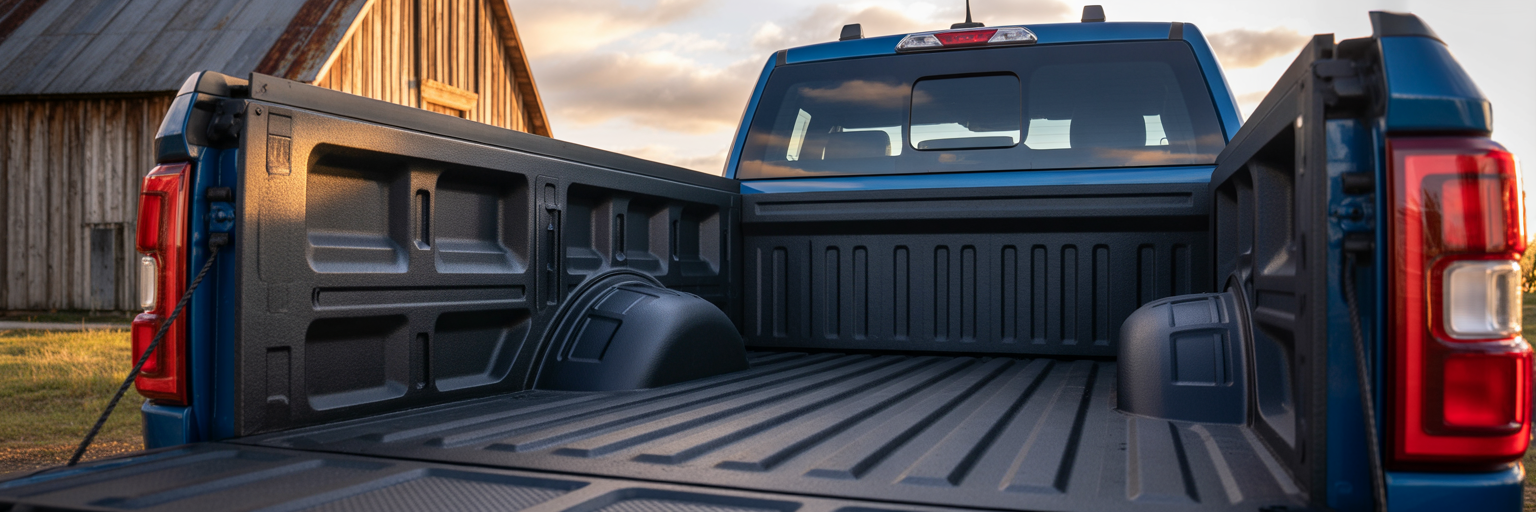
The key to unlocking the Maverick’s full hauling potential lies in understanding that its cargo area is not just a simple box. It is an engineered solution called the Ford Maverick FLEXBED system. While the standard bed length is 54.4 inches, or just over 4.5 feet, that measurement alone is misleading. The FLEXBED is designed with a series of integrated features that work in concert to accommodate oversized items, including the ubiquitous 4×8 sheet of plywood. It is a system that rewards owners who take a moment to learn its capabilities.
The first critical component is the set of molded-in slots found within the bed walls. These are not merely for aesthetics; they are precisely sized to hold standard 2×4 or 2×6 lumber. By sliding two boards into these slots across the width of the bed, you create a raised platform. This simple action elevates your cargo floor, allowing it to sit above the wheel wells. This creates a completely flat surface from one side of the bed to the other, which is essential for supporting brittle materials like drywall or ensuring a stack of plywood sits perfectly level.
The second, and equally important, feature is the multi-position tailgate. While it can open fully flat like any other truck, its true genius is revealed in its mid-position setting. This is not an improvised hack but a specific, factory-designed function. The tailgate support cables can be unhooked and re-secured to a secondary set of anchor pins, allowing the tailgate to rest partially open. This mid-position is engineered to be perfectly level with the top of the 2x4s or 2x6s you placed in the bed slots. Together, the raised boards and the mid-position tailgate create a continuous, flat support surface that extends well beyond the bed’s standard length. This intelligent design is a prime example of how manufacturers are rethinking utility, a concept we explore further in our comparison of the Maverick and Honda Ridgeline.
A Step-by-Step Guide to Loading Plywood
With a clear understanding of the FLEXBED system, the process of loading a 4×8 sheet of plywood becomes straightforward. This is not about brute force but about using the truck’s features as intended. Follow these steps for a safe and successful haul.
- Prepare the Bed: Your first step begins at the lumber aisle. You will need two 8-foot-long pieces of lumber to act as support rails. While 2x4s will work, 2x6s are preferable as they provide a wider and more stable surface for the plywood to rest on. Once you have your boards, slide them into the molded-in slots within the Maverick’s bed. They should fit snugly, creating a raised platform that clears the wheel wells. Ensure they are seated fully and are parallel to each other.
- Adjust the Tailgate: This is the most critical step in learning how to use Maverick multi-position tailgate. With the tailgate open, locate the support cables on each side. Detach the end of each cable from its main anchor point on the truck bed. You will see a smaller, secondary anchor pin located near the tailgate latch mechanism. Hook the cable onto this secondary pin. Repeat on the other side. Now, when you lift the tailgate, it will stop in a halfway-open position, resting on the cables. The top edge of the tailgate should now be perfectly level with the support boards you just installed.
- Load the Plywood Sheets: This step should always be performed with a partner. A 4×8 sheet of plywood is awkward and heavy enough to cause injury or damage if handled alone. With one person on each end, lift the sheet and approach the truck from the rear. Slide the sheet smoothly into the bed, with the front edge resting against the front wall of the bed. The remainder of the sheet should lie flat across your wooden support rails and the top edge of the mid-position tailgate.
- Check for Level and Stability: Before you even think about straps, take a moment to perform a visual inspection. Stand to the side of your Maverick and look at the loaded plywood. It should be completely level from the front of the bed to its end over the tailgate. If you see any tilting or sagging, it is a sign that something is not set correctly. The support boards may not be fully seated, or the tailgate might not be properly latched in its mid-position. A level load is a stable load, so this final check is essential for a safe journey.
Calculating Your Maverick’s Payload Capacity
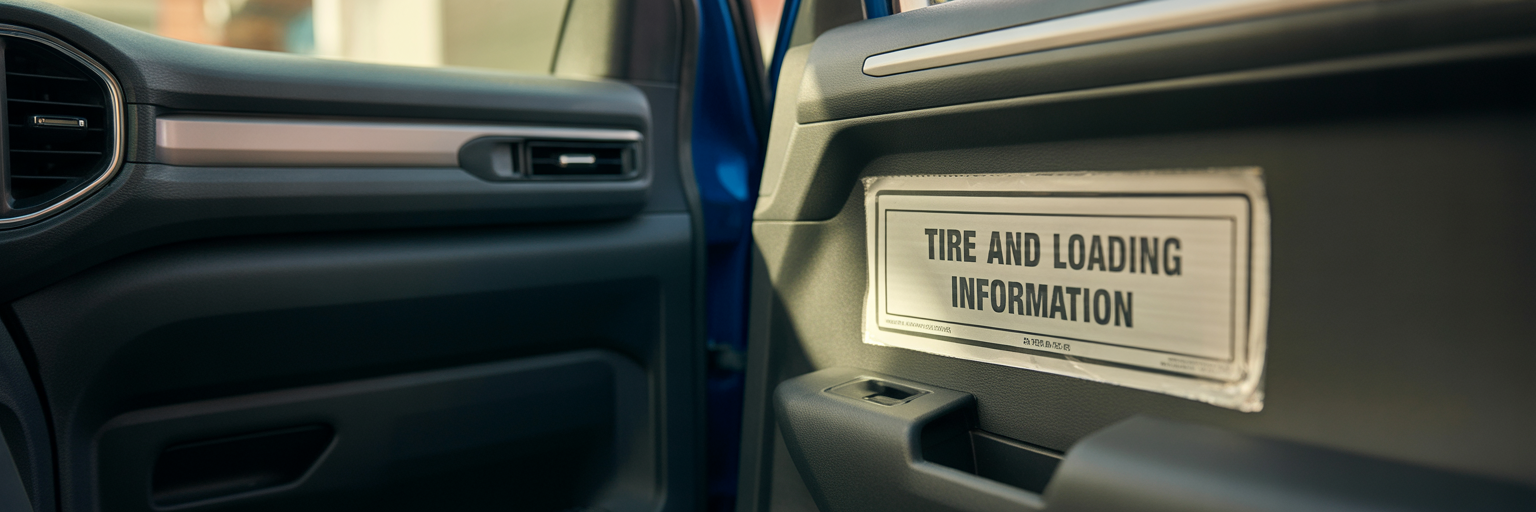
Getting the plywood to fit is only half the battle; ensuring you can carry it safely is just as important. This is where payload capacity comes in. Often confused with towing capacity, payload is the total weight your truck can carry in its cab and bed. This includes the driver, passengers, tools, and the cargo itself. Exceeding your vehicle’s payload capacity is not only dangerous, affecting braking and handling, but it also puts excessive strain on the suspension, tires, and frame.
The most reliable way to find your Maverick’s specific payload capacity is to ignore generic online charts and look at the “Tire and Loading Information” sticker. This sticker is typically located on the driver-side doorjamb. The number listed here is unique to your truck, accounting for its specific trim, engine, and factory-installed options. It will state, “The combined weight of occupants and cargo should never exceed XXX kg or XXXX lbs.” This is your definitive guide.
To determine how much plywood you can carry, you must do some simple math. Start with your maximum payload number and subtract the weight of yourself, any passengers, and any gear you have in the truck. The remaining number is the available payload for your materials. A standard 4×8 sheet of 1/2-inch plywood weighs around 40 to 50 pounds. This calculation is a key part of managing a small truck payload capacity effectively.
| Item | Weight (lbs) | Remaining Payload (lbs) |
|---|---|---|
| Maximum Payload (from sticker) | – | 1,500 |
| Driver | -180 | 1,320 |
| Passenger | -150 | 1,170 |
| Tools & Gear in Cab/Bed | -50 | 1,120 |
| Available Payload for Plywood | – | 1,120 |
| Number of Plywood Sheets (at 50 lbs each) | 1,100 (22 sheets) | 20 |
Note: This table uses example weights for demonstration purposes. Always use the specific payload capacity from your vehicle’s doorjamb sticker and the actual weights of passengers and cargo for an accurate calculation.
Securing the Load for a Safe Drive
Your plywood is loaded, level, and within your payload capacity. The final, non-negotiable step before you start the engine is to secure the load properly. An unsecured or poorly secured load is a serious hazard to you and every other driver on the road. This is a critical aspect of hauling plywood in a small truck, and it requires the right tools and technique.
For this task, ratchet straps are the superior choice. While rope and bungee cords might seem sufficient, they cannot provide the consistent, high tension needed to keep a heavy stack of plywood from shifting. Invest in a set of good quality, 1-inch or 2-inch ratchet straps. You will need at least two. Run the straps across the width of the plywood stack, not the length. This prevents the sheets from sliding out from the side during turns.
The Maverick’s FLEXBED is equipped with several sturdy tie-down points. Locate the anchor points at the front and rear of the bed. Hook one end of your strap to a tie-down point on one side, run the strap over the top of the plywood, and hook the other end to the corresponding tie-down on the opposite side. Tighten the ratchet until the strap is taut and the plywood stack does not move when you push on it firmly. Be careful not to overtighten, as excessive pressure can damage the edges of the wood. Repeat with a second strap. As confirmed by various automotive resources, including an analysis from Wray Ford, using the FLEXBED’s features and tie-downs correctly is key to safely transporting large materials.
Finally, address the overhang. In most US states, any load that extends more than three or four feet beyond the rear of the vehicle must be marked with a red or orange flag. A 4×8 sheet of plywood on the Maverick’s mid-position tailgate will definitely qualify. Tying a brightly colored flag or cloth to the rearmost edge of your plywood is not just a good idea; it is a legal requirement that ensures other drivers can see the end of your load.
Driving Tips with an Extended Load

Once your load is secure, your driving style must adapt to the new dynamics of your vehicle. The added weight and length change how the Maverick handles, brakes, and maneuvers. The center of gravity is now higher and shifted further back, making smooth, deliberate inputs essential for a safe trip home.
Keep these key tips in mind:
- Increase Following Distance: The extra weight of the plywood significantly increases the distance required to bring your truck to a complete stop. Leave much more space than you normally would between your Maverick and the vehicle in front of you. This gives you more time and space to react to sudden stops.
- Avoid Sudden Maneuvers: Smoothness is your best friend. Accelerate gently from a stop, apply the brakes gradually, and make slow, deliberate steering inputs. Abrupt turns or lane changes can cause the load to shift, even if it is well-strapped, putting stress on your straps and suspension.
- Mind Your Tail Swing: The overhanging end of the plywood will swing out wider than the truck itself during turns. You must be conscious of this “tail swing” when navigating tight corners, pulling out of the parking lot, or backing into your driveway. A turn that feels normal could cause the end of your load to clip a parked car, a fence post, or a pedestrian.
- Perform a Re-Check: After driving for a few minutes or after hitting the first significant bump in the road, pull over in a safe location like an empty parking lot. Get out and inspect your load. Check the tension on the straps and push on the plywood to ensure nothing has shifted. Straps can sometimes settle and loosen slightly after the initial drive. This simple five-minute check can prevent a serious incident down the road. For those who frequently haul heavy loads and are interested in vehicles built for towing, exploring other options can be beneficial, and we have guides on trucks tailored for that purpose.
Alternative Hauling Methods and Accessories
While the Maverick’s FLEXBED system is remarkably capable, it is not the only solution for transporting large or awkward items. Depending on the frequency and type of your hauling needs, investing in some aftermarket accessories or considering other methods can make your life even easier.
First, consider an aftermarket bed extender. These accessories typically flip out onto the lowered tailgate to create a contained cage. While the FLEXBED’s mid-gate position is perfect for flat sheets, a bed extender excels at securing mixed loads of lumber, bulky boxes, or other items that are not perfectly uniform. It provides vertical containment that the flat-plywood method lacks.
Second, a roof rack can be an excellent addition. It is generally not the best choice for heavy sheets of plywood due to the difficulty of lifting them that high and the lower weight limits of most roof racks. However, a rack is an ideal solution for carrying longer, lighter items. Things like PVC pipes, long pieces of trim, a ladder, or even a kayak can be securely mounted to the roof, which completely frees up the bed for other tools and materials. Understanding how different trucks handle utility tasks can help buyers make an informed decision, as seen in our comparison of off-road focused trucks.
Third, for those who find themselves hauling very heavy or oversized loads regularly, a small utility trailer might be the most practical long-term investment. The Maverick has a respectable towing capacity, and a trailer allows you to transport loads that would otherwise exceed the truck’s payload limit or be too unwieldy for the bed. Finally, it is important to know when to call for backup. If you need to transport a quantity of material that would require multiple trips or push the boundaries of your payload capacity, the smartest and safest choice is often to use the hardware store’s delivery service.
Beyond Plywood: Other Large Items in Your Maverick
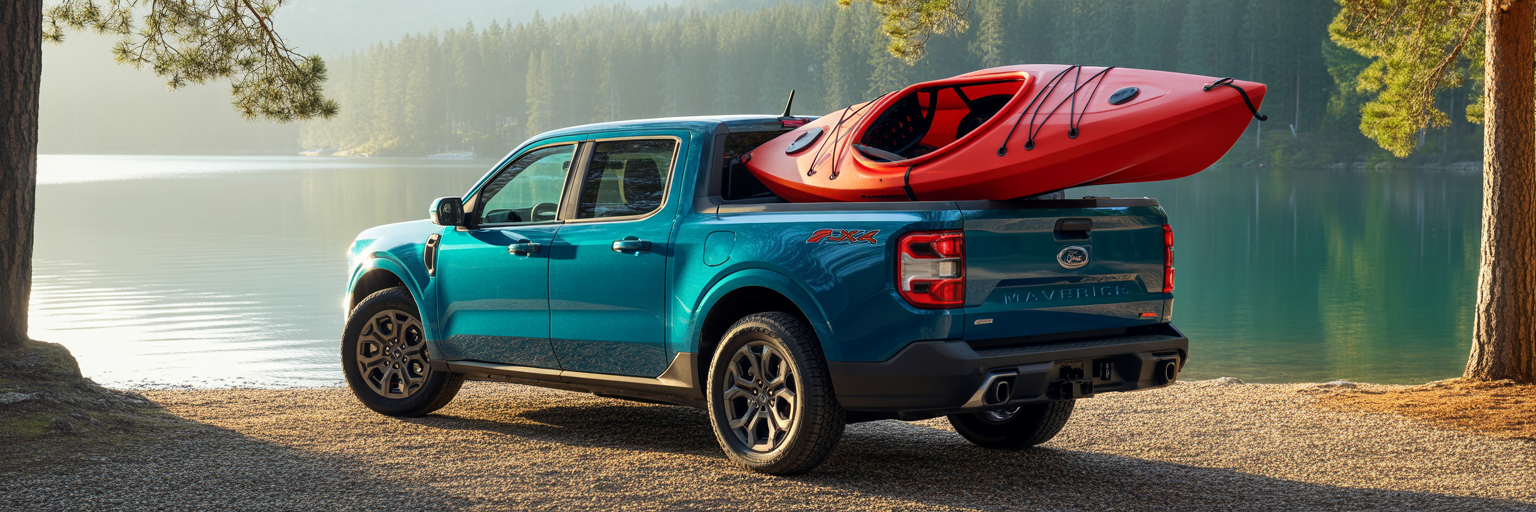
The principles you have learned for hauling plywood are not limited to just that one material. The combination of support boards and the mid-position tailgate unlocks the ability to transport a wide variety of oversized items, solidifying the Maverick’s role as a versatile lifestyle vehicle.
The same method works perfectly for other 4×8 sheet goods. This includes OSB (Oriented Strand Board), which is similar in weight to plywood, and drywall (gypsum board). When hauling drywall, it is even more critical to ensure your support boards are level and your driving is smooth, as drywall is much more brittle and prone to cracking. The same setup also provides excellent support for other long, rigid items. An 8-foot ladder, a bundle of 8-foot 2x4s, or long sections of metal pipe can all be laid flat and securely supported using this technique.
The Maverick’s utility extends to bulky items as well. While you might not use the raised board method, the numerous tie-down points in the FLEXBED are invaluable for securing things of all shapes and sizes. A flat-packed bookcase from a furniture store, a small couch for a new apartment, or even a lawnmower can be safely anchored. This versatility is central to the Maverick’s appeal. It is a truck that can handle a DIY project on Saturday morning and then be ready to transport recreational gear like kayaks or paddleboards on Sunday afternoon. Knowing how to properly use the bed and its features is what makes this seamless transition possible.
Maintaining Your Maverick’s Bed After Hauling
After a successful project, taking a few minutes to care for your truck’s bed will protect your investment and ensure it is ready for the next task. Hauling materials, especially raw lumber and drywall, can leave behind debris that can cause long-term issues if ignored.
Start with a thorough cleanup. Sweep or use a leaf blower to remove all sawdust, drywall dust, and any other small debris. These particles can be abrasive and scratch the bed’s finish over time. More importantly, they can clog the small drain holes located in the bed, which can lead to standing water and promote rust. A quick rinse with a hose can help wash away any remaining fine dust.
Next, perform a quick inspection. Look for any deep scratches or gouges in the bed’s paint that may have occurred during loading or unloading. If you find a spot where the metal is exposed, it is important to address it quickly, especially if you live in a region with harsh winters or high humidity. A small application of touch-up paint will seal the metal and prevent rust from forming. Just as bed maintenance is crucial for a truck’s longevity, proper engine care is vital, and you can learn more about how to keep your car’s engine running for years in our detailed guide.
For preventative care, consider a bed liner. A durable spray-in liner offers a permanent, non-slip surface that is highly resistant to scratches. A drop-in plastic liner provides excellent protection against dents but can sometimes trap moisture underneath. A simple rubber bed mat is an affordable option that provides good grip and impact protection, and can be easily removed for cleaning. This simple maintenance routine is part of responsible ownership that keeps your Maverick looking good and functioning perfectly.
The Verdict: A Capable Compact Hauler
So, can a 2026 Ford Maverick haul a 4×8 sheet of plywood? The answer is a definitive yes. When its features are used as designed, the Maverick proves to be an impressively capable and effective hauler for common DIY and homeowner tasks.
The key is to move beyond a simple glance at the bed’s length and instead appreciate the clever engineering of the FLEXBED system. Success comes down to following a few critical rules:
- Use 2×4 or 2×6 boards in the bed slots to create a raised, flat platform above the wheel wells.
- Set the tailgate to its mid-position to create a continuous, level surface that supports the end of the load.
- Always calculate your payload to ensure you are not overweight, and securely strap down your load before driving.
The Maverick’s value proposition is clear: it demonstrates that a massive, fuel-hungry truck is not a prerequisite for tackling most home improvement projects. Its intelligent design makes it a highly efficient and versatile tool. By learning to use its features correctly, you have empowered yourself to take on your next project with full confidence in your truck’s abilities. For those interested in exploring more about trucks and their capabilities, our comprehensive truck section offers a wealth of information.