The Critical Role of Healthy Tires in Vehicle Safety
According to the National Highway Traffic Safety Administration (NHTSA), tire failures contribute to hundreds of fatal crashes each year. This isn’t just a statistic; it’s a stark reminder that tire maintenance is a fundamental responsibility for every driver. Your tires are the only part of your vehicle that actually touches the road. They are singularly responsible for how your car accelerates, brakes, and steers.
Thinking about them as a technical chore misses the point entirely. Healthy tires provide the grip and stability needed to react to unexpected road hazards. Ignoring them is like ignoring the foundation of a house. To help you stay safe, this guide details five clear warning signs that your tires need attention: critically low tread depth, visible damage, sidewall issues, unusual vibrations, and advanced age. These checks are simple, essential, and could save your life.
Sign 1: Critically Low Tread Depth
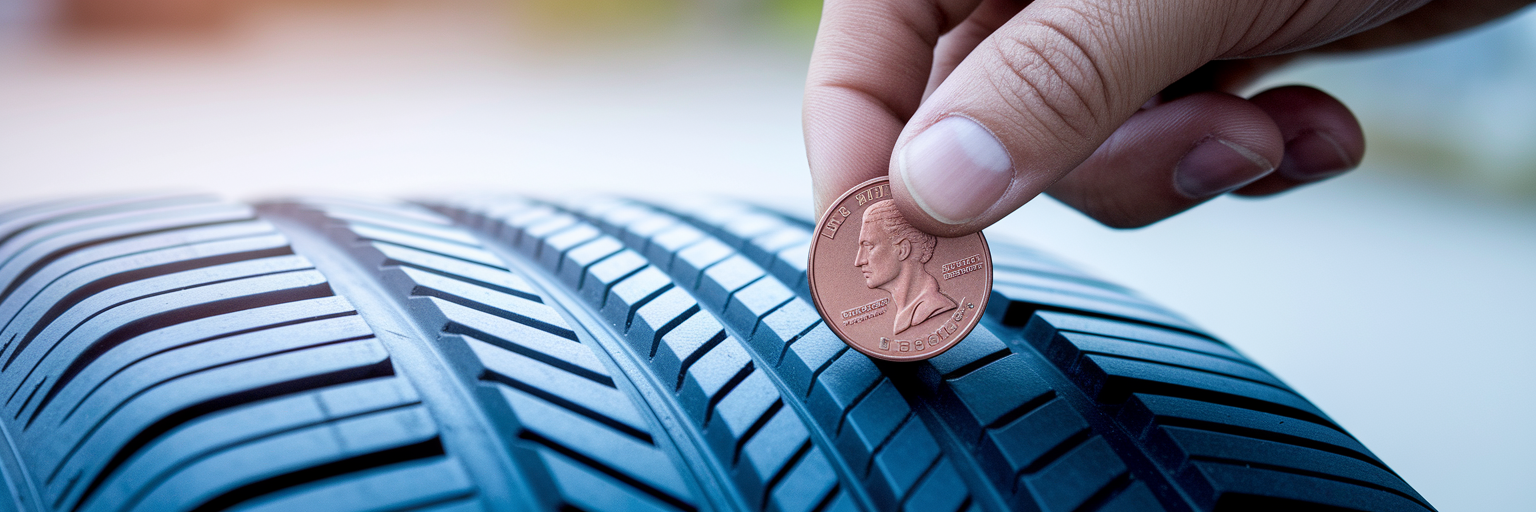
One of the most common and dangerous signs of wear is low tread depth. The grooves in your tires are not just for show; they are engineered channels designed to evacuate water from beneath the tire, maintaining contact with the road surface. As these grooves become shallower, their ability to prevent hydroplaning diminishes significantly.
Why Tread Depth Matters for Grip
On a wet road, a tire with good tread acts like a squeegee, pushing water away so the rubber can grip the pavement. When the tread is worn, the tire can ride on a thin film of water, leading to a complete loss of steering and braking control. As highlighted in a report by AAA, driving on tires with only 2/32-inch of tread can increase stopping distances by nearly 90 feet on wet pavement compared to new tires. That’s the length of a basketball court.
The Penny Test: A Simple DIY Check
You don’t need special tools to determine if your tread is dangerously low. The penny test is a reliable method for anyone to use. Here’s how to check tire tread yourself:
- Take a standard US penny and find a section of your tire’s tread.
- Place the penny into one of the main tread grooves with Abraham Lincoln’s head upside down, facing you.
- If you can see the top of Lincoln’s head, your tread depth is below the legal minimum of 2/32-inch. This is a clear signal that your tire is worn out and needs immediate replacement.
Modern Alternatives: Tread Wear Indicator Bars
Most modern tires have a built-in safety feature to help you spot wear. These are small, raised bars of rubber located in the bottom of the tread grooves. As the tire wears down, these bars become more visible. When the tread is worn to the point that it is flush with the indicator bars, the tire has reached the end of its safe service life. It’s a non-negotiable sign that a replacement is due. Just as you might wonder why is my car squeaking when I drive and recognize it as a call for inspection, these visual cues on your tires demand the same attention.
Sign 2: Visible Cords or Wires
While low tread is a gradual warning, seeing cords or wires is an emergency. The fabric and steel belts inside a tire act as its skeleton, providing structural integrity and strength. These cords are meant to be internal and should never, under any circumstances, be visible from the outside.
If you see threads or shiny wires poking through the rubber, it means the tire has suffered a catastrophic failure. The layers of rubber have worn away completely, exposing the core structure. The primary danger here is an imminent and often explosive blowout. This can happen at any speed, without any further warning, and almost always leads to a complete loss of vehicle control.
There is no room for debate or second opinions on this issue. A tire with exposed cords is beyond repair and makes the vehicle fundamentally unsafe to operate. Do not drive on it, not even to the repair shop. Your only safe options are to mount your spare tire or have the vehicle towed for a replacement. This is one of the most serious signs you need new tires.
Sign 3: Cracks and Bulges in the Sidewall
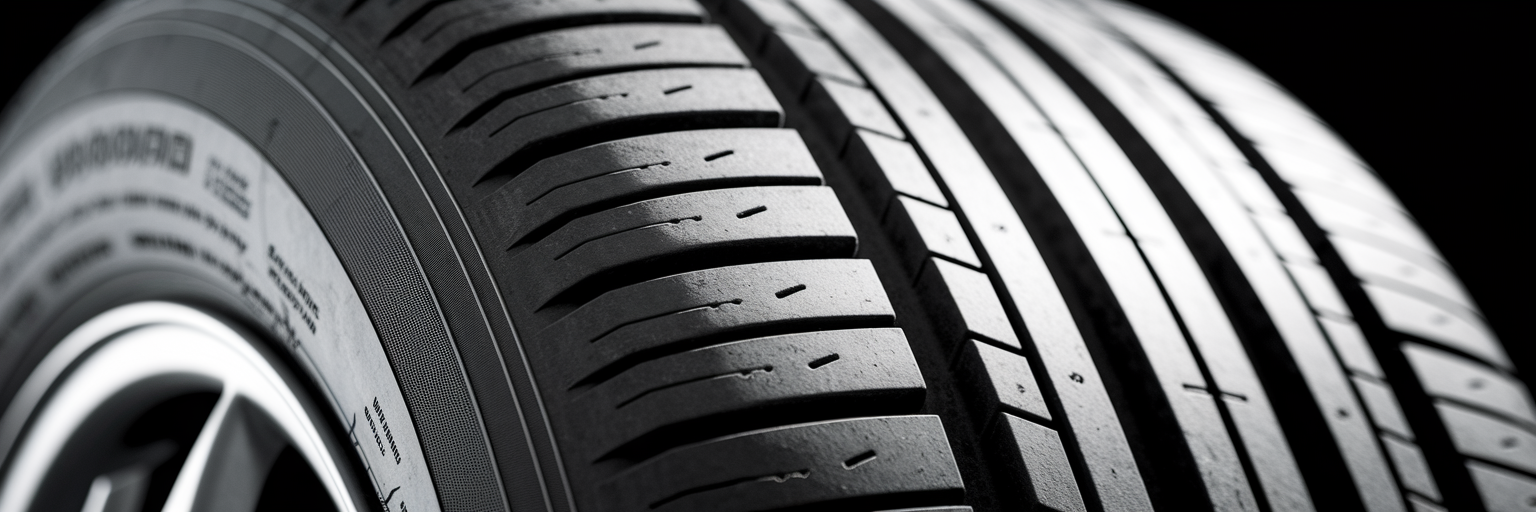
The sidewall of your tire is thinner and more flexible than the tread area, making it particularly vulnerable to damage. Problems here can compromise the entire tire structure, so it’s crucial to inspect your sidewalls regularly for any abnormalities.
Identifying ‘Dry Rot’ and Sidewall Cracks
Have you ever noticed a network of fine lines on an old tire, almost like a spiderweb? This condition, often called “dry rot” or “weather checking,” is caused by the rubber breaking down from exposure to UV light, ozone, and temperature fluctuations. While minor surface-level cracks may not be an immediate threat, deep cracks in tire sidewall are a different story. If you can see fissures that appear to penetrate the rubber, the tire’s integrity is compromised and it is much more susceptible to failure.
The Danger of a Sidewall Bulge
A bulge or bubble on the sidewall is an even more urgent warning. It looks like a small blister pushing out from the side of the tire. This happens when an impact, such as hitting a pothole or curb, severs the internal cords in that area. Air from inside the tire then leaks into the outer layers of rubber, creating a weak spot. A tire with a bulge is a ticking time bomb, at an extremely high risk of a sudden blowout. Any visible bulge means the tire must be replaced immediately. For those who drive more rugged vehicles, regular sidewall inspection is especially important, a topic we cover more for owners of trucks.
Sign 4: Unusual Vibrations While Driving
Sometimes, the most telling sign of a tire problem is something you feel rather than see. If you notice a new shimmy or vibration that seems to come from nowhere, your tires should be the first thing you check. This sensation is often felt in the steering wheel or through the seat and typically worsens as you increase your speed. A car shaking while driving is a clear signal that something is wrong.
While other issues can cause vibrations, several common tire-related problems are the likely culprits:
- Tire Imbalance: Uneven weight distribution around the tire causes it to wobble as it rotates.
- Uneven Tread Wear: “Cupping” or flat spots on the tread can disrupt the smooth roll of the tire.
- Internal Belt Separation: A belt inside the tire may have shifted or broken, causing the tire to go out of round.
- A Bent Wheel: An impact could have bent the rim, which will cause a vibration even with a perfectly good tire.
It’s true that poor wheel alignment or worn suspension parts can also cause shaking. However, because a failing tire poses such an immediate safety risk, it should always be the first component inspected by a professional. Ignoring vibrations not only is unsafe but can also lead to accelerated wear on other vehicle components. Just as understanding why a car won’t start is key to being a prepared owner, recognizing these physical warnings is equally important.
Sign 5: The Tire’s Age

A tire can look perfectly fine, with deep tread and no visible damage, yet still be dangerously unsafe. This is because rubber degrades chemically over time, a process that happens from the inside out. Exposure to oxygen and heat causes the rubber compounds to become brittle and weak, even if the tire has been stored in a garage and never used. This hidden danger makes age one of the most overlooked factors in tire safety.
How to Read Your Tire’s ‘Birth Date’
So, how old are my tires? Every tire sold in the US has a Department of Transportation (DOT) code stamped on its sidewall. To find the manufacturing date, look for the sequence of letters and numbers beginning with “DOT” and focus on the last four digits. These four numbers represent the week and year the tire was made.
The 6-Year Replacement Guideline
Most vehicle and tire manufacturers agree on when to replace tires based on age. The general recommendation is to replace tires six years after their manufacturing date, regardless of tread depth. After ten years, replacement is considered mandatory. As noted by experts at Consumer Reports, internal cracking from age can occur long before it becomes visible, making age a critical safety metric. Trying to save money by running on old tires is a false economy that puts you at significant risk.
| DOT Code Example | Meaning of Last Four Digits | Manufacture Date |
|---|---|---|
| DOT U2LL LMLR 3224 | The first two digits represent the week of the year. | 32nd Week |
| DOT U2LL LMLR 3224 | The last two digits represent the year. | 2024 |
| Full Interpretation | A tire with the code ‘3224’ was manufactured in the 32nd week of 2024. | August 2024 |
Note: This table provides a clear example for reading the date on any tire manufactured since the year 2000. Always check the sidewall for the full DOT code to determine your tire’s age.
Your Next Steps for a Safer Drive
Recognizing the warning signs is the first step toward ensuring your vehicle is safe. By now, you should be able to spot the five critical signs you need new tires:
- Critically low tread depth (less than 2/32-inch)
- Visible cords, wires, or belts
- Cracks, cuts, or bulges in the sidewall
- Unusual vibrations or shaking while driving
- A manufacturing date older than six years
Don’t wait for a problem to appear. Shift your mindset from reactive replacement to proactive maintenance. Once a month, take five minutes to walk around your car and perform a quick visual inspection of your tires, and be sure to check their pressure. Regular professional services like tire rotation and balancing will also help you maximize their lifespan and performance.
If you see any of the signs discussed in this article, do not delay. Replacing your tires is not just another expense; it is a non-negotiable investment in the safety of yourself, your passengers, and everyone else on the road. By staying informed about your vehicle’s health, you can drive with more confidence. For more tips and the latest in automotive news, CarPhanatics is your go-to resource for becoming a smarter car owner.