
The American pickup truck has transformed. Once confined to construction sites and farm fields, it has become the ultimate “one-vehicle garage” for millions. It hauls groceries on Monday, handles the carpool lane on Tuesday, and disappears into the mountains on Saturday. This shift has created a central conflict for buyers: finding a single vehicle that serves as both a comfortable daily driver truck and a genuinely capable off-road machine. Manufacturers are responding, but the fundamental trade-offs remain.
An aggressive off-road suspension that soaks up desert whoops can feel jarring over city potholes. Those beefy, mud-slinging tires that grip rocks also create a constant hum on the highway and hurt fuel economy. Automakers now offer specialized trims that bundle extreme capability with surprising comfort, attempting to solve this puzzle. This article will dissect the essential features that make this duality possible, compare the leading models, and provide a clear framework to help you choose from the best trucks for your specific blend of daily life and weekend exploration.
Essential Features for Off-Road Capability and On-Road Comfort
Understanding the technology behind a modern truck’s dual personality is the first step to making an informed choice. It’s not just about looking tough; it’s about having the right hardware that works when you need it without punishing you when you don’t. These features are what separate a true all-terrain vehicle from something that just has four-wheel drive.
Hardware for the Trail
When the pavement ends, specialized hardware takes over. A two-speed transfer case is the heart of a true 4×4 system, offering a low-range gear set that multiplies engine torque for crawling over obstacles. Think of it as a creeper gear for your truck. Locking differentials are just as critical. An open differential, standard on most vehicles, sends power to the wheel with the least resistance. That’s a problem when one wheel is spinning uselessly in the air or mud. A locker forces both wheels on an axle to turn at the same speed, ensuring power gets to the tire with grip.
Suspension: The Key to a Dual Personality
Suspension is where the magic happens. A standard truck suspension is a compromise designed for paved roads. Off-road-focused trucks use advanced dampers, like the Multimatic DSSV systems found on some GM models, that can tell the difference between a pothole and a hard landing off a jump. These sophisticated shocks provide incredible control and stability at high speeds off-road without making the highway ride feel like a buckboard wagon. The difference is immediately noticeable, turning a bone-rattling trail into a manageable experience.
Powertrains and Comfort for the Pavement
A truck’s engine needs to be a jack-of-all-trades. It requires low-end torque for technical trails but also needs to be efficient enough for the daily commute. Modern powertrains like Ford’s EcoBoost V6 or mild-hybrid systems deliver that blend of power and reasonable fuel consumption. Beyond the engine, features like adaptive cruise control and lane-keeping assist transform a long highway drive from a chore into a relaxed journey, reducing fatigue before you even reach the trailhead.
| Feature | Off-Road Benefit | Daily Driving Trade-Off |
|---|---|---|
| Locking Differentials | Maximizes traction on uneven or slippery surfaces by forcing wheels to spin at the same speed. | Can cause tire scrubbing and handling issues on pavement; only used in specific off-road situations. |
| Advanced Dampers (e.g., Multimatic DSSV) | Provides exceptional control and stability during high-speed off-roading and absorbs large impacts. | Significantly higher cost and can be more expensive to repair or replace than standard shocks. |
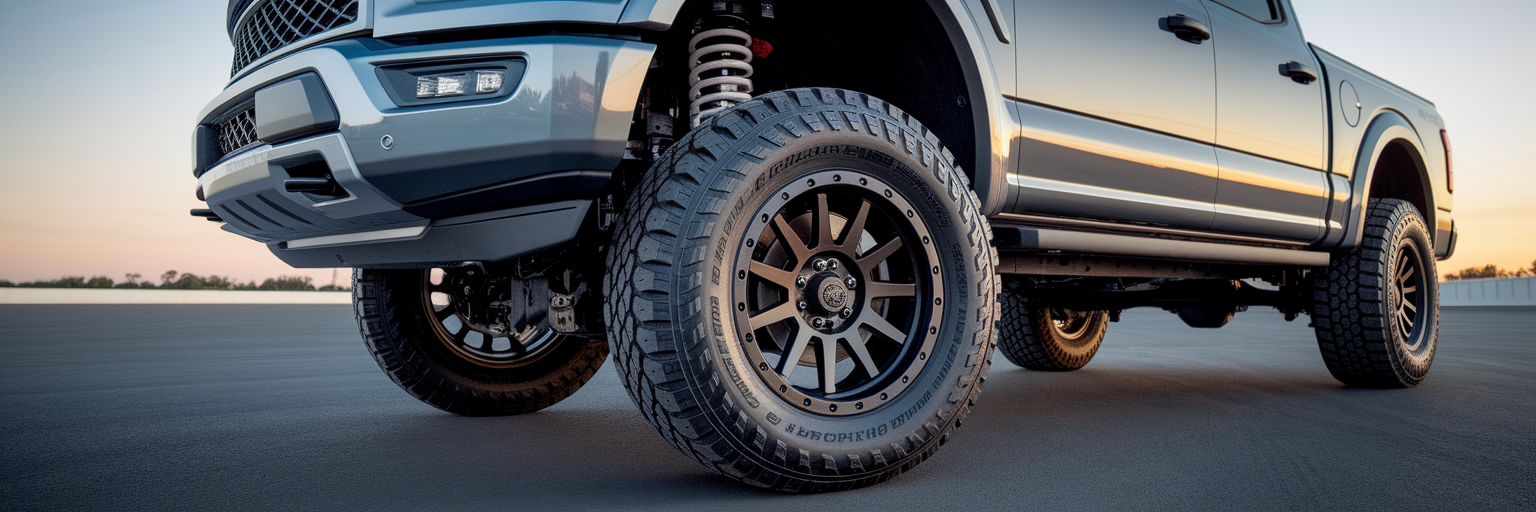
| Aggressive All-Terrain/Mud-Terrain Tires | Superior grip on dirt, mud, and rocks; puncture resistance. | Increased road noise, faster wear on pavement, and a noticeable decrease in fuel efficiency. |
| Underbody Skid Plates | Protects critical components like the engine oil pan, transfer case, and fuel tank from rocks and debris. | Adds significant weight to the vehicle, which can slightly reduce fuel economy and acceleration. |
This table illustrates the direct trade-offs associated with key off-road hardware. The data helps buyers understand how features that enhance trail performance can affect everyday comfort, cost, and efficiency.
Top Mid-Size Contenders for Versatility
Mid-size trucks often hit the sweet spot for buyers who need a vehicle that can navigate both tight city streets and narrow wooded trails. They are easier to park and more fuel-efficient than their full-size siblings, yet modern engineering has made them incredibly capable. The leading models each offer a distinct personality tailored to a specific type of adventure.
Ford Ranger Raptor: The High-Speed Specialist
If your idea of off-roading involves high-speed desert runs and soaking up bumps like a Baja racer, the Ranger Raptor is your machine. Its identity is defined by a powerful twin-turbo V6 and a sophisticated long-travel suspension with advanced Fox Live Valve shocks. This setup is engineered to stay composed and controlled when flying across rough terrain. That focus does come with a trade-off: its on-road ride is noticeably firmer than its competitors. It’s not punishing, but you’ll feel the road more. It’s a purpose-built machine from a manufacturer with a deep off-road heritage, as seen across the entire Ford lineup.
Chevrolet Colorado ZR2: The All-Around Athlete
The Colorado ZR2 presents itself as the versatile champion of the group. It’s the athlete that’s good at every sport, if not the absolute best at any single one. Its secret weapon is the Multimatic DSSV spool-valve dampers, a technology born from motorsports that provides an exceptional balance of on-road comfort and off-road control. It’s narrower than the Ranger Raptor, making it more nimble on tight trails, and its ride quality on pavement is surprisingly smooth for such a capable truck. The Ford Ranger Raptor vs Colorado ZR2 debate often comes down to this: the Raptor is a specialist, while the ZR2 is a brilliant generalist.
Jeep Gladiator Rubicon: The Rock-Crawling King
When the trail becomes a staircase of boulders, the Jeep Gladiator Rubicon is in a class of its own. Its credentials are pure old-school capability: solid front and rear axles, a disconnecting front sway bar for massive wheel articulation, and aggressive rock rails. No other truck in its class can match its slow-speed, technical rock-crawling prowess. This single-minded focus, however, means its on-road manners can feel less refined. The solid front axle that provides such durability off-road can lead to a wandering sensation on the highway. It’s an unapologetic tool for the most difficult terrain, a core part of the Jeep brand’s identity. A recent evaluation by Cars.com highlighted the Ford Ranger Raptor’s dominance in high-speed off-road scenarios, reinforcing these distinct personalities.
Leading Full-Size Trucks for Power and Practicality
For those who need more space, towing capacity, and sheer presence, full-size trucks deliver. They offer expansive cabins and powerful engines that make long-distance travel effortless. However, their size can be a liability in dense urban environments or on narrow, tree-lined trails. The best models manage to blend this immense capability with surprising refinement.
Ford F-150: The Versatile Best-Seller
There’s a reason the F-150 has been a best-seller for decades. Its strength lies in its incredible range of configurations. You can get a basic work truck, a luxurious Platinum trim, or a trail-ready version with the Tremor or Raptor packages. This breadth makes it a fantastic all-rounder. An F-150 with an off-road package can confidently tackle most weekend adventures while remaining one of the most comfortable and technologically advanced daily drivers on the market. For those wanting a deeper look, the details on the 2025 Ford F-150 showcase its blend of innovation and proven performance.
GM’s Heavy Hitters: Silverado ZR2 & Sierra AT4X
General Motors offers a powerful one-two punch with the Chevrolet Silverado ZR2 and GMC Sierra AT4X. These trucks share the same highly capable bones, including Multimatic DSSV dampers and front and rear locking differentials, but are packaged with different aesthetics. They provide a more spacious and often more luxurious platform than mid-size options, making them ideal for families who adventure together. They bring serious off-road hardware to a larger footprint, offering a compelling mix of comfort and capability for those who need the extra room.
Ram 1500 TRX: The Apex Predator
The Ram 1500 TRX is not just a truck; it’s an event. With a supercharged V8 engine producing over 700 horsepower, it is the undisputed king of high-performance, factory-built trucks. Its suspension is built to withstand incredible punishment at speed. However, this extreme performance comes with extreme compromises. Its fuel economy is abysmal, making it a painful choice for a daily commute, and its sheer width can make parking lots and narrow streets a constant challenge. It’s a phenomenal machine, but one that demands you accept its impracticalities.
The Reliability Factor
When a vehicle has to serve as both a workhorse and a weekend warrior, long-term durability is not just a bonus; it’s a necessity. So, what is the most reliable full size truck? For buyers prioritizing longevity, a report from MWMotor identifies the Toyota Tundra and Ford F-150 as two of the most reliable full-size trucks for 2025, citing their strong track records and robust engineering.
How to Choose the Right Truck for Your Lifestyle
Selecting from the best off road trucks 2025 has to offer is less about finding a perfect vehicle and more about finding the perfect compromise for you. A truck that excels in one area will inevitably make sacrifices in another. This simple off road truck buying guide can help you clarify your priorities and make the right choice.
- Honestly Assess Your Driving Habits. Be realistic. What is your true split between pavement and trail? If you spend 95% of your time commuting and only venture onto dirt roads a few times a year, a super-aggressive model like the Gladiator Rubicon might be overkill. The noise from its tires and its less-than-perfect highway manners could become daily annoyances.
- Consider the Total Cost of Ownership. The sticker price is just the beginning. Off-road trims come with costs that add up. Aggressive all-terrain tires wear out faster on pavement and can significantly reduce fuel economy. That V8 power is thrilling, but are you prepared for the weekly fuel bills? These are not just minor details; they are real-world budget impacts.
- Think About Your Adventure Style. Where do you actually go? If your adventures involve tight, wooded trails in the Northeast, a nimble mid-size truck is a better tool than a wide-body full-size. If you’re exploring the open deserts of the Southwest, the high-speed stability of a Ranger Raptor becomes far more appealing.
- Explore New Technologies. The truck world is changing. The emergence of electric vehicles like the GMC Hummer EV introduces new possibilities. It offers silent operation and incredible low-speed torque for off-roading but also presents new challenges, like the logistics of trailside charging.
Ultimately, the goal is to identify the truck that best aligns with your budget, your daily needs, and your adventure goals. The perfect truck isn’t the one with the most features; it’s the one that feels right on Monday morning and just as right on Saturday afternoon.