
Why All-Season Tires Fall Short in Winter
The moment temperatures consistently dip below 45°F (7°C), the performance of your tires changes dramatically. This isn’t just a guideline; it’s a rule rooted in material science. The rubber compounds in all-season tires are designed for a wide range of conditions, but they become stiff and lose their pliability in the cold. Think of it like trying to grip an icy surface with a piece of hard plastic instead of a flexible rubber eraser. The plastic simply slides, unable to conform to the road’s micro-imperfections.
This loss of grip is where the real danger lies. While all-season treads are engineered to channel water away on rainy days, their design is not optimized for snow. Winter tire treads, in contrast, feature deeper grooves and thousands of tiny slits designed to bite into snow and slush, packing it into the tread and then expelling it to maintain a clear contact patch with the road.
The most critical difference appears when you need to stop. On snow and ice, a vehicle with winter tires can have a braking distance that is 30% shorter or more than the same vehicle on all-seasons. That difference can be the margin between a close call and a serious accident. Many drivers believe their all-wheel drive (AWD) or four-wheel drive (4WD) system makes them invincible in winter. This is a common and dangerous misconception. These systems are excellent at providing power to all four wheels to help you accelerate, but they do absolutely nothing to help you stop or steer. Your ability to brake and turn depends entirely on the grip your tires have on the road, which is why a specialized winter tire is essential for true winter safety.
Decoding Winter Tire Features and Symbols
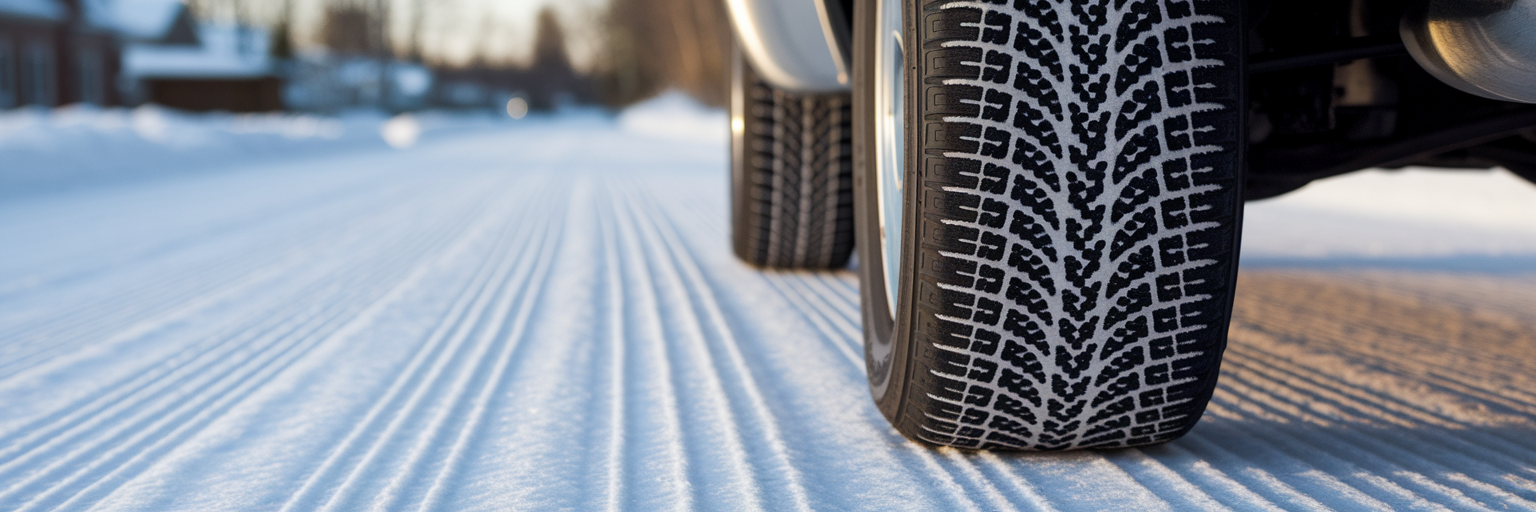
Now that we understand why all-season tires are not enough, let’s focus on what makes a true winter tire. The first thing to look for is the Three-Peak Mountain Snowflake (3PMSF) symbol on the sidewall. This is not a marketing gimmick; it’s an industry certification indicating the tire has met specific performance requirements for severe snow conditions. For anyone driving in snowy regions of the US, this symbol should be a non-negotiable requirement when you’re learning how to choose winter tires.
Beyond the symbol, the next major decision is between studded and studless winter tires. Each type uses different technology to achieve grip, and the right choice depends on your local conditions. Studless winter tires rely on advanced, flexible rubber compounds and a complex network of tiny slits called sipes. These features work together to provide excellent grip on snow and cold pavement. Studded tires, on the other hand, have small metal pins embedded in the tread that physically dig into ice, offering unmatched traction on frozen surfaces.
The debate over studded vs studless winter tires comes down to trade-offs. While studded tires excel on ice, they are noisy on dry pavement, can damage roads, and have reduced grip on clear asphalt. Their use is also restricted or banned in some states, so it’s crucial to check your local regulations. Studless tires are quieter, handle better on dry and wet roads, and are legal everywhere. Their sipes act like thousands of tiny biting edges that provide a squeegee effect on ice, clearing the thin layer of water that forms from pressure and friction.
| Feature | Studless Winter Tires | Studded Winter Tires |
|---|---|---|
| Primary Advantage | Excellent grip on snow and cold pavement | Superior traction on sheer ice |
| Best Use Case | Most urban, suburban, and highway winter conditions | Rural or mountainous areas with frequent ice |
| Ice Traction | Very Good (from sipes and compound) | Excellent (from metal studs) |
| Dry/Wet Pavement | Quieter and better handling | Noisy, reduced grip, can damage roads |
| State Legality (US) | Legal in all states | Restricted or banned in some states |
This table outlines the key performance differences between studless and studded tires to help drivers in different parts of the US choose based on their typical winter road conditions and local regulations.
Reading the Sidewall for a Perfect Fit
Choosing the right tire means more than just picking a brand; it means selecting a tire that perfectly matches your vehicle’s specifications. The key to this is learning to read the alphanumeric code on the tire’s sidewall. You can find your vehicle’s recommended tire size on a sticker inside the driver’s side door jamb or in your owner’s manual. Let’s break down a common example: P225/60R17.
- P: Indicates a passenger car tire.
- 225: The width of the tire in millimeters.
- 60: The aspect ratio, meaning the sidewall height is 60% of the tire’s width.
- R: Stands for radial construction, the standard for modern tires.
- 17: The diameter of the wheel in inches that the tire is designed to fit.
Following the size, you’ll find the Load Index and Speed Rating. A common question arises here: why do winter tires often have a lower speed rating, like ‘Q’ (99 mph)? This is not a sign of poor quality. It’s a direct result of their softer, more flexible rubber compounds, which are designed for grip in the cold, not for high-speed performance. Understanding tire ratings for snow means recognizing that these trade-offs are made for safety.
Finally, look for the DOT code. The last four digits tell you the week and year the tire was manufactured. For example, ‘3524’ means it was made in the 35th week of 2024. For optimal performance and safety, always try to purchase tires manufactured within the last two years. According to the National Highway Traffic Safety Administration (NHTSA), using the correct tire size and load rating is essential for maintaining vehicle stability and handling as engineered, a point you can explore further in the NHTSA’s winter driving tips. For more general information on vehicle specifications, car owners can find a wealth of resources on Carphanatics.
Matching Tires to Your Vehicle and Driving Habits

The best winter tires for snow are not one-size-fits-all. The right choice depends on your vehicle, where you live, and how you drive. Instead of a generic list, think about your specific needs.
Are you an urban or suburban commuter in the Midwest or Northeast, mostly driving on roads that are plowed and salted? If so, a performance winter tire might be your best bet. These tires offer a great balance of snow and ice grip while providing better handling and responsiveness on the cold, dry, or wet pavement you’ll encounter most of the time.
On the other hand, if you live in a rural or mountainous area where you frequently face deep, unplowed snow and icy backroads, your priority is maximum traction. In this case, a more aggressive studless tire with deep tread blocks or even a studded tire would be a more appropriate choice. These tires are built to claw through the worst conditions, prioritizing grip above all else.
Your vehicle type also plays a significant role. Heavier vehicles like SUVs and trucks place greater demands on their tires. They require tires with a higher load index to support their weight and often benefit from LT (Light Truck) designated versions, which feature reinforced sidewalls for improved stability. This is especially true for popular models like those detailed in our guide to the 2026 Jeep Grand Cherokee. The higher center of gravity in these vehicles makes proper tire choice even more critical for safe handling. Whether you drive a sedan or one of the many popular models in our trucks section, the right tire choice is critical.
Finally, consider the brand. Premium brands like Michelin and Nokian are often at the forefront of rubber compound and tread design innovation. However, trusted brands like Bridgestone with its Blizzak line and Goodyear with its Ultra Grip series offer exceptional and reliable performance that has been proven over decades, allowing you to find a tire that fits both your safety needs and your budget.
Proper Installation and Seasonal Changeover
Once you’ve selected the right tires, proper installation is the final step to ensuring your safety on winter roads. The single most important rule is to always install a complete, matching set of four winter tires. Never install just two. Mixing tires creates a dangerous imbalance in traction between the front and rear of your vehicle. This can confuse your car’s anti-lock braking (ABS) and stability control systems, dramatically increasing the risk of a spin-out, especially during an emergency maneuver.
Knowing when to install winter tires is simple: follow the 45°F (7°C) rule. When the average daily temperature consistently stays at or below this mark, it’s time to make the switch. The same rule applies in reverse for spring. Removing your winter tires once temperatures warm up is crucial, as their soft rubber compound will wear down very quickly on warm pavement.
While it’s possible to change tires yourself if you have the right equipment, including a properly calibrated torque wrench, we strongly recommend professional installation. A tire shop will ensure the tires are mounted and balanced correctly, which is vital for ride quality and even wear. Improper installation can lead to other issues, so if you’re ever wondering ‘why is my car squeaking when I drive?‘, a poorly mounted wheel could be a cause. Here’s a practical tip: schedule your tire swap appointment well before the first snowflake is in the forecast. Tire shops in snowy areas become incredibly busy overnight, and you don’t want to be caught unprepared.
Extending the Life of Your Winter Tire Investment
Winter tires are a significant investment in your safety, and with proper care, they can serve you well for several seasons. Following a few simple winter tire maintenance tips will protect that investment and ensure they perform as designed when you need them most.
- Check Tire Pressure Regularly: For every 10°F drop in ambient temperature, your tire pressure will decrease by about 1 PSI. Underinflated tires wear unevenly and compromise handling. Check your pressure at least once a month during the winter.
- Monitor Tread Depth: While the “penny test” is a common trick, winter tires need more tread depth to be effective. Once the tread wears down to 4/32″, a tire’s ability to evacuate snow and slush is significantly reduced. It’s time for a new set.
- Store Them Properly in the Off-Season: When you remove your winter tires, clean and dry them thoroughly. Store them in a cool, dark, dry place, away from direct sunlight and electric motors, which produce ozone that can degrade the rubber.
- Rotate Your Tires: Even within a single season, rotating your tires according to your vehicle manufacturer’s recommendation helps ensure they wear evenly, maximizing their lifespan and performance.
By carefully selecting the right tires for your needs and performing these simple maintenance steps, you can drive with confidence through whatever winter throws your way. For more automotive news and tips, readers can always check the latest updates we’ve published.