
The Wartime Origins of the 4×4
The first mass-produced four-wheel-drive vehicles were not born from consumer desire but forged by the brutal necessities of World War II. The need for a light, durable vehicle that could conquer unpredictable and hostile terrain was a critical military requirement, not a weekend hobby. This challenge gave birth to the American Willys-Overland “Jeep,” a vehicle whose simple, rugged design became the blueprint for off-road capability. It was a go-anywhere workhorse, stripped of all but the essentials, designed for reliability under fire.
Across the Atlantic, a similar philosophy emerged from post-war resourcefulness in Britain. The original Land Rover Series I was built on a Jeep chassis with an aluminum body, a material chosen not for its lightweight properties but because steel was heavily rationed. Like its American counterpart, it was designed for pure utility, a tool to help rebuild a nation. The shared DNA between these two pioneers is undeniable and forms the foundation of the entire history of off road vehicles.
This foundational engineering formula—a strong ladder frame, robust solid axles for maximum articulation, and high ground clearance—was not an accident. It was the direct result of needing to cross streams, climb muddy hills, and endure conditions that would destroy a conventional car. This core architecture, proven on the battlefield, remains the undisputed blueprint for any serious off-road vehicle built today.
From Battlefield Utility to Civilian Icon
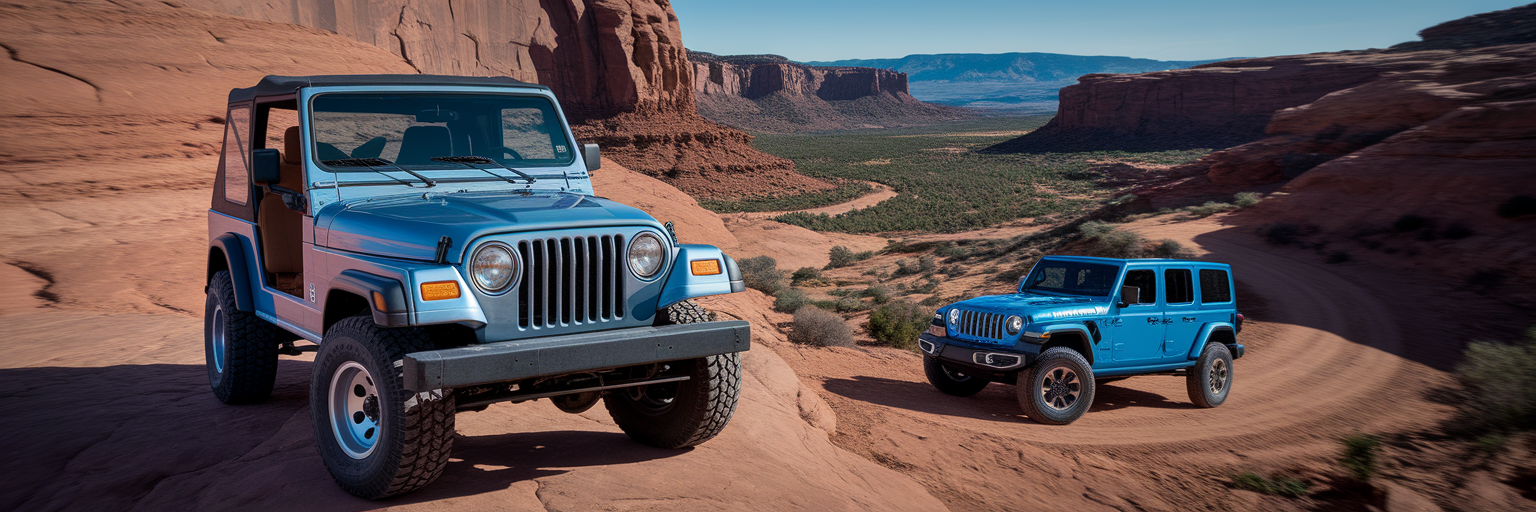
With their wartime credentials established, these rugged vehicles transitioned seamlessly into civilian life. Long before they were symbols of recreation, their proven toughness made them indispensable tools for farmers, surveyors, and industrial workers. The Willys “Jeep” evolved into the CJ, or “Civilian Jeep,” models. The CJ-5 and CJ-7, in particular, captured the public imagination, transforming the 4×4 from a piece of farm equipment into a symbol of American freedom and adventure. Suddenly, remote trails and backcountry campsites were within reach for everyone.
In parallel, the Land Rover followed a similar path, evolving through the Series II and III before cementing its status as the iconic Defender. It became the vehicle of choice for explorers and aid workers across the globe, its boxy silhouette synonymous with navigating the world’s most remote corners. This success in demanding civilian roles demonstrated a clear market for rugged utility vehicles, which ultimately influenced the development of versatile consumer models, including many of the most capable trucks we see today.
What truly solidified their iconic status, however, was the growth of devoted enthusiast communities. Owners weren’t just drivers; they were tinkerers and modifiers. This passion fueled a massive aftermarket ecosystem, making customization a central part of the 4×4 identity. Whether it was adding bigger tires for more clearance or a winch for recovery, owners made these vehicles their own. This hands-on culture turned the Jeep and Land Rover from mere transportation into a deeply personal hobby.
The Jeep Wrangler’s Unbroken Lineage
The introduction of the Jeep Wrangler (YJ) in 1986 marked a pivotal moment. It was a strategic move to succeed the beloved CJ series by improving on-road comfort and daily usability to attract a wider audience. Some purists initially balked at its square headlights, but the core formula remained. The Wrangler was designed to be a more civilized off-roader, not a compromised one.
Fast forward to 2025, and the modern Wrangler is a masterclass in balancing heritage with progress. It retains its fundamental off-road DNA: a tough body-on-frame design, five-link solid axle suspension, and an available 100:1 crawl ratio for incredible low-speed control. Yet, it integrates modern amenities that would have been unimaginable in its ancestors, like a 12.3-inch Uconnect 5 touchscreen and advanced driver-assist systems such as blind-spot monitoring. As the flagship for a brand with a rich legacy, the Wrangler embodies the spirit you can explore further on our dedicated Jeep brand page.
This blend of old-school mechanics and new-school tech is most evident in its diverse powertrain lineup. The Wrangler offers something for every type of driver, from traditionalists to tech adopters.
- Standard 3.6L Pentastar V-6: The proven workhorse of the lineup.
- Efficient 2.0L Turbocharged Four-Cylinder: Balances power with improved fuel economy.
- Powerful 6.4L V-8 (Rubicon 392): Delivers muscle-car performance in an off-road package.
- Wrangler 4xe Plug-In Hybrid: Combines a turbo engine with electric motors for silent off-roading and significant torque.
The Wrangler 4xe, in particular, has been a resounding success, becoming America’s best-selling plug-in hybrid. It proves that electrification can enhance the off-road experience, not detract from it. The Wrangler has successfully evolved without abandoning the soul that made it an icon.
The Land Rover Defender Reimagined
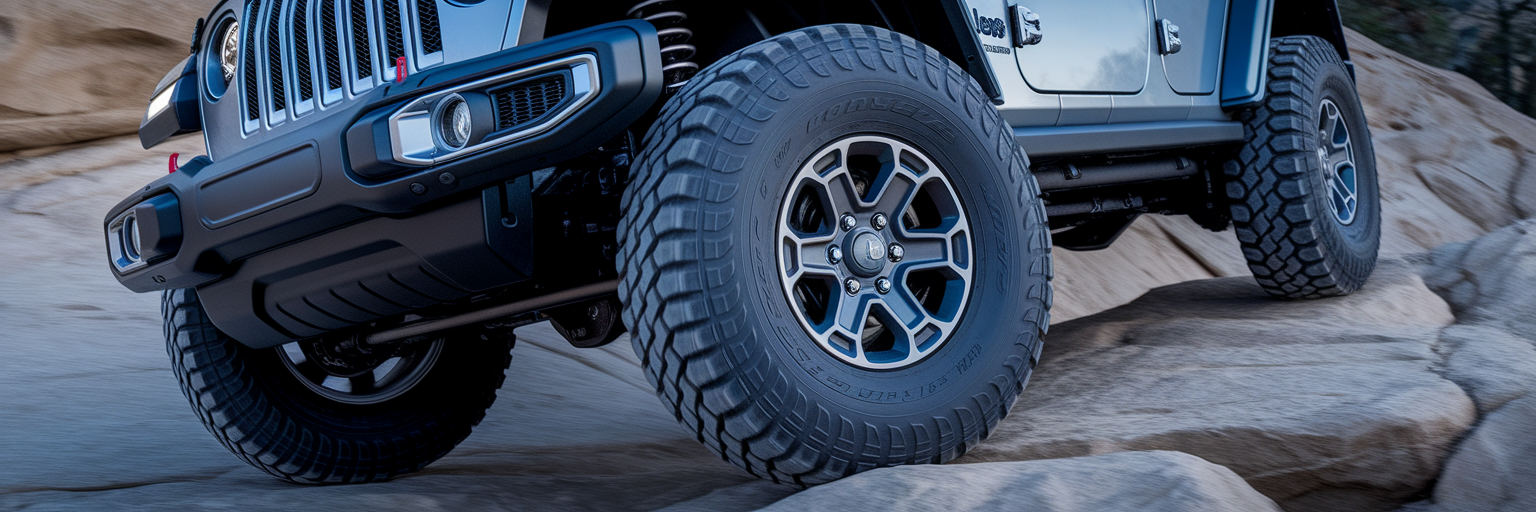
While the Wrangler chose a path of careful evolution, the Land Rover Defender underwent a dramatic revolution. The original Defender was a purely utilitarian tool, celebrated for its agricultural simplicity and anvil-like robustness. It was a vehicle you could fix with a hammer and sheer will. The conversation around the Jeep Wrangler vs Land Rover Defender used to be about two sides of the same mechanical coin.
That all changed with the 2020 redesign. The new Defender pivoted sharply toward the premium luxury SUV market, trading its classic body-on-frame construction for a modern unibody platform. This shift brought a level of on-road refinement and technological sophistication previously unseen in a Defender. Advanced features like the automated Terrain Response 2 system, which analyzes conditions and optimizes vehicle settings, and electronic air suspension deliver incredible capability with minimal driver input.
This transformation, however, created a clear philosophical divide. While the new Defender is immensely capable, its higher price point and complex electronics place it in a different category. It appeals to luxury buyers who want comfort and capability in one package, whereas the Wrangler continues to court off-road purists who value mechanical simplicity and a hands-on approach. The Defender became a sophisticated instrument, while the Wrangler remained a trusty multi-tool.
| Factor | Modern Jeep Wrangler | Modern Land Rover Defender |
|---|---|---|
| Core Design | Body-on-frame with solid axles | Unibody (monocoque) with independent suspension |
| Engineering Priority | Mechanical capability and user modification | Technological sophistication and on-road refinement |
| Target Audience | Off-road purists and adventure enthusiasts | Luxury buyers seeking capability and comfort |
| Key Technology | Locking differentials, sway bar disconnect, 100:1 crawl ratio | Terrain Response 2, air suspension, ClearSight Ground View |
| Accessibility | Lower entry price, vast aftermarket support | Higher price point, more complex and costly repairs |
This table contrasts the core philosophies of the two leading off-road icons. Data points are based on manufacturer specifications for Rubicon and comparable Defender trims, highlighting their divergent approaches to achieving off-road capability.
How Software and Steel Redefined Capability
The evolution of off-road vehicles is a story of both mechanical brawn and digital brains. The blend of hardware and software represents the pinnacle of modern off road technology, allowing today’s 4x4s to perform feats that were once the exclusive domain of heavily modified rigs. This trend of blending rugged hardware with smart software is expanding across lineups, as seen in the advanced systems planned for models like our upcoming 2026 Jeep Grand Cherokee.
The Hardware Advantage: Mechanical Leverage
At its core, extreme off-roading is a game of physics, and hardware is king. Components like the Jeep Wrangler Rubicon’s heavy-duty Dana 44 axles provide the raw strength needed to handle the stress of large tires and difficult terrain. Its electronically disconnecting front sway bar is a perfect example of a mechanical advantage, allowing the front wheels to move independently for maximum articulation when rock-crawling. For those seeking the best off road vehicle upgrades, many of these features now come straight from the factory, including steel bumpers and integrated winch mounts.
The Software Revolution: Accessible Expertise
While hardware provides the muscle, software provides the finesse. Systems like Land Rover’s Terrain Response act as a virtual off-road expert, automatically adjusting throttle response, traction control, and differential settings for sand, mud, or rocks. This makes expert-level vehicle control accessible to drivers of all skill levels. The Defender’s ClearSight Ground View camera, which creates a virtual view of the terrain beneath the front of the vehicle, turns tricky obstacle placement into a confident maneuver. As publications like Road & Track have noted, the latest vehicles successfully add these modern comforts without diluting their core purpose.
The Electric Future of Trail Exploration
The off-road world is facing its next great evolutionary leap, driven by tightening emissions regulations and unwavering consumer demand for better performance. The idea of an electric 4×4 is no longer a distant concept; it’s a market reality. A brief Jeep Wrangler 4xe review of its sales figures shows a clear appetite for electrification, proving that capability and sustainability can coexist. It has become the best-selling plug-in hybrid in America, demonstrating that drivers are ready for a new kind of adventure.
Both Jeep and Land Rover have announced that fully electric versions of the Wrangler and Defender are on the horizon. This shift is not a compromise but the next stage of performance enhancement. This is part of a larger automotive movement, and you can explore more about the future of electric vehicles on our dedicated page.
The potential advantages of electric power for off-roading are compelling, promising to redefine the experience in fundamental ways.
- Instant Torque: Unmatched precision and control for rock crawling and technical obstacles.
- Silent Operation: Enhances the connection with nature by eliminating engine noise.
- Simplified Drivetrain: Fewer mechanical parts could lead to increased durability and less maintenance.
- Onboard Power Source: The ability to power tools, campsites, and accessories directly from the vehicle’s battery.